

Best Video Editing Software in 2026: Free & Paid, Compared by Real Cost
October 23, 2026
Best DPI for Printing: The Complete 2026 Guide (Why 300 Isn’t Always the Answer)
October 27, 2026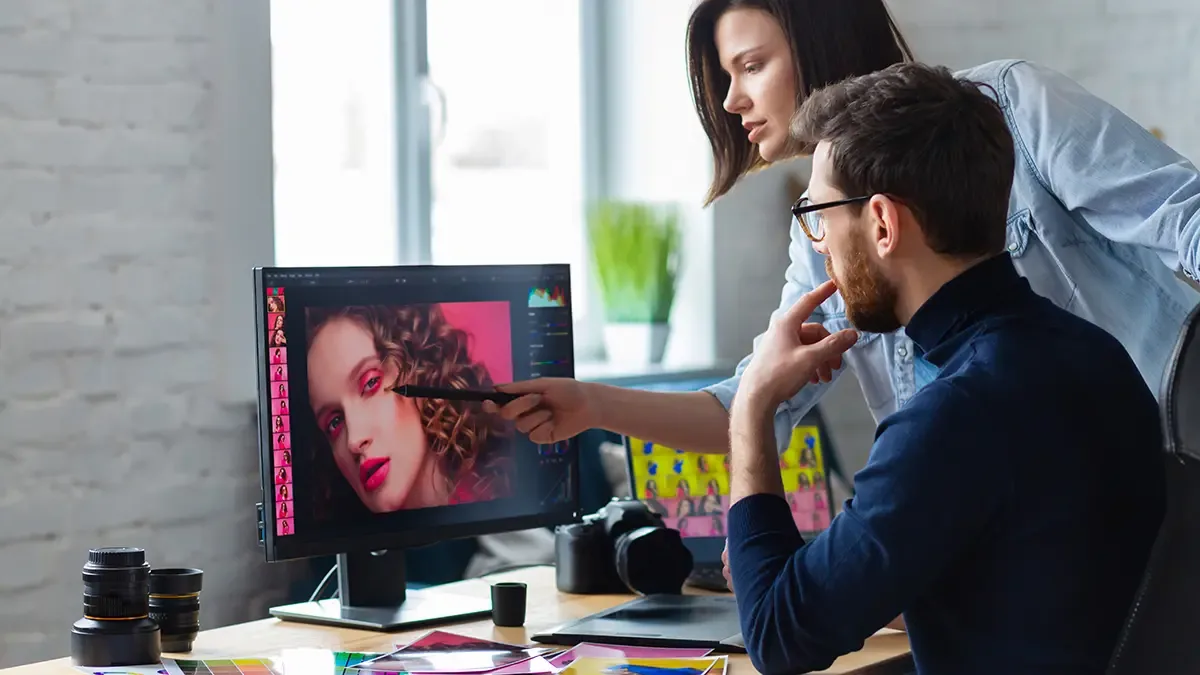
Hiring an image retouching expert costs $0.50 to $10 per image for standard professional work in 2026, and $15 to $100+ per image for high-end commercial and editorial retouching. Billed hourly, expect $15–$35/hour for entry-level freelancers, $35–$75/hour for experienced retouchers, and $75–$150+/hour for high-end specialists. Where you land depends on one thing more than any other: how many decisions the retoucher has to make on each image, not how many clicks they perform. A basic cleanup corrects what is already there. A high-end retouch rebuilds parts of the image the camera never saw — and that judgment is what you are actually paying for.
- You Are Not Buying Clicks. You Are Buying Judgment.
- The 2026 Price Landscape at a Glance
- Hourly Rates: What Experience Actually Costs
- Country-by-Country Pricing: Why the Same Job Costs 10x Less in Dhaka Than in Dallas
- Per-Image Pricing by Niche (Where Your Money Actually Goes)
- Why Two Experts Quote 10x Apart for the Same Photo
- Freelancer vs Agency vs Studio vs In-House: The Real Cost Math
- The Hidden Costs of "Cheap" Retouching
- How to Hire a Retouching Expert Without Getting Burned
- How to Save Money Without Killing Quality
- Three Real Budget Scenarios (So You Can Benchmark)
- Frequently Asked Questions
- Final Thought: Hire for the Judgment You Need
You Are Not Buying Clicks. You Are Buying Judgment.
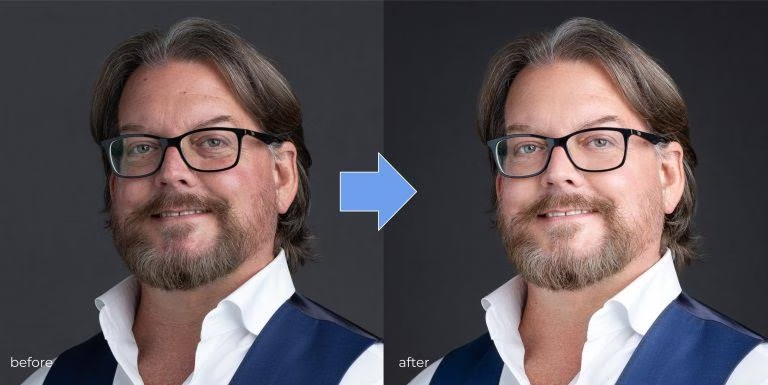
Before we get to numbers, let us settle the thing that confuses most buyers. Two retouchers can look at the same photo and quote you $5 and $50. The cheap one sees a list of tasks: remove blemish, whiten teeth, fix exposure. The expensive one sees decisions: how much texture to keep, where the light should fall, whether the jawline needs shaping and by how much, what “natural” means for this specific face. Studios that focus on expert retouching that preserves natural texture will tell you the same thing: the difference between a $5 edit and a $50 edit is invisible until you put them side by side — and then you cannot unsee it.
So when you ask “how much does it cost to hire an image retouching expert,” the honest answer is another question: what level of judgment do you need? A catalog image that shoppers glance at for two seconds needs very little. A hero image that carries your whole homepage needs a lot.
The 2026 Price Landscape at a Glance
Here is the full spectrum, cross-verified from published rate cards and freelance marketplace data.
| Retouching Level | Per-Image Cost | Typical Time per Image | Best For |
|---|---|---|---|
| Basic cleanup | $0.50 – $2 | 15–30 min | Bulk ecommerce, simple products |
| Standard / professional | $2 – $6 | 30–60 min | Portraits, fashion lookbooks, mid-tier products |
| Advanced | $6 – $15 | 1–2 hours | Close-ups, branding, detailed beauty |
| High-end commercial | $15 – $100+ | 2–4+ hours | Campaigns, magazine, advertising |
| Top-tier ad / editorial | $100 – $5,000+ | Half day to days | Major brand campaigns, billboards, covers |
For a service-by-service pricing breakdown that covers every task from background removal to beauty work, that reference lays out the full rate card. Here we will focus on what those numbers actually buy you.
Hourly Rates: What Experience Actually Costs
Per-image pricing dominates the ecommerce world, but hourly pricing still rules high-end and custom work. Here is how the market breaks down in 2026.
| Experience Level | Hourly Rate | Per-Image Equivalent | What You Get |
|---|---|---|---|
| Entry-level freelancer | $15 – $35 | $5 – $15 | Basic cleanup, fast turnaround, variable quality |
| Experienced professional | $35 – $75 | $15 – $50 | Consistent quality, natural results, real revision dialogue |
| High-end specialist | $75 – $150+ | $50 – $300+ | Beauty, fashion, advertising-level precision |
| Elite ad studio | $200 – $500+ (or day rate $600–$2,000) | $1,000 – $5,000+ | Campaign heroes, composites, print masters |
The U.S. Bureau of Labor Statistics and marketplace data put the median photo editor wage around $22/hour, and ZipRecruiter’s salary data confirms a similar range for in-house roles. Freelance specialists charge a premium over that because they carry their own software, hardware, and downtime costs. The Adobe Creative Cloud Photography plan alone runs ~$20/month per seat, plus a color-accurate monitor ($800–$2,000), a calibrated workstation ($2,000–$4,000), and cloud storage — all of which get baked into every freelance rate.
Country-by-Country Pricing: Why the Same Job Costs 10x Less in Dhaka Than in Dallas
Location is the single biggest price lever, and it is not close. Labor costs, currency differences, and overhead create a spread that looks shocking until you see the quality is often identical.
| Region | Basic per Image | Advanced per Image | Hourly Rate |
|---|---|---|---|
| USA / Canada / UK | $5 – $25 | $50 – $150+ | $35 – $150+ |
| Western Europe | $4 – $20 | $40 – $120 | $30 – $120 |
| Eastern Europe | $2 – $10 | $15 – $50 | $15 – $50 |
| India / Bangladesh / Philippines / Vietnam | $0.20 – $5 | $5 – $30 | $5 – $30 |
The offshore studios in Bangladesh, India, the Philippines, and Vietnam operate at 60–90% lower labor and overhead. Photoshop training is deep, workflows are hyper-specialized, and the best studios process 1,000+ images per day per team. Quality is not the trade-off — process discipline is. The risk with offshore work is never “can they do it” — it is “will the 400th image look as good as the 1st.” That is why a free test edit on your hardest images matters more than the rate card.
Per-Image Pricing by Niche (Where Your Money Actually Goes)
Portrait and Beauty Retouching
Portraits are where “retouching” stops being cleanup and starts being art. Basic blemish removal and teeth whitening run $0.79–$3 per image. Standard beauty work — skin smoothing, stray hair removal, under-eye cleanup — runs $3–$12. High-end beauty with frequency separation retouching and dodge-and-burn runs $15–$150+ per image, because the retoucher is sculpting light and shadow pixel by pixel while preserving every pore. If you want to see what good technique looks like, these portrait retouching techniques show the difference between natural and plastic.
Spending too much time on tedious skin cleanup in post-production?
Outsource the detail work to our fast, reliable Beauty Retouching Service and focus on shooting.
Jewelry and Watch Retouching
Jewelry is the most expensive standard product category, full stop. A mirror-finish band reflects the entire room, so every reflection must be rebuilt to a light source that did not exist. Brighten a diamond globally and it goes grey and dead — facet contrast has to be rebuilt facet by facet, at magnification. Standard jewelry photo editing runs $0.99–$5 per image. High-end work with focus stacking, symmetry correction, and metal color matching runs $5–$15. Luxury editorial jewelry for campaigns can exceed $75 per image.
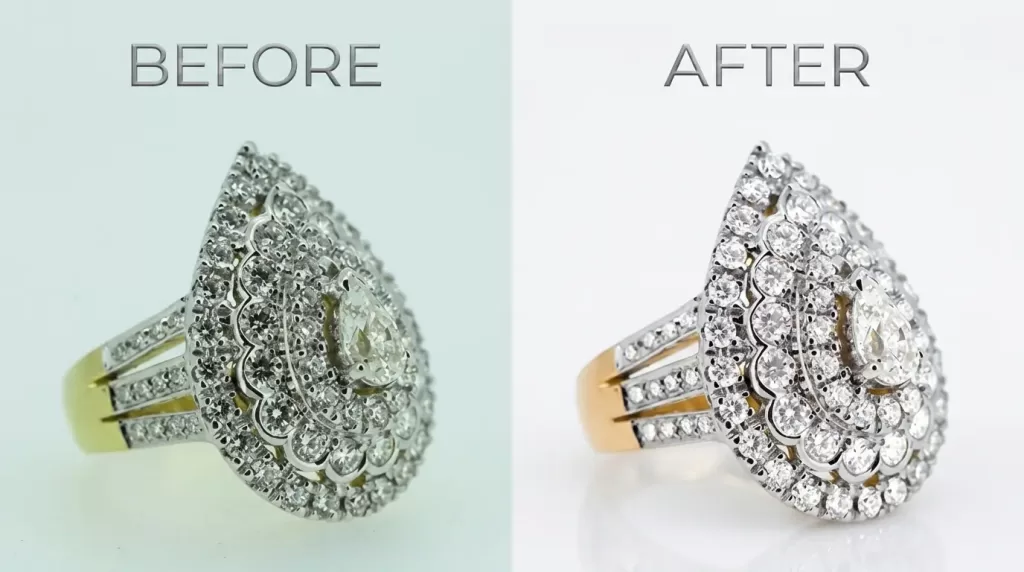
Do your product images fail to show off intricate details?
Highlight every facet and texture with our precise Jewelry Photo Editing Service
Ecommerce Product Retouching
This is the volume engine of the industry. Dust removal, scratch cleanup, basic color correction, and shadow creation run $0.25–$2.50 per image when outsourced. Most Amazon and Shopify catalogs land between $0.30 and $1.50 per image. Solid ecommerce product photo editing at this level is repeatable, consistent, and fast — which is exactly why volume discounts (10% at 100+, 25% at 500+, up to 40% at 1,000+) apply so aggressively.
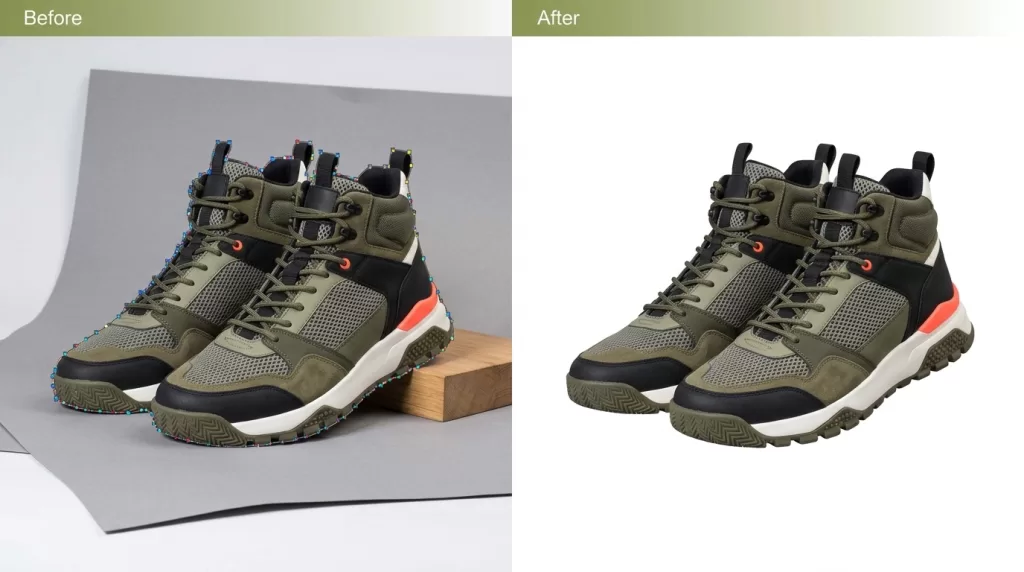
Want to keep your image editing costs low without sacrificing quality?
Enjoy premium, hand-drawn Clipping Path services starting at just 30¢ per image.
Fashion, Apparel, and Ghost Mannequin
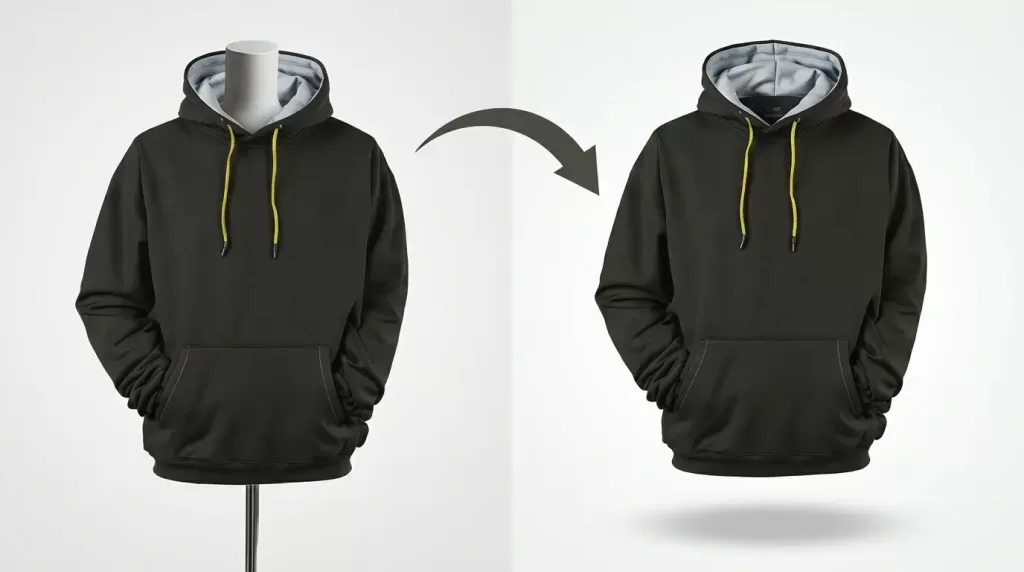
Apparel adds wrinkle removal and ghost mannequin compositing — rebuilding the inside of a garment the camera never photographed. Neck-joint-only work runs $0.79–$1.50. Full 3D composites with sleeve and bottom joints run $3–$8. Editorial fashion retouching with model skin, fabric texture, and campaign-level polish runs $15–$50+.
Real Estate, Wedding, and Newborn Photography
Real estate HDR blending and sky replacement run $0.60–$5 per image; virtual staging runs $10–$30 per room. Wedding gallery editing (culling + batch color) runs $0.05–$0.25 per image with AI-assisted workflows, or $300–$600 per full wedding through traditional outsourcing. Newborn and baby retouching sits at the high end of portrait work because skin is delicate and over-smoothing is instantly visible.
Why Two Experts Quote 10x Apart for the Same Photo
If you have ever sent the same image to three retouchers and received three wildly different numbers, here is why. Six variables move the price, and most buyers only discuss one of them.
- Complexity of the image. A rigid product on white vs. multi-path jewelry with reflections is the difference between one vector path and forty.
- Reconstruction required. Anything the camera never saw — inner backs of garments, collar undersides, rebuilt reflections — has to be invented. That is art, not correction.
- Material difficulty. Sheer fabric, fur, knit, chrome, and glass all behave badly at the edge. None can be cut with a plain path.
- Volume and retainer. A monthly commitment lets a studio hold a named team on your account. That is the real reason rates fall with volume.
- Turnaround. Rush work carries a premium because it displaces other scheduled jobs, not because it is done differently. Expect +25% for 12-hour and +50–100% for same-day.
- Revisions and QC. Unlimited revisions price slightly higher and usually cost less overall, because a re-edit at your end is more expensive than a correction at theirs.
If you are still learning the basics yourself — say, how to remove blemishes in Photoshop — you will quickly discover why the manual work behind even a “simple” edit takes real time. That time is what you are outsourcing.
Struggling with complex hair or fur edges?
Let our experts deliver flawless, natural cutouts with our advanced Image Masking Service
Freelancer vs Agency vs Studio vs In-House: The Real Cost Math
Let us compare the four ways to get retouching done, with actual numbers.
| Option | Per-Image Cost | Consistency | Scalability | Best For |
|---|---|---|---|---|
| Freelancer | $5 – $50 | Varies by person | Limited (one person) | Small batches, creative direction |
| Agency / studio | $10 – $100+ | High | High | Campaigns, premium brands |
| Offshore outsourced studio | $0.25 – $10 | High (if QC exists) | Very high | Ecommerce volume, catalogs |
| In-house editor | $0.83 – $12.25 effective | High | Limited by headcount | Under 50 images/month |
In-house looks controllable until you run the math. A U.S.-based editor at $22.10/hour median, loaded to $28–$32 with benefits, plus software and hardware, produces an effective per-image cost of $0.83–$12.25. Below 50 images a month, in-house wins on control. Above 500, outsourcing is functionally the only sane option. In between — and this surprises most brands — a hybrid of in-house direction plus outsourced production usually wins on both cost and quality.
Imagen’s analysis of photo editing costs makes a related point: AI has slashed the price floor to $0.05–$0.22 per image, but it still fumbles hair, glass, jewelry, and skin texture. The 2026 professional default is hybrid — AI on the easy 80%, human experts on the 20% of hero images that drive revenue.
The Hidden Costs of “Cheap” Retouching
The rate is only the visible part of the price. Three costs sit underneath it, and Retouch Atelier’s cost breakdown names them bluntly.
First, re-editing. Work that comes back wrong is paid for twice — once to the studio, once in your own team’s time. If an AI tool produces an image that is 80% correct and your team spends 20 minutes fixing each one in a batch of 200, that is 66+ hours of manual labor. That is the rework tax, and it rarely shows up in the original quote.
Second, inconsistency. A single image can be judged on its own. A category page cannot. Eight colorways that do not match each other is a problem no individual image reveals.
Third, returns. Color that is close but not correct is the most expensive error in apparel — nobody catches it in approval, and the customer catches it on arrival. Those “product not as described” returns carry real logistics, restocking, and support costs, plus permanent damage to your store rating. Research from the Baymard Institute on product page UX confirms that image quality directly drives conversion and return behavior.
How to Hire a Retouching Expert Without Getting Burned
Price comes fifth in the hiring decision. The first four questions decide whether you will be happy at any price. If you are new to this, a solid guide on how to outsource photo editing walks through the full vendor-selection checklist, but the short version is:
- Send your hardest images, not your easiest. Every studio can cut out a shoe. Send the sheer top, the chrome bottle, the black-on-black product.
- Require a free test edit — 2–3 images, delivered under the same SLA as paid work, by the same editor who would handle your batch (the most common bait-and-switch is a senior editor on the trial, trainees on production).
- Ask what happens on revision two. The answer tells you whether there is a real QC layer or a single retoucher hoping.
- Get an all-in written quote that itemizes revisions, delivery format (JPEG vs PSD vs WebP), turnaround SLA, and minimum order fees.
- Check data security. Will they sign an NDA? What happens to your files afterward, and on what date?
A studio that fails the first four does not become acceptable by being cheaper.
How to Save Money Without Killing Quality
You have more leverage than you think, and none of it means accepting worse work.
- Split your tiers. Send 50 catalog shots to a budget studio at ~$2 each, and invest in the 10 hero images at $40+ each. Most of your budget should go to the images that actually drive sales.
- Commit to volume. A 12-month retainer at 500 images/month typically unlocks 15–25% below the public rate card.
- Batch by complexity. Sort files into basic / medium / complex buckets before quoting so you do not pay complex-tier rates for basic work.
- Shoot better source images. Clean lighting, consistent white balance, and gray-card references cut editing time by 30–50%.
- Offer flexible turnaround. If you can wait 48–72 hours instead of 24, most studios discount 10–20%.
Three Real Budget Scenarios (So You Can Benchmark)
Scenario A — Amazon FBA seller, 100 simple product images. 100 × $0.30 basic cleanup + $0.50 shadow = $80 base. Volume discount (100+): 10% → ~$72 total. This fits inside the ~$50/month image budget most FBA guides recommend.
Scenario B — Shopify apparel brand, 500 SKUs quarterly. 500 × $0.79 ghost mannequin = $395 base. Volume discount (500+): 25% → ~$296/quarter, ~$1,184/year. Compare that to one U.S. in-house editor at ~$46,000/year loaded. Net savings by outsourcing: roughly $45,000/year.
Scenario C — Fashion brand launching a campaign. 10 hero model shots at high-end, $40 each = $400. 50 catalog product shots at $2 each = $100. Total: $500, with 80% of the spend on the images that will appear on the homepage and in ads. Path’s pricing guide uses a similar split to show why tiered budgeting beats flat-rate budgeting every time.
Frequently Asked Questions
How much does it cost to hire an image retouching expert per image?
Standard professional retouching costs $0.50–$10 per image in 2026. Basic ecommerce cleanup starts at $0.50–$2, advanced portrait and branding work runs $6–$15, and high-end commercial retouching costs $15–$100+ per image depending on complexity and manual detail.
How much do retouchers charge per hour?
Hourly rates range from $15–$35 for entry-level freelancers, $35–$75 for experienced professionals, and $75–$150+ for high-end commercial specialists. Elite ad studios may charge $200–$500/hour or day rates of $600–$2,000.
Is it cheaper to outsource retouching or hire in-house?
Above 50 images per month, outsourcing is almost always cheaper. In-house editing carries fixed costs — salary, software, hardware, benefits — that push effective per-image cost to $0.83–$12.25 for U.S. teams. Offshore outsourced retouching costs $0.25–$10 per image with zero fixed overhead. Below 50 images/month, in-house wins on control.
Why is high-end retouching so expensive?
High-end retouching uses manual techniques like frequency separation, dodge-and-burn, detailed skin refinement, and compositing that take 2–4+ hours per image. You are paying for judgment — knowing what to fix and what to leave alone — not for clicks or filters.
Can cheap retouching hurt my business?
Yes. Extremely low-cost retouching ($0.10–$0.30/image) often relies on automation or rushed work, producing over-smoothed skin, inconsistent colors, and missed details. The real costs show up as rework, inconsistent catalogs, and product returns — which are far more expensive than the savings on the per-image rate.
How long does it take to retouch one photo?
Basic retouching takes 15–30 minutes per image. Standard edits take 30–60 minutes. Advanced retouching takes 1–2 hours, and high-end commercial work can take 2–4 hours or more per image.
Do retouchers offer volume discounts?
Yes. The standard structure is roughly 10% off at 100+ images, 25% at 500+, and up to 40% at 1,000+. Enterprise clients above 5,000 images/month often negotiate retainer pricing that beats the public discount ladder by an additional 15–25%.
How do I know if a retoucher is worth the price?
Check their portfolio, then test them on your hardest images for free. Look for natural texture (not plastic skin), clean edges on hair and fabric, consistent color across a batch, and whether they ask clarifying questions before starting. A studio that refuses a free trial or asks for a credit card upfront is signaling process problems.
Ready to transform your raw photos into professional assets?
Get a custom, no-obligation quote tailored to your specific volume and needs. Explore Clipping Expert Asia
Final Thought: Hire for the Judgment You Need
The question “how much does it cost to hire an image retouching expert” has no single answer because “expert” covers everyone from a $15/hour freelancer doing basic cleanup to a $150/hour specialist working on magazine covers. The smart move is not to find the cheapest expert — it is to match the level of judgment to the job. Basic catalog work needs consistency and speed; hero images need an artist. Pay for the first in bulk, pay properly for the second on the few images that matter, and always start with a free test edit on your hardest files. That is how you get expert-quality work without paying expert rates for every single frame.