


What Is Photo Manipulation? Definition, Types, Techniques & Ethics
September 12, 2026
Frequency Separation Retouching: Step-by-Step Photoshop Guide for Beginners
September 16, 2026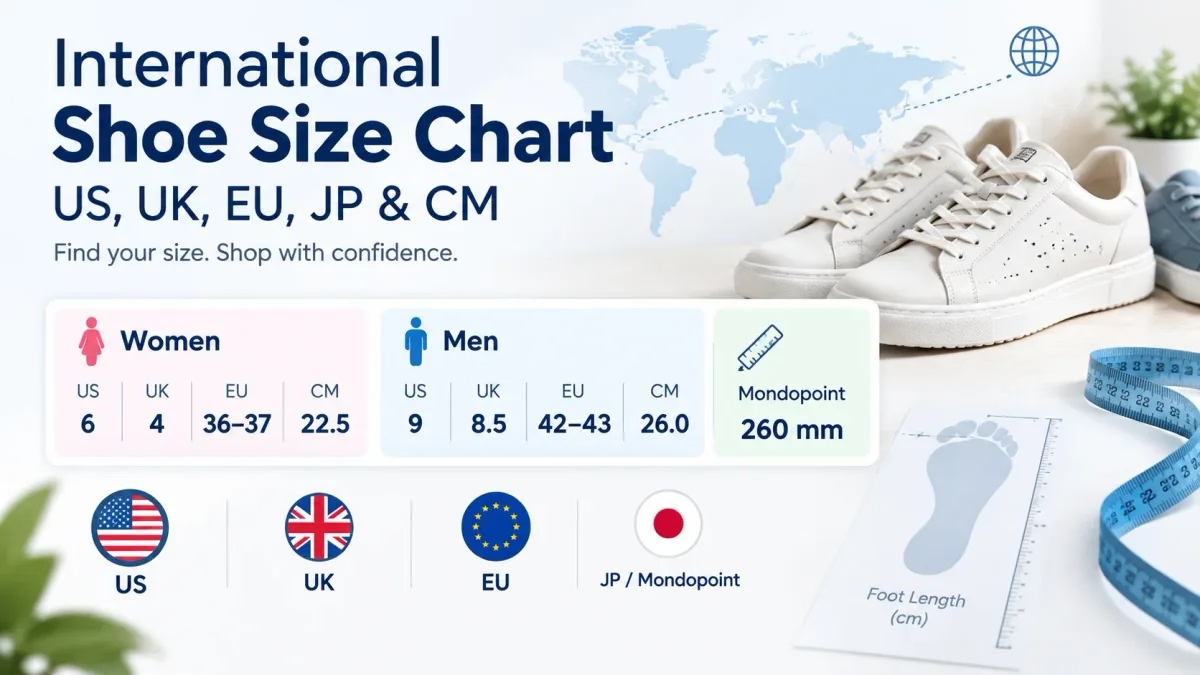
- Quick Answer (TL;DR)
- Interactive Shoe Size Converter (With Live Foot Graph & Sliders)
- Why Shoe Sizes Are So Confusing Across Countries
- Women’s International Shoe Size Conversion Chart
- Men’s International Shoe Size Conversion Chart
- How to Measure Your Foot at Home (Step-by-Step)
- Shoe Width Explained (Narrow, Medium, Wide, EE)
- Men-to-Women & Women-to-Men Size Conversion
- Kids’ Shoe Size Conversion Chart (Bonus)
- Brand Variance: Why Nike, Adidas, and New Balance Fit Differently
- Pro Tips for Buying Shoes Online (Without the Return Nightmare)
- Common Shoe Sizing Mistakes to Avoid
- Country-by-Country Sizing Cheat Sheet
- Key Takeaways
- Frequently Asked Questions
- Final Word
Quick Answer (TL;DR)
If you only have thirty seconds, here is the short version:
- Women’s rule of thumb: US size − 2 = UK size · US size + 30 ≈ EU size · Foot length in cm = Japan size.
- Men’s rule of thumb: US size − 1 = UK size · US size + 33 ≈ EU size · Foot length in cm = Japan size.
- The universal unit is centimeters. Measure your foot from heel to longest toe, and match the cm value in any chart below.
- Add 0.5–1 cm of wiggle room for closed-toe shoes.
- Always measure feet in the late afternoon, when they naturally reach their largest size.
Everything else on this page — full charts, an interactive slider tool with a live foot-length graph, brand-fit intel, and expert FAQs — makes those five rules bulletproof for real online shopping.
Interactive Shoe Size Converter (With Live Foot Graph & Sliders)
Change any slider below and every other value updates in real time. The tool shows a scaling foot silhouette and a comparative bar chart so you can see how the same foot maps across every region.
Interactive Shoe Size Converter
Drag any slider. All sizes and the foot graph update live.
Tip: bar length shows how each region scales relative to others. Half-sizes and brand lasts vary — when in doubt, size up by half.
Every slider is linked to the same “foot length” source of truth. Move the CM slider and the US, UK, EU, and Japan sliders follow. Drag the EU slider and the CM value adjusts. The animated foot silhouette scales to your exact length, and the bar chart shows how each region’s numbering system stretches relative to the others.
Why Shoe Sizes Are So Confusing Across Countries
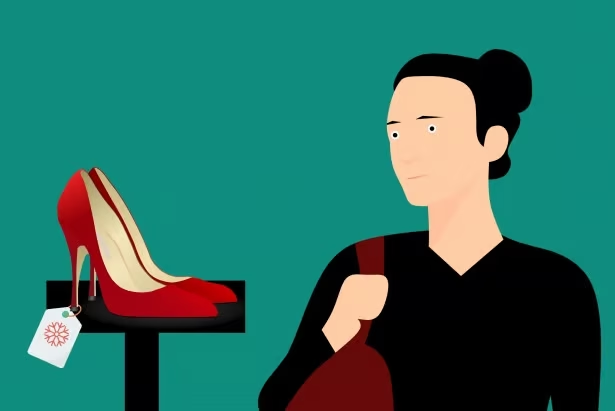
Shoe sizes look chaotic because each region grew its own scale in a different century, using a different ruler, and never agreed to switch. Once you understand the four foundational systems, every chart on this page clicks into place.
- US & Canada system — Based on the old English barleycorn (1/3 inch, 8.47 mm). Men, women, and kids start from different “zero points,” which is why a men’s US 9 is not the same length as a women’s US 9.
- UK & Commonwealth system — Also barleycorn-based, but uses one unified scale for men and women. Ireland, India, Pakistan, South Africa, and Australia mostly follow it.
- European (EU / Paris Point) system — One Paris point equals 2/3 cm (6.67 mm). EU sizes measure the shoe’s last (the mold), not the foot, and are unisex. That is why an EU 43 fits any 27 cm foot regardless of gender.
- Japanese / Mondopoint system — The cleanest scale of all. Your Japan size is literally your foot length in centimeters. Mondopoint is standardized in ISO 9407 and used across Japan, China, Taiwan, South Korea, and the global sports industry.
Once you know that EU sizes measure the shoe, Japan sizes measure the foot, and US and UK sizes measure something older than the light bulb, the numbers stop feeling random and start making sense.
Women’s International Shoe Size Conversion Chart
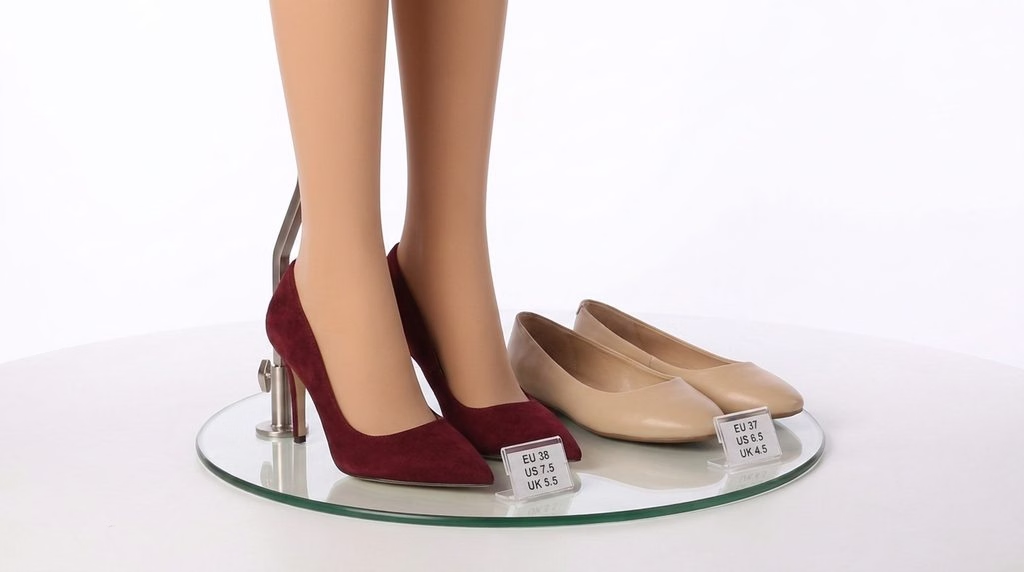
Women’s sizes stretch across six major systems. Use the chart below to translate your usual size into any market. Foot length in centimeters is the universal reference — when brands disagree, match the cm value.
| US | UK | EU | AU | China | Japan (cm) | Inches |
|---|---|---|---|---|---|---|
| 5 | 3 | 35 | 3.5 | 35 | 22.0 | 8.66 |
| 5.5 | 3.5 | 35.5 | 4 | 35.5 | 22.5 | 8.86 |
| 6 | 4 | 36 | 4.5 | 36 | 23.0 | 9.06 |
| 6.5 | 4.5 | 37 | 5 | 37 | 23.5 | 9.25 |
| 7 | 5 | 37.5 | 5.5 | 37.5 | 24.0 | 9.45 |
| 7.5 | 5.5 | 38 | 6 | 38 | 24.5 | 9.65 |
| 8 | 6 | 38.5 | 6.5 | 38.5 | 25.0 | 9.84 |
| 8.5 | 6.5 | 39 | 7 | 39 | 25.5 | 10.04 |
| 9 | 7 | 40 | 7.5 | 40 | 26.0 | 10.24 |
| 9.5 | 7.5 | 40.5 | 8 | 40.5 | 26.5 | 10.43 |
| 10 | 8 | 41 | 8.5 | 41 | 27.0 | 10.63 |
| 10.5 | 8.5 | 42 | 9 | 42 | 27.5 | 10.83 |
| 11 | 9 | 42.5 | 9.5 | 42.5 | 28.0 | 11.02 |
Quick math worth memorizing:
- US → UK women’s: subtract 2 sizes.
- US → EU women’s: add roughly 30–32.
- US → Japan women’s: first find your foot length in cm; that is your Japan size.
Women’s shoes typically run on a B width last by default, which is slightly narrower than the men’s D width. Heels, flats, and ballet styles usually skew narrower still.
Curious how sizing works for other clothing categories too? The same regional chaos exists in apparel — our dress size chart guide breaks it down cleanly.
Men’s International Shoe Size Conversion Chart
Men’s sizes look more consistent between US and UK (offset by only one size), but jump quickly in EU numbers because Paris points are shorter than barleycorns. Use the chart below with confidence.
| US | UK | EU | AU | China | Japan (cm) | Inches |
|---|---|---|---|---|---|---|
| 6 | 5.5 | 39 | 5.5 | 39 | 24.0 | 9.45 |
| 6.5 | 6 | 39.5 | 6 | 39.5 | 24.5 | 9.65 |
| 7 | 6.5 | 40 | 6.5 | 40 | 25.0 | 9.84 |
| 7.5 | 7 | 40.5 | 7 | 41 | 25.5 | 10.04 |
| 8 | 7.5 | 41 | 7.5 | 41.5 | 26.0 | 10.24 |
| 8.5 | 8 | 42 | 8 | 42 | 26.5 | 10.43 |
| 9 | 8.5 | 42.5 | 8.5 | 43 | 27.0 | 10.63 |
| 9.5 | 9 | 43 | 9 | 43.5 | 27.5 | 10.83 |
| 10 | 9.5 | 44 | 9.5 | 44 | 28.0 | 11.02 |
| 10.5 | 10 | 44.5 | 10 | 45 | 28.5 | 11.22 |
| 11 | 10.5 | 45 | 10.5 | 45.5 | 29.0 | 11.42 |
| 11.5 | 11 | 45.5 | 11 | 46 | 29.5 | 11.61 |
| 12 | 11.5 | 46 | 11.5 | 47 | 30.0 | 11.81 |
| 13 | 12.5 | 47.5 | 12.5 | 48 | 31.0 | 12.20 |
| 14 | 13.5 | 49 | 13.5 | 49 | 32.0 | 12.60 |
Key rules of thumb for men:
- US → UK men’s: subtract exactly 1 (a US 10 becomes a UK 9).
- AU men’s = UK men’s in nearly every catalog.
- US → EU men’s: add roughly 33 to 34.
- Japan men’s = foot length in cm, always.
How to Measure Your Foot at Home (Step-by-Step)
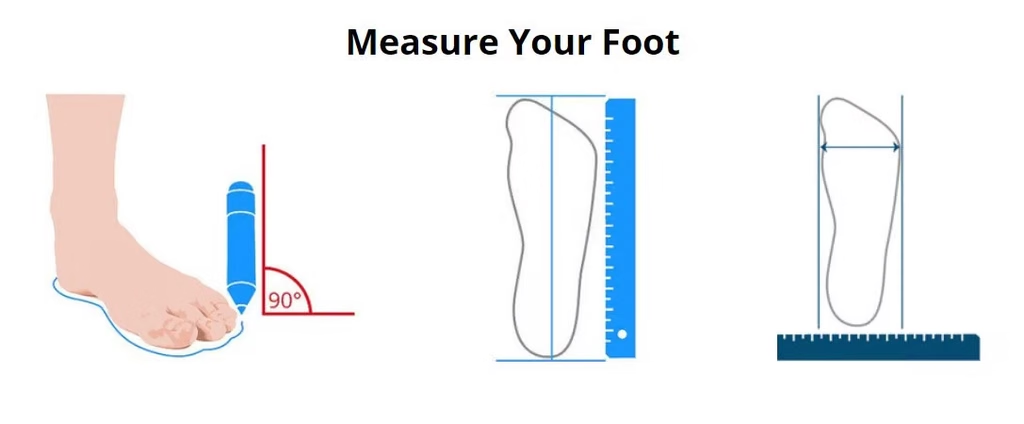
Charts only help when you know your true foot length. Skip guesswork and measure at home in under five minutes. All you need is a sheet of paper, a pencil, a ruler, and a wall.
- Prep your setup. Place an A4 sheet on a hard, flat floor pushed flush against a wall. Wear the socks you normally pair with the shoe type you plan to buy.
- Position your heel. Stand on the paper with your heel gently touching the wall. Keep body weight evenly distributed between both feet.
- Mark the tip of your longest toe. Hold the pencil straight up — perpendicular to the paper — and mark where the tip of your longest toe ends. Do not lean.
- Measure the length. Use a ruler to measure from the wall edge to the pencil mark. Record the result in centimeters — that is your Mondopoint / Japan size.
- Repeat for the other foot. One foot is almost always slightly longer. Always fit shoes to the larger measurement.
- Add a tiny buffer. Add 0.5–1 cm of extra length for comfortable toe wiggle room, especially for closed-toe shoes, running trainers, and boots.
Pro tip on timing: Measure feet in the late afternoon or evening. Feet naturally swell up to 5% throughout the day from walking, warmth, and gravity. Measuring in the morning almost always yields shoes that feel tight by 5 PM.
For shoppers who prefer the gold-standard tool, the historic Brannock Device invented in 1925 remains the industry benchmark. Most physical shoe stores still keep one, and it measures heel-to-toe length, heel-to-ball arch length, and width simultaneously.
Shoe Width Explained (Narrow, Medium, Wide, EE)
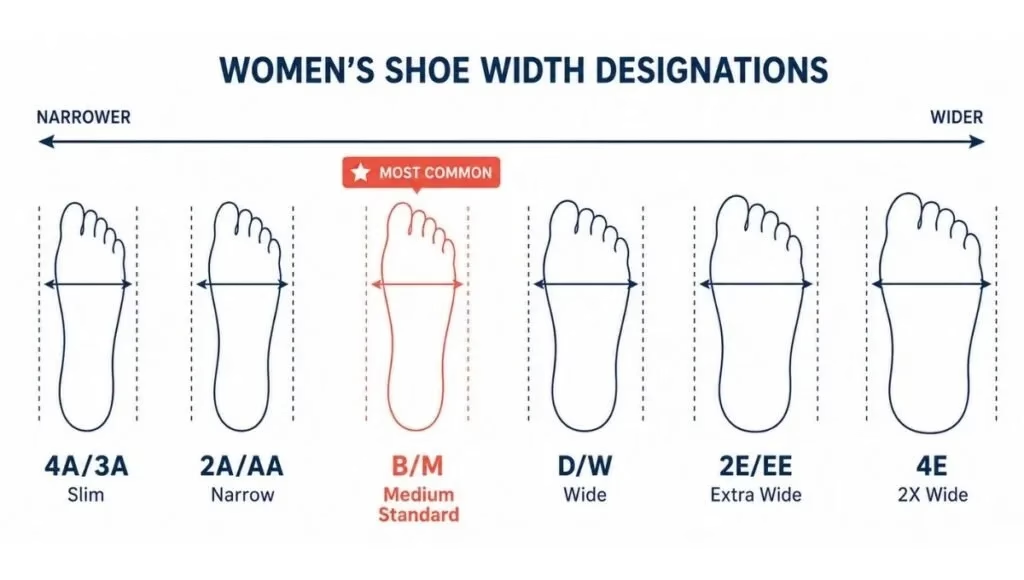
Length is only half the equation. Width decides whether a shoe hugs comfortably or squeezes your metatarsals raw. Most brands publish width codes, but the alphabet soup can feel intimidating. Here is the clean breakdown.
- AAA / AA — Extra narrow to narrow. Common in slim ballet flats and dressier heels.
- A / B — Narrow (men) / Standard (women). B is the default women’s width.
- C / D — Standard (men) / Wide (women). D is the default men’s width.
- E / EE (2E) — Wide to extra wide. Popular for running shoes and orthopedic styles.
- EEE (3E) / EEEE (4E) — Ultra wide. Reserved for very wide feet or medical needs.
You may also see N (Narrow), M (Medium), and W (Wide) used in place of letters — the meaning stays identical, just simpler branding.
To measure your width at home:
- Stand on paper and mark the widest points across the ball of your foot.
- Measure the distance in centimeters between the marks.
- Compare the value with the brand’s official width guide.
Men-to-Women & Women-to-Men Size Conversion
Sneakerheads and thrifters cross the gender aisle constantly — vintage Jordans, unisex Vans, or that limited Dr. Martens colorway that only launched in men’s sizing. Use this simple cheat sheet.
- Men’s US → Women’s US: add 1.5 (industry standard) or 2 (Zappos convention). A men’s 7 lands between women’s 8.5 and 9.
- Women’s US → Men’s US: subtract 1.5 to 2. A women’s 9 becomes a men’s 7 to 7.5.
Foot length stays the same. What changes is the last. Women’s lasts are typically narrower at the heel and slightly higher-arched, while men’s lasts are broader across the ball. That is why a straight number swap works for length but not always for feel.
Some brands publish “unisex” sizing on the men’s scale (Converse, Vans, most Nike Dunks). In those catalogs, women should subtract 1.5 from the printed size to find their usual women’s fit.
Kids’ Shoe Size Conversion Chart (Bonus)
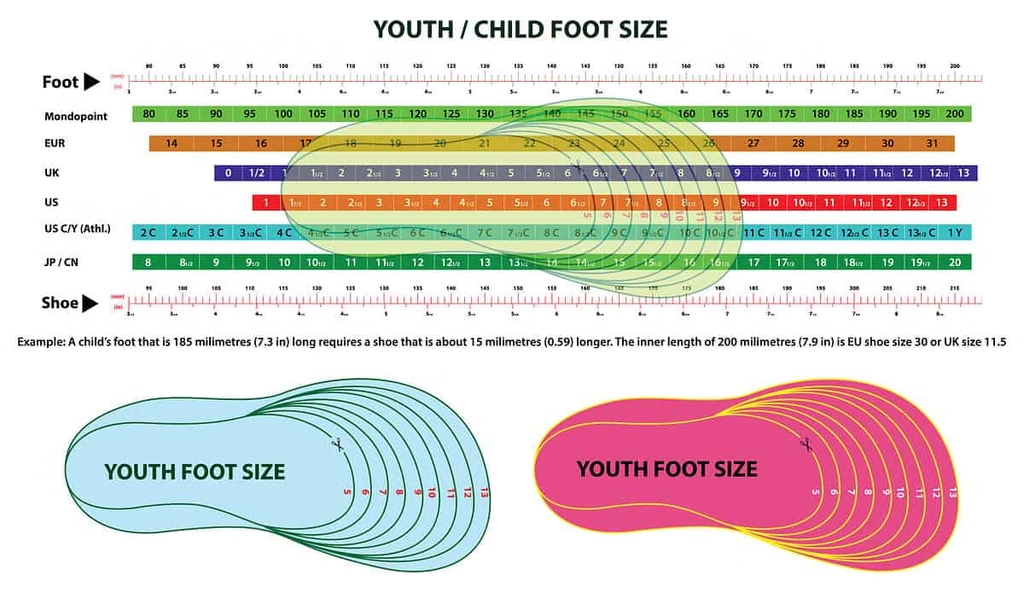
Children’s feet grow in bursts, so parents deserve a shortcut. Kids’ shoes use a US Kids © scale that resets to zero and jumps into Youth (Y) sizing at US 1Y, which then flows into adult sizing. The table below covers the essentials.
| Age (approx.) | US Kids | UK | EU | Foot Length (cm) |
|---|---|---|---|---|
| 0–3 months | 0C | 0 | 15 | 8.0 |
| 3–6 months | 2C | 1.5 | 17 | 9.5 |
| 6–12 months | 4C | 3.5 | 19 | 11.0 |
| 12–18 months | 5C | 4.5 | 20 | 11.5 |
| 2 years | 7C | 6.5 | 23 | 13.0 |
| 3 years | 9C | 8.5 | 25 | 15.0 |
| 4 years | 10C | 9.5 | 26 | 16.0 |
| 5 years | 11C | 10.5 | 28 | 17.0 |
| 6 years | 12C | 11.5 | 29 | 17.7 |
| 7 years | 13C | 12.5 | 31 | 18.5 |
| 8 years | 1Y | 13.5 | 32 | 19.5 |
| 9 years | 2Y | 1 | 33 | 20.3 |
| 10 years | 3Y | 2 | 34 | 21.0 |
| 11–12 years | 5Y | 4 | 36 | 22.5 |
Kids’ feet can jump a full size every three to four months during growth spurts. Measure monthly, leave 1 cm of wiggle room, and never rely on age alone — a 3-year-old can easily wear a 4-year-old size.
Brand Variance: Why Nike, Adidas, and New Balance Fit Differently
Even with a perfect measurement, brand differences can throw everything off. Every manufacturer builds shoes on its own last — a wooden or plastic mold with a unique length, width, arch height, and toe box shape. Two “size 9” shoes from different brands can differ by up to half a centimeter in real length.
- Nike — Tends to run slightly small and narrow, especially in performance running lines like Pegasus and Vaporfly. Many buyers size up half.
- Adidas — Runs mostly true to size but with a snug toe box; Ultraboost and Samba are notably tight.
- New Balance — Runs the truest to labeled size and offers the widest range of official widths (B, D, 2E, 4E). Podiatrists frequently recommend the brand for this reason.
- Vans / Converse — Sized in men’s US by default. Women should subtract 1.5 for equivalence.
- Dr. Martens — Runs a full size large and only offers whole sizes; go down one.
- Hoka / On Running — Runs long and roomy in the toe box. Some models fit a half-size smaller than usual.
Always cross-reference the brand’s official size chart with the shoe length in centimeters — that number never lies. Reading verified customer reviews for phrases like “runs small,” “true to size,” or “size up” saves plenty of returns.
Retailers who nail their product photography workflow also tend to show accurate scale and true colors, which helps massively when shopping for size-sensitive footwear online.
Pro Tips for Buying Shoes Online (Without the Return Nightmare)
Shoe returns are one of the biggest cost centers in e-commerce, and most of them come down to size confusion. These practical rules keep the right pair on your feet the first time.
- Measure before every big purchase. Feet change size with weight, age, pregnancy, and even the seasons — never assume last year’s number holds.
- Match by centimeters, not by label. The cm value is the only unit every brand agrees on.
- Read fit reviews. Filter reviews by “fit” and look for terms like “runs small” or “runs large.”
- Check width options. If your foot is on the wider or narrower end, look for shoes offered in multiple widths.
- Size up half for closed-toe styles. Slightly loose shoes can be adjusted with insoles; too-tight shoes cause blisters no break-in fixes.
- Buy from stores with generous returns. Zappos offers a 365-day return window, and most major brands accept 30–60 day returns on unworn shoes.
- Test them indoors first. Walk on carpet for 10–15 minutes before wearing them outside — outdoor use voids most return policies.
Merchants selling on their own store need pixel-perfect imagery so buyers trust size and fit. If you run a Shopify store, follow a strict product image size guide to make every angle clear.
Common Shoe Sizing Mistakes to Avoid
Even experienced shoppers slip up. Watch out for these recurring pitfalls.
- Measuring feet in the morning. Feet swell later in the day; morning measurements produce shoes that feel tight by evening.
- Ignoring the longer foot. Almost everyone has one foot larger than the other — always fit to the bigger one.
- Trusting age charts for kids. Age is a rough proxy; actual foot length is the only reliable input.
- Skipping the width check. Length feels right, width feels wrong — the culprit behind half of all returns.
- Buying a size smaller “to stretch.” Leather does stretch a little, but not enough to save a shoe that pinches on day one.
- Mixing men’s and women’s numbers without conversion. Add or subtract 1.5 — never assume US 8 means the same across genders.
Country-by-Country Sizing Cheat Sheet
Every region prints size labels in its own dialect. Keep this quick reference handy for cross-border shopping.
- United States & Canada — Barleycorn scale; separate men’s and women’s numbers; half sizes standard.
- United Kingdom & Ireland — Barleycorn scale; unisex numbering; half sizes standard.
- European Union (Italy, France, Germany, Spain, etc.) — Paris point scale; unisex numbering; sometimes only whole sizes.
- Japan — Mondopoint / cm; unisex numbering; the simplest, most transparent scale in the world.
- Australia & New Zealand — Follow UK sizing for men; slightly offset for women (usually UK + 0.5).
- China — Uses a mix of Mondopoint (mm) and EU numbers; large e-commerce platforms usually display both.
- South Korea & Taiwan — Mondopoint (mm), like Japan, but often written in millimeters (e.g., 250 = 25.0 cm).
- Mexico & Brazil — Custom local scales close to EU but offset by 1–2 sizes; always match by centimeters.
Key Takeaways
- The centimeter is the universal shoe-sizing unit — every regional label ultimately maps to foot length in cm.
- US and UK use barleycorns, EU uses Paris points, and Japan uses Mondopoint (cm). Understanding these four systems unlocks every conversion.
- Measure both feet in the late afternoon, use the larger measurement, and add 0.5–1 cm of wiggle room.
- Brand-specific lasts matter. A US 9 in Nike does not equal a US 9 in New Balance. Cross-check by cm and read fit reviews.
- When in doubt, size up by half. Too-large shoes can be adjusted; too-small shoes cannot.
Frequently Asked Questions
What is the easiest way to convert shoe sizes internationally?
Measure your foot length in centimeters, then match that number to the Japan (cm) column in any chart. Japan sizing is a direct measure of foot length, so it works as a universal translator between US, UK, EU, and Asian sizes.
Are EU shoe sizes unisex?
Yes. European sizes measure the length of the shoe last in Paris points (2/3 cm each), so the same EU number applies to men’s and women’s shoes. An EU 43 fits any 27 cm foot.
How much wiggle room should I add when buying shoes?
Add roughly 0.5 to 1 cm of extra length beyond your foot measurement. Closed-toe shoes, running trainers, and boots need the full centimeter; ballet flats and open-toe styles can be closer to 0.5 cm.
Why does a US 9 in Nike feel different from a US 9 in New Balance?
Every brand designs on its own last — the mold used to build the shoe. Nike lasts run slightly narrower and shorter, while New Balance lasts run truer to labeled size with wider width options. Always cross-check the brand chart.
Should I go up or down half a size when in doubt?
Go up half a size. Loose shoes can be tightened with insoles, thicker socks, or heel grips. Too-small shoes cause blisters, bunions, and long-term pain that no break-in period fixes.
Do men’s and women’s shoes have the same length at the same US number?
No. Under the standard US scale, a women’s size is roughly 1.5 to 2 larger than a men’s size for the same foot length. A men’s US 7 equals a women’s US 8.5 to 9 in length, though the width and shape differ.
What time of day should I measure my feet?
Late afternoon or evening. Feet swell throughout the day from walking, warmth, and gravity — measuring at that time gives you the size that will feel comfortable all day long.
How do I know if I have wide or narrow feet?
Measure the widest part of your foot (across the ball) and compare to the brand’s width chart. Women averaging 9–9.5 cm across the ball are standard (B); men averaging 10–10.5 cm are standard (D). Anything wider needs an E or 2E width.
Final Word
Shoe sizes may look like alphabet soup, but they follow four consistent systems once you know the rules. The charts on this page, the interactive slider converter with its live foot graph, and a simple paper-and-pencil measurement together handle 99% of real-world shopping situations. Bookmark this page, drag the sliders next time an EU 42 confuses you, and you will never send back another pair for size again.