


11 Types of Graphic Design with Examples and Tools
September 5, 2026
What Is Photo Manipulation? Definition, Types, Techniques & Ethics
September 12, 2026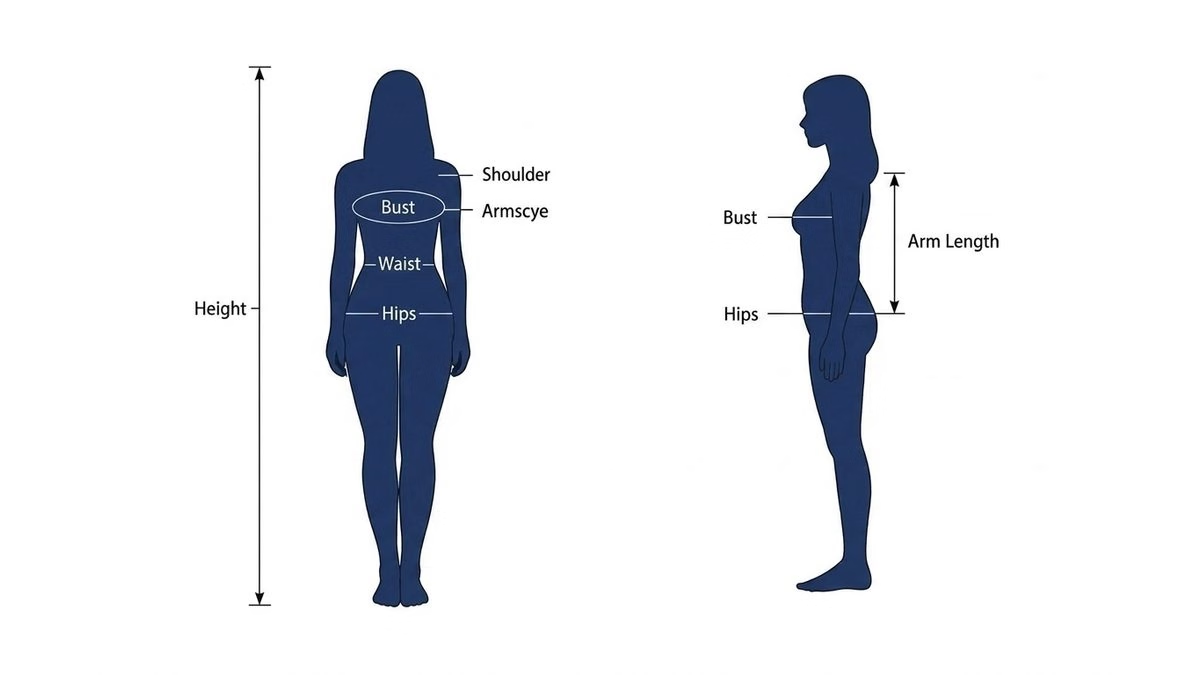
Quick Answer
A US 6 equals a UK 10, EU 38, AU 10, Italian 44, French 40 and Japanese 11 — but only when your bust (86–89 cm / 33.5–35″), waist (69–72 cm / 27–28.5″) and hips (95–97 cm / 37.5–38.5″) land in that band. Because there’s no legally enforced global standard, brands still cut differently, so measure your body first and convert second. Use the interactive tool below to convert any size across regions, then run the Fit Calculator with your bust, waist, hips and height for a personalized recommendation.
- Dress Size Converter & Fit Calculator (Free, Interactive)
- Why Do Dress Sizes Vary So Wildly Between Countries?
- What Does a Full International Dress Size Chart Look Like?
- What Are the Fast Rules of Thumb Between Regions?
- How Do You Measure Yourself Accurately?
- What Do You Need to Know About Each Regional System?
- Why Does the Same Size Fit Differently at Every Brand?
- What Should You Do When You’re Between Two Sizes?
- Petite, Regular, Tall, Plus: How Does Height Change Your Size?
- How Do You Actually Shop International Brands With Confidence?
- Which Sizing Myths Should You Ignore?
- What Is Vanity Sizing and Why Does It Matter?
- Data Limitations
- Frequently Asked Questions
Dress Size Converter & Fit Calculator (Free, Interactive)
Pick your home sizing system on the left, tap any size, and every region updates in real time. Prefer measurements? Switch to the Fit Calculator tab, enter your numbers in cm or inches, and receive a size recommendation with a confidence score, a “between-size” comparison, and clear next-step advice.
Dress Size Converter & Fit Calculator
Convert US, UK, EU, FR, IT, JP, AU & S–XXL sizes instantly, or get a personalized size from your bust, waist, hips & height.
Ready when you are
Enter your measurements to see your recommended size, fit confidence and a between-size comparison.
How to measure correctly
- Bust: Wear a non-padded bra. Wrap tape around the fullest part, level across the back.
- Waist: Find the narrowest point of your torso (usually 1″ above the belly button). Don’t suck in.
- Hips: Wrap around the widest part of your hips and buttocks, keeping tape parallel to the floor.
- Tape rule: One finger should slide easily between the tape and skin — never tight.
| Intl | US | UK | EU | FR | IT | JP | AU | Bust | Waist | Hips |
|---|
Click any row to highlight it and copy your reference set. Values shown in centimeters.
Why Do Dress Sizes Vary So Wildly Between Countries?
Every region grew its own sizing habit from local body studies, retail history and cultural preferences. The United States kept a compact even-number scale (0, 2, 4…), the United Kingdom adopted a scale that runs about four numbers higher, and mainland Europe standardized on centimeter-based numbering that starts at 30 and rises in steps of two.
Japan built a tighter odd-number system (5, 7, 9…) that fits the domestic body population and runs one to two sizes smaller than US labels. Italy layered its own scale on top, adding roughly eight to the US number. Because most countries never made a single system legally mandatory, there is no “correct” size — only regional conventions plus brand-level tweaks.
ISO 8559-1:2017 now defines a globally consistent way to measure the body for clothing, and Europe’s EN 13402 encourages brands to label sizes with real body dimensions in centimeters. Adoption remains voluntary, though, which is why brand-to-brand variation is here to stay.
What Does a Full International Dress Size Chart Look Like?
Use bust, waist and hip measurements as your anchor, then read across for the label in each region. Values in centimeters follow the standard adopted by most global retailers and cross-verified with Sizeguide.net and Wikipedia’s international matrix.
| Intl | US | UK | EU (DE) | FR | IT | JP | AU | Bust (cm) | Waist (cm) | Hips (cm) |
|---|---|---|---|---|---|---|---|---|---|---|
| XXS | 00 | 2 | 30 | 32 | 36 | 3 | 2 | 74 | 58 | 80 |
| XS | 0 | 4 | 32 | 34 | 38 | 5 | 4 | 74–77 | 58–61 | 80–84 |
| XS | 2 | 6 | 34 | 36 | 40 | 7 | 6 | 78–81 | 62–64 | 85–89 |
| S | 4 | 8 | 36 | 38 | 42 | 9 | 8 | 82–85 | 65–68 | 90–94 |
| S | 6 | 10 | 38 | 40 | 44 | 11 | 10 | 86–89 | 69–72 | 95–97 |
| M | 8 | 12 | 40 | 42 | 46 | 13 | 12 | 90–93 | 73–77 | 98–101 |
| M | 10 | 14 | 42 | 44 | 48 | 15 | 14 | 94–97 | 78–81 | 102–104 |
| L | 12 | 16 | 44 | 46 | 50 | 17 | 16 | 98–102 | 82–85 | 105–108 |
| L | 14 | 18 | 46 | 48 | 52 | 19 | 18 | 103–107 | 86–90 | 109–112 |
| XL | 16 | 20 | 48 | 50 | 54 | 21 | 20 | 108–113 | 91–95 | 113–116 |
| XL | 18 | 22 | 50 | 52 | 56 | 23 | 22 | 114–119 | 96–102 | 117–121 |
| XXL | 20 | 24 | 52 | 54 | 58 | 25 | 24 | 120–125 | 103–108 | 123–128 |
| XXL | 22 | 26 | 54 | 56 | 60 | 27 | 26 | 126–131 | 109–114 | 129–134 |
Prefer inches? Divide any centimeter value by 2.54. For a fast sanity check, a US 4 (S) sits at roughly 32–33.5″ bust, 25–26.5″ waist and 35–37″ hips.
What Are the Fast Rules of Thumb Between Regions?
You don’t always need a chart. A handful of pattern rules cover most everyday shopping decisions.
- US → UK: Add 4. US 6 ≈ UK 10, US 10 ≈ UK 14.
- US → EU (Germany): Add 32. US 6 ≈ EU 38, US 10 ≈ EU 42.
- US → France / Spain: Add 34. US 6 ≈ FR 40, US 10 ≈ FR 44.
- US → Italy: Add 38. US 4 ≈ IT 42, US 8 ≈ IT 46.
- US → Japan: Add 5 to 7. US 4 ≈ JP 9, US 8 ≈ JP 13.
- UK ↔ AU / NZ: One-to-one. UK 10 = AU 10 = NZ 10.
- International letters: XS covers US 0–2, S is 4–6, M is 8–10, L is 12–14, XL is 16–18, XXL is 20+.
These formulas track most mainstream women’s dress ranges cleanly. They lose accuracy at the extremes (very petite XXS and larger XXL ranges), so double-check the brand chart when you sit at either end of the spectrum.
How Do You Measure Yourself Accurately?
Your body measurements matter more than any label. Grab a soft cloth tape, stand relaxed in front of a mirror and take each number twice for accuracy.
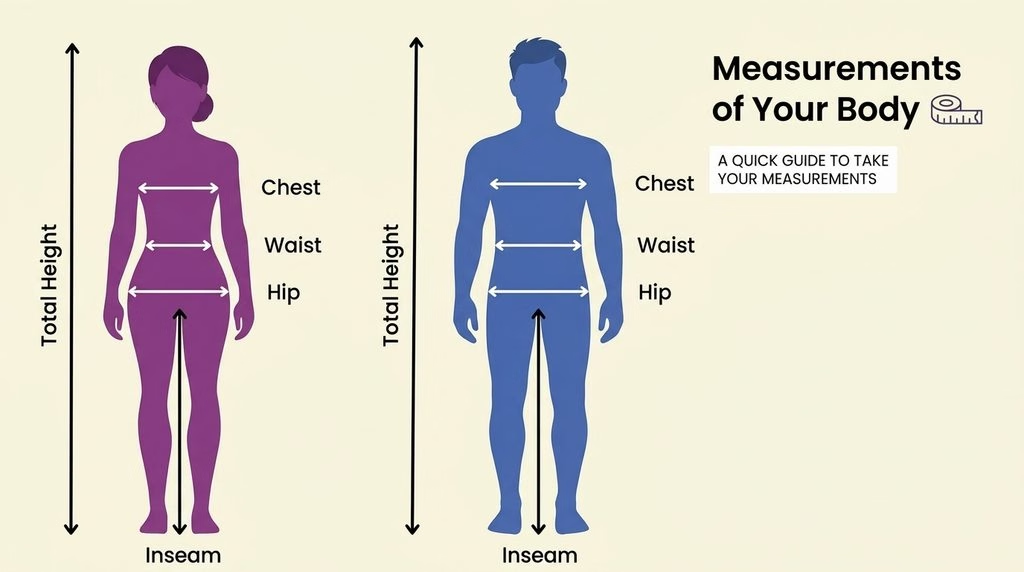
- Bust: Wear a non-padded, well-fitting bra. Wrap the tape around the fullest part of your chest, across the nipple line, keeping it level across your back.
- Waist: Locate the natural waistline — the narrowest point of your torso, usually one inch above the belly button. Breathe normally and don’t suck in.
- Hips: Stand with feet together, then wrap the tape around the widest part of your hips and buttocks, parallel to the floor.
- The finger rule: One finger should slide easily between tape and skin. Too tight distorts numbers; too loose adds inches you don’t have.
- Log both units: Record every number in cm and inches. Global brands publish charts in both, so you’ll avoid conversion errors at checkout.
Boutiques and ecommerce sellers who pair accurate measurements with clean, well-lit photography sell more — that’s why studios still invest in polished product photo editing and consistent visuals across every listing.
What Do You Need to Know About Each Regional System?
US Sizes
US women’s dress sizing runs in even numbers (0, 2, 4… 22), with 00 as the smallest common label. Junior sizing uses odd numbers (1, 3, 5…) and cuts narrower through the hip and bust. Most American retailers post size charts online, and Nordstrom’s size guide offers a useful cross-brand reference.
UK Sizes
UK numbers run four higher than US on paper, so a US 6 lands as a UK 10. British sizing was standardized decades ago around a slimmer bust-to-hip ratio than modern American cuts, which is why a UK 10 sometimes feels tighter across the hip than the “matched” US 6 in stretch fabrics.
EU (German / Standard European) Sizes
The core European scale — dominant in Germany, Austria, the Netherlands, Switzerland, Sweden, Denmark and Norway — starts at 30 and jumps in steps of two. To translate from US, add 32. Most tags you’ll see across mainland Europe follow this scale.
French & Spanish Sizes
France, Spain, Belgium and Portugal share a scale that starts at 32 and rises in twos, always sitting one step higher than the German scale for the same body. A French 38 aligns with a German 36 and a US 4. If your tag shows just “T2” or “T3,” those are French letter-tier shorthand for size 38 and 40.
Italian Sizes
Italy operates on its own scale (36, 38, 40…), typically four numbers above the French scale and eight above the US. An Italian 44 equals a French 40, a UK 12 and a US 8. Italian tailoring also tends to run slimmer through the waist and shoulders, so many shoppers size up one step for comfort.
Japanese Sizes
Japan uses odd numbers (5, 7, 9, 11, 13, 15, 17) for women’s dresses, plus letter equivalents (S, M, L, LL, 3L). Japanese size 9 is the most common domestic “average” and maps to a US 4 / UK 8 / EU 36. Because Japanese sizing was calibrated on the domestic body, most Western shoppers should size up one to two steps for a comfortable fit.
Australian & New Zealand Sizes
Australia and New Zealand share the UK scale one-to-one. If you wear an AU 12, you’re a UK 12, which converts to US 8 and EU 40. One rule handles most Down Under shopping.
Why Does the Same Size Fit Differently at Every Brand?
A dress-size number is only the starting point — the cut decides how the label actually behaves on your body.
- Bodycon / column dresses: Match your largest measurement (usually hips), then use fabric stretch to fine-tune fit.
- A-line & fit-and-flare: Prioritize bust and waist. The flared skirt forgives one or two inches of hip variance.
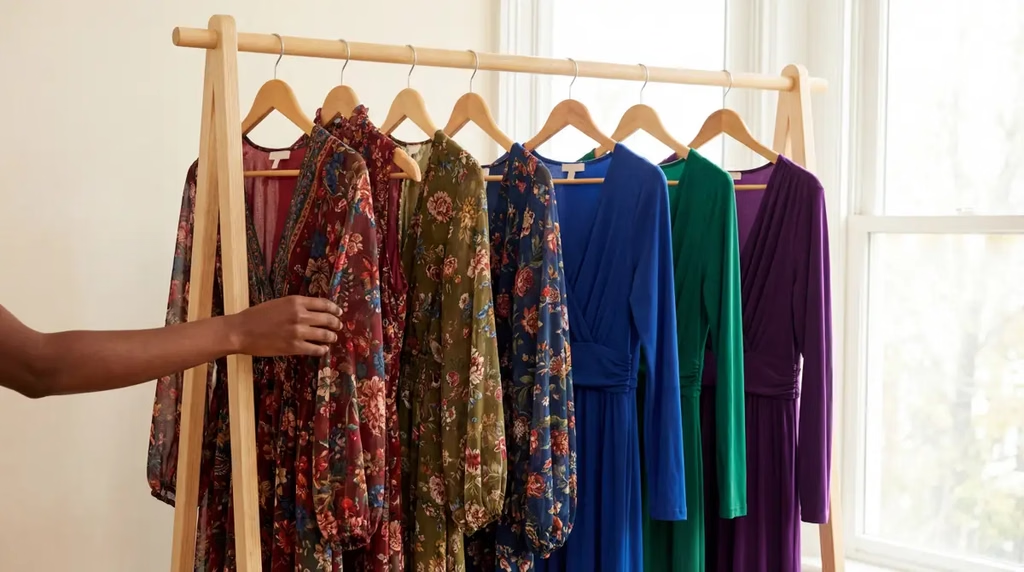
- Wrap dresses: Order by bust — the tie belt handles waist and hip differences automatically.
- Shift dresses: These skim the body, so pick the size closest to your bust and waist average.
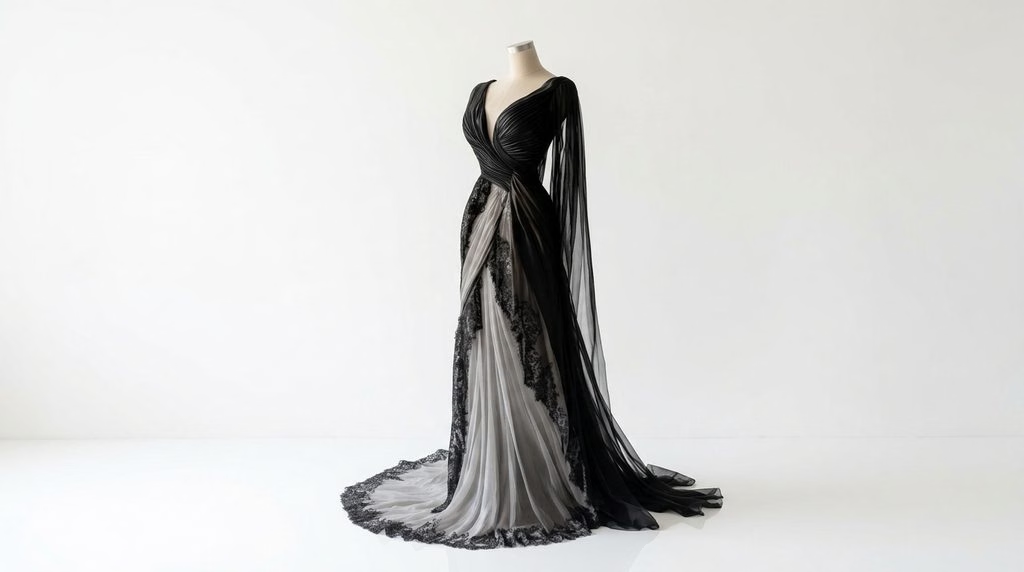
- Bias-cut dresses: Fabric hugs curves tightly, so size up when you’re between numbers.
- Structured cocktail dresses: No stretch, no forgiveness. Match your largest measurement and tailor the rest.
Brands like Zara, H&M, ASOS and Reformation all cut their “size 8” differently because each uses a proprietary block pattern derived from its own target demographic. Retailers that photograph the same dress with flat lay, on-model and ghost mannequin photography help you visualize drape, which reduces guesswork before you order.
What Should You Do When You’re Between Two Sizes?
Fabric is the tiebreaker whenever your measurements straddle two rows on the chart.
- Stretch knits (jersey, ponte, spandex blends): Choose the smaller size for a body-skimming fit that doesn’t gap.
- Non-stretch wovens (linen, cotton poplin, taffeta, silk crepe): Choose the larger size — they don’t give.
- Lined or fully constructed styles: Size for the lining first, since it sits closest to your body.
- Ruched or gathered fabrics: Grab your usual size. The gathering absorbs one to two centimeters of variance.
- Sheer or delicate fabrics: Sizing slightly up looks better; tight fits reveal seams and strain fibers.
Petite, Regular, Tall, Plus: How Does Height Change Your Size?
Standard charts assume a regular height range of roughly 5’4″–5’8″ (163–173 cm). If you fall outside that band, hunt for size-adjusted lines instead of sizing up or down.
- Petite (P): Cut for heights up to 5’3″ / 160 cm with shorter torso, sleeve and skirt length.
- Regular: The default line most charts (including ours) describe.
- Tall (T): Extra length in torso and legs, cut for heights 5’9″+ / 175 cm+.
- Plus (W or +): Extended sizes (14W, 16W…) with proportion adjustments through the bust and hip, not just scaled-up regular sizes.
- Maternity: Uses your pre-pregnancy size in most brands; the pattern adds room where it’s needed.
Buying petite or tall in your correct numeric size will always beat sizing up or down in a regular cut, because the proportions are fundamentally different.

How Do You Actually Shop International Brands With Confidence?
Ordering a dress from a foreign brand doesn’t have to be a gamble. Run this checklist every time.
- Measure yourself in cm and inches. Write the numbers where you can copy them at checkout.
- Open the brand’s own size guide. Never rely purely on a generic conversion chart.
- Match your body numbers — not your usual label — to the brand’s bust/waist/hip ranges.
- Scan the reviews. Phrases like “runs small,” “true to size” or “fits big” from shoppers with a similar build save real money.
- Confirm the return policy and any customs / duty fees before you check out.
- Save the brand’s chart if it fits well. Many retailers keep consistent block patterns across seasons.
Large marketplaces increasingly blend AI virtual try-on with detailed size charts, but photo consistency still matters. Inconsistent product images are a well-documented reason photographers lose clients and shoppers return dresses.
Which Sizing Myths Should You Ignore?
- “My size is my size.” Not really. The Washington Post documented that today’s US 8 matches the measurements of a 1958 size 16, thanks to vanity sizing.
- “Letters (S, M, L) are universal.” They’re the least consistent — one brand’s medium can be another’s small.
- “European numbers are bigger because Europeans are bigger.” False. EU sizes reflect bust measurement in centimeters divided by 2, not body volume.
- “Add exactly 4 for US to UK, always.” Close for the middle of the range; less reliable at the extremes and across knitwear.
- “Stretchy always means size down.” Only for close-fit styles. Loose stretch dresses can still slip when oversized.
What Is Vanity Sizing and Why Does It Matter?
Vanity sizing is the decades-long practice of labeling clothing with smaller numbers than the body would suggest, so shoppers feel better about the tag. It took off in the 1980s and has been documented across nearly every mainstream US brand.
The gap between labels and reality quietly widened over 40 years. A modern US 8 measures roughly 4–6 inches larger at the bust than a US 8 from 1958. Retailers won’t advertise the drift, but you’ll feel it whenever a dress from a boutique brand fits like a shoebox while a “same size” from a mass retailer swims on you.
The takeaway: treat labels as marketing shorthand, not measurements. Your bust, waist and hips are the only numbers that don’t lie.
Data Limitations
The chart in this article aligns with the standards published by mainstream size-conversion databases (Sizeguide.net, Wearview and Wikipedia’s international matrix), and it works cleanly for most mid-range Western and Asian brands. Individual retailers — especially fast-fashion labels, luxury houses and country-specific brands — routinely deviate by one full size in either direction. Treat every generic chart as a starting reference, then verify against the brand’s own guide before ordering. If a brand publishes garment measurements (bust width flat, waist flat, length), compare those to a dress you already love, then decide.
Frequently Asked Questions
Is a US 6 the same as an EU 38?
Yes. A US 6 converts to EU 38 (Germany / standard European), UK 10, AU 10, French 40, Italian 44 and Japanese 11 for most mainstream dress lines.
Why do the same sizes fit differently across brands?
Because no legally required standard exists for women’s dress sizing in most countries. Brands set their own fit blocks, and vanity sizing has drifted the numbers over decades.
How do I convert a UK dress size to a US size?
Subtract 4. UK 12 = US 8, UK 14 = US 10, UK 16 = US 12. The rule holds cleanly through the middle of the range.
What size is a Japanese 9 in US and EU?
Japanese size 9 equals US 4, UK 8, EU 36 and AU 8. It’s a common “M” for the Japanese domestic body but often fits Western shoppers like an XS or a small S.
Should I go by bust, waist or hips when I’m between sizes?
Match your largest measurement for structured or non-stretch styles, and your average for stretch or loose cuts. Fabric type is the deciding factor.
Are Australian dress sizes the same as UK sizes?
Yes. Australian women’s sizing mirrors UK sizing one-to-one. AU 12 = UK 12 = US 8 = EU 40.
What is vanity sizing?
Vanity sizing is the practice of labeling clothes with smaller numbers than the body would suggest so shoppers feel better about the tag. It’s why a size 8 from 1970 fits nothing like a size 8 today.
Does the calculator work for plus sizes?
Yes. The Fit Calculator handles measurements up to bust 131 cm / 51.5″, waist 114 cm / 45″, hips 134 cm / 53″, covering XXS through XXL and their numeric equivalents in every region.