

Best Budget Camcorder in 2026: 9 Affordable Picks That Punch Above Their Price
June 13, 2026
Aperture, Shutter Speed & ISO: Exposure Triangle Phohotgraphy Guide
June 15, 2026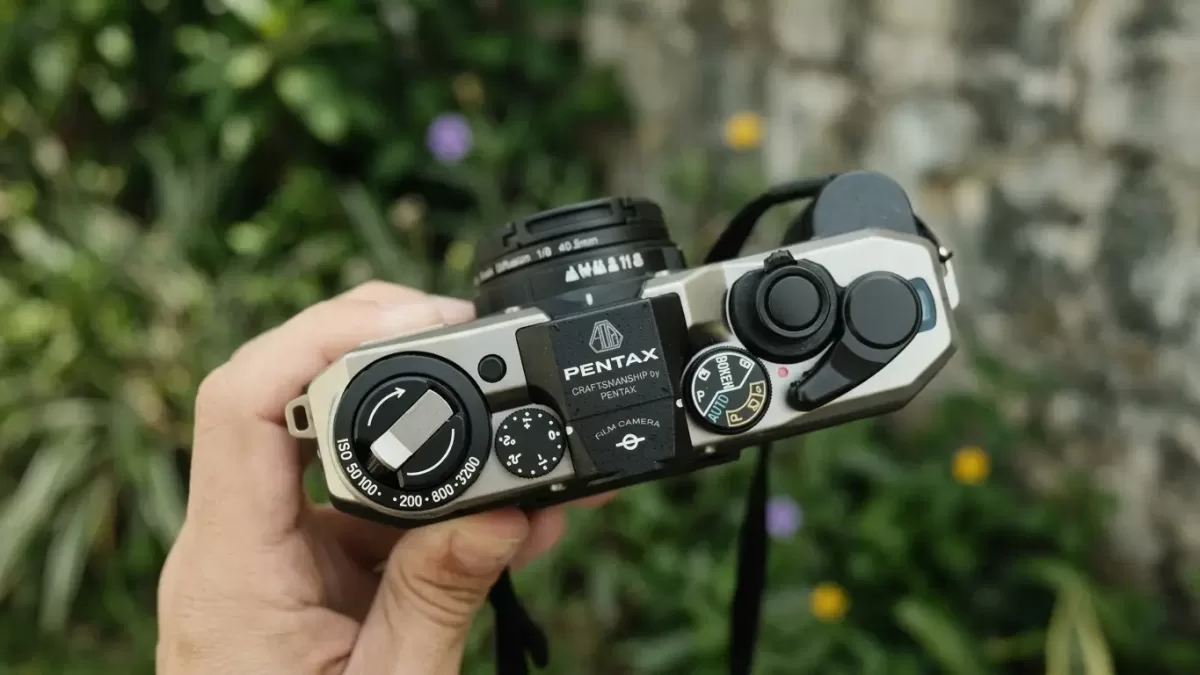
Film photography has roared back to life, and 2026 is shaping up to be its biggest year of the modern revival. According to the BBC, the global film-camera market is on track to climb past £303 million by 2030, up from £223 million in 2023 — a jump that screams cultural shift rather than passing trend.
Walk into any camera shop today and you’ll see what’s driving the resurgence. Gen Z photographers crowd the vintage shelves, professionals dust off their Leicas for client work, and hobbyists fall in love with the deliberate, tactile rhythm of shooting a 36-exposure roll. Digital simulators try to fake the look, yet nothing replaces the real grain of Kodak Portra or the chunky shutter snap of a Canon AE-1.
This guide ranks the best film cameras 2026 has to offer — whether you’re loading your very first roll or hunting for a serious medium-format workhorse. I tested, researched, and cross-checked every camera on this list against current market prices and availability, so you can buy with confidence.
Already capturing gorgeous frames but tired of dust spots and scanner marks? Send your film scans to our professional photo retouching team and get gallery-ready images delivered overnight.
- How We Picked the Best Film Cameras for 2026
- Quick Comparison Table: Best Film Cameras 2026
- 1. Pentax 17 — Best New Film Camera
- 2. Canon AE-1 / AE-1 Program — Best 35mm SLR for Beginners
- 3. Nikon FM2n — Best Mechanical 35mm SLR
- 4. Pentax K1000 — Best Film Camera for Students
- 5. Olympus OM-1 — Best Compact 35mm SLR
- 6. Leica M6 — Best 35mm Rangefinder (Pro Pick)
- 7. Yashica T4 — Best Premium Point-and-Shoot
- 8. Contax T2 — Best Luxury Point-and-Shoot
- 9. Rollei 35AF — Best Modern Compact (2024 Release)
- 10. Hasselblad 500C/M — Best Medium Format (6×6)
- 11. Mamiya RB67 — Best Studio Medium Format
- 12. Nikon F100 — Best Pro Autofocus Film SLR
- What Film Stocks Should You Buy in 2026?
- Where to Buy Film Cameras Safely
- Beginner Tips for Shooting Film in 2026
- Common Mistakes to Avoid When Buying a Film Camera
- Film Camera Comparison: New vs. Vintage
- FAQ
- Final Thoughts: Pick the Camera That Matches Your Story
How We Picked the Best Film Cameras for 2026
Choosing a film camera in 2026 is harder than it looks because the secondhand market keeps shifting. I weighed every camera against five real-world criteria:
- Availability — can you actually find one today, new or used?
- Reliability — does the shutter still fire after 30+ years?
- Image quality — how good are the negatives at standard sizes?
- Ease of use — friendly enough for first-timers, deep enough for pros?
- Value — does the price match what you get on the open market?
I also leaned on current data from retailers like KEH Camera, B&H Photo, and analog specialists for verified pricing in early 2026.
Quick Comparison Table: Best Film Cameras 2026
| Camera | Type | Best For | Approx. Price (USD) |
|---|---|---|---|
| Pentax 17 | Half-frame point-and-shoot | New buyers, half-frame fans | $499 |
| Canon AE-1 / AE-1 Program | 35mm SLR | Beginners learning manual | $150–$300 |
| Nikon FM2n | 35mm SLR (mechanical) | Reliability seekers | $300–$500 |
| Pentax K1000 | 35mm SLR | Students | $150–$250 |
| Olympus OM-1 | 35mm SLR (compact) | Travel photographers | $200–$350 |
| Leica M6 | 35mm Rangefinder | Pros, street shooters | $5,000+ (new); $2,500+ (used) |
| Yashica T4 | Point-and-shoot | Pocket carry, sharp lens | $600–$1,000 |
| Contax T2 | Premium point-and-shoot | Aesthetic shooters | $1,200–$1,800 |
| Rollei 35AF | Compact (new 2024) | Modern compact lovers | $799 |
| Hasselblad 500C/M | Medium format (6×6) | Portraits, fine art | $1,500–$2,500 |
| Mamiya RB67 | Medium format (6×7) | Studio work | $700–$1,200 |
| Nikon F100 | Pro 35mm AF SLR | Hybrid shooters | $250–$450 |
1. Pentax 17 — Best New Film Camera
Why It’s a Game-Changer
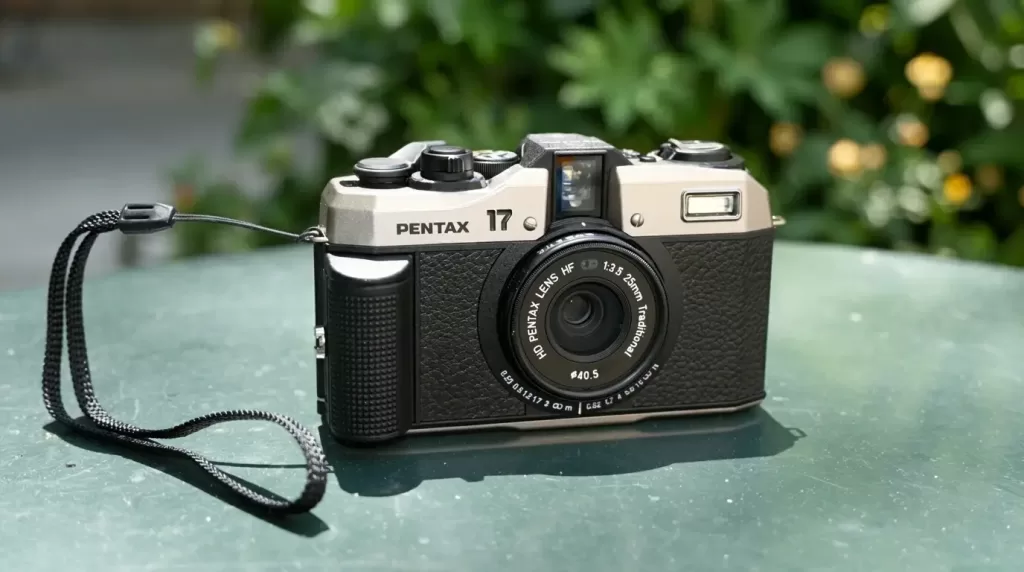
The Pentax 17 is the first brand-new film camera from a major manufacturer in decades, and it landed in mid-2024 to genuine cheers from the analog community. It splits each 35mm frame in half, giving you 72 shots per roll of 36 — a big deal when film prices keep climbing.
Key features:
- 25mm f/3.5 fixed lens (≈35mm equivalent on full frame)
- Seven shooting modes including Bokeh and Slow Sync Flash
- Hybrid manual film advance with auto exposure
- Solid metal body with retro styling
Who Should Buy It?
If you want a new film camera in 2026 with a manufacturer warranty, the Pentax 17 is the obvious pick. Beginners love it because the modes do the thinking; experienced shooters enjoy the manual film-wind ritual without fussing over exposure.
Watch out: The half-frame format means smaller negatives, so don’t expect Hasselblad-level enlargements.
2. Canon AE-1 / AE-1 Program — Best 35mm SLR for Beginners
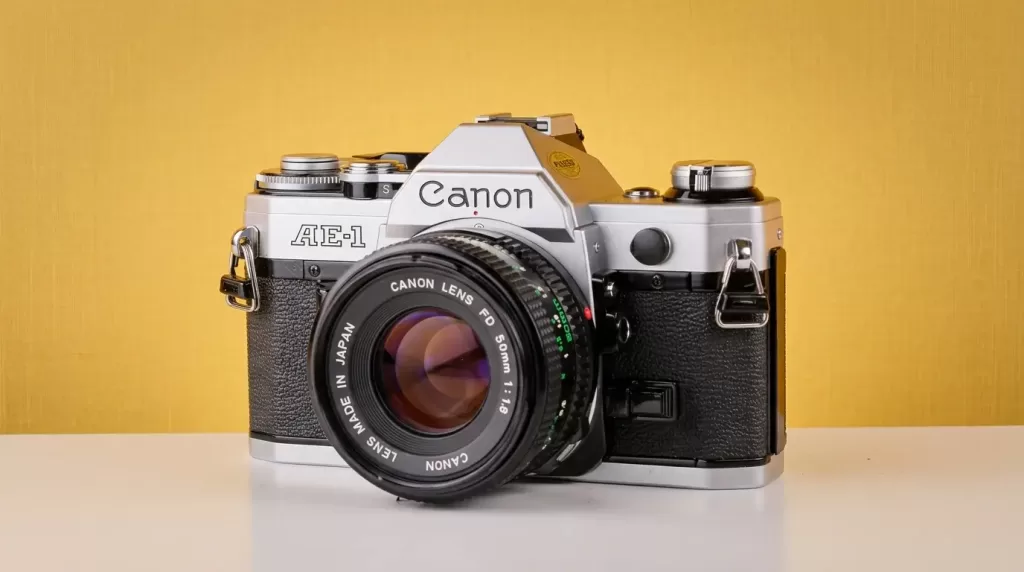
The Beginner’s Champion
Canon sold more than a million AE-1 bodies, which is exactly why you can still grab a clean one on the used market for around $150–$300. Its mix of shutter-priority auto and full manual mode hand-holds new shooters through the learning curve without trapping them in “auto-only” mode.
Standout features:
- Shutter-priority auto exposure (AE-1) or full Program mode (AE-1 Program)
- Bright, easy-to-focus split-prism viewfinder
- Massive lens ecosystem (Canon FD mount)
- Reliable horizontal-traverse cloth shutter
Real-World Pros & Cons
✓ Tons of inventory on KEH, eBay, and local shops
✓ Cheap, abundant FD-mount lenses (50mm f/1.8 is a steal)
✓ Lightweight enough for all-day carry
✕ Battery-dependent (uses one PX28 cell)
✕ The infamous “Canon cough” needs a CLA on older bodies
3. Nikon FM2n — Best Mechanical 35mm SLR
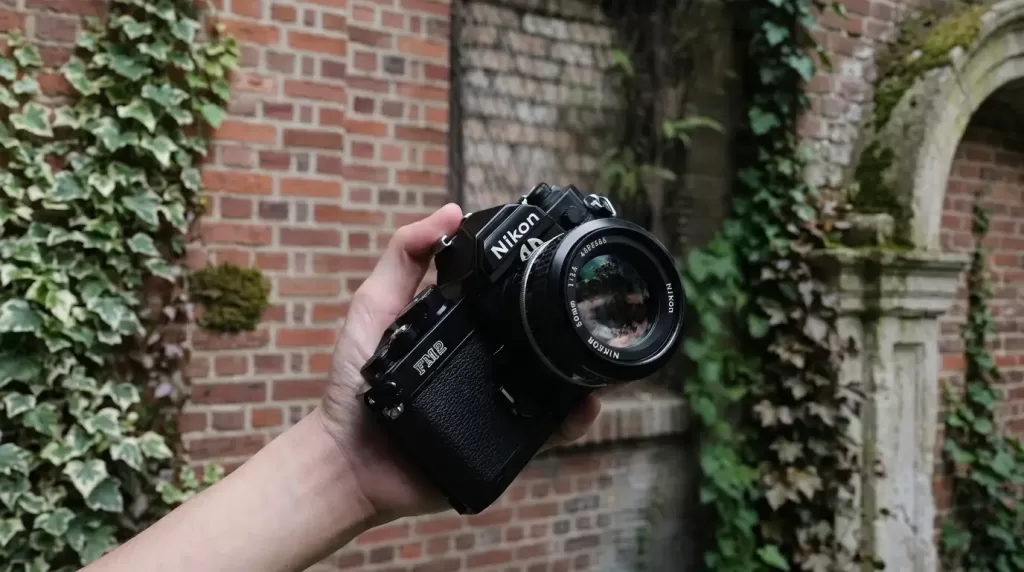
Built Like a Tank
The Nikon FM2n is a fully mechanical SLR — meaning it fires every shutter speed without a battery (the battery just powers the meter). That’s a huge deal for cold-weather shooters, travelers, and anyone who hates dead batteries ruining a shoot.
Why pros love it:
- 1/4000s top shutter speed (rare for mechanical cameras)
- 1/250s flash sync
- Compatible with most Nikon F-mount glass, including modern AI-S lenses
- Brass top plate — gorgeous brassing develops over years of use
Buying Tip
Look for the late “New FM2” with the titanium-bladed shutter. Expect to pay $300–$500 for a clean copy from a reputable dealer.
Shooting product flat-lays on film and need crisp white backgrounds for your store? Our expert background removal service keeps every detail of your film grain intact.
4. Pentax K1000 — Best Film Camera for Students
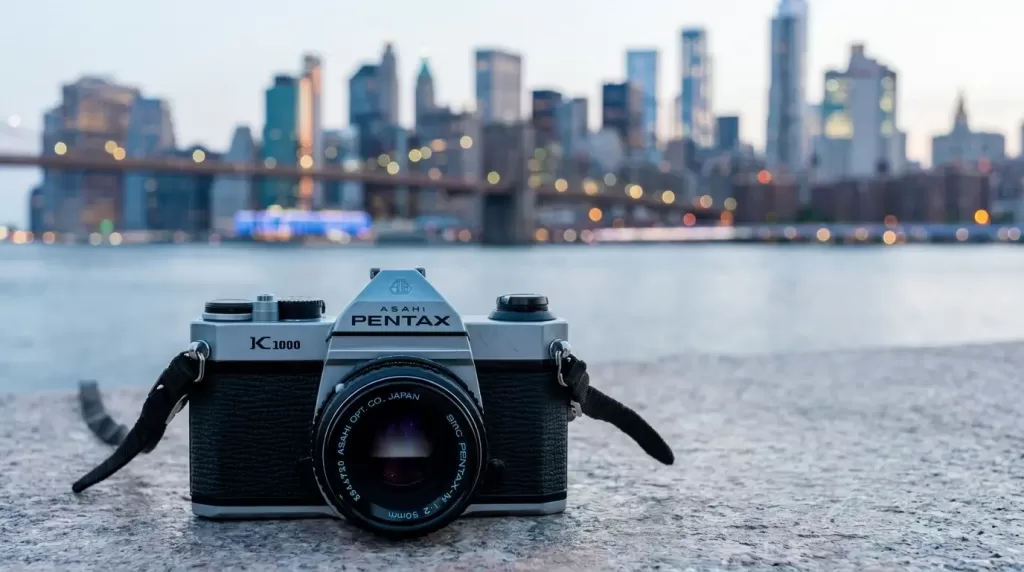
The Classroom Classic
Photography schools have recommended the Pentax K1000 for over four decades, and the reasoning still holds: this camera teaches you exposure because it forces you to do every step manually. No program modes, no aperture priority — just you, the meter needle, and the basics.
Highlights:
- Match-needle TTL metering
- Indestructible all-mechanical build
- K-mount lenses are everywhere and cheap
- Often comes bundled with a 50mm f/2 lens
Honest Take
It’s not the most exciting camera on this list, but the K1000 will outlive every other body in your bag. If a student or beginner asks me which camera to start with, I always mention the K1000.
5. Olympus OM-1 — Best Compact 35mm SLR
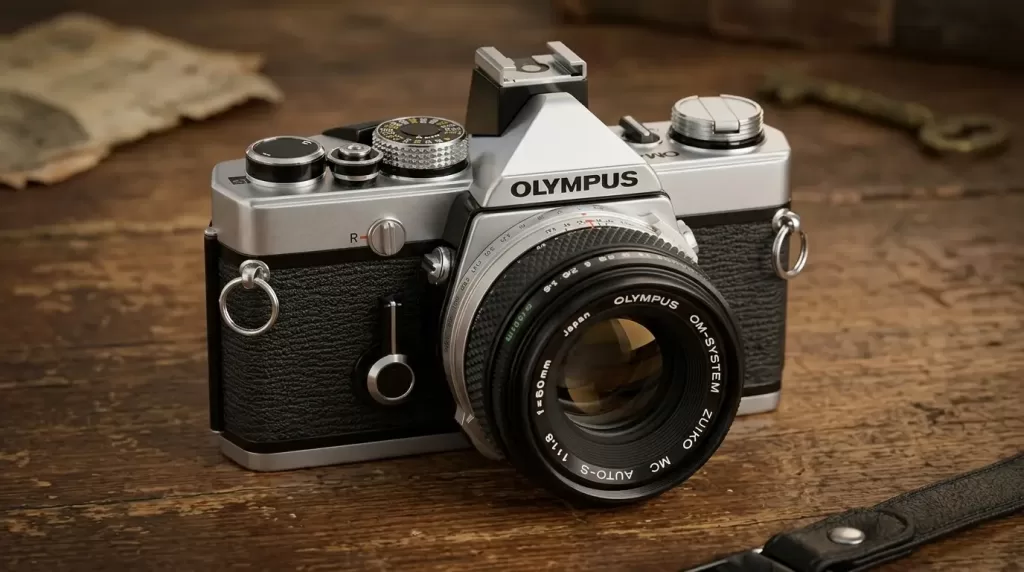
The Travel-Friendly SLR
Designer Yoshihisa Maitani built the OM-1 to prove SLRs didn’t have to be heavy. The result is one of the smallest, lightest 35mm SLRs ever made — perfect for hikers, backpackers, and street photographers who refuse to lug a brick.
Standout traits:
- Whisper-quiet shutter (much quieter than a Nikon F)
- Huge, bright viewfinder relative to body size
- Compact Zuiko lenses are razor-sharp
- Beautiful, minimalist control layout
Watch the Battery Issue
The OM-1 was designed for 1.35V mercury batteries (now banned). You’ll need an adapter or a service to recalibrate the meter for modern 1.55V cells. Brands like Small Battery Company sell drop-in replacements.
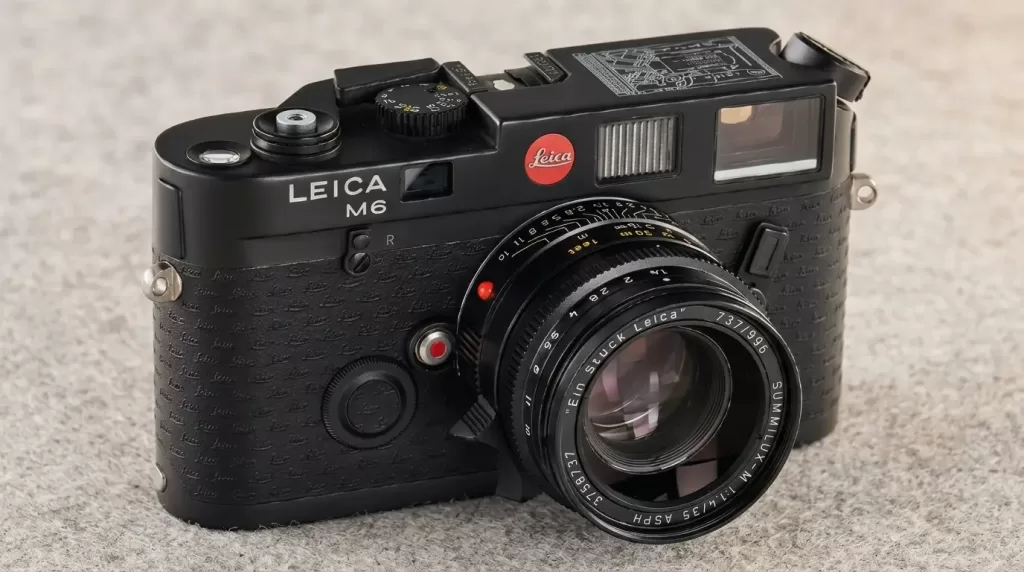
6. Leica M6 — Best 35mm Rangefinder (Pro Pick)
Why It’s Worth the Price
Leica re-released the M6 in 2022, and that move alone proved how serious the film revival has become. The original M6 (1984–2002) and the new 2022 version share the same DNA: built-in TTL meter, smooth advance lever, and Leica’s signature ergonomic perfection.
Why street and documentary shooters swear by it:
- Bright-line frame finder with parallax correction
- Quiet leaf-cloth shutter (perfect for candid work)
- Compatible with Leica M-mount lenses (Voigtländer too)
- Holds value better than almost any camera ever made
Used vs. New
A clean used M6 Classic now runs $2,500–$4,500 depending on condition. The 2022 re-release starts around $5,295 new. Either way, it’s the camera you keep for life.
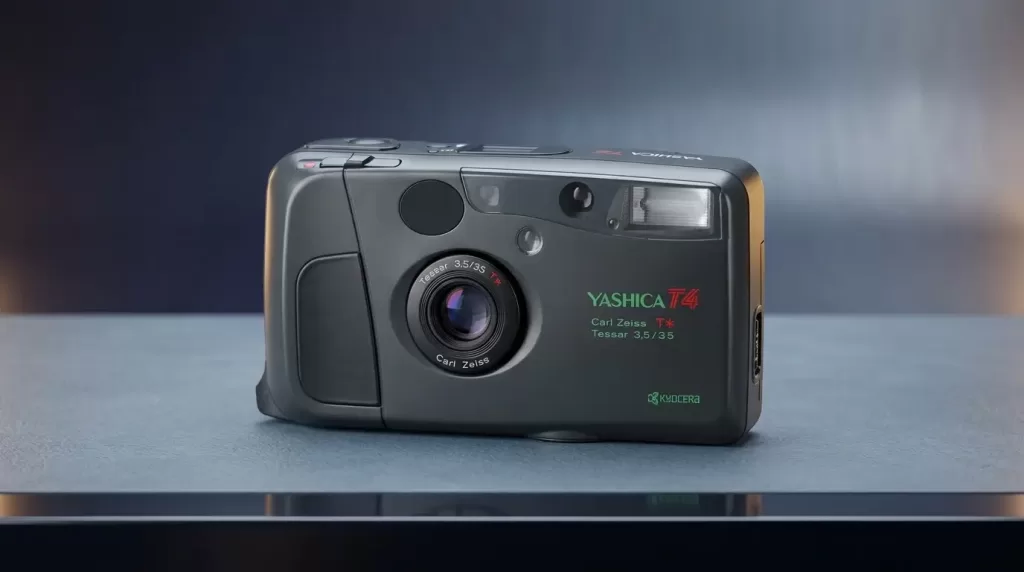
7. Yashica T4 — Best Premium Point-and-Shoot
The Cult Classic
The Yashica T4 packs a Carl Zeiss Tessar 35mm f/3.5 lens into a pocketable body — and that single fact turned it into one of the most hyped point-and-shoots ever. Editorial photographers, fashion shooters, and street artists love its sharpness.
Pros:
- Genuine Zeiss optics in a $20-era price body (originally)
- Weatherproof construction
- Compact enough for a jacket pocket
- Fully automatic shooting — no fuss
Cons:
- Prices have ballooned past $700 on eBay
- No manual override
- Repairs are difficult to find
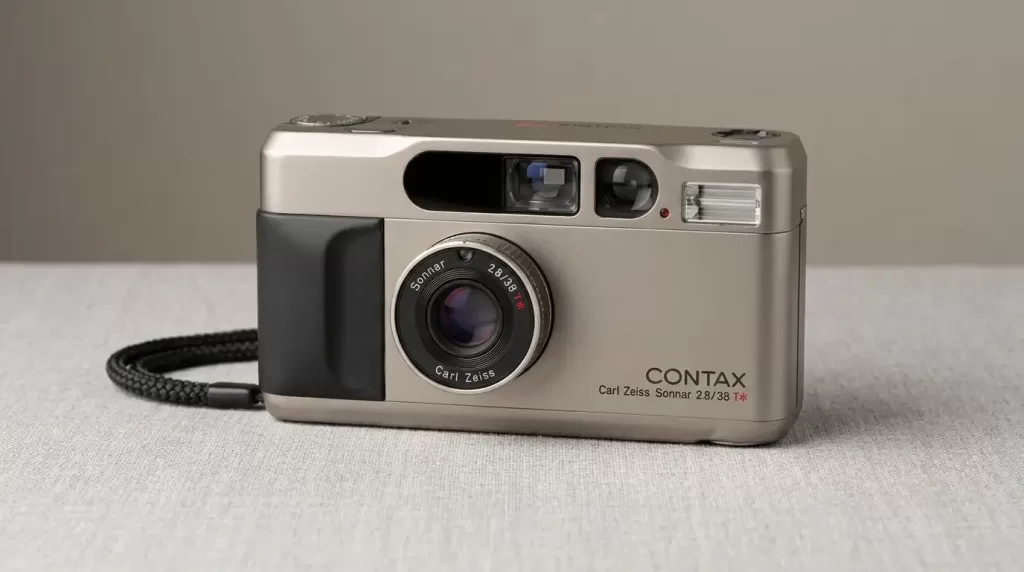
8. Contax T2 — Best Luxury Point-and-Shoot
The Instagram-Era Favorite
Kendall Jenner shoots one. Drake carries one. The Contax T2 rocketed to fame thanks to celebrity sightings and its absurdly good Zeiss Sonnar T* 38mm f/2.8 lens. It also offers something the Yashica T4 lacks — aperture priority mode, so you can control depth of field.
Why it commands $1,200+ in 2026:
- Titanium body that feels jewelry-grade
- Sharpest lens on any point-and-shoot
- Manual aperture control
- Reliable autofocus
Reality check: Resale prices are insane. If you can find a working Konica Hexar AF for half the price, you’ll get 90% of the same magic.
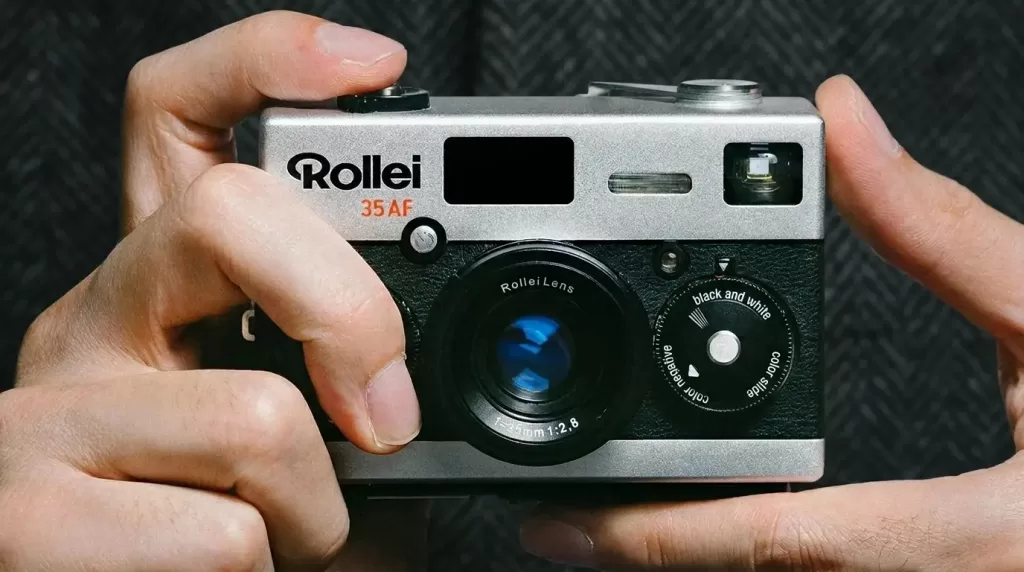
9. Rollei 35AF — Best Modern Compact (2024 Release)
A Brand-New Compact in 2026
Mint Camera resurrected the iconic Rollei 35 form factor and launched the Rollei 35AF in September 2024. Buyers get a tiny pocketable body with LiDAR autofocus, automatic exposure, and a 35mm f/2.8 lens.
What’s new for film fans:
- First modern compact with LiDAR AF
- USB-C charging for the flash
- Genuinely pocketable (smaller than a Pentax 17)
- Available new with full warranty
The Rollei 35AF retails around $799, which sits comfortably between the Pentax 17 and the Contax T2 used prices.
Selling your film cameras online? Pair every listing with crisp cutouts using our clipping path service — faster sales, fewer questions from buyers.
10. Hasselblad 500C/M — Best Medium Format (6×6)
The Square Format King
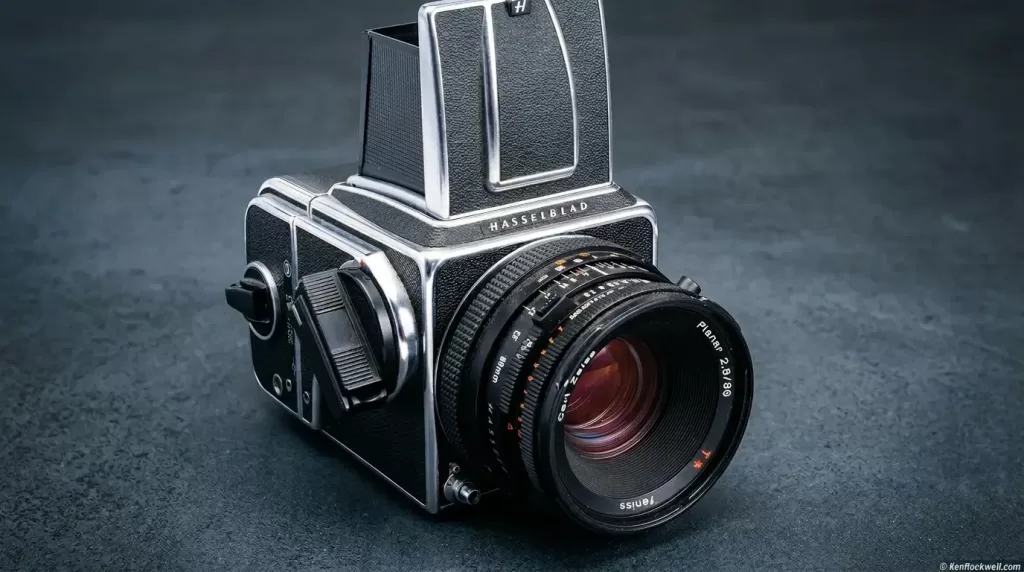
A Hasselblad 500C/M still shoots like nothing else — square negatives, waist-level finder, and that famously addictive clunk of the mirror slap. NASA carried Hasselblads to the moon, which is a heck of a résumé. Many of today’s best popular camera brands owe their reputations to companies like Hasselblad pushing the technical envelope decades ago.
System advantages:
- Modular: swap backs, finders, and lenses anytime
- Carl Zeiss C and CF lenses produce dreamy rendering
- 6×6 negative ≈ 4× the area of 35mm
- Resale market stays strong year after year
What to Budget
- Body only (good condition): $800–$1,200
- Body + 80mm Planar + A12 back: $1,800–$2,500
- Pro CLA service: $300–$500 (do it before first shoot)
11. Mamiya RB67 — Best Studio Medium Format
Why Wedding Pros Love It
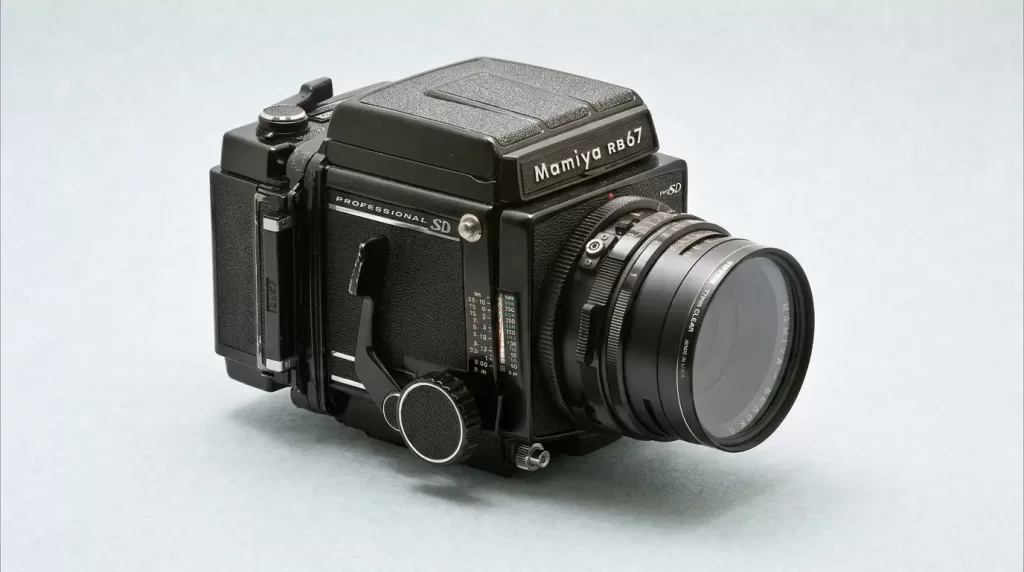
The Mamiya RB67 weighs roughly the same as a small dog, which is exactly why studio photographers love it — it doesn’t move once it’s locked down on a tripod. The 6×7 negative is huge (“ideal format”), and the rotating film back lets you swap from horizontal to vertical without turning the camera.
Reasons it stays popular in 2026:
- 6×7 negatives enlarge beautifully to 16×20 and beyond
- Sekor lenses are sharp and affordable
- Bellows focusing — close-up work is built in
- Tank-tough mechanical reliability
Best Use Cases
- Portrait studios
- Editorial fashion
- Fine-art landscape (with tripod)
- Anyone wanting Hasselblad quality at half the price
12. Nikon F100 — Best Pro Autofocus Film SLR
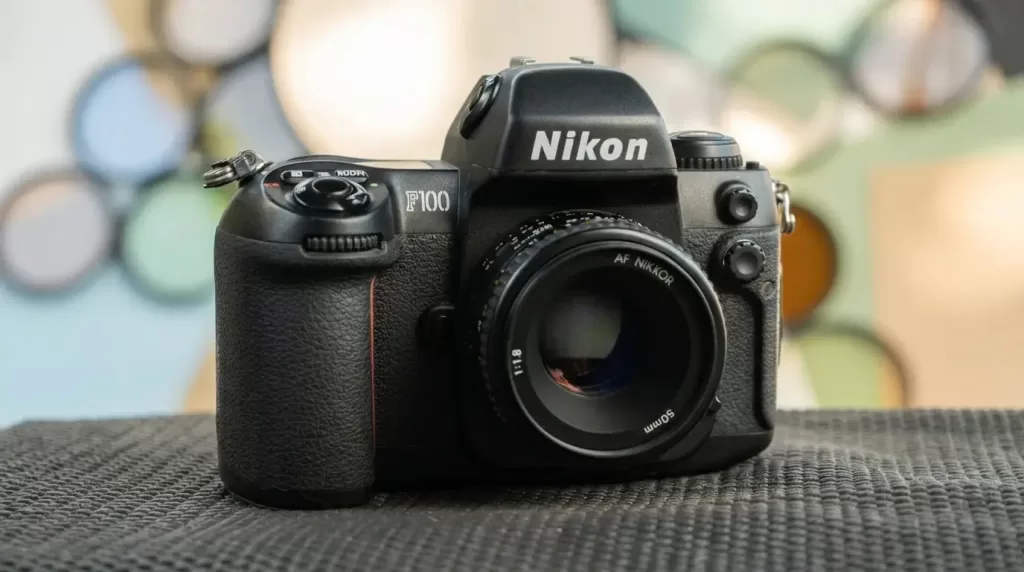
The Nikon F100 is what the pros bought when they didn’t quite have F5 money but needed AF, matrix metering, and modern ergonomics. It accepts virtually any Nikon F-mount lens (manual and AF), making it the perfect bridge for digital Nikon shooters who want to dabble in film.
Why it’s perfect for hybrid shooters:
- 1/8000s shutter, 5fps continuous
- 3D matrix metering
- Compatible with modern AF-S Nikon glass
- Lighter than the F5
Used prices hover at $250–$450, which is a steal for the build quality.
What Film Stocks Should You Buy in 2026?
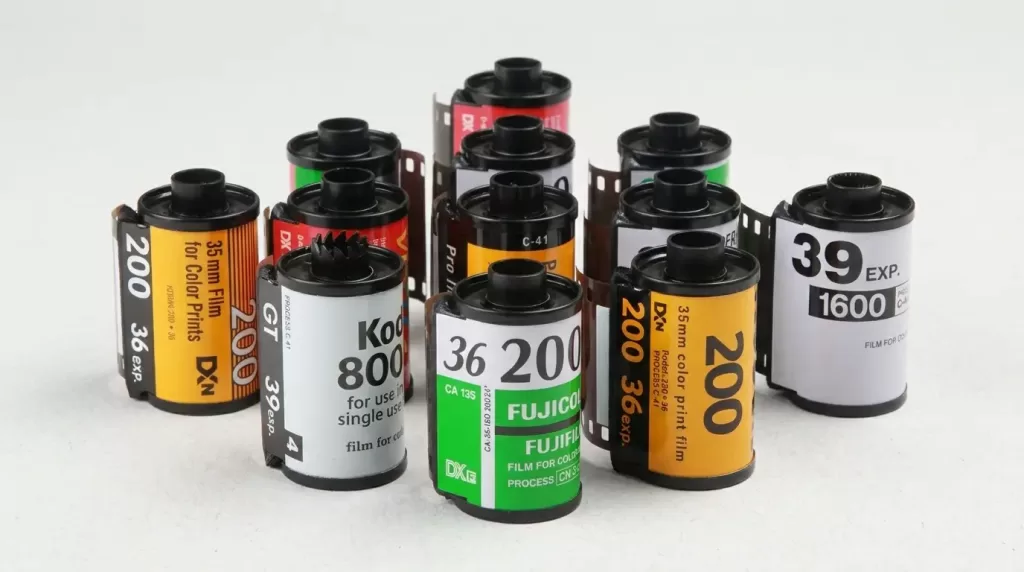
A great camera with bad film still produces bad photos. Here are my 2026 film-stock picks based on availability and rendering:
- Kodak Portra 400 — the go-to for portraits, weddings, and warm tones
- Kodak Gold 200 — the affordable everyday color stock with nostalgic warmth
- Ilford HP5 Plus 400 — flexible B&W film that handles push-processing beautifully
- Cinestill 800T — tungsten-balanced for night and neon shooting
- Fujifilm 200 (rebranded Kodacolor) — bright daylight color on a budget
- Ilford Delta 3200 — when you need real grain and real speed
Keep film cool, store it in a fridge for long-term, and don’t let TSA X-ray your high-speed stocks at the airport — request hand inspection instead.
Where to Buy Film Cameras Safely
Not every used camera is a good buy. Stick to dealers who test, rate, and warranty their gear:
- KEH Camera — every camera gets graded and inspected
- B&H Photo (Used Dept.) — strong return policy
- MPB.com — six-month warranty and clear condition photos
- Local camera shops — handle in person before you pay
- eBay — risky unless seller has photo proof of working shutter
Run a vintage camera store? Make your inventory irresistible with our ghost mannequin service that ensures every product shot looks magazine-clean.
Beginner Tips for Shooting Film in 2026
Film photography rewards patience. Here are quick wins that helped me when I started:
- Overexpose color film by half a stop — color negative loves light
- Use a handheld light meter app if your camera’s meter is dead (Lumu, Pocket Light Meter)
- Always meter for the shadows in tricky lighting
- Don’t change ISO mid-roll unless you know how to compensate during processing
- Get scans at 16-bit TIFF if you plan to edit heavily
- Send to a real lab — places like The Darkroom and Negative Lab do excellent work
Common Mistakes to Avoid When Buying a Film Camera
- ✕ Buying untested eBay cameras described as “for parts”
- ✕ Ignoring shutter speeds (test 1s, 1/30s, and 1/1000s before purchase)
- ✕ Forgetting to budget for CLA (Clean, Lube, Adjust) — average cost $150
- ✕ Underestimating film and developing costs (~$15–$25 per roll today)
- ✕ Skipping the light seal check (foam degrades after 20+ years)
- ✕ Paying influencer prices for cameras like the Yashica T4 when alternatives exist
Film Camera Comparison: New vs. Vintage
| Factor | New Cameras (Pentax 17, Rollei 35AF) | Vintage (AE-1, FM2n, Leica M6) |
|---|---|---|
| Warranty | Yes (1–2 years) | No (unless from dealer) |
| Repairs | Easy via manufacturer | Specialist required |
| Image quality | Good (smaller formats) | Excellent (most legendary glass) |
| Resale value | Likely to depreciate | Usually appreciates |
| Learning curve | Gentle | Steeper but rewarding |
FAQ
Q1. Is film photography really making a comeback in 2026?
Yes — and the numbers prove it. Film sales have grown more than 127% since 2020, according to industry reports, and major brands like Pentax and Rollei have launched new film cameras within the past two years. Labs are expanding, and film stocks like Kodak Gold are back in regular production.
Q2. What is the best film camera for absolute beginners in 2026?
The Canon AE-1 Program and Pentax K1000 lead the beginner list. Both are affordable, mechanically simple, and teach the fundamentals of exposure without overwhelming you. If you want something brand new, grab the Pentax 17.
Q3. How much does it cost to shoot film in 2026?
Budget about $15–$25 per roll all-in (film + developing + scans). Some labs offer monthly bundles that bring the cost closer to $12. Black-and-white can be cheaper if you develop at home.
Q4. Are new film cameras worth buying over vintage?
Yes, if you want a warranty, factory support, and modern ergonomics. The Pentax 17 and Rollei 35AF both deliver excellent quality. But vintage Leicas, Nikons, and Hasselblads still produce better image quality at any given price point.
Q5. What’s the difference between 35mm and medium format?
35mm film measures 24×36mm per frame and gives you 24–36 shots per roll. Medium format (120 film) produces much larger negatives (6×4.5, 6×6, 6×7, or 6×9), resulting in vastly more detail and smoother tonality — at the cost of bigger cameras and fewer shots per roll (8–16 typically).
Q6. Where can I get my film developed?
Big-city labs like The Darkroom, Indie Film Lab, Boutique Film Lab, and Carmencita Film Lab offer mail-in service worldwide. Local minilabs are reappearing in major cities. For Black & White, many photographers also develop at home using simple kits.
Q7. Will my old camera still work?
Probably yes — but get a CLA (Clean, Lube, Adjust) service first. Light seals dry out after 20+ years, and shutter speeds drift over time. A $100–$150 service can extend a camera’s life by another 20 years.
Q8. Is the Leica M6 really worth $5,000+?
For most people, no. For street photographers and pros who’ll use it daily, yes. Leicas hold value like gold — many buyers actually make money when they resell years later. A used M6 Classic at $2,500 is a smarter entry point than the 2022 re-release.
Final Thoughts: Pick the Camera That Matches Your Story
The best film camera in 2026 isn’t the most expensive one or the trendiest one on Instagram — it’s the one that gets you out the door and shooting. A Canon AE-1 in your hands beats a Leica M6 sitting in a display case every single time.
Start with one camera, one lens, and one favorite film stock. Shoot through ten rolls. Pay attention to how the camera makes you feel, not just the images it produces. That’s how you’ll know you’ve found the right tool for your style.
Whether you choose a brand-new Pentax 17 for half-frame fun, a battle-tested Nikon FM2n for fieldwork, or a luxurious Hasselblad 500C/M for serious portrait work — the magic of film is waiting on every roll. Load up, slow down, and start telling stories the way photographers did for over a hundred years.
Once your film scans come back, polish each one to perfection with our professional image editing services — we’ll handle dust removal, color correction, and retouching so your analog work shines online.