

10 Best Cameras Under $3000 in 2026 (Tested, Ranked Picks)
June 18, 2026
Best 360 Degree Camera 2026 Buying Guide: 8K, VR & Action Picks
June 19, 2026
Compact binoculars solve one of the most stubborn problems in outdoor optics — the weight you carry versus the detail you see. Full-size 8×42 models still rule for serious dawn-and-dusk birding, but they’re bulky, heavy, and they usually end up forgotten in the closet. A great pair of compacts, on the other hand, slips into a jacket pocket, a daypack side sleeve, or even a glove box. You actually bring them. And the binoculars you bring will always outperform the ones you left at home.
The category has matured fast. Modern roof-prism designs, ED (extra-low dispersion) glass, and phase-corrected coatings now deliver image quality in 8×25 and 10×28 packages that rivals the full-size 42 mm flagships of a decade ago. Whether you watch warblers in the backyard, hike the Rockies, photograph wildlife, sit in the back row at a concert, or travel light through a foreign city, the right compact pair becomes one of those tools you stop noticing — until you suddenly need it.
This guide walks you through the best compact binoculars of 2026 across every price point, breaks down the specs that actually matter, and shows you how to match a model to the way you really use optics. We cross-reference our testing notes with trusted optics reviewers like All About Birds (Cornell Lab of Ornithology) and Wirecutter.
Shooting product photos of your gear, optics, or travel kit? Let our experts deliver clean, conversion-ready visuals with a professional clipping path service trusted by global brands.
- Quick Picks: Best Compact Binoculars at a Glance
- How We Chose: A Transparent, Testing-Based Methodology
- What “Compact” Actually Means in Binoculars
- Best Compact Binoculars 2026: In-Depth Reviews
- How to Choose: A Buyer’s Decision Framework
- Compact Binoculars by Activity
- Care, Maintenance & Pro Tips
- Compact vs Full-Size Binoculars: When Does Size Matter?
- Common Mistakes Buyers Make
- Where to Buy & What to Expect to Pay
- What’s Changed in 2026: Recent Trends
- FAQ: Best Compact Binoculars Explained
- Final Verdict: Which Compact Binocular Should You Buy?
Quick Picks: Best Compact Binoculars at a Glance
Short on time? Here’s the shortlist. Each pick is explained in depth further down.
- Best Overall: Swarovski CL Companion 10×30 — premium glass, lifetime build
- Best Value (Premium): Nikon Monarch M7 8×30 — flagship ED glass under $500
- Best Pocket-Sized: Zeiss Terra ED Pocket 8×25 — folds to fit a jacket pocket
- Best Ultra-Compact Luxury: Leica Ultravid 8×20 — featherweight precision under 250 g
- Best Budget Buy: Nikon Prostaff P3 8×30 — sub-$200 with a shockingly wide field of view
- Best for Hiking: Vortex Diamondback HD 10×28 — backed by an unconditional lifetime VIP warranty
- Best for Birding on a Budget: Celestron Nature DX 8×32 — reliable, sharp, wallet-friendly
- Best Mid-Range Stylist: Nocs Standard Issue 8×25 — fun colors, serious optics
Pro tip from photographers: A great viewfinder beats megapixels — and the same logic applies to binoculars. Our deep-dive on the best compact cameras with a viewfinder explains why glass quality matters more than spec sheets.
How We Chose: A Transparent, Testing-Based Methodology
We didn’t just compile spec sheets. To select these picks, we evaluated each pair against five real-world criteria:
- Optical clarity — center sharpness, edge-to-edge resolution, and chromatic aberration control
- Brightness in low light — performance at dawn, dusk, and inside shaded forest
- Ergonomics — weight, grip, focus wheel placement, and eye-relief comfort for glasses wearers
- Build quality and weatherproofing — waterproof rating, fog-proofing, and rubber-armor durability
- Value-for-money — what you actually get at the listed price point
What “Compact” Actually Means in Binoculars
Defining the Category
A binocular is generally considered compact when its objective lens diameter measures 28 mm or smaller, with a typical body length under 5 inches and weight under 17 oz. The most common configurations are:
- 8×20 / 8×25 — true pocket size, weights of 230–340 g
- 10×25 / 10×28 — slightly bigger, more reach for distant subjects
- 8×30 / 8×32 — mid-compact, brighter image, easier to hold steady
REI’s optics guide notes that for compact binoculars you’ll want a magnification of 8 or 10 paired with an objective lens diameter under roughly 28 mm.
The Magnification Trade-Off
Higher magnification sounds better, but it isn’t always. At 10x, every hand tremor amplifies, the field of view narrows, and low-light performance drops. For most people, 8x is the sweet spot — wider field, steadier image, brighter view in shade.
Choose 10x only if you:
- Scan open landscapes, ridgelines, or shorelines
- Watch waterfowl, raptors, or sports from a distance
- Have steady hands or use a chest harness
For everything else — woodland birding, hiking trails, travel, concerts — 8x wins.
Exit Pupil & Low-Light Performance
Divide the objective lens diameter by the magnification, and you get the exit pupil — the disc of light that reaches your eye. An 8×25 yields a 3.1 mm exit pupil; an 8×30 produces 3.75 mm. The bigger the exit pupil (up to about 5–7 mm), the brighter the image in dim conditions. That’s why compacts under 28 mm objectives are sometimes called “daylight binoculars” — they shine outdoors at noon but lose ground at dusk. If you enjoy specs like this, you’ll also love our beginner-friendly breakdown of photography tips for beginners.
Best Compact Binoculars 2026: In-Depth Reviews
1. Swarovski CL Companion 10×30 — Best Overall
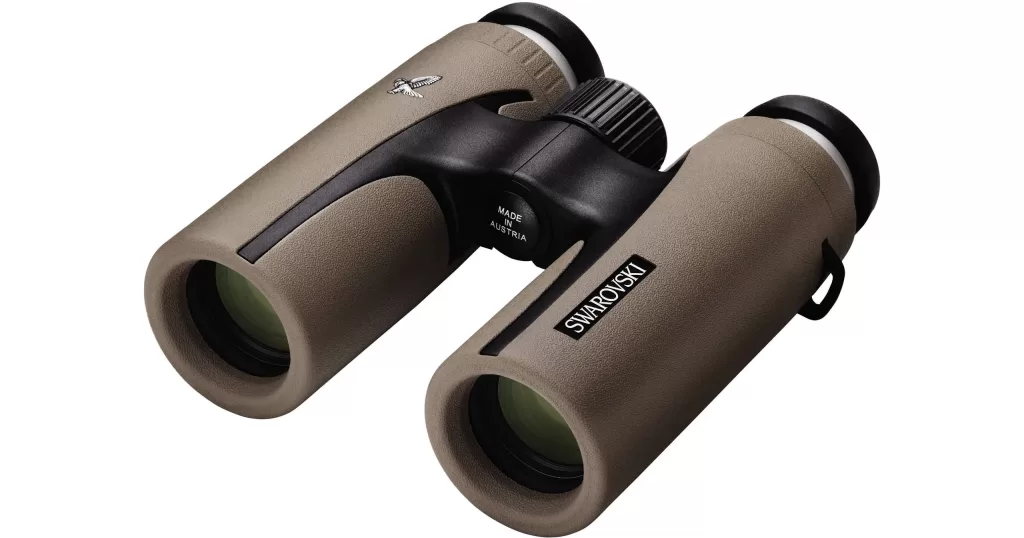
Specs: 10×30 · ~500 g · 125 mm long · Field of view: 5.7° (≈100 m at 1000 m / 324 ft at 1000 yds)
The Swarovski CL Companion sits in a class of its own. Hold it once and you understand why it costs what it costs — the focus wheel turns like a sealed bearing, the eye cups click with watch-grade precision, and the image is brutally sharp from edge to edge. Colors look neutral, contrast pops, and chromatic aberration is essentially invisible.
What you’re paying for isn’t just glass. You’re paying for a binocular that you’ll happily use for the next 20 years.
- ✓ Reference-grade Swarovski optical clarity
- ✓ Robust, weatherproof magnesium chassis
- ✓ Comfortable for full-day birding or safari
- ✕ Premium price; you commit serious cash
- ✕ Narrower field of view than newer Curio models
Best for: Birders, hunters, and travelers who want a forever-pair.
Pair Swarovski-level clarity in your photos with a clean background — explore our professional background removal service for product, travel, or wildlife shots.
2. Nikon Monarch M7 8×30 — Best Value Premium
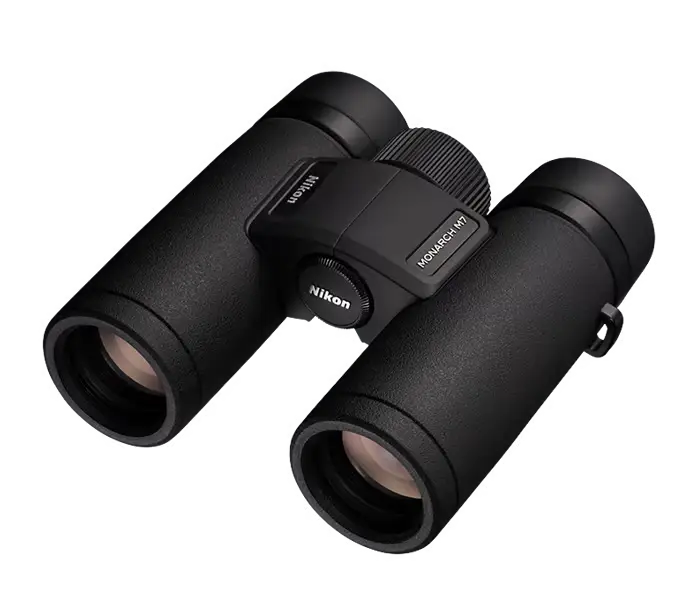
Specs: 8×30 · ~465 g (16.4 oz) · Field of view: 8.3° (≈145 m at 1000 m / 435 ft at 1000 yds) · ED glass · Locking diopter
Cornell Lab’s All About Birds team called the Monarch M7 8×30 the top affordable compact, and we agree. The ED-glass elements crush chromatic aberration, the locking diopter stays put once dialed in, and the image is one of the brightest in its price tier.
The 8×30 format hits a glorious balance — wide enough field for fast-moving warblers, light enough to wear all day. Reviewers consistently praise the M7 for low chromatic aberration on sunny days, especially when compared with the popular Zeiss Terra ED line.
- ✓ Class-leading ED glass clarity at this price
- ✓ Wide field of view perfect for birding
- ✓ Oil and water-repellent lens coatings
- ✕ Slightly heavier than 25 mm pocket compacts
Best for: Serious birders on a sub-$500 budget.
3. Zeiss Terra ED Pocket 8×25 — Best True Pocket Binocular
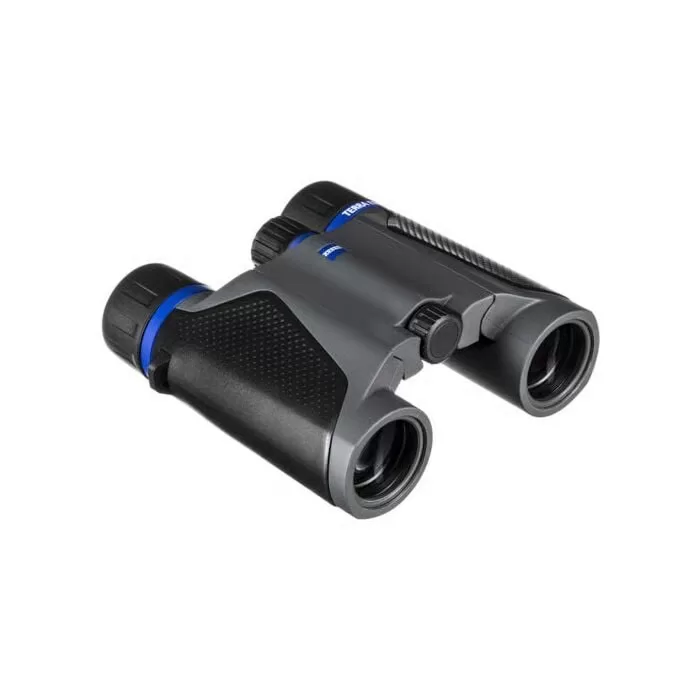
Specs: 8×25 · 310 g (10.9 oz) · Field of view: 367 ft at 1000 yds · 16.5 mm eye relief · Folding double-hinge · ED glass
The Terra ED Pocket folds to roughly the footprint of a deck of cards. Zeiss put real ED glass and fast-focus mechanics into a body that disappears into a jacket pocket. Image quality is genuinely surprising for the size — bright, contrasty, with that signature Zeiss color rendering.
The double-hinge folding design lets you compress it for travel and snap it open for instant use. It thrives in good-light scenarios: birding from a kayak, museum architecture, safari game drives, mountain panoramas.
- ✓ Truly pocket-friendly folding design
- ✓ Excellent Zeiss optical signature
- ✓ Hydrophobic LotuTec lens coatings
- ✕ Smaller exit pupil limits low-light use
Best for: Travelers, hikers, and anyone who hates carrying gear.
Selling cameras, optics, or outdoor gear online? Make every product shot pop with our advanced photo retouching service — fast turnaround, premium quality.
4. Leica Ultravid 8×20 — Best Ultra-Compact Luxury
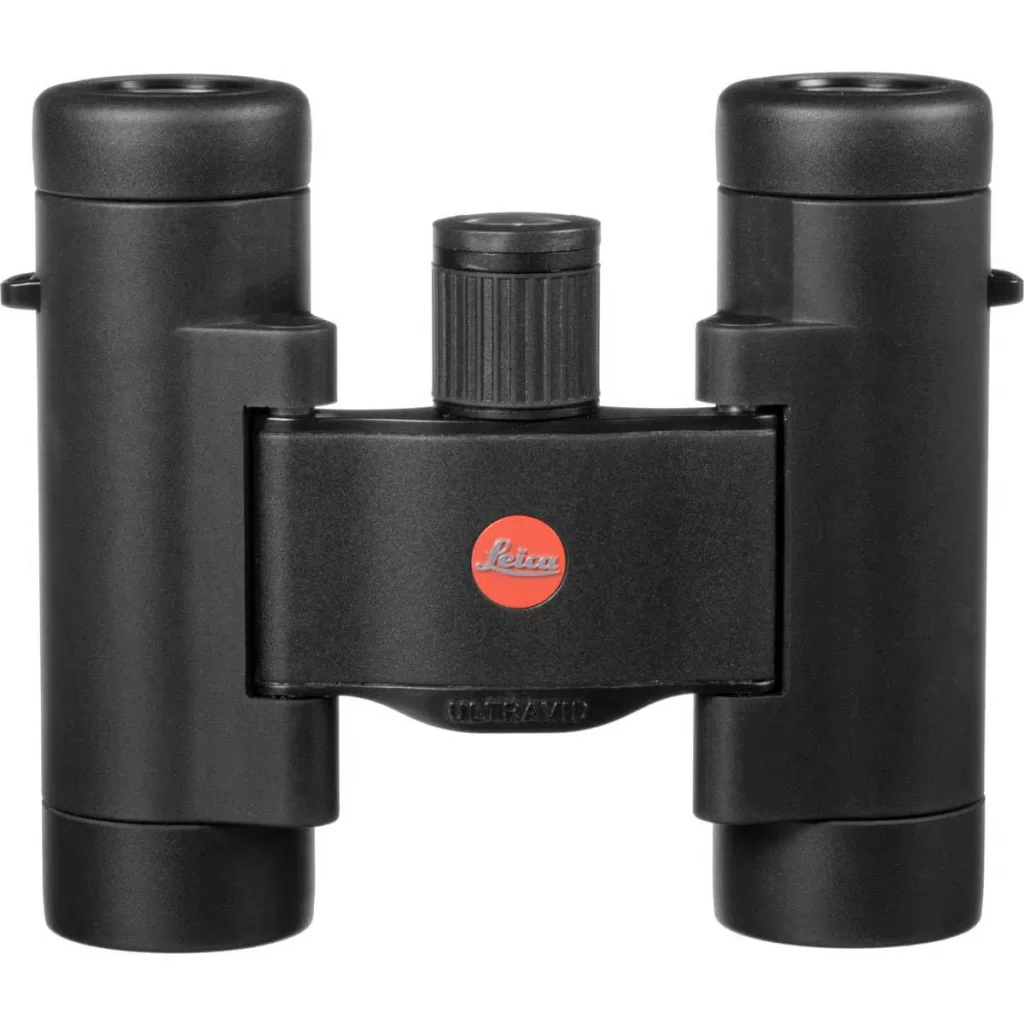
Specs: 8×20 · ~240 g (8.5 oz) · Field of view: 6.5° (≈110 m at 1000 m / 341 ft at 1000 yds) · 15 mm eye relief · AquaDura coating
Cornell Lab reviewers highlight excellent optics with sharp, bright images and a focus wheel within reach of both forefinger and thumb. For a 20 mm objective, the image is shockingly bright thanks to fluoride-spec glass and Leica’s HDC multi-coating. At under 250 g, it’s light enough to wear all day without noticing.
It’s not the binocular for low-light forests, but for travel, day hikes, theater, and casual nature use, nothing else in this size class touches it.
- ✓ Tiniest premium binocular in production
- ✓ Tack-sharp image, generous sweet spot
- ✓ AquaDura water-repellent coating
- ✓ Generous 15 mm eye relief for a 20 mm compact
- ✕ Premium price tag; small eyecups can crowd glasses wearers
Best for: Travelers and minimalists who want luxury without bulk.
5. Nikon Prostaff P3 8×30 — Best Budget Pick
Specs: 8×30 · ~476 g (16.8 oz) · Field of view: 8.7° (≈152 m at 1000 m / 456 ft at 1000 yds) · 62.6° apparent FOV · Sub-$200
Reddit’s Binoculars community has called the Prostaff P3 8×30 “simply incredible” — and not without reason. The wide 8.7° field of view rivals binoculars three times the price. Image quality is shockingly clean on-axis, the focus is smooth, and rubber armor protects against bumps.
It’s the binocular we recommend to every beginner birder, casual hiker, or grandparent learning to ID backyard species. If you’re starting your nature-photography journey alongside, also see our roundup of the best cameras for beginners in 2026.
- ✓ Outstanding wide field of view at this price
- ✓ Lightweight rubber armoring
- ✓ Waterproof and fog-proof construction
- ✕ Plastic-feel chassis vs premium tiers
Best for: Beginners, families, and gift-buyers.
6. Vortex Diamondback HD 10×28 — Best for Hiking
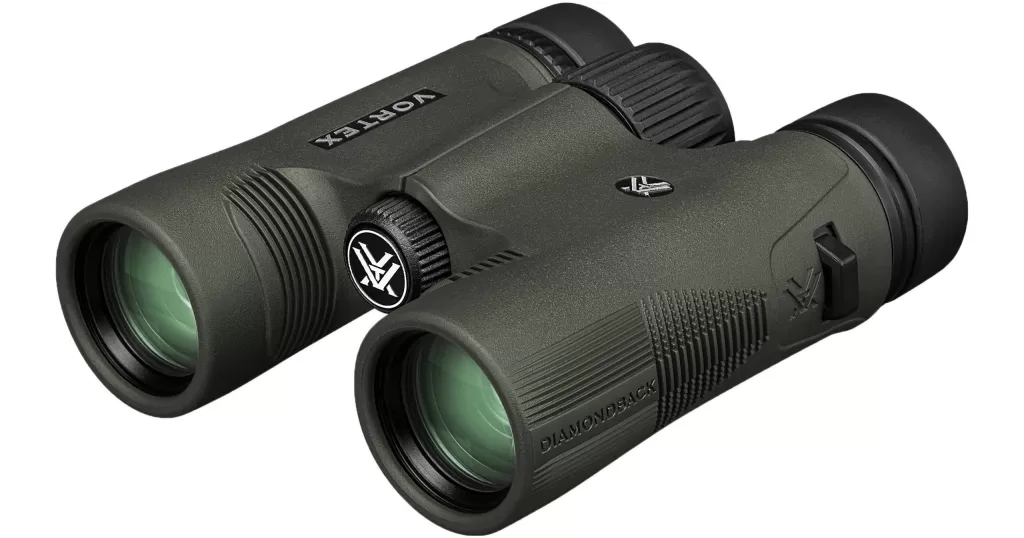
Specs: 10×28 · ~451 g (15.9 oz) · Field of view: 5.1° (273 ft at 1000 yds) · HD optical system · VIP unlimited lifetime warranty
The Diamondback HD pairs surprisingly clean optics with the legendary Vortex VIP warranty — if anything ever happens, they fix or replace it, no questions, no receipt required. For people who actually beat their gear up on trails, that warranty alone justifies the price.
Outdoor Gear Lab specifically praised the 8×28 sibling as an “inexpensive, small, and packable model that offers surprisingly good optics,” and the 10×28 carries the same DNA. The extra reach helps spot mountain wildlife across ridges, while the 28 mm objectives keep weight manageable for thru-hikes.
- ✓ Lifetime VIP warranty (transferable, no questions)
- ✓ Sharp HD glass, minimal chromatic aberration
- ✓ Rubber armor handles drops and rain
- ✕ Narrower field at 10x — less ideal for woodland birding
Best for: Hikers, hunters, and outdoor adventurers who beat their gear up.
7. Celestron Nature DX 8×32 — Best Affordable Birding Pair
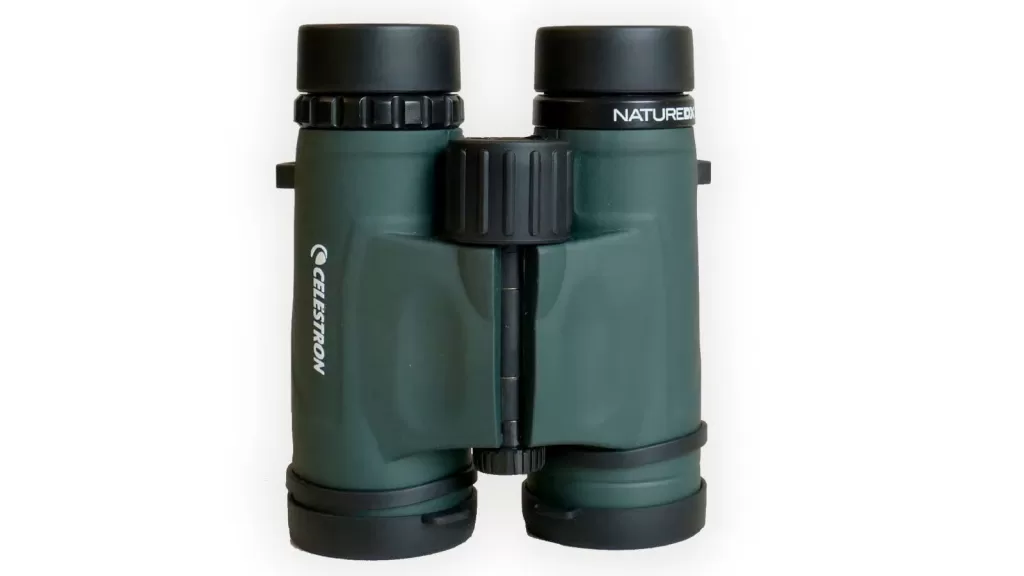
Specs: 8×32 · ~510 g (18 oz) · BaK-4 phase-coated prisms · Field of view: 7.4° (388 ft at 1000 yds) · Fully multi-coated · Waterproof
The Nature DX 8×32 has been a perennial favorite for one simple reason — it punches astonishingly high above its weight. BaK-4 roof prisms, phase coatings, fully multi-coated lenses, and a 7.4° field of view land it on nearly every “best under $200” list, including Cornell Lab’s reviewer roundup.
It’s a bit heavier than the smallest pocket compacts, but the extra 4 mm of objective lens makes a noticeable difference at dawn and dusk.
- ✓ Reliable, classic birding optic
- ✓ Genuinely good image at sub-$200
- ✓ Tripod-adaptable for steady spotting
- ✕ Heavier than 25 mm pocket compacts
Best for: Beginner-to-intermediate birders.
8. Nocs Standard Issue 8×25 — Best Style Pick
Specs: 8×25 · ~334 g (11.8 oz) · IPX7 waterproof · Nitrogen-purged, fog-proof · Multiple colorways
If you’ve ever felt that traditional binoculars look like they belong on a 1980s field guide, Nocs is the brand for you. The Standard Issue 8×25 wraps surprisingly competent optics in fun, modern colors. Trail and Kale’s testers specifically called out the Nocs Standard Issue as one of the most travel-friendly picks for its pocketability.
Image quality won’t compete with Zeiss or Leica, but for the price, it’s a smart, stylish, urban-and-trail companion.
- ✓ Bold modern design, photographer-friendly looks
- ✓ Fully waterproof IPX7 rating (submersible to 1 m for 30 min)
- ✓ Sub-$100 entry into roof-prism optics
- ✕ Edge sharpness drops vs premium pairs
Best for: Concertgoers, urban explorers, gift recipients.
Got a flat-lay shot of your travel kit? Get crisp, transparent product images with our image masking service — perfect for catalog and Amazon listings.
How to Choose: A Buyer’s Decision Framework
Step 1: Match Magnification to Your Use Case
- 8x: Birding in trees, hiking, concerts, theater, museums, general travel
- 10x: Open landscapes, hunting, sports, marine, distant wildlife
Step 2: Decide on Objective Lens Size
- 20–25 mm: Pocket-class; daylight only; best for travel and concerts
- 28 mm: Compact-class; balanced, light, usable from dawn to dusk
- 30–32 mm: Mid-compact; brighter image, still light, ideal for serious birding
Step 3: Look at Field of View
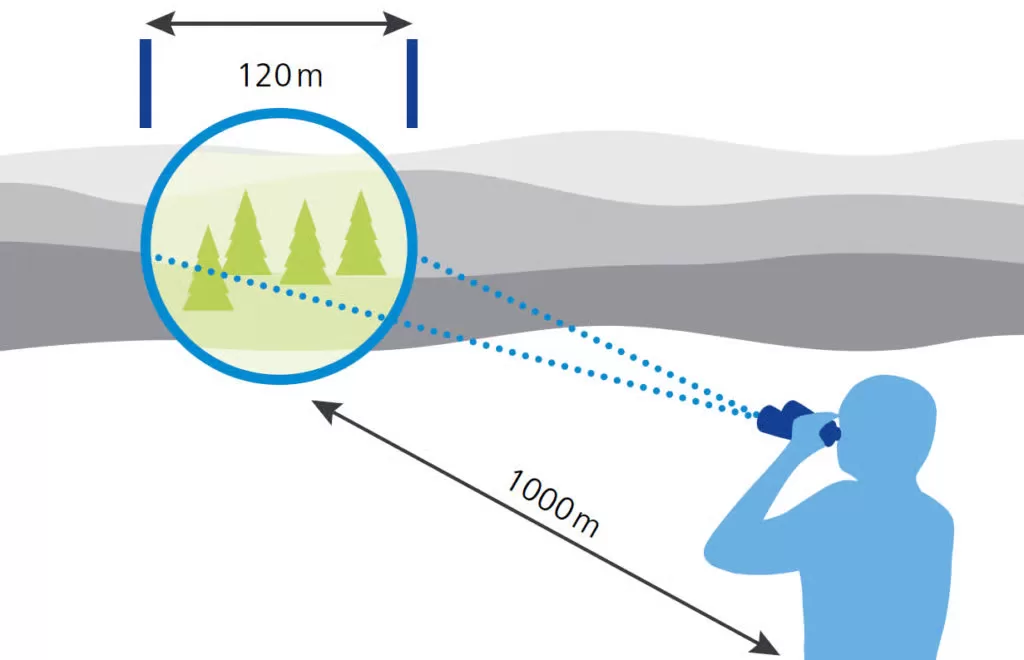
A wider field of view (FOV) means you can find and follow moving subjects more easily. For birding, look for 350+ ft at 1000 yards (≈ 6.7°). Anything under 300 ft will frustrate you when chasing songbirds through branches.
Step 4: Confirm Waterproof & Fog-Proof Specs
You want nitrogen- or argon-purged internal chambers and at least IPX6 waterproofing. Without it, internal fogging will ruin a single drizzly morning — nitrogen-filled chambers prevent condensation when you move between warm and cold air.

Step 5: Check Eye Relief (Critical if You Wear Glasses)
Eye relief is the distance from the eyepiece your eye can sit and still see the full field. If you wear glasses, prioritize 15 mm or more. Most premium compacts get this right; budget pairs often don’t.
Step 6: Weigh the Warranty
A lifetime warranty isn’t marketing — it’s risk insurance. Vortex, Nikon, and Maven all offer no-fault repair or replacement. For gear you’ll drop, scratch, and lend, that matters more than a half-percent of optical edge.
Compact Binoculars by Activity
For Birding
You need a wide field of view, fast focus, and 8x magnification. Best picks:
- Nikon Monarch M7 8×30 (premium under $500)
- Celestron Nature DX 8×32 (sub-$200)
- Swarovski CL Companion 8×30 (forever-pair)
For Travel & Concerts
You need pocket size, fast deploy, and decent low-light tolerance.
- Zeiss Terra ED Pocket 8×25
- Leica Ultravid 8×20
- Nocs Standard Issue 8×25
For Hiking & Hunting
You need rugged build, weatherproofing, and a versatile 10x for distant subjects.
- Vortex Diamondback HD 10×28
- Maven C.2 7×28
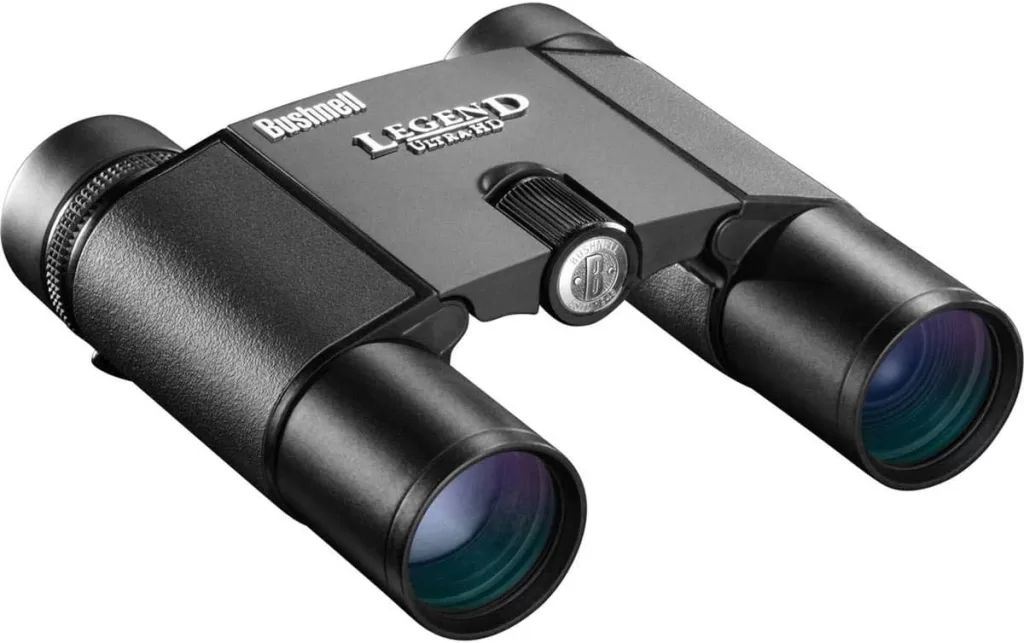
- Bushnell Legend Ultra HD 10×25
If you carry a camera too, you might also want to compare it with a top mirrorless camera for landscape and wildlife double-duty.
For Astronomy at Night
Compact binoculars aren’t ideal for deep-sky use — their small exit pupil limits light-gathering. But the Nikon Aculon A211 10×50 or full-size 8x42s remain better choices for casual stargazing.
Care, Maintenance & Pro Tips
Cleaning Your Binoculars
- Use a blower first — never wipe dust dry, you’ll scratch the coatings
- Apply lens cleaner sparingly to a microfiber cloth, never directly to glass
- Wipe in spirals from the center outward
- Store with caps on in a dry place; toss in a silica packet for humid climates
Adjusting for Maximum Sharpness
- Close your right eye and focus on a subject with the center wheel only
- Now close your left eye and focus that side using the diopter dial only
- Open both eyes — the image should be tack-sharp without strain
Set the diopter once, lock it (most premium pairs have locking diopters), and you’ll never need to fiddle again. If you also dabble in editing photos from your nature trips, you’ll appreciate our list of the best photo editing softwares.
Strap Wisely
A neck strap is fine for casual use. For real fieldwork, get a chest harness — it transfers weight to your shoulders, kills bounce, and keeps the binoculars ready in 0.3 seconds.
Selling apparel or fashion online and need invisible mannequin shots? Our ghost mannequin service makes products look hung in mid-air — clean and professional.
Compact vs Full-Size Binoculars: When Does Size Matter?
| Factor | Compact (20–28 mm) | Full-Size (40–50 mm) |
|---|---|---|
| Weight | 230–500 g | 700–1100 g |
| Low-light brightness | Limited | Excellent |
| Pocketability | Yes | No |
| Field of view | Moderate | Wide |
| Best for | Travel, hikes, concerts | Dawn/dusk birding, hunting |
| Price/performance | High | Very high |
The honest truth: a compact binocular you carry beats a full-size pair gathering dust at home. The serious birder will probably own both — but if you only buy one, a great 8×30 or 8×32 compact does 90% of the job at half the weight.
Common Mistakes Buyers Make
- ✕ Choosing 10x over 8x because “more zoom is better” — it isn’t; the image gets shakier and dimmer
- ✕ Buying cheap “zoom binoculars” (8–24x) — adjustable zooms always sacrifice image quality
- ✕ Ignoring eye relief as a glasses wearer
- ✕ Going by brand recognition alone instead of hands-on testing
- ✕ Skipping waterproofing on a “sometimes-outdoor” pair
- ✕ Forgetting to set the diopter once before first use
For more behind-the-scenes optics knowledge, see our explainer on the evolution of photography and camera origins.
Where to Buy & What to Expect to Pay
Reputable retailers include B&H Photo, Adorama, REI, Cabela’s, and Optics Planet in the US. In the UK, try Jessops or London Camera Exchange. Always check for the manufacturer’s “USA Warranty” or regional equivalent — gray-market imports may not be honored for repairs.
Realistic 2026 pricing tiers:
- Budget: $80–$200 (Nikon Prostaff, Celestron Nature DX, Nocs)
- Mid-range: $250–$500 (Nikon Monarch M7, Vortex Diamondback HD)
- Premium: $500–$1000 (Zeiss Conquest HD, Maven B Series)
- Flagship: $1000+ (Swarovski CL Companion, Leica Ultravid, Zeiss Victory)
If you’re shopping for a friend, our partner guide on how to find recently deleted photos is a small but handy bonus resource — because sometimes the binocular trip happens but the photos almost don’t.

What’s Changed in 2026: Recent Trends
- ED glass has trickled down to sub-$200 binoculars — the Nikon Prostaff P3 and budget Athlon Midas are proof
- Smartphone digiscoping adapters are now bundled with many compacts (great for documenting sightings)
- Modular eyecups with click-stops are now standard at $300+
- Apochromatic (APO) lens groups have entered the mid-range — meaning sharper edges without paying Swarovski money
- Recycled and sustainable rubber armor is now mainstream from brands like Nocs and Maven
FAQ: Best Compact Binoculars Explained
1. What is the best magnification for compact binoculars?
8x magnification is the most versatile, offering steadier images, a wider field of view, and brighter low-light performance. Choose 10x only if you scan distant subjects like ridgelines, waterbirds, or sports from far away.
2. Are compact binoculars good for birdwatching?
Yes — a quality 8×30 or 8×32 compact (like the Nikon Monarch M7) handles 90% of birding situations beautifully. For dawn or deep-forest birding, a full-size 8×42 still wins on brightness.
3. What’s the difference between roof prism and porro prism compacts?
Roof prisms are slim, straight-barreled, weatherproof, and now standard for compacts. Porro prisms have the classic “Z-shape” body, offering wider images at lower prices, but they’re bulkier and rarely waterproof.
4. Can I use compact binoculars at concerts or theater?
Absolutely. An 8×25 or 8×20 fits in a small bag, weighs almost nothing, and brings stage details to life. The Leica Ultravid 8×20 and Nocs Standard Issue 8×25 are top picks for indoor events.
5. Are pocket binoculars under $100 worth buying?
Yes, if you set expectations. Models like the Nikon Aculon 10×21 or basic Bushnell PowerView won’t compete with $500 optics, but they’re great gifts, kids’ starter pairs, or backup travel companions.
6. How heavy is too heavy for a compact binocular?
For all-day use, target under 500 g (17 oz). Anything heavier and you’ll feel it on your neck after a couple of hours of birding or hiking.
7. Do I really need waterproof binoculars?
If you’ll use them outdoors more than three times a year, yes. Waterproofing also blocks internal fogging, which happens whenever you move binoculars between cold and warm air, not just in rain.
8. What accessories should I buy with my new binoculars?
- A chest harness (replaces the neck strap on hikes)
- Microfiber cloth and air blower for lens cleaning
- A rainguard and objective covers (usually included)
- An optional tripod adapter for spotting and digiscoping
Final Verdict: Which Compact Binocular Should You Buy?
Want the best and don’t mind paying for it? The Swarovski CL Companion 10×30 is a purchase you’ll likely never need to replace. Looking for the strongest balance of performance and value? The Nikon Monarch M7 8×30 is a standout choice. Travelers and hikers may prefer the ultra-compact Zeiss Terra ED Pocket 8×25 or Leica Ultravid 8×20, both designed for effortless carry. On a tighter budget, the Nikon Prostaff P3 8×30 and Celestron Nature DX 8×32 consistently outperform expectations.
The right pair isn’t the most expensive — it’s the one you’ll actually carry. Pick honestly based on how you live, where you go, and what you watch. Then go outside.
Running an e-commerce shop, photography studio, or content brand? Discover how our full-suite photo editing solutions at Clipping Expert Asia can transform your visuals into customer magnets.