

Master Selection Brush and Lasso Tools in Photoshop
April 20, 2026
Beyond the Ghost Mannequin: How 3D Product Visualization is Driving Sales in 2026
April 22, 2026
You see graphic design everywhere. It shapes the logos you recognize instantly, the websites you browse daily, and the posters that catch your eye on the street. Graphic design combines art and communication so you connect with messages faster and more powerfully than words alone ever could. Designers solve real problems by creating visuals that inform, persuade, and delight.
Graphic design drives how brands speak to you. Companies use it to build trust, sell products, and stand out in crowded markets. When you understand graphic design, you see why certain visuals feel professional while others fall flat. This guide walks you through everything step by step so you grasp the basics, explore the tools, and discover how professionals create work that actually works.
- The Roots of Graphic Design and How It Evolved
- What Graphic Design Actually Means Today
- Core Elements That Make Graphic Design Powerful
- Timeless Principles That Guide Every Successful Design
- Exploring Different Types of Graphic Design
- Essential Tools and Software Every Designer Needs
- Key Skills That Separate Good Designers from Great Ones
- Career Paths and Opportunities in Graphic Design
- How Graphic Design Drives Business Success
- Emerging Trends Shaping Graphic Design in 2026
- Putting It All Together: Your Next Steps in Graphic Design
- Frequently Asked Questions About Graphic Design
The Roots of Graphic Design and How It Evolved
Graphic design began long before computers existed. Early humans painted symbols on cave walls to share stories and warnings. Later, ancient civilizations carved hieroglyphs and created illuminated manuscripts that combined text and images beautifully.
The printing press changed everything in the 15th century. Suddenly, designers could reproduce visuals quickly and reach wider audiences. By the 19th century, posters and advertisements exploded with bold typography and illustrations that sold products and promoted ideas. The industrial revolution pushed designers to create packaging and branding that stood out on store shelves.
In the 20th century, movements like Bauhaus and Swiss Style brought clean lines, grids, and simplicity that still influence work today. Designers started treating type as a visual element rather than just readable text. World War II posters showed how graphic design could rally nations and spread powerful messages.
Digital tools arrived in the 1980s and 1990s. Computers let designers experiment faster and iterate endlessly. Today, you see the results in apps, social media graphics, and immersive brand experiences. The core idea remains the same: designers use visuals to communicate clearly and memorably.
What Graphic Design Actually Means Today
Graphic design means purposeful visual communication. Designers arrange images, text, colors, and shapes so viewers understand a message instantly. You do not just make things look pretty. You solve problems, guide attention, and evoke emotions that drive action.
Professionals create everything from business cards to billboards. They craft user interfaces for apps and packaging that makes products irresistible. Every decision serves a goal whether to inform, sell, entertain, or inspire.
You distinguish graphic design from fine art because graphic design always serves a client or audience need. Artists create for personal expression while graphic designers create for specific purposes. Both fields borrow from each other, yet the intent separates them.
Modern graphic design blends creativity with strategy. You research your audience, define objectives, and test designs to make sure they work. The best work feels effortless even though it results from careful planning and revision.
Core Elements That Make Graphic Design Powerful
Line gives direction and defines shapes in your designs. You use thick lines for emphasis and thin lines for subtle details. Lines lead the eye across a layout and create movement.
Shape forms the building blocks of every composition. Geometric shapes feel structured while organic shapes feel natural and flowing. Designers combine shapes to create logos, icons, and illustrations that viewers remember.
Color triggers emotions and builds brand recognition. You choose hues that match the message—warm reds for energy or cool blues for trust. Proper color contrast ensures readability and accessibility for everyone.
Texture adds depth and interest even in digital work. You create visual texture through patterns, gradients, or simulated materials that make flat designs feel rich and tactile.
Space, or negative space, gives designs room to breathe. White space prevents clutter and helps important elements stand out. Skilled designers use space as actively as they use positive elements.
Typography turns words into visual statements. You select fonts that reinforce the message and adjust spacing, size, and weight for maximum impact and readability.
Timeless Principles That Guide Every Successful Design
Balance creates stability so your layouts feel harmonious. You achieve balance through symmetry or thoughtful asymmetry that still feels intentional.
Contrast makes elements pop and draws attention exactly where you want it. You contrast large against small, dark against light, or bold against delicate to create visual hierarchy.
Emphasis highlights the most important part of your design. You guide viewers straight to the call-to-action or key message through size, color, or placement.
Movement directs the eye through the composition in a logical flow. You use lines, shapes, and spacing to lead viewers from one element to the next without confusion.
Pattern and repetition build consistency and reinforce branding. You repeat elements like colors or icons so the entire piece feels cohesive.
Unity ensures every part works together toward one clear goal. When you apply these principles skillfully, viewers understand the message without conscious effort.
Exploring Different Types of Graphic Design
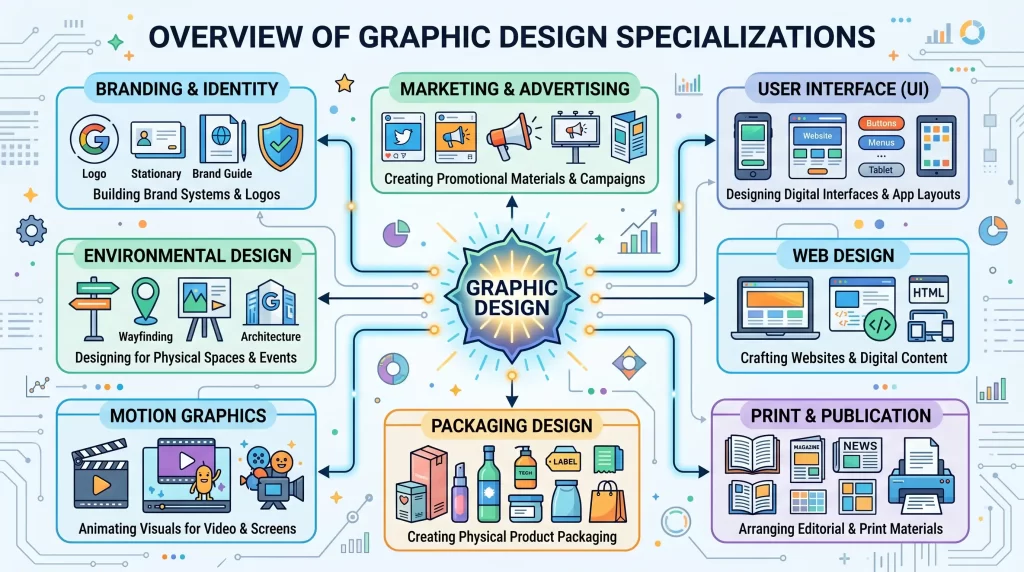
Designers specialize in various areas so they deliver targeted results for each project. Some focus on print while others master digital experiences.
Visual identity design builds the complete look of a brand through logos, color palettes, and style guidelines. You see this work in every consistent brand touchpoint from business cards to websites.
Publication design shapes books, magazines, and reports so readers enjoy the content and navigate easily. Layout, typography, and image placement all work together to create engaging reading experiences.
Packaging design turns products into shelf standouts. You combine structural thinking with eye-catching visuals that communicate benefits at a glance.
Environmental design creates signage, wayfinding systems, and branded spaces that guide people through physical environments.
Motion graphics and digital design bring static visuals to life through animation, web interfaces, and social media content that captures attention in fast-scrolling feeds.
You can explore even more specialized areas and see real-world examples that show how professionals apply these categories every day when you dive deeper into the types of graphic design.
Essential Tools and Software Every Designer Needs
You start with the right tools to bring ideas to life efficiently. Professionals rely on industry-standard programs that speed up workflows and deliver polished results.
Vector software lets you create scalable logos and illustrations that stay crisp at any size. Raster software handles photo editing and complex image work with precision.
Layout programs help you arrange multi-page documents and complex print projects with perfect alignment and typography control.
Many beginners wonder where to start without feeling overwhelmed. You gain confidence faster when you choose beginner-friendly options that still grow with your skills.
You can discover the top recommendations tailored specifically for new designers in 2026 when you check out the best graphic design software for beginners.
Professional workflows often center around powerful tools for advanced editing and compositing. Many experts turn to Adobe Photoshop to refine images, create digital art, and produce stunning visual effects with unmatched control.
Key Skills That Separate Good Designers from Great Ones
Creativity alone does not guarantee success. You combine artistic vision with technical ability and strong communication skills.
You research thoroughly so every design meets real audience needs and business goals. Problem-solving helps you adapt when client feedback arrives or constraints appear.
Time management keeps projects on schedule and prevents last-minute stress. You learn to present ideas clearly and defend design decisions with solid reasoning.
Continuous learning keeps your skills sharp as technology and trends evolve. You experiment with new techniques and study what works for other professionals.
Attention to detail separates amateur work from professional results. You check alignment, spacing, and color consistency so nothing distracts from the message.
Career Paths and Opportunities in Graphic Design
You can work as a full-time in-house designer for corporations, join creative agencies, or build a thriving freelance business. Many professionals combine multiple paths for variety and income stability.
Entry-level roles often start with junior designer positions where you learn from experienced mentors. With experience, you advance to senior designer, art director, or creative director roles that involve strategy and team leadership.
Freelancers enjoy flexibility and the chance to work with diverse clients across industries. You build a strong portfolio that showcases your range and problem-solving ability.
Agencies offer collaborative environments and exposure to large-scale campaigns. You collaborate with copywriters, marketers, and developers to deliver complete brand experiences.
The demand for skilled designers remains strong because businesses always need clear, compelling visual communication.
If you want expert support for complex projects or prefer to outsource specific tasks, you can explore professional graphic design services that deliver high-quality results on tight deadlines.
How Graphic Design Drives Business Success
Strong design builds instant credibility. Customers trust brands that look professional and consistent across every touchpoint.
You increase conversion rates when buttons, calls-to-action, and layouts guide users naturally toward desired actions. Well-designed packaging makes products feel premium and worth the price.
Social media graphics that stop scrolls and encourage shares expand reach organically. Email campaigns with clean, branded visuals improve open rates and click-through performance.
Internal design improves employee morale and communication. Well-designed reports, presentations, and dashboards help teams understand data and make better decisions faster.
Graphic design delivers measurable return on investment when you track engagement, sales lift, and brand recognition.

Emerging Trends Shaping Graphic Design in 2026
Designers embrace bolder typography that commands attention while remaining readable across devices. Variable fonts give you precise control over weight and width within a single file.
Sustainability influences material choices and digital optimization that reduces energy consumption. Brands highlight eco-friendly practices through transparent, honest visuals.
Immersive experiences blend 3D elements with interactive interfaces that let users explore products virtually before purchase.
Personalization grows as designers create adaptable templates that adjust automatically to user preferences and behaviors.
Accessibility remains central so every design works for people of all abilities and on every device. You test contrast ratios, provide alternative text, and ensure keyboard navigation works smoothly.
Minimalism continues to evolve with purposeful whitespace and meaningful details that feel both calm and impactful.
Putting It All Together: Your Next Steps in Graphic Design
You now understand the foundations, tools, skills, and business value of graphic design. Start small by practicing one element or principle at a time. Create personal projects that solve real problems you care about.
Build a portfolio that tells your story and showcases your process as much as the final results. Seek feedback from other designers and potential clients to keep improving.
Stay curious and keep learning because the field rewards those who adapt and experiment thoughtfully.
Graphic design offers endless creative possibilities while delivering real value to the world. Whether you pursue it as a hobby, side hustle, or full career, you shape how people see and interact with information every single day.
Start creating today. Your unique perspective matters, and the world needs more thoughtful, effective visual communication.
Frequently Asked Questions About Graphic Design
1. What does a graphic designer do?
A graphic designer creates visual content to communicate ideas and solve problems. Daily tasks include researching audience needs, developing concepts, designing layouts, editing images, and delivering final files for print or digital platforms. Designers combine creativity with strategy to achieve business goals.
2. Do you need a degree to become a graphic designer?
No, a degree is not mandatory to become a graphic designer. Many professionals learn through online courses, tutorials, and hands-on practice. A strong portfolio, practical skills, and real project experience are more important than formal education in today’s design industry.
3. How long does it take to learn graphic design?
You can learn basic graphic design skills in 3–6 months with consistent practice. However, becoming a professional graphic designer typically takes 1–2 years of real-world projects, portfolio development, and continuous learning.
4. What skills are required for graphic design beginners?
Beginners need a mix of creative and technical skills, including typography, color theory, layout design, branding, and basic software knowledge. Problem-solving, communication, and attention to detail are also essential for success in graphic design.
5. What is the difference between graphic design and web design?
Graphic design focuses on visual elements like logos, posters, and branding, while web design includes user experience (UX), interface design (UI), and responsive layouts. Web design also involves basic coding knowledge and interactive design elements.
6. How much can a graphic designer earn in 2026?
Graphic designer salaries vary depending on experience, location, and specialization. Beginners earn modest income, while experienced designers and freelancers can earn significantly higher through client work, branding projects, and digital services.
7. Which software should beginners learn for graphic design?
Beginners should start with popular tools like Adobe Photoshop, Illustrator, or Canva. Learning one tool deeply is more effective than using many tools at once. As skills grow, designers can explore advanced software for layout and motion design.
8. How can I get my first graphic design clients?
Start by building a strong portfolio with personal or sample projects. Promote your work on platforms like Behance, Dribbble, and LinkedIn. Reach out to small businesses, offer value-driven services, and focus on client satisfaction to gain referrals and repeat work.