
Boost Sales with Shadow Creation in Product Photography
December 5, 2025
Clipping Mask in Illustrator: Complete Beginner to Advanced Guide (Step-by-Step Tutorial)
January 9, 2026
- How AI Is Changing Jewelry Photo Retouching (And What It Can’t Do Yet)
- The Rise of AI in Jewelry Photo Retouching
- Key AI Tools and Techniques Revolutionizing the Field
- Benefits of AI for E-Commerce Jewelry Sellers
- What AI Can’t Do Yet: Emphasizing the Limitations
- The Enduring Role of Human Expertise in Retouching
- Future Outlook: Where AI and Jewelry Retouching Head Next
- Frequently Asked Questions (FAQs)
How AI Is Changing Jewelry Photo Retouching (And What It Can’t Do Yet)
Artificial intelligence reshapes industries across the board, and jewelry photo retouching stands out as a prime example. Professionals in e-commerce and photography now leverage AI to streamline workflows that once demanded hours of manual effort. This technology enhances images by automating tasks like background removal and color adjustment, making high-quality visuals more accessible. Yet, amid these advancements, experts recognize clear boundaries where human skill remains indispensable. Jewelers and photographers must understand both the transformative power of AI and its current shortcomings to make informed decisions in their creative processes.
Professionals increasingly adopt AI to handle repetitive aspects of retouching, allowing them to focus on artistic elements. Companies like Clipping Expert Asia provide specialized services that blend traditional methods with modern tools, ensuring images captivate potential buyers. As online sales surge, the demand for flawless jewelry photos grows, and AI steps in to meet this need efficiently.
The Rise of AI in Jewelry Photo Retouching
Artificial intelligence emerges as a game-changer for jewelry photo retouching. Developers create tools that analyze images pixel by pixel, identifying imperfections and suggesting corrections in seconds. For instance, AI algorithms detect dust particles on gemstones and remove them without altering the natural sparkle. This shift began accelerating around 2023, with platforms integrating machine learning to process batches of photos for e-commerce sites.
Jewelers benefit from this evolution because AI reduces production time significantly. Photographers upload raw images, and the software applies enhancements like sharpening facets or balancing lighting across multiple shots. Industry reports indicate that AI adoption in photo editing has grown by over 50% in the last two years, driven by the need for consistent quality in online catalogs. Brands now produce hundreds of product images daily, a feat unattainable without automation.
Moreover, AI democratizes access to professional-level retouching. Small businesses, previously reliant on expensive software or outsourcing, now use affordable apps to achieve results that rival those from high-end studios. This accessibility fosters innovation, as creators experiment with styles that highlight unique jewelry features. However, this rise also prompts questions about authenticity in visual representations.
Key AI Tools and Techniques Revolutionizing the Field
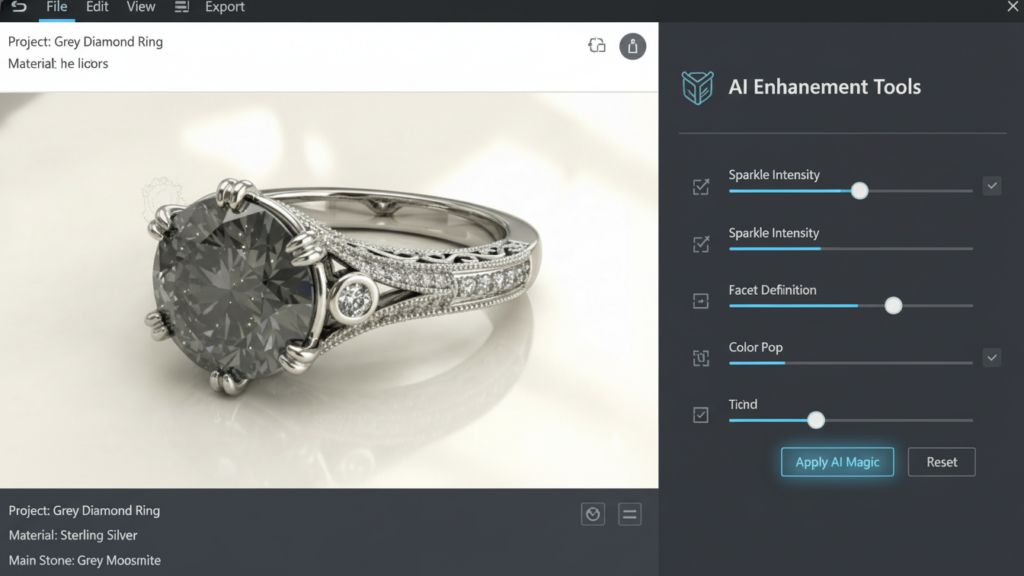
Several AI-powered tools lead the charge in jewelry photo retouching. Adobe Firefly, for example, offers generative features that fill in missing details or generate realistic reflections on metal surfaces. Users input prompts, and the system produces variations tailored to specific needs, such as enhancing gemstone brilliance in low-light shots.
Techniques like automated background removal stand out for their precision. AI identifies intricate edges around chains or pendants, separating them from backgrounds without manual clipping paths. Color correction follows suit, where algorithms match metal tones to real-life appearances, ensuring gold looks warm and silver remains cool. Gemstone enhancement involves boosting contrast to make diamonds appear more vibrant, a process that once required expert manual adjustments.
Other tools focus on batch processing, applying uniform edits across entire collections. This consistency proves vital for e-commerce platforms, where mismatched images can deter customers. Advanced techniques even simulate 3D effects, adding depth to flat photos through shadow creation. Professionals combine these with traditional methods to refine outputs, creating a hybrid approach that maximizes efficiency.
Benefits of AI for E-Commerce Jewelry Sellers
AI delivers tangible advantages to e-commerce jewelry sellers. It accelerates image preparation, enabling faster listings on platforms like Shopify or Etsy. Sellers upload photos, apply AI edits, and publish within minutes, outpacing competitors who rely on slower manual processes. This speed translates to increased sales, as fresh inventory attracts more browsers.
Quality improvements rank high among benefits. AI ensures every image meets professional standards, reducing returns due to mismatched expectations. Customers see accurate representations of shine and texture, building trust in the brand. Analytics show that optimized photos boost click-through rates by up to 30%, directly impacting revenue.
Cost savings emerge as another key perk. By minimizing the need for extensive photo shoots or hired retouchers, businesses allocate resources elsewhere. AI tools handle bulk tasks affordably, making high-end visuals feasible for startups. Services from providers like Clipping Expert Asia’s photo retouching service complement AI by offering expert oversight when needed, creating a balanced ecosystem.
- Enhanced Efficiency: Process dozens of images simultaneously, cutting turnaround times.
- Improved Accuracy: AI detects subtle flaws that human eyes might miss in fatigue.
- Scalability: Grow product lines without proportional increases in editing costs.
- Customization Options: Tailor edits to brand aesthetics, maintaining a cohesive look.
These benefits position AI as an essential ally for sellers navigating competitive online markets.
What AI Can’t Do Yet: Emphasizing the Limitations
Despite its strengths, AI falls short in several critical areas of jewelry photo retouching. It struggles with nuanced creative decisions that require artistic intuition. For example, AI might over-enhance a gemstone’s sparkle, making it appear unnatural, whereas a human retoucher adjusts based on aesthetic judgment. This limitation underscores the importance of human oversight in preserving the jewelry’s authentic appeal.
Complex reflections pose another challenge. Jewelry often features intricate light bounces on curved surfaces, and AI algorithms sometimes misinterpret these, resulting in distorted images. Professionals report that AI handles simple cases well but falters with multifaceted pieces like cluster rings, where shadows and highlights demand precise manual tweaks.
Ethical considerations highlight further gaps. AI lacks the ability to ensure cultural sensitivity in designs or verify the ethical sourcing of materials depicted in photos. It processes data without context, potentially amplifying biases from training datasets. Jewelers emphasize that these shortcomings necessitate human intervention to maintain integrity.
Moreover, AI cannot replicate the tactile understanding that comes from physical interaction with jewelry. Retouchers draw from real-world experience to anticipate how light interacts with different metals, a depth AI has not yet achieved. This gap becomes evident in high-stakes scenarios, such as luxury brand campaigns, where perfection is non-negotiable.
Industry experts stress these limitations to temper expectations. While AI automates routine tasks, it cannot replace the creative spark that defines exceptional retouching. Businesses that ignore this risk will experience subpar results, alienating discerning customers who value authenticity. Recognizing what AI can’t do yet encourages a collaborative approach, blending technology with human expertise for superior outcomes.
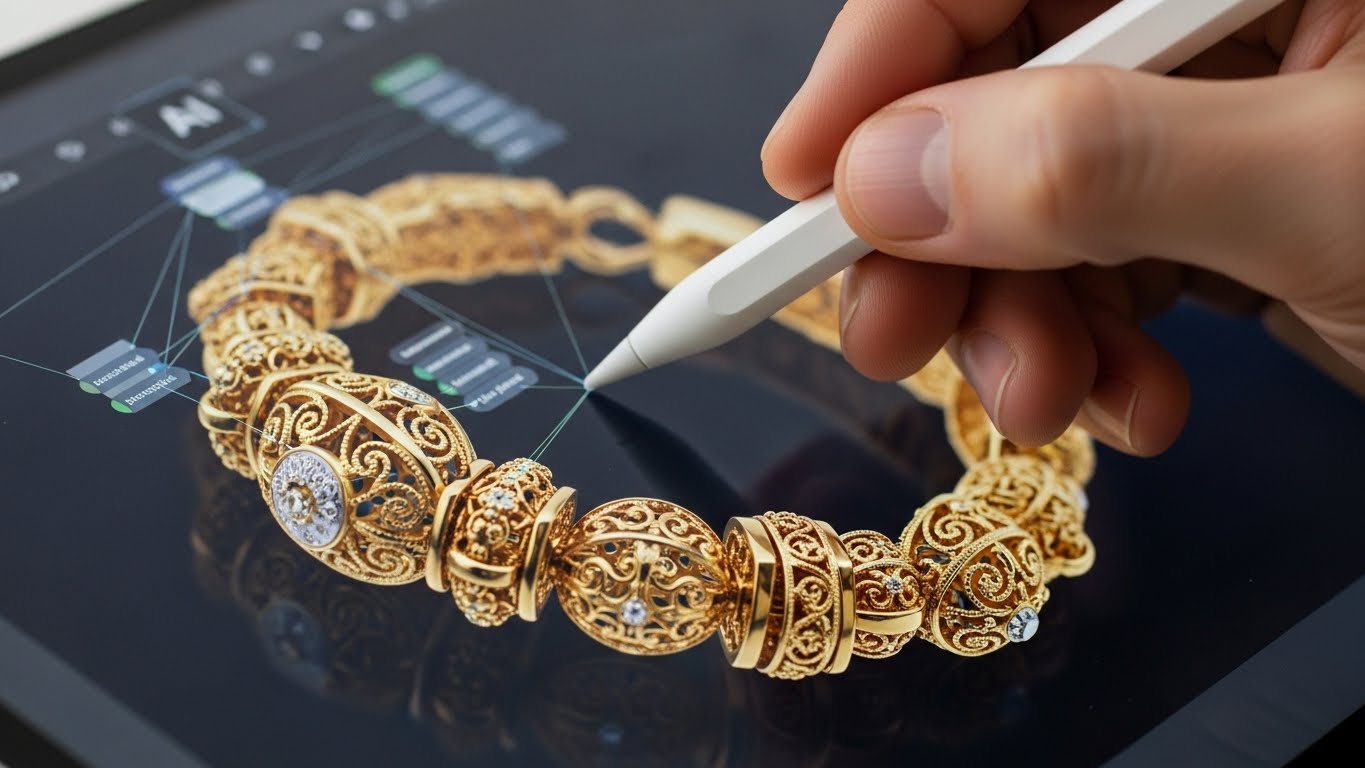
The Enduring Role of Human Expertise in Retouching
Human experts bring irreplaceable value to jewelry photo retouching. They interpret client visions, incorporating subtle preferences that AI overlooks. For instance, a retoucher might soften edges to evoke elegance, a decision rooted in experience rather than data.
Training and intuition allow humans to address AI’s blind spots effectively. They correct algorithmic errors, ensuring images align with brand standards. In collaborative workflows, professionals use AI as a starting point, then refine details for polished results.
Outsourcing to specialists enhances this dynamic. Firms offer tailored services that integrate AI tools with manual precision, delivering customized outcomes. Pricing models, such as those detailed on Clipping Expert Asia’s pricing page, make these accessible, allowing businesses to scale without compromising quality.
- Creative Interpretation: Humans adapt to unique artistic requirements.
- Quality Assurance: Manual checks prevent overlooked flaws.
- Personalization: Tailor edits to specific cultural or seasonal themes.
- Innovation: Experiment beyond AI’s programmed capabilities.
This synergy ensures retouching evolves thoughtfully, respecting both technology and craftsmanship.
Future Outlook: Where AI and Jewelry Retouching Head Next
Looking ahead, AI promises deeper integration into jewelry photo retouching. Predictions suggest that by 2030, AI could handle 80% of basic edits, with advancements in machine learning enabling more sophisticated tasks. Tools might simulate real-time lighting adjustments, revolutionizing virtual try-ons for e-commerce.
Hybrid models will likely dominate, where AI assists humans in real-time collaborations. Innovations like augmented reality could overlay retouched images onto user photos, enhancing personalization. However, ethical frameworks will guide development to address biases and privacy concerns.
Challenges remain, but opportunities abound. As AI learns from vast datasets, its accuracy in handling complex jewelry elements will improve. Jewelers who embrace this evolution while valuing human input will thrive in an increasingly digital marketplace.
In summary, AI transforms jewelry photo retouching by boosting efficiency and accessibility, yet its limitations highlight the vital role of human expertise. Balancing both ensures stunning visuals that drive sales and satisfy customers. For those seeking professional support, exploring options like Adobe’s AI photo editor features or specialized services can provide a strong foundation.
Frequently Asked Questions (FAQs)
- How does AI improve efficiency in jewelry photo retouching?
AI automates tasks like background removal and color correction, allowing professionals to process images faster and focus on creative aspects. - What are the main limitations of AI in retouching jewelry images?
AI often lacks artistic judgment, struggles with complex reflections, and requires human oversight to avoid unnatural results or ethical issues. - Can AI completely replace human retouchers for jewelry photos?
No, AI excels in routine tasks but cannot match human intuition for nuanced adjustments or creative decisions in high-quality work. - What future trends should jewelers watch in AI retouching?
Expect advancements in hybrid AI-human workflows, real-time edits, and augmented reality integrations for more immersive e-commerce experiences. - How can small businesses start using AI for jewelry photo retouching?
Begin with user-friendly tools like Adobe Firefly, and consider outsourcing to experts for complex needs to ensure professional outcomes.