


Best Sports Photo Background Ideas
December 5, 2025
Benefits and Drawbacks of AI Jewelry Retouching Tools
January 8, 2026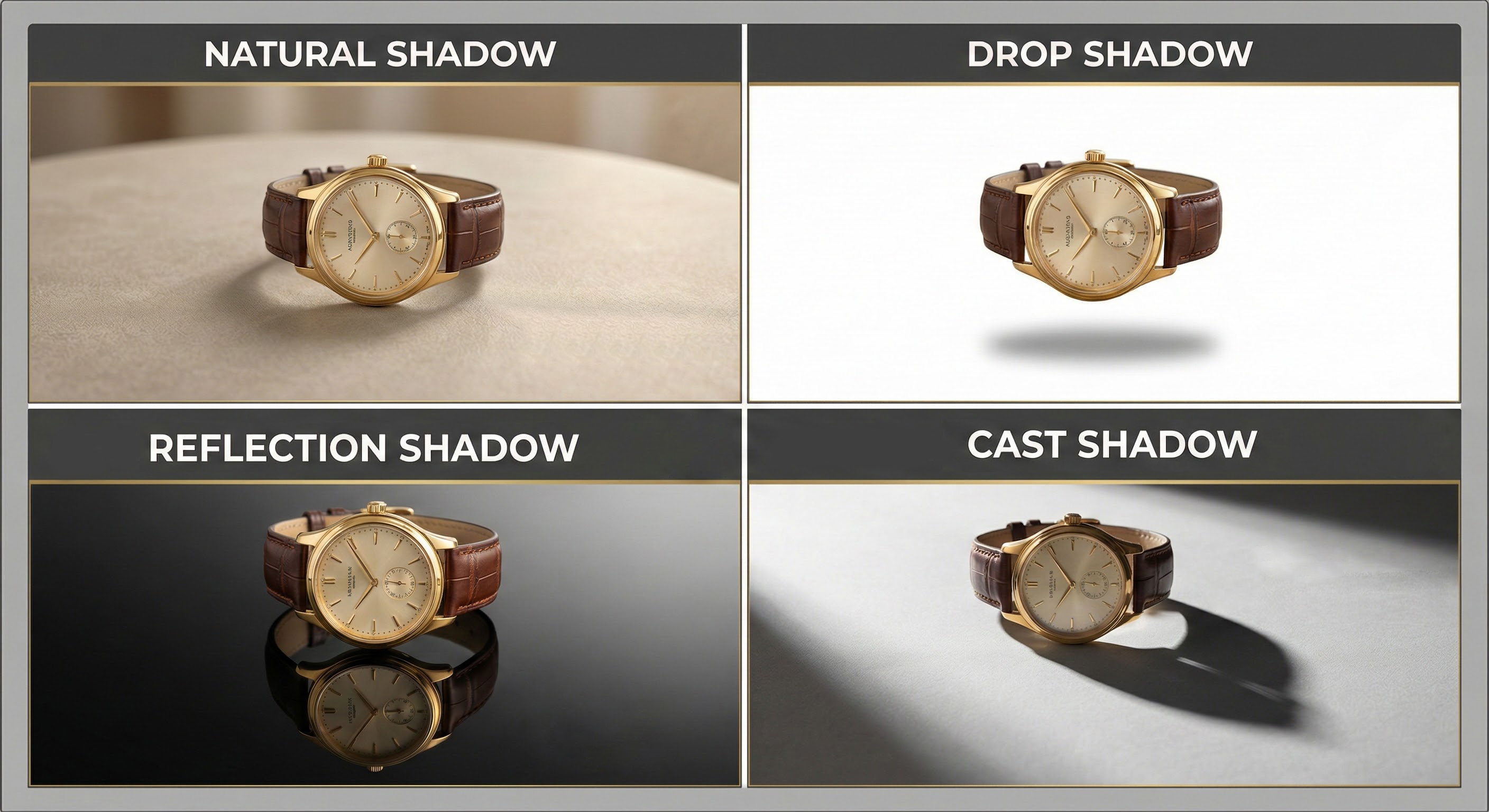
- Everything You Need to Know About Product Image Shadows
- What Exactly Is Shadow Creation?
- The Essential Types of Product Photography Shadows
- The Undeniable Importance of Shadows in E-commerce
- Actionable Tips for Creating Realistic Shadows
- Best Software and Tools for Shadow Creation
- Conclusion: Invest in Details That Drive Sales
- Frequently Asked Questions (FAQ)
Everything You Need to Know About Product Image Shadows
In the competitive landscape of e-commerce, your product image is your silent salesperson. It’s the first handshake, the initial pitch, and often the deciding factor for a customer. But what separates a good product photo from a great one? The answer usually lies in the details, especially in the subtle art of shadow creation.
An image without a proper shadow can look flat, unprofessional, and disconnected from reality, as if it’s floating on the page.
Shadow creation in product photography is a post-production technique where shadows are added or enhanced to make a product look grounded, three-dimensional, and realistic. It’s a fundamental step in professional e-commerce image editing that transforms a simple product cutout into a compelling visual that builds trust and drives sales. Whether you’re selling on Amazon or building your brand on Shopify, understanding how to apply high-quality shadows is a game-changer.
This guide explores everything you need to know about product photography shadows. You’ll learn the different types of shadows, from drop shadows to reflection shadows, why they matter for your business, and essential tips and tools for creating them.
What Exactly Is Shadow Creation?
Shadow creation is a digital editing process used to add realistic shadows to an image after the product has been cut out from its original background.
In a product photoshoot, the goal is to capture clean lighting and sharp details. But when the product is placed on a pure white background, the natural shadow often disappears. This leaves the product looking disconnected or “floating.”
A shadow creation service solves this by digitally recreating a shadow. This grounds the product, gives it depth, and makes it feel real and tangible. For online shoppers who can’t touch the product, shadows provide a sense of authenticity and presence, a psychological cue that boosts trust and sales.
The Essential Types of Product Photography Shadows
Different products require different types of shadows. Choosing the right one gives your catalog visual appeal and consistency.
1. Natural Shadow
A natural shadow replicates the soft shadow a product casts under natural lighting. Editors may keep part of the original shadow or recreate one from scratch. The goal is realism, making the product appear placed on a real surface.
Why it’s important:
It gives the highest level of authenticity.
Best for:
Furniture, shoes, electronics, kitchenware, and other items with a flat base.
2. Drop Shadow
The most common shadow used in e-commerce. A drop shadow sits directly beneath the product and gives a slight floating or lifted look.
Why it’s important:
It’s clean, simple, and highly consistent for large catalogs.
Best for:
Almost any product, especially those listed on Amazon, Shopify, and eBay.
3. Reflection Shadow (Mirror Effect)
This shadow creates a subtle reflection beneath the product, as if it’s resting on glass or a polished surface.
Why it’s essential:
It adds elegance and a premium feel.
Best for:
Jewelry, watches, sunglasses, cosmetics, and high-end products.
4. Cast Shadow
A cast shadow appears when the light source is angled, causing the shadow to extend to one side. It adds drama and realistic depth.
Why it’s essential:
It makes the product appear placed within a real environment.
Best for:
Apparel on ghost mannequins, furniture, or creative product presentations.
The Undeniable Importance of Shadows in E-commerce
High-quality shadows are not optional, they directly impact your conversions and brand image.
They Build Trust Through Realism
Shadows make products appear solid and grounded. Customers subconsciously trust images that look natural and three-dimensional.
They Enhance Professionalism
A well-shadowed product looks polished and premium. A product with a missing or poorly made shadow instantly appears amateurish.
They Improve Visual Focus
Shadows help separate the product from the background, guiding the viewer’s eye and making the product stand out.
They Increase Perceived Value
A high-end reflection shadow can make an item look more expensive. Better presentation leads to higher perceived value.
Actionable Tips for Creating Realistic Shadows
- Observe real shadows – Study how shadows behave under different lighting conditions.
- Stay consistent – Keep lighting direction, softness, and opacity the same across your catalog.
- Avoid pure black – Real shadows are dark gray with lower opacity, not solid black.
- Soften edges – Use blur to mimic natural softness.
- Match perspective – Ensure the shadow follows the product’s angle and height.
- Consider the surface – A reflective surface needs a reflection shadow; matte surfaces use natural shadows.
Best Software and Tools for Shadow Creation
Adobe Photoshop
The industry standard for professional shadow creation.
Key features include:
- Layers and opacity control
- Soft brushes
- Pen tool
- Drop shadow effects
- Gaussian blur for softening edges
Learning shadow creation in Photoshop is essential for serious e-commerce editing.
GIMP
A free, powerful alternative with similar tools, great for budget users.
Outsourcing to Professionals
For large batches or high-end products, outsourcing saves time and ensures consistent quality. Professional services can handle everything from clipping path shadows to advanced cast shadows.
Conclusion: Invest in Details That Drive Sales
In e-commerce, your product images speak before you do. Shadows aren’t a small detail, they’re a powerful visual tool that enhances realism, builds trust, and increases conversions.
From natural shadows for catalog items to reflection shadows for luxury products, each choice shapes your brand’s image. Whether you edit shadows yourself in Photoshop or hire a professional service, investing in high-quality shadow creation is one of the simplest ways to elevate your product presentation.
Frequently Asked Questions (FAQ)
What is shadow creation?
Shadow creation is the digital process of adding realistic shadows to product images to make them appear natural and grounded.
Why is shadow creation important for e-commerce?
Realistic shadows increase trust, boost perceived value, and enhance professional appearance.
What types of shadows are commonly used?
Natural shadow, drop shadow, reflection shadow, and cast shadow.
Can I create shadows without professional tools?
Yes, simple shadows can be made in GIMP, Canva, or Pixlr, but professional results require Photoshop or expert services.
How do shadows affect brand perception?
High-quality shadows show professionalism and attention to detail, improving trust and credibility.
Is outsourcing worth it?
Yes, especially for large batches or luxury items. It saves time and ensures consistent, high-quality results.