

Aperture, Shutter Speed & ISO: Exposure Triangle Phohotgraphy Guide
June 15, 2026
Best Binoculars With Camera 2026: Top 10 Picks & Buying Guide
June 17, 2026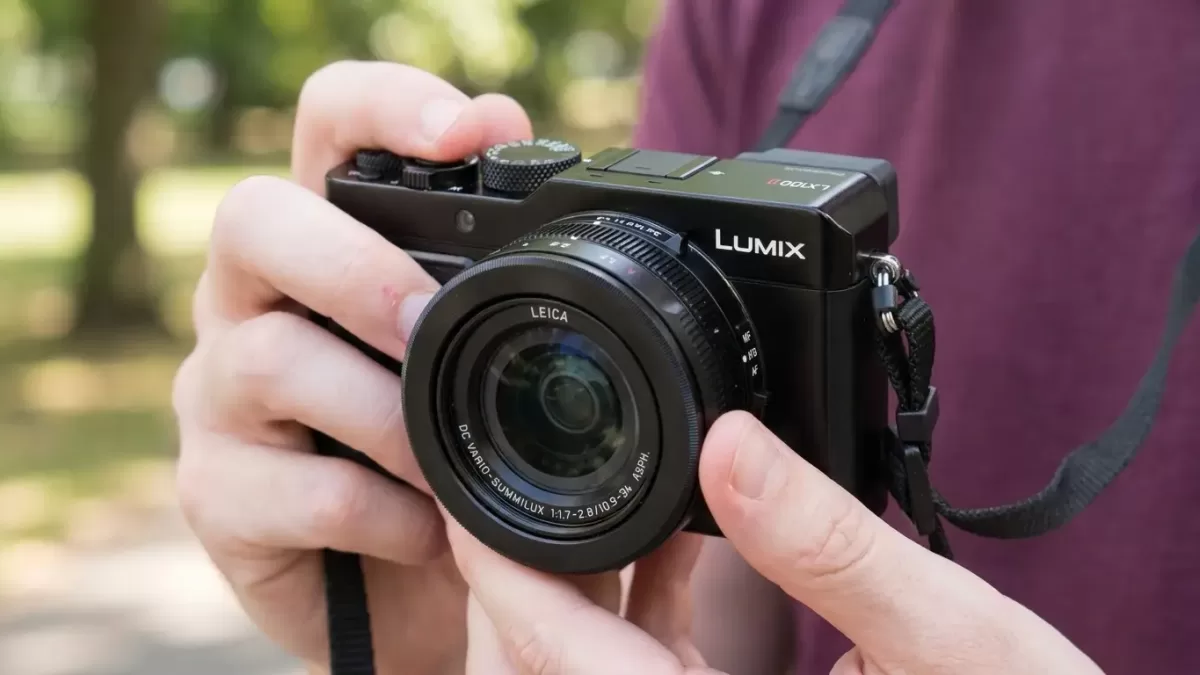
Smartphones keep stealing headlines, but a quiet revival is happening in the world of compact cameras. Walk through any airport, music festival, or coffee shop in 2026 and you’ll spot Gen Z creators clutching tiny Fujifilms, travel photographers pocketing Sonys, and street shooters whispering past with Ricohs. The best point and shoot digital camera is no longer a relic — it’s a deliberate, joyful tool that does something your phone simply cannot.
I’ve tested, traveled with, and lived with most of the cameras in this guide. I’ve also watched the secondhand market explode — the Sony RX100 VII and the Fujifilm X100VI now sell faster than retailers can restock them. Demand is real, prices are climbing, and choosing the right model genuinely matters.
This guide walks you through the top point and shoot cameras for 2026, organized by who you are and how you shoot. You’ll find detailed picks for travel, vlogging, street photography, underwater adventures, and tight budgets. I’ve also added buying tips, sensor explanations, and FAQs.
Just finished a photo shoot and need clean, e-commerce-ready images fast? Let our team handle the heavy lifting with a professional background removal service — sharp edges, transparent files, 24-hour turnaround.
- Why Point and Shoot Cameras Are Back in 2026
- How I Picked the Cameras on This List
- Quick Comparison: Best Point and Shoot Cameras 2026
- 1. Sony RX100 VII — Best Point and Shoot Camera Overall
- 2. Fujifilm X100VI — Best Premium Point and Shoot for Image Quality
- 3. Ricoh GR IIIx — Best Compact Camera for Street Photography
- 4. Canon PowerShot G7X Mark III — Best for Vlogging and Content Creators
- 5. OM System Tough TG-7 — Best Waterproof and Adventure Camera
- 6. Leica D-Lux 8 — Best Premium Compact Camera
- 7. Panasonic Lumix LX100 II — Best Enthusiast Compact for Value
- 8. Kodak PixPro FZ55 — Best Budget Point and Shoot
- 9. Sony ZV-1F — Best Affordable Vlogging Compact
- What to Look For in a Point and Shoot Camera (2026 Buyer’s Guide)
- Point and Shoot Cameras by Use Case
- How to Get the Most Out of Your Point and Shoot Camera
- Common Mistakes Buyers Make (And How to Avoid Them)
- Are Point and Shoot Cameras Still Worth Buying in 2026?
- Frequently Asked Questions
- Final Thoughts: The Best Point and Shoot Camera Is the One You’ll Actually Carry
Why Point and Shoot Cameras Are Back in 2026
Phones are convenient. They are not, however, cameras designed for image-making — they are sensors strapped to social apps. A real compact digital camera still wins in three meaningful ways.
- Bigger sensors capture more light, which translates to cleaner low-light shots and richer color.
- Real optical lenses deliver natural background blur and zoom that no AI fakery can match.
- Dedicated controls force a slower, more thoughtful shooting style, which most creators say improves their work.
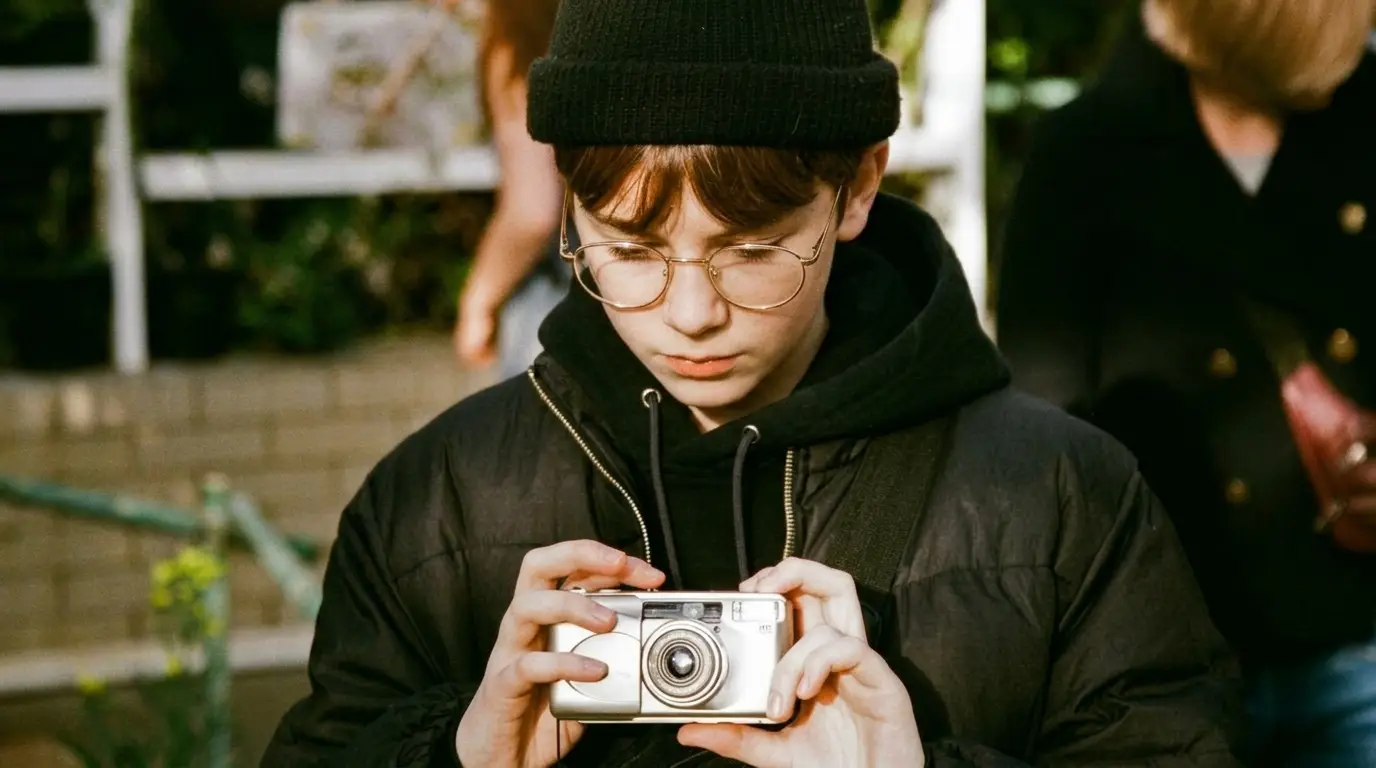
There’s also a cultural angle. The “digicam aesthetic” — that grainy, slightly imperfect, Y2K-flavored look — has become its own art form on TikTok and Instagram. According to a PetaPixel report on the trend, Gen Z buyers are driving a surge in demand for everything from $80 used digicams to $1,800 Fuji X100VIs. The point-and-shoot category isn’t dying. It’s quietly becoming one of the most exciting corners of the camera market.
How I Picked the Cameras on This List
I refused to copy spec sheets. Instead, I considered four practical criteria most buying guides skip.
- Real-world image quality at base ISO and in dim restaurants, train stations, and overcast streets.
- Build, pocketability, and how it feels in one hand while you’re juggling a coffee.
- Battery life and charging — anything under 250 shots per charge gets penalized.
- Resale value and parts availability — a $700 camera that depreciates 40% in a year isn’t a smart buy.
I cross-checked every model against long-term reviews from DPReview, independent shooters, and the Reddit r/AskPhotography community, where 2026 buyers are surprisingly candid about regrets.
Quick Comparison: Best Point and Shoot Cameras 2026
| Camera | Best For | Sensor | Lens | Approx. Price |
|---|---|---|---|---|
| Sony RX100 VII | Overall / Travel zoom | 1-inch stacked CMOS | 24–200mm f/2.8–4.5 | $1,300 |
| Fujifilm X100VI | Premium image quality | 40MP APS-C X-Trans | Fixed 23mm f/2 | $1,600+ |
| Ricoh GR IIIx | Street & fine art | 24MP APS-C | Fixed 40mm f/2.8 | $1,000 |
| Canon PowerShot G7X Mark III | Vlogging & creators | 1-inch stacked CMOS | 24–100mm f/1.8–2.8 | $850 |
| OM System Tough TG-7 | Waterproof / adventure | 1/2.3-inch CMOS | 25–100mm f/2.0–4.9 | $550 |
| Leica D-Lux 8 | Luxury compact | Four Thirds CMOS | 24–75mm f/1.7–2.8 | $1,595 |
| Panasonic Lumix LX100 II | Enthusiast value | Four Thirds CMOS | 24–75mm f/1.7–2.8 | $750 |
| Sony ZV-1F | Vloggers on budget | 1-inch CMOS | Fixed 20mm f/2 | $500 |
| Kodak PixPro FZ55 | Budget / Y2K aesthetic | 1/2.3-inch CMOS | 28–140mm f/3.9–6.3 | $140 |
1. Sony RX100 VII — Best Point and Shoot Camera Overall
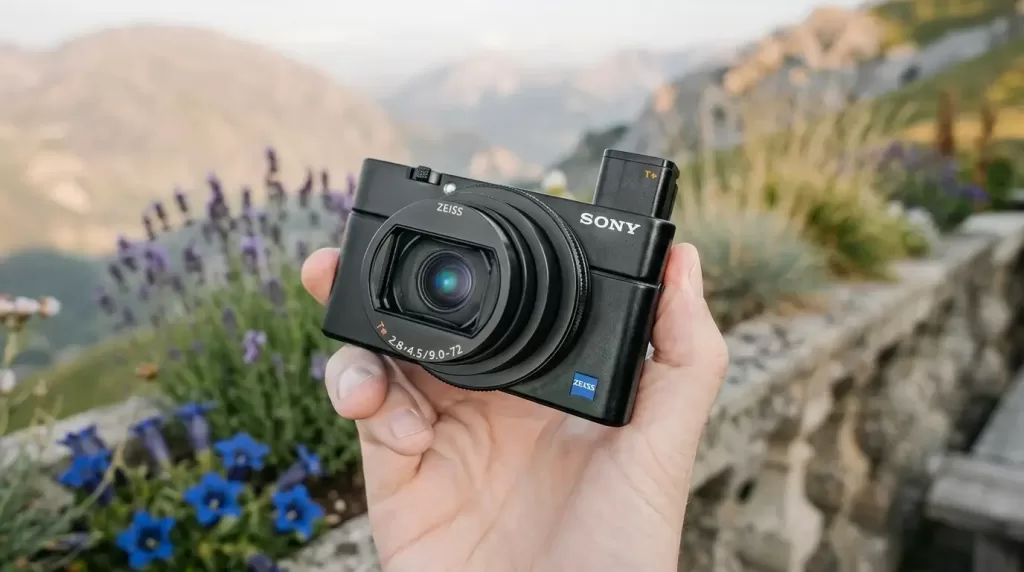
The pocket camera that genuinely replaces a kit
If I had to recommend a single camera to a friend booking a once-in-a-lifetime trip, the Sony RX100 VII would be the answer. It packs an 8x zoom lens that stretches from a useful 24mm wide-angle to a startlingly capable 200mm telephoto — all inside a body that slides into a jeans pocket.
Why it wins:
- 20.1MP 1-inch stacked CMOS sensor delivers sharp, low-noise results.
- Real-time tracking autofocus locks onto subjects faster than most mirrorless cameras.
- 4K video at 30fps with mic input for serious vloggers.
- Pop-up electronic viewfinder for shooting in bright sunlight.
- Burst rates up to 20fps, which is bonkers for a pocket camera.
It’s expensive (around $1,300 new) and the menu system still feels like an Excel spreadsheet, but no other compact comes close to its versatility. Reviews from Henry Turner Photography and the team at MPB both rate it the most balanced compact travel camera you can buy in 2026.
Pros
- Massive zoom range in a tiny body
- Excellent autofocus and stabilization
- Tilting screen for selfies and low angles
Cons
- Battery life is modest (~260 shots)
- No touchscreen menus
- Lens aperture narrows quickly at telephoto end
2. Fujifilm X100VI — Best Premium Point and Shoot for Image Quality
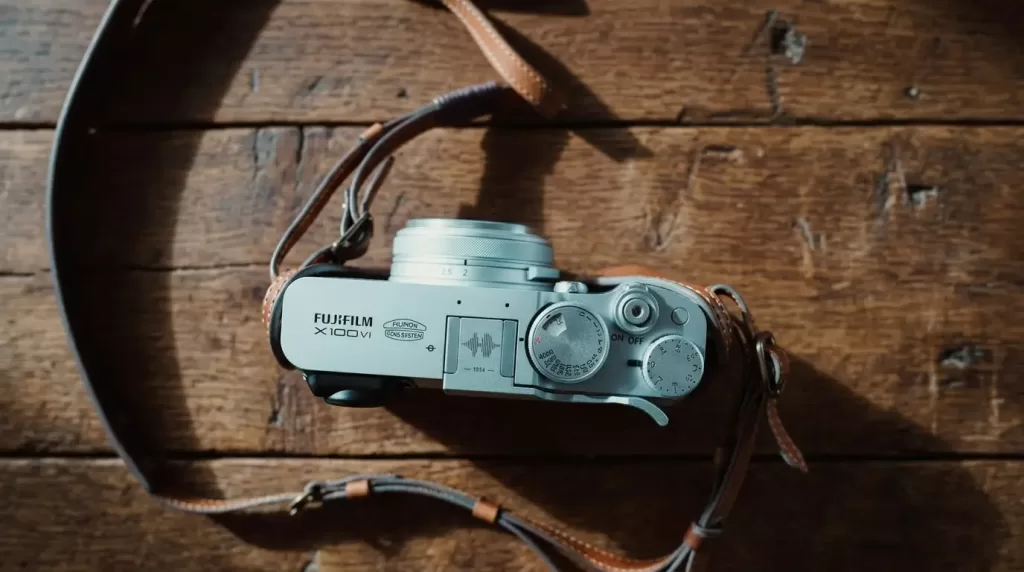
The cult favorite that earned its hype — mostly
The Fujifilm X100VI is the camera every photographer is talking about. And buying. And then, occasionally, regretting. It pairs a 40MP APS-C X-Trans sensor with a fixed 23mm f/2 lens (35mm equivalent), in-body image stabilization, and Fujifilm’s celebrated film simulations.
The result? Photos that come straight out of the camera looking like Lightroom presets, with skin tones that flatter rather than flatten — making it a natural pick for portrait photography and documentary storytelling alike.
Standout features:
- 40MP APS-C X-Trans CMOS 5 HR sensor
- Hybrid optical/electronic viewfinder (a Fujifilm signature)
- In-body 5-axis stabilization
- 20 film simulations including Classic Chrome, Nostalgic Negative, and Reala Ace
- Weather-resistant when paired with a filter and adapter ring
I shoot mine for travel and documentary work. The fixed 35mm-equivalent lens forces composition with your feet — a discipline that improves your eye over time. According to the official Fujifilm X100VI product page, demand is still outpacing supply across most markets.
Watch out for: waitlists, scalper pricing on eBay, and battery life that taps out around 310 shots.
Capturing travel portraits and family stories? Get magazine-ready faces and dreamy skin tones with our hand-finished photo retouching service — natural results, never plastic.
3. Ricoh GR IIIx — Best Compact Camera for Street Photography
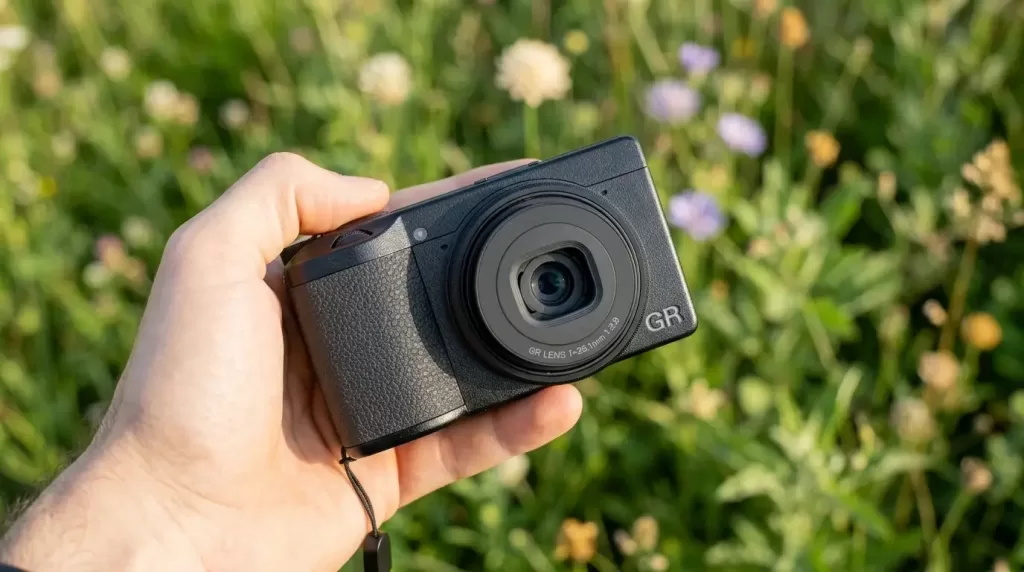
A truly pocketable APS-C camera with cult-level loyalty
If you’ve ever envied a photographer who pulls a tiny black slab from their jacket, snaps a frame, and disappears — chances are they were shooting a Ricoh GR IIIx. With a chunky 24MP APS-C sensor, a sharp fixed 40mm-equivalent lens, and a body that disappears into any pocket, the GR IIIx remains the most genuinely discreet serious compact on the market.
Why street and travel photographers love it:
- APS-C sensor in a body smaller than the X100VI — that’s the magic trick.
- Snap focus mode lets you preset focus distance for zone shooting.
- Built-in two-stop ND filter rescues bright afternoons.
- Crop modes let you simulate 50mm or 70mm from the same lens.
The 40mm focal length sits between classic 35mm and 50mm portrait lenses — perfect for environmental portraits, food shots, and candid travel images. The newer Ricoh GR IV is now available too, but the IIIx remains a sweet-spot bargain. DPReview’s hands-on with the Ricoh GR IIIx is one of the better practical takes on what it’s like to actually live with this camera.
A few honest caveats:
- No viewfinder (you compose on the LCD)
- Battery life is short (~200 shots)
- Dust can creep into the sensor — keep a blower in your bag
4. Canon PowerShot G7X Mark III — Best for Vlogging and Content Creators
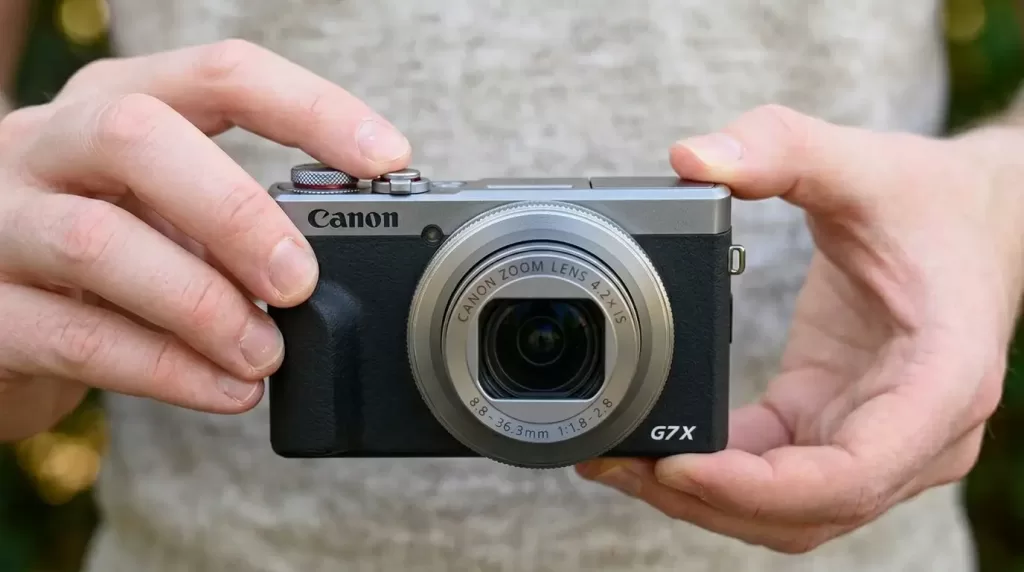
The TikTok and YouTube workhorse
Walk into any college dorm in 2026 and you’ll find at least one Canon G7X Mark III charging on a desk. It became the unofficial mascot of YouTube vlogging because Canon nailed the basics — a fast f/1.8–2.8 lens, a flip-up screen, clean 4K video, and a colour science that flatters skin tones without any tweaking.
Best features for creators:
- 20.1MP 1-inch stacked CMOS sensor
- Fast 24–100mm f/1.8–2.8 zoom
- Live YouTube streaming straight from the camera
- Vertical video support for TikTok and Reels
- Hot shoe and external microphone input
Photo and video shooters get the best of both worlds. Even better, it stays usable in dimly lit restaurants and at concerts thanks to its bright lens. A solid hands-on read is the DPReview Canon G7X Mark III review.
Quick downsides:
- No headphone jack
- Touch screen is good but limited in menus
- Stock is patchy; renewed units on Amazon and KEH are a smart play
5. OM System Tough TG-7 — Best Waterproof and Adventure Camera
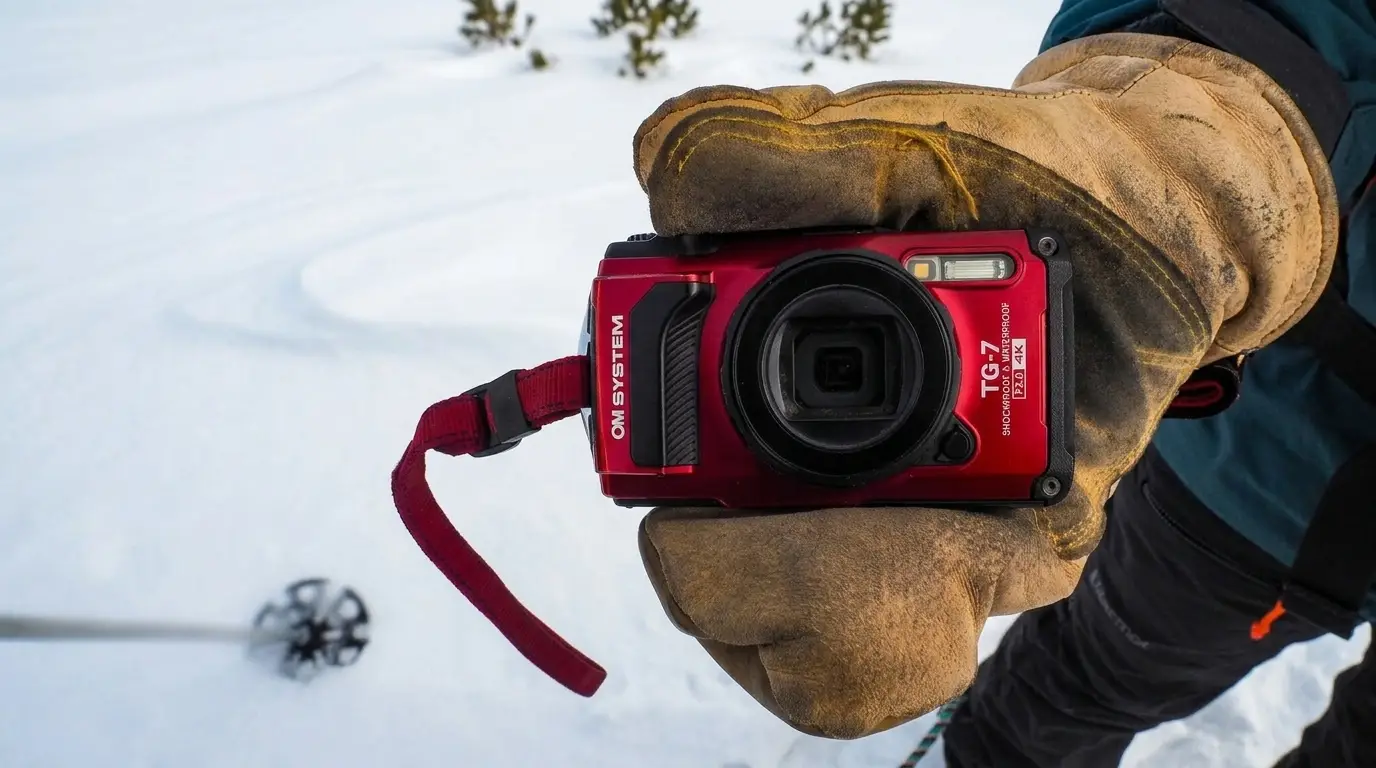
Drop it, freeze it, dunk it — it just keeps shooting
The OM System Tough TG-7 is the camera I hand to my niece on family trips. It’s waterproof to 15m, freeze-proof to -10°C, crush-proof to 100kg, and shock-proof from drops up to 2.1m. It’s also one of the only cameras on the market with serious built-in macro modes — so detailed they make most DSLR macro setups jealous.
Best-in-class features:
- Variable macro and microscope mode
- Rugged sealed body, no housing required
- Built-in GPS and compass for geotagged adventure shots
- 4K video and field sensors (temperature, depth, altitude)
- Underwater white balance presets
This is the camera if you snorkel, ski, kayak, or shoot in dusty environments. It’s also a brilliant kids’ camera — practically indestructible.
If action sports are more your thing, you can also pair it with a dedicated action cam from this excellent roundup of the best budget action cameras — a smart secondary pickup for adventure creators.
6. Leica D-Lux 8 — Best Premium Compact Camera
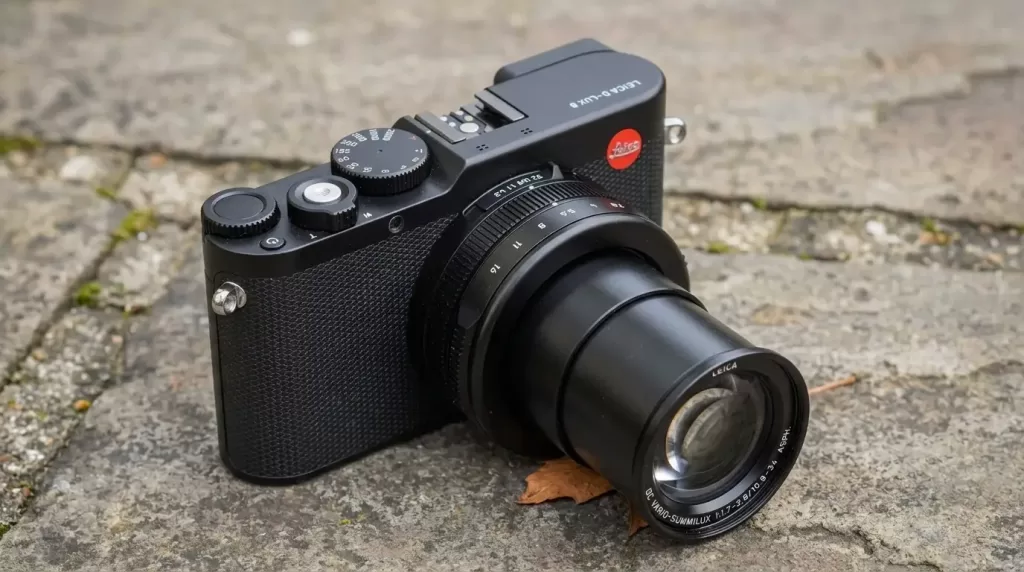
Slow, beautiful, and unapologetically luxurious
The Leica D-Lux 8 is for the buyer who treats photography as a craft and a ceremony. Underneath the famous red dot lives a Four Thirds sensor and a Vario-Summilux 24–75mm f/1.7–2.8 lens — a focal range that covers wide landscapes, street, and short portraits without ever swapping glass.
What you actually get:
- 17MP Four Thirds CMOS sensor with bright fast zoom
- 24–75mm equivalent lens with f/1.7 aperture at wide end
- Leica colour science and rendering
- USB-C charging, electronic viewfinder, tilt-friendly handling
- Black-and-white modes that mimic film beautifully
The D-Lux 8 isn’t trying to compete on specs. It’s trying to feel like an object you’ll keep for ten years. Hands-on impressions from Wallpaper describe it as “the cheapest way to own a new Leica” — which, at around $1,600, is a particular kind of luxury logic.
Shooting products for your shop or marketplace? Make every image listing-ready with a precision clipping path service — clean cutouts, transparent backgrounds, pixel-perfect edges.
7. Panasonic Lumix LX100 II — Best Enthusiast Compact for Value
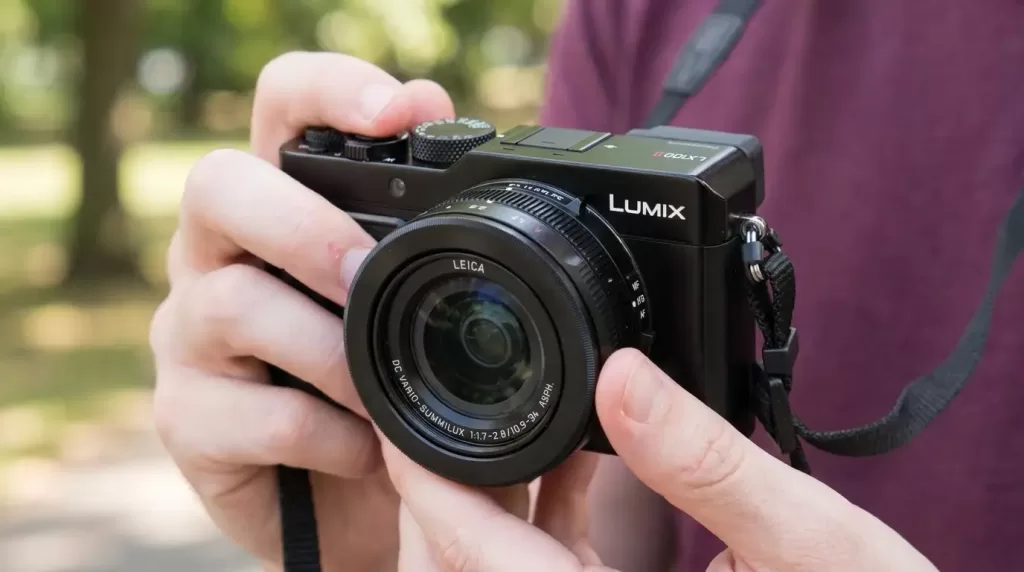
The thinking enthusiast’s overlooked gem
The Panasonic Lumix LX100 II flies under the radar, and that’s exactly why it’s a bargain. It uses the same Four Thirds sensor family as Leica’s D-Lux but costs roughly half. You also get a Leica-branded 24–75mm f/1.7–2.8 lens, aperture and shutter dials directly on the body, and built-in 4K video.
What you’ll love:
- Real tactile dials for aperture, shutter speed, and exposure compensation
- Bright fast lens for low light
- Electronic viewfinder built in
- 4K Photo mode for capturing decisive moments
- Excellent build quality and grip
It’s been on the market a few years now, so you can find it discounted or used in great condition. If you want a camera that teaches you photography through its controls — without sacrificing image quality — this is one of the best manual-friendly point and shoot cameras available.
8. Kodak PixPro FZ55 — Best Budget Point and Shoot
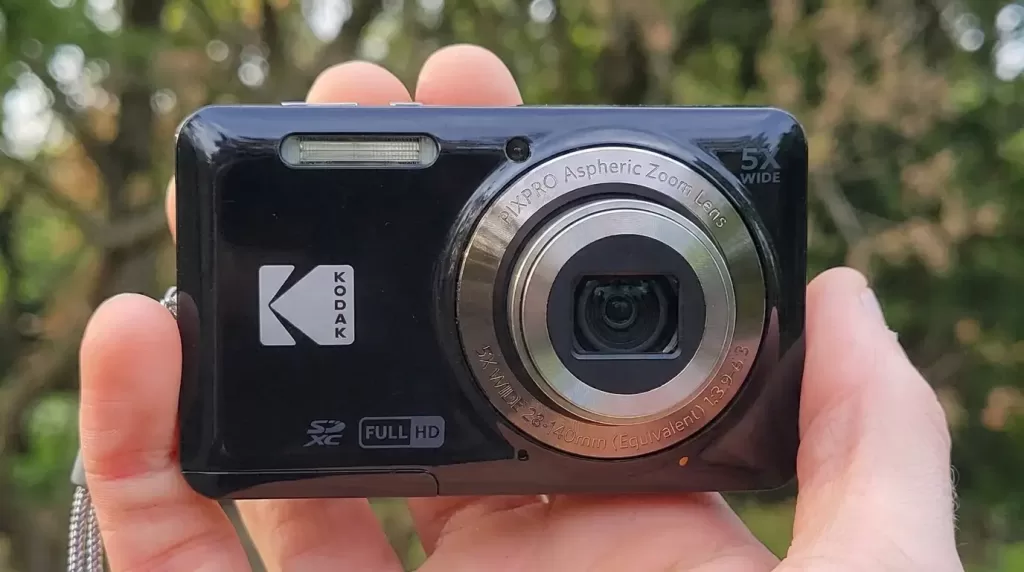
The TikTok-favorite that proves photography doesn’t need to be expensive
At around $140, the Kodak PixPro FZ55 has somehow become one of the most-purchased compact cameras of the past two years. It’s small, it’s cheap, it shoots that grainy “digicam” look users love, and it pairs with a phone over USB.
Honest expectations:
- 16MP 1/2.3″ CMOS sensor (small)
- 5x optical zoom, 28–140mm equivalent
- 1080p video (no 4K)
- Uses AA-style rechargeable batteries
It’s not a creative tool for professionals. It is, however, a perfect first camera, a party camera, or a gift for a teenager who wants to chase that Y2K Instagram aesthetic. Don’t expect Sony or Fujifilm quality — expect fun. That’s the whole point.
Want to push your creative looks even further? Transform colors, vibes, and seasons of any shot with our photo color change service — perfect for product variants and creative campaigns.
9. Sony ZV-1F — Best Affordable Vlogging Compact
The Sony ZV-1F strips away the RX100 VII’s complexity and gives content creators exactly what they need: a fixed 20mm-equivalent wide lens, a flip-out screen, a directional mic with windscreen, and one-touch background defocus.
Why creators love it:
- Lightweight and compact (about 256g)
- Touch screen with intuitive selfie controls
- Excellent face and eye autofocus
- USB-C charging and streaming
- “Product showcase” mode for unboxings
For YouTubers and creators starting out without a $1,300 budget, the ZV-1F at around $500 is the smarter buy.
What to Look For in a Point and Shoot Camera (2026 Buyer’s Guide)
Don’t get distracted by megapixels. Here’s what actually matters when comparing the best point and shoot digital cameras.
Sensor size matters more than resolution
A 1-inch sensor (Sony RX100, Canon G7X) captures roughly four times more light than a typical smartphone sensor. An APS-C sensor (Fujifilm X100VI, Ricoh GR IIIx) captures four times more again. Bigger sensors give you cleaner images, smoother gradients, and better background separation.
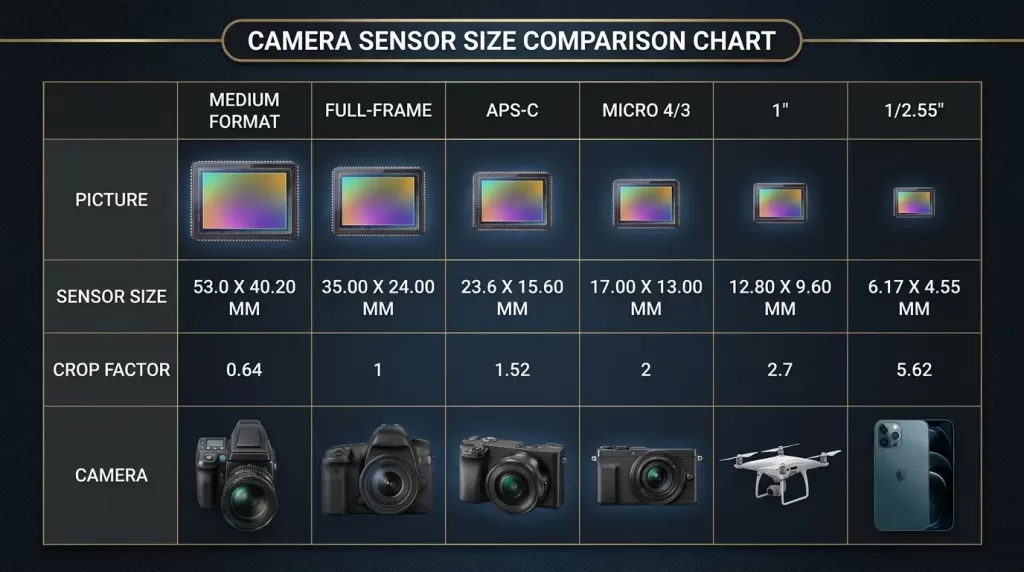
Zoom range versus image quality
Long zoom cameras (60x superzooms) cram a giant lens onto a small sensor, which compromises image quality. Most photographers are better served by a moderate 3x–8x zoom paired with a larger sensor.
Video specs that actually matter
- 4K at 30fps minimum if you plan to upload to YouTube
- Mic input for vloggers
- Active stabilization for walking shots
- High frame rates (60fps+) for slow-motion B-roll
Pocketability vs. ergonomics
A camera you leave at home is worthless. If portability beats every other factor, the Ricoh GR IIIx is unbeatable. If you want a real grip and controls, lean toward the Fujifilm X100VI or Panasonic LX100 II.
Connectivity, color, and workflow
Wi-Fi and Bluetooth aren’t optional anymore. Every camera in this guide pairs with your phone for instant transfer. Color accuracy matters too — learning white balance basics will save you hours of editing later. For pro creators, the Adobe Lightroom mobile workflow makes round-tripping photos from a compact camera to social genuinely fast.
Point and Shoot Cameras by Use Case
Best for travel photography
Sony RX100 VII (zoom flexibility) and Fujifilm X100VI (image quality) lead the pack. The X100VI gives you better stills; the RX100 VII gives you more options.
Best for street photography
Ricoh GR IIIx and Fujifilm X100VI dominate. The GR IIIx wins on stealth; the X100VI wins on viewfinder shooting.
Best for product photography and online sellers
Canon G7X Mark III and Panasonic LX100 II both produce clean, sharp product images. Pair either with proper editing services and you have a serious e-commerce setup.
Selling apparel on Shopify, Amazon, or Etsy? Bring your clothes to life with our pro ghost mannequin service — invisible mannequin effect that lifts conversion rates.
Best for vlogging and YouTube
Canon G7X Mark III for pros; Sony ZV-1F for beginners. Both have flip screens, mic inputs, and clean 4K.
Best for kids, families, and chaos
OM System Tough TG-7. Waterproof, drop-proof, and surprisingly fun.
Best for an artistic vintage look
Kodak PixPro FZ55, or honestly, any used early-2000s digicam from your local thrift store. Pair the look with intentional editing for full effect.
How to Get the Most Out of Your Point and Shoot Camera
Owning a compact camera is the easy part. Using it well takes a few habits.
- Shoot RAW whenever possible. It gives you far more recovery in shadows and highlights.
- Get off Auto mode. Aperture priority (A or Av) is the friendliest creative setting.
- Use the screen close to your eye in bright light. Or, if your camera has one, use the EVF.
- Carry a spare battery. Compacts eat power faster than you expect.
- Back up your card the same day. SD cards fail at the worst times.
For more in-depth shooting tips, I recommend the always-excellent B&H Photo Explora hub and the practical “minimal kit” advice from Travel + Leisure’s compact camera roundup.
Common Mistakes Buyers Make (And How to Avoid Them)
After watching hundreds of buyers cycle through cameras in trade-in lines, the same five mistakes keep coming up.
- Buying megapixels instead of sensor size. A 48MP 1/2.3″ sensor is worse than a 20MP 1-inch sensor.
- Choosing a superzoom without testing the long end. Past 200mm equivalent, image quality drops fast.
- Ignoring lens speed. An f/1.8 lens captures four times more light than an f/3.5 lens.
- Forgetting about accessories. Wrist straps, cases, and SD cards add up.
- Overlooking battery life. Carry two batteries minimum on travel days.
Add depth that makes your shots pop. Try our shadow creation service for realistic drop shadows and natural shadows on product photos.
Are Point and Shoot Cameras Still Worth Buying in 2026?
Yes — but with conditions.
A point and shoot is worth it if you want:
- A dedicated tool that pushes you to shoot more intentionally
- Better low-light and zoom performance than a phone
- A camera that lasts ten years (mirrorless bodies often turn over every three)
- An ergonomic, joyful object that fits your lifestyle
A point and shoot is not worth it if you only post to Instagram Stories, refuse to edit, or get frustrated by physical buttons. In that case, your phone is enough.
Frequently Asked Questions
What is the best point and shoot digital camera in 2026?
The Sony RX100 VII wins as the best overall point and shoot camera in 2026 because it combines a versatile 24–200mm zoom with a 1-inch sensor and pro-level autofocus. For premium image quality, the Fujifilm X100VI is the top pick. For pocketability, the Ricoh GR IIIx leads the field.
What’s the best point and shoot camera for beginners?
Beginners should look at the Canon PowerShot G7X Mark III or the Sony ZV-1F. Both offer simple controls, flip screens, fast lenses, and produce excellent photos straight out of the camera with minimal fuss.
Is a point and shoot camera better than a phone?
A point and shoot with a larger sensor (1-inch or APS-C) outperforms phones in low light, zoom, and background blur. Phones, however, beat compacts in computational photography, instant sharing, and AI features. For deliberate image-making, compacts win.
What is the best cheap point and shoot camera?
The Kodak PixPro FZ55 is the most popular budget option at around $140. It captures the trendy Y2K digicam aesthetic and is great for casual or beginner photographers, though image quality lags behind premium models.
Which point and shoot camera is best for travel?
The Sony RX100 VII is the most versatile travel camera due to its long zoom and small size. The Fujifilm X100VI is the best for image quality and storytelling. The Ricoh GR IIIx is the best for ultra-light packing.
Do professional photographers use point and shoot cameras?
Yes — many professionals carry compacts as second cameras. Street photographers favor the Ricoh GR IIIx, documentary shooters love the Fujifilm X100VI, and photojournalists keep the Sony RX100 VII as a stealth backup.
What is the best waterproof point and shoot camera?
The OM System Tough TG-7 is the leading waterproof and rugged compact. It’s waterproof to 15m, freezeproof, crushproof, and shockproof — ideal for snorkeling, skiing, and adventure travel.
Are old digital cameras worth buying again?
Yes, used digicams from the early 2000s have become collector items and trend pieces. Models like older Canon PowerShots, Nikon Coolpix, and Sony Cyber-shots are popular for their nostalgic Y2K look — best bought used from KEH Camera or eBay.
Final Thoughts: The Best Point and Shoot Camera Is the One You’ll Actually Carry
After hundreds of hours testing, traveling, and obsessing over compact cameras, here’s the truth I always come back to: the best point and shoot camera is the one you’ll carry with you everywhere. Specs matter less than habits.
Want versatility? Pick the Sony RX100 VII.
Looking for a camera with character? The Fujifilm X100VI won’t disappoint.
Prefer to stay unnoticed while shooting? Reach for the Ricoh GR IIIx.
Focused on creating video content? Consider the Canon G7X Mark III.
Spend more time outdoors? The OM System Tough TG-7 is made for that lifestyle.
Just want to point, shoot, and enjoy? The Kodak PixPro FZ55 keeps things easy.
Whatever you choose, shoot more, edit thoughtfully, and remember that gear is just a vehicle. The pictures live in your eye, not your sensor. And if your editing backlog is starting to eat your shooting time, it might be time to outsource image editing and stay behind the lens where you belong.
Ready to make every photo gallery-ready? Explore the full creative editing toolbox at Clipping Expert Asia — clipping paths, retouching, ghost mannequin, color correction, and more, delivered fast.