


Best Cameras for Photography in 2026: The Ultimate Buyer’s Guide
May 23, 2026
Camera Lens Filters Explained: The Complete 2026 Guide
May 25, 2026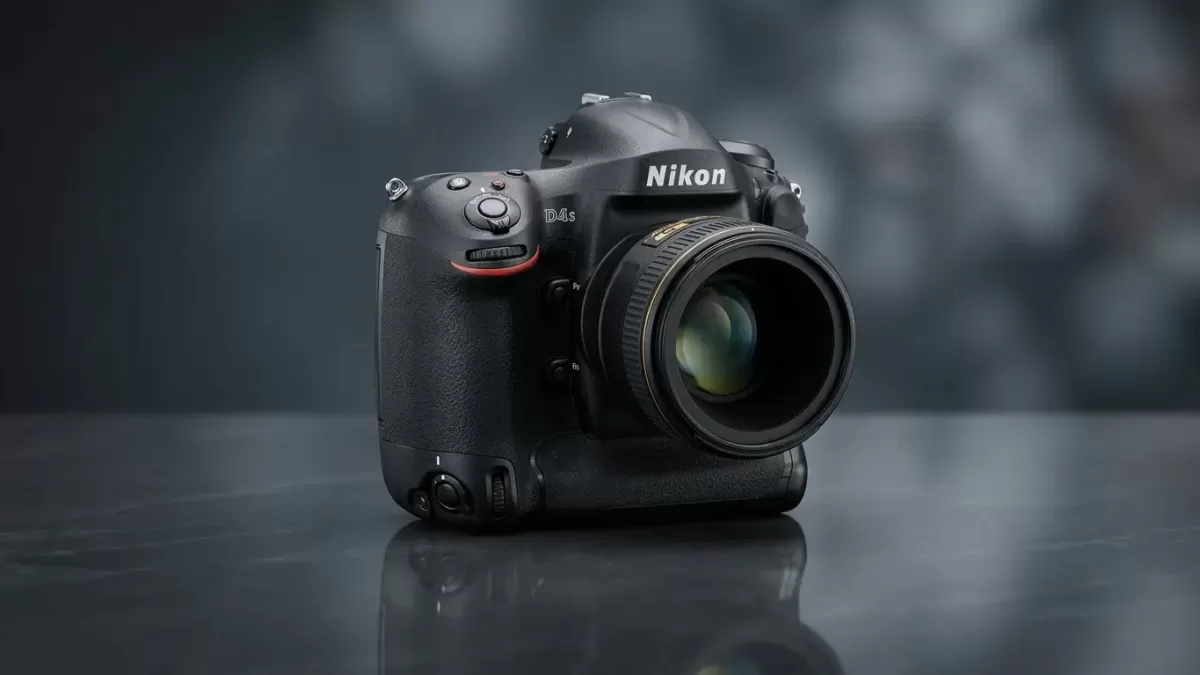
- Introduction: A Flagship That Refuses to Retire
- Who Should Actually Care About the Nikon D4S?
- Nikon D4S Specifications at a Glance
- Build Quality and Ergonomics: Engineered Like a Hammer
- Image Quality and Low-Light Performance: The D4S’s Real Superpower
- Autofocus and Burst Performance: Where the D4S Earns Its Reputation
- Video Capabilities: Competent, Not Cinematic
- Battery Life and Storage: Where the D4S Embarrasses Modern Cameras
- Connectivity and Workflow: Built for Wired Pros
- Nikon D4S vs Nikon D4: Is the Upgrade Worth It?
- Nikon D4S vs the Modern Competition
- Best Lenses to Pair With the Nikon D4S in 2026
- Real-World Use Cases: Where the D4S Excels
- Pros and Cons: A Working Photographer’s Verdict
- Should You Buy a Used Nikon D4S in 2026?
- Tips to Maximize Your Nikon D4S
- Frequently Asked Questions
- Final Verdict: A Workhorse That Refuses to Quit
Introduction: A Flagship That Refuses to Retire
Nikon unveiled the D4S on February 25, 2014, and the company made a deliberate choice — it refined every working part of its flagship rather than chasing a flashy reinvention. Photojournalists, sports shooters, and wildlife pros received a tool engineered to survive the field. More than a decade later, that same $6,499.95 statement piece now sells for roughly $600 to $1,200 on the used market, and it still earns its place in working photographers’ bags (DPReview).
That value gap explains why so many photographers keep typing “Nikon D4S review” into search engines in 2026. The mirrorless revolution promised to make every DSLR obsolete, yet the D4S keeps showing up at football sidelines, wedding receptions, and concert pits. Nikon built it like a tank, optimized it for moving subjects, and gave it a sensor that still ranks among the best low-light performers ever shipped.
This review walks through what makes the D4S special, where it falls short by 2026 standards, and who should still buy one. I’ve cross-referenced years of professional testing so you can make a buying decision with full context — not marketing fluff.
Already shooting with a D4S and want every frame to look print-ready? Try our professional photo retouching service for studio-perfect color and detail finishing.
Who Should Actually Care About the Nikon D4S?
The Audience That Still Picks This Body
Modern mirrorless cameras dominate marketing campaigns, yet thousands of professionals keep reaching for the D4S. The reasons rarely show up on a spec sheet — they live in muscle memory, battery confidence, and weather-sealing tested at minus ten degrees.
This camera makes the most sense for:
- Sports and event photographers who shoot bursts longer than a marathon highlight reel
- Wildlife shooters working in rain, dust, and unpredictable light
- Photojournalists who need a body that won’t quit during a 14-hour assignment
- Wedding pros demanding flawless skin tones at ISO 6,400 in dim churches
- Hobbyists chasing flagship build quality without the flagship price tag
If your work depends on landing the shot rather than chasing the latest sensor, the D4S deserves a serious look.
Nikon D4S Specifications at a Glance
The Numbers That Define the Camera
Here’s the D4S spec sheet at a glance before we dig into real-world performance. These numbers explain why the camera still gets pulled off shelves in 2026.
- Sensor: 16.2 MP full-frame (FX) CMOS, 36.0 × 23.9 mm, 7.3µm pixel pitch
- Processor: EXPEED 4 (roughly 30% faster than the D4’s EXPEED 3)
- Native ISO: 100–25,600 (expandable to 50–409,600)
- Continuous Shooting: 11 fps with full AF/AE tracking
- Autofocus: Multi-CAM 3500FX, 51 focus points, 15 cross-type
- AF Detection: Down to f/8 across 11 focus points
- Shutter: 1/8000s top speed, rated for 400,000 cycles
- Buffer: Up to 200 JPEGs or ~133 14-bit lossless RAW frames
- Video: 1080p Full HD at 60/50/30/25/24 fps
- Storage: Dual slots — 1× CompactFlash + 1× XQD
- Viewfinder: Optical pentaprism, 100% coverage, 0.7× magnification
- LCD: 3.2-inch fixed, 921k dots
- Battery: EN-EL18a, CIPA-rated ~3,020 shots per charge
- Weight: ~1,180g body only / ~1,350g loaded
- Connectivity: Gigabit Ethernet, USB, HDMI; no built-in Wi-Fi
- Launch Price: $6,499.95 (now ~$600–$1,200 used)
Specifications cross-referenced with DPReview’s official spec page and Nikon’s original documentation.
Build Quality and Ergonomics: Engineered Like a Hammer
Magnesium Alloy, Sealed Like a Submarine
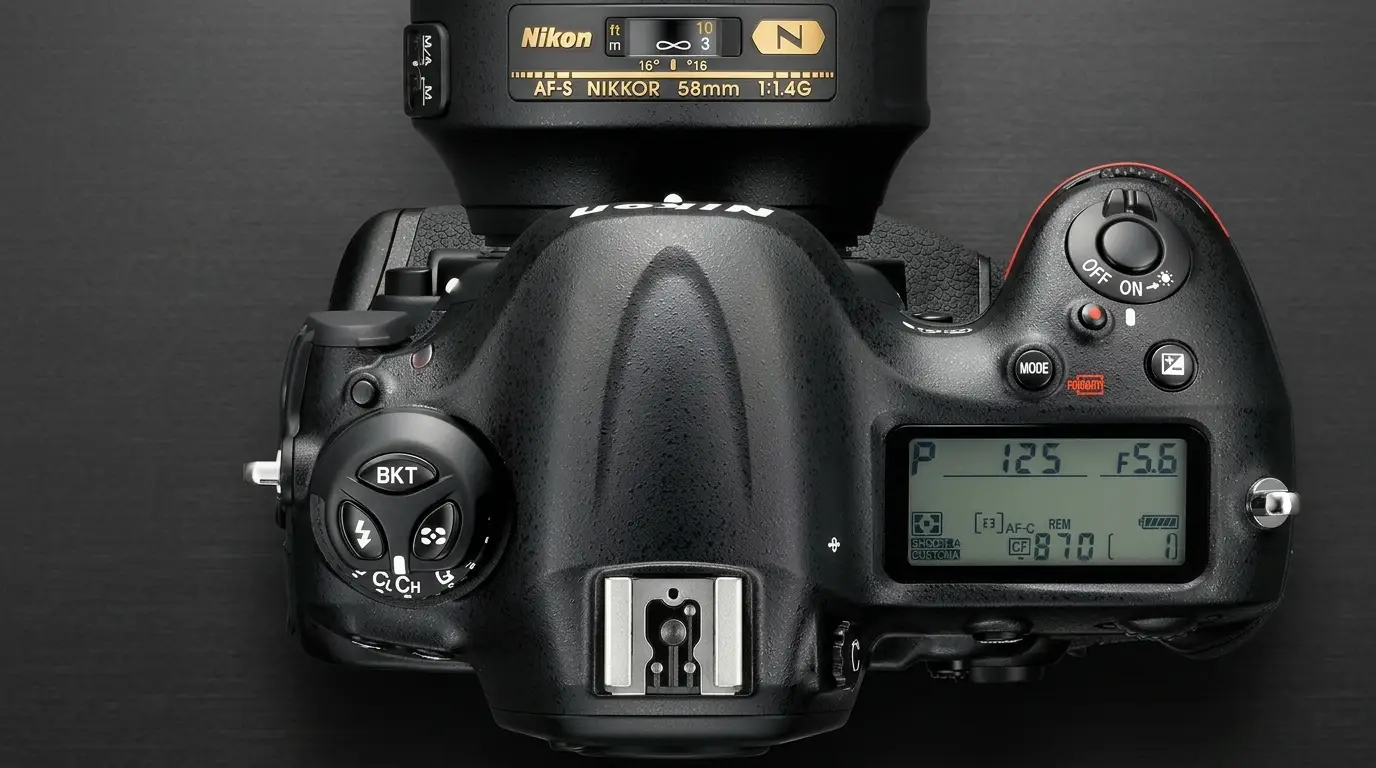
Pick up a D4S once and you understand why working photographers still trust it. Nikon machined the chassis from magnesium alloy and sealed every seam against dust, splashes, and freezing temperatures. The body weighs roughly 1.35 kg with a battery loaded, which sounds punishing until you mount a 70-200mm f/2.8 and feel the balance click into place.
Nikon brought subtle but smart refinements compared to the D4. The grip received more lens-clearance space, the thumb rest deepened on the vertical battery grip, and Nikon added textured finishes to the twin joystick selectors. Wildlife photographer Richard Peters, who shot the D4 and D4S side by side, captured the ergonomic upgrades cleanly — the refinements are subtle, but when paired with a heavy telephoto, that thumb-grip adjustment genuinely makes a difference during long handheld sessions.
Smart Touches Working Photographers Actually Notice
- Backlit buttons that glow when you twist the power switch — invaluable for wedding receptions, theaters, and night sports
- Dual card slots (CompactFlash + XQD) for instant backup or overflow
- Dedicated AF-ON, ISO, and metering buttons so you never dig through menus
- Built-in vertical grip with duplicate controls for portrait shooting
- Self-diagnostic shutter monitor that compensates for shutter drift over time
- Bright top-plate LCD that confirms settings without lifting the camera
The Small Annoyances
Honesty matters in any review. The rear multi-selector pad feels noticeably smaller than the one on the D810, which becomes irritating when shooting with thick gloves. The electronic horizon indicator inside the viewfinder hides active focus points whenever you turn it on, which feels like a design oversight. Neither is a deal-breaker — but you’ll notice both within the first week.
Image Quality and Low-Light Performance: The D4S’s Real Superpower
Why 16 Megapixels Still Get the Job Done
Here’s where the D4S earns its legend. The 16.2 MP sensor sounds modest in an era of 45 MP and 60 MP cameras, but every photosite measures a generous 7.3µm. Each pixel grabs more light, which translates directly into clean files at sensitivities where most cameras melt into noise.
Independent testing measured the D4S at roughly 13 EV of dynamic range at base ISO, with sports low-light scores that placed it among the best DSLR sensors ever shipped at launch (DxOMark). The redesigned CMOS chip paired with EXPEED 4 produces files that look genuinely filmic straight out of the camera — smooth tonality, pleasing color, and skin tones that wedding photographers adore.
Practical ISO Guide
Native ISO performance feels effectively noise-free through ISO 1,600, very clean through 6,400, and entirely usable through 12,800 in the field.
- ISO 100–800: Pristine files, virtually noise-free
- ISO 1,600–3,200: Excellent — ideal for most indoor sports
- ISO 6,400–12,800: Very usable for editorial, web, and prints up to A4
- ISO 25,600: Strong emergency setting with light noise reduction
- ISO 51,200+ (Hi modes): Documentary or news-only territory
I’d happily shoot weddings at ISO 12,800 with this camera and never explain myself in post.
Where the 16 MP Sensor Actually Wins
- Smaller file sizes that fly through wire transmissions for newsrooms
- Faster card-write speeds so the buffer rarely chokes
- Better noise performance thanks to larger photosites
- Plenty of resolution for double-truck magazine spreads and 16×20 prints
- Lower computing demands on older laptops and edit suites
- Easier on storage, backup, and post-processing hardware
The lower pixel count also produces files that travel faster across networks — an underrated advantage for sports shooters wiring images during halftime.
Want your high-ISO sports and wedding files to look gallery-clean? Our background removal service keeps subjects sharp while we cut the clutter.
Autofocus and Burst Performance: Where the D4S Earns Its Reputation
The Multi-CAM 3500FX System, Refined
The D4S autofocus system feels almost mechanical in its confidence. Nikon paired the proven Multi-CAM 3500FX module — 51 points, 15 cross-type — with recalibrated tracking algorithms and the new EXPEED 4 brain. The result is a camera that locks fast, tracks aggressively, and rarely hunts in low contrast.
The headline addition is Group Area AF, a five-point cluster mode brilliantly suited to small, erratic targets like birds in flight or hockey players against busy backgrounds. It prioritizes the nearest subject inside the cluster and behaves more forgivingly than a single point in chaos.
Key Autofocus Highlights
- 51 focus points with 15 cross-type sensors clustered around the frame center
- Group Area AF — a five-point cluster that excels at erratic subjects like raptors mid-strike
- f/8 AF support across 11 points, critical when stacking a 1.4× teleconverter onto a 500mm f/4
- Improved subject tracking through faster scene-recognition processing
- Reduced viewfinder blackout that makes panning feel smoother
- Customizable AF tracking sensitivity and lock-on behavior
Burst Speed That Means Something
Burst speed rises from the D4’s 10 fps to a clean 11 fps with full AF and AE tracking. Nikon shortened the mirror travel, which reduces viewfinder blackout time and helps you stay glued to a moving subject. Side-by-side burst sequences against the D4 consistently show a higher hit rate of sharp frames with the D4S, especially in low light and erratic action.
The buffer numbers tell the rest of the story: approximately 200 JPEG frames or 133 14-bit lossless compressed RAW frames before slowdown, with significantly faster buffer clearing thanks to XQD card support. For sports shooters wiring images during halftime, that single specification often justifies the upgrade alone.

I won’t pretend the D4S keeps pace with a Z9 or Z8 in 2026 — modern mirrorless systems use machine-learning subject recognition that the D4S simply can’t replicate. For traditional zone-based shooting, though, it remains one of the most reliable AF systems Nikon has ever built.
Video Capabilities: Competent, Not Cinematic
The Honest Verdict on Moving Images
Calibrate your expectations if you’re buying a D4S for video. The camera maxes out at 1080p Full HD at 60 fps, with no 4K option at all. That was respectable by 2014 standards; by 2026 standards it lags behind even entry-level mirrorless bodies.
The D4S still does several things video shooters appreciate, however:
- 1920×1080 at 60p, 50p, 30p, 25p, and 24p with full manual exposure control
- Uncompressed 4:2:2 HDMI output for external recorders
- Simultaneous internal + external recording
- Built-in stereo microphone plus 3.5mm input/output jacks
- Auto ISO during movie capture with adjustable maximum sensitivity
Realistic D4S Video Use Cases in 2026
- B-roll for documentary projects where lighting is controlled
- Photojournalism video segments that pair with stills
- Wedding reception clips at 60p for natural slow-motion
- Interview setups with external mics and a stable tripod
Look at a Nikon Z6 III or Z8 instead if hybrid stills/video is essential to your workflow. Modern compact cinema cameras like the DJI Osmo Pocket 4 deliver vastly more flexibility in a fraction of the size — we covered this in detail in our DJI Osmo Pocket 4 review, which pairs nicely with the D4S for run-and-gun video clips while you keep the DSLR for stills.
Battery Life and Storage: Where the D4S Embarrasses Modern Cameras
The Practical Side of Pro Bodies
This is the section every mirrorless convert hates. The D4S uses the EN-EL18a battery and delivers a CIPA-rated 3,020 shots per charge. Real-world shooting — bursts, AF tracking, image review — pushes most photographers to 4,000 or 5,500 frames per battery. I’ve shot two full wedding days on a single charge with the D4S. Try that with a Z8.
The dual-card setup is equally pragmatic. The CompactFlash slot accepts inexpensive cards everyone already owns, while the XQD slot delivers absurd write speeds for buffer clearing and 1080p60 video. Configure them as overflow, simultaneous backup, or split RAW-to-XQD / JPEG-to-CF — a wedding shooter’s dream setup.
What This Means in Practice
- One battery survives a full day of sports coverage
- Two batteries handle weddings with margin to spare
- XQD cards still sell on the used market, often paired with the camera
- CompactFlash availability remains strong from KEH, B&H, and Amazon
Editing thousands of wedding frames? Speed up your workflow with our clipping path service for crisp cut-outs and clean composites.
Connectivity and Workflow: Built for Wired Pros
Nikon prioritized wired workflows because the D4S targets working pros. The body includes:
- 1000Base-T Gigabit Ethernet (RJ-45) — transfers up to 185 Mbps for newsroom desks
- USB 3.0 for tethered shooting in studios
- HDMI Type-C for clean monitoring or recording
- PC sync port for studio strobes
- Optional WT-5A wireless transmitter for tethered Wi-Fi workflows
What’s missing in 2026 will sting some buyers. There’s no built-in Wi-Fi, no Bluetooth, no GPS, and no SnapBridge. The camera also lacks a touchscreen, an articulating LCD, and in-body image stabilization. Plan to buy an XQD/CF USB-C card reader if you live on your phone for sharing. Most professionals, however, prefer wired connections anyway — reliability beats convenience when an editor is waiting.
Nikon D4S vs Nikon D4: Is the Upgrade Worth It?
What You Actually Gain With the D4S
Here’s the honest side-by-side summary if you already own a D4 and you’re searching “Nikon D4S vs D4.”
- EXPEED 4 processor (~30% faster) replacing EXPEED 3
- Native ISO doubled to 25,600 (was 12,800)
- Burst speed up to 11 fps with full AF/AE (was 10 fps)
- Group Area AF mode — genuinely useful for action
- 1080p video at 60 fps (was capped at 30 fps)
- Gigabit Ethernet for faster wired transfers
- Battery life improved to ~3,020 shots (was ~2,600)
- Larger buffer — up to 200 JPEGs
- Refined ergonomics — thumb grip, textured selectors
- Raw Size S and Spot White Balance added on D4S
The Verdict for Existing D4 Owners
The upgrade simply doesn’t justify itself for most existing D4 owners. The high-ISO improvement is real but modest, and the buffer was already generous. Photographers coming from older bodies — D700, D3, or even D3S — gain a substantial leap in autofocus, ISO ceiling, and battery longevity. For them, the D4S still feels like buying a flagship.
Nikon D4S vs the Modern Competition
Mirrorless Hasn’t Solved Everything
Modern Z-series bodies and Sony A1-class cameras outpace the D4S on paper. Specs don’t always translate to results, though. The D4S still beats most competitors in several specific categories:
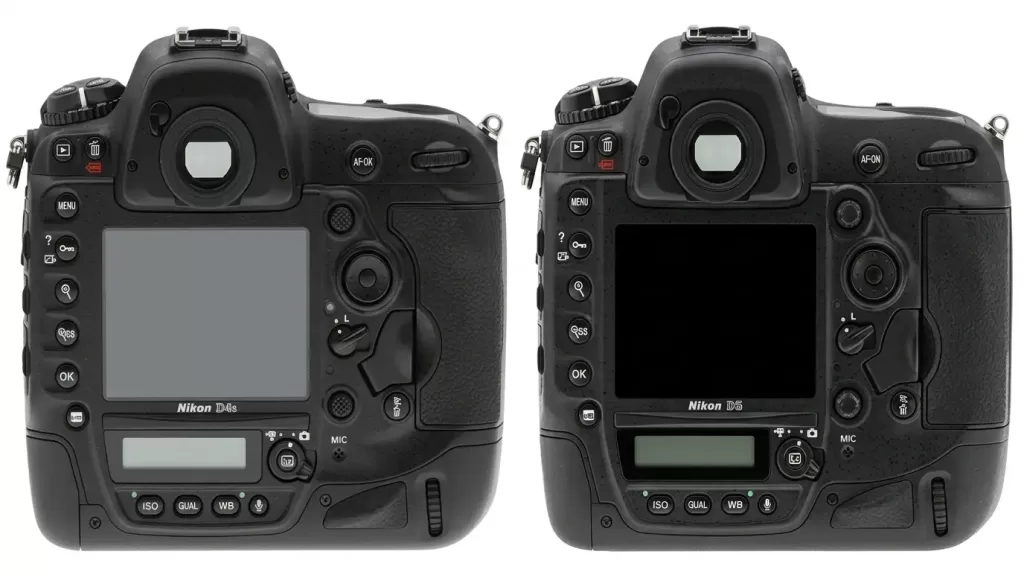
- D4S vs D5: The D5 wins on AF (153 points), ISO ceiling, and resolution (20 MP), but D4S files arguably look more pleasing at moderate ISOs — and the D5 costs nearly double on the used market
- D4S vs Z9: The Z9 is a generational leap in AF, resolution (45 MP), and video, but the D4S remains roughly 5–7× cheaper on the used market
- D4S vs D850: The D850 wins on resolution and dynamic range; the D4S wins on speed, weather sealing, and ergonomics
- D4S vs Sony A9 II: The Sony wins on AF tracking and silent shooting; the D4S wins on battery life, build, and tactile control
Where the D4S Still Dominates
- Optical viewfinder clarity that never lags or blacks out
- Battery endurance that mirrorless bodies still rarely match
- Tactile control layout built for blind operation in chaotic environments
- Total ecosystem cost when you include F-mount lenses you already own
- Long-term reliability proven over a decade of professional use
A working photographer on a tight budget gets roughly 80% of the modern pro-camera experience at 15–20% of the cost with the D4S. That math is hard to argue with.
Shooting apparel or e-commerce with your D4S? Our ghost mannequin service delivers clean, conversion-ready product shots.
Best Lenses to Pair With the Nikon D4S in 2026
Recommendations for Each Genre
The D4S has Nikon’s F-mount, which opens the entire historical Nikkor catalog plus dozens of Sigma, Tamron, and Tokina options. Here are the lenses that genuinely deserve a D4S behind them.
The “Holy Trinity” for working pros:
- Nikkor 14-24mm f/2.8G ED — landscapes, interiors, environmental work
- Nikkor 24-70mm f/2.8E ED VR — weddings, events, documentary
- Nikkor 70-200mm f/2.8E FL ED VR — sports, portraits, wildlife reach
Specialty glass that completes the kit:
- Nikkor 300mm f/2.8G ED VR II — workhorse for sports and wildlife
- Nikkor 200-500mm f/5.6E ED VR — affordable super-telephoto for birding
- Nikkor 85mm f/1.4G — devastating portraits with the D4S’s color depth
- Nikkor 105mm f/2.8G VR Micro — macro and product work
- Sigma 150-600mm f/5-6.3 Sport — budget reach for safari and aviation
For an excellent deep-dive on telephoto options, Photography Life’s wildlife lens roundup offers detailed comparisons of each Nikkor super-telephoto.
Real-World Use Cases: Where the D4S Excels
Sports Photography
The combination of 11 fps, deep buffer, fast Ethernet, and the legendary 51-point AF puts the D4S in serious contention for sports work. Stadium lighting often falls between ISO 3,200 and 6,400, exactly the range where this sensor shines. Add the dedicated AF-ON button and Group Area AF, and tracking a quarterback through traffic becomes muscle memory.
Wildlife Photography
Telephoto shooters love this camera for one specific reason: f/8 autofocus support. Stack a TC-14E III on a 500mm f/4 and the D4S still focuses confidently — something many newer mirrorless bodies struggle with through optical viewfinders. Throw in weather sealing that laughs at light rain and you have a serious bird and mammal camera.
Wedding and Event Coverage
Low-light receptions reward cameras that hold detail at high ISOs. The D4S delivers usable files at ISO 12,800 with light retouching — a critical advantage when flash isn’t appropriate. Dual card slots also matter here; nobody wants to explain a missed ceremony because a single card failed.
Photojournalism
Foreign correspondents praised the D4S at launch because it handled extreme climates, transferred files quickly over wired Ethernet, and ran through a full shift on one battery. Those qualities still apply in 2026.
Studio and Portrait Work
Even fashion photographers occasionally pick this body for its skin-tone rendering and fast workflow. The 16-megapixel files print cleanly to 24×36 inches and edit faster than 45-megapixel files from current flagships.
Pros and Cons: A Working Photographer’s Verdict
Pros
- ✓ Outstanding high-ISO performance with excellent color science
- ✓ 11 fps burst with deep, fast-clearing buffer
- ✓ Legendary 51-point AF with Group-Area mode
- ✓ Rugged magnesium body with full weather sealing
- ✓ Exceptional battery life (~3,020 CIPA shots, often 4,000+ in real use)
- ✓ Dual card slot redundancy for critical assignments
- ✓ Gigabit Ethernet for tethered and fast transfer workflows
- ✓ Bright optical viewfinder with 100% coverage
- ✓ Backlit buttons that genuinely help at night
- ✓ Massive used-market value at $600–$1,200 in 2026
Cons
- ✕ Only 16.2 MP — limits aggressive cropping and giant prints
- ✕ No 4K video, no log profiles
- ✕ No built-in Wi-Fi, Bluetooth, or GPS
- ✕ Heavy at 1,350g loaded — a real consideration for travel
- ✕ Fixed, non-touch LCD — feels dated in 2026
- ✕ Mono built-in microphone
- ✕ XQD cards remain expensive compared to SD
- ✕ No in-body image stabilization
- ✕ Nikon DSLR ecosystem is winding down
Should You Buy a Used Nikon D4S in 2026?
The Value Proposition Has Never Looked Better
The original $6,499 MSRP made the D4S an aspirational camera for most photographers. Today, well-maintained bodies sell in the $600–$1,200 range, and the value math suddenly tilts heavily in the buyer’s favor.
Smart Used-Buying Checklist
- Shutter count under 100,000 = lots of life left out of 400,000-rated cycles
- Sensor inspection for dust, scratches, or oil spots — test with a shot at f/16 against a white wall
- Battery health check — replacement EN-EL18a packs cost $150+
- Both card slots must read and write reliably (CF and XQD)
- Rubber grip integrity — old grips can peel after years of use
- Firmware version (1.32 or later is the final official release)
- Service history — a recent Nikon service is a strong plus
Where to Buy With Confidence
- MPB: Bodies starting around $594 with 6-month warranties
- KEH Camera: D4S bodies from “Bargain” to “Like New Minus” grades, typically $700–$1,150
- B&H Used Department: Occasionally stocks D4S bodies with warranty
- Adorama Used: Frequently lists the D4S in Excellent grade
- eBay: Wide price range, but requires careful shutter-count verification
Reputable used dealers grade their inventory honestly, which removes most of the guesswork from private sales.
The Ideal D4S Buyer
- Sports and wildlife photographers on a budget
- Photojournalists who need rugged reliability
- Wedding shooters who value low-light performance
- Nikon lens owners with a deep F-mount collection
- Working pros who want a dedicated backup body
Who Should Skip the D4S
- Hybrid creators who need 4K video
- Landscape photographers craving 45+ MP resolution
- Travelers who prioritize compact mirrorless bodies
- Anyone allergic to manual file transfers
Tips to Maximize Your Nikon D4S
A few small adjustments will dramatically improve your experience if you do pick one up.
- Update the firmware to the latest official Nikon release
- Format XQD as your primary card, CF as backup for redundancy
- Calibrate AF fine-tune for every lens you own
- Set up Group-Area AF on a custom button for instant action shooting
- Use 14-bit lossless compressed RAW for maximum quality without absurd file sizes
- Disable long-exposure noise reduction on bursts to preserve buffer
- Pair with Capture One or Lightroom for the best RAW rendering
Nikon’s own NX Studio software is free and handles D4S files beautifully if you’d rather avoid subscription editors.
Need flawless cutouts for fashion or product shots? Our expert image masking specialists handle hair, fur, and complex edges with hand-drawn precision.
Frequently Asked Questions
1. Is the Nikon D4S still worth buying in 2026?
Yes, especially for sports, wildlife, photojournalism, and event photographers who need a pro-grade body without paying flagship prices. The D4S delivers pro-level autofocus, weather sealing, and low-light performance at $600–$1,200 used that mid-range mirrorless bodies still can’t match in pure reliability.
2. How much does a used Nikon D4S cost today?
Expect to pay roughly $600–$1,200 for a well-maintained body with moderate shutter count. Mint copies with sub-50,000 actuations sometimes command $1,500 or slightly more from reputable dealers like KEH and MPB.
3. Can the Nikon D4S shoot 4K video?
No. The D4S tops out at 1080p Full HD at 60 fps. You’ll need a Nikon D5, D6, Z6 III, Z8, or Z9 instead if 4K is essential to your workflow.
4. What’s the main difference between the Nikon D4 and D4S?
The D4S adds the EXPEED 4 processor, +1 stop of native ISO performance, 11 fps shooting (up from 10), Group-Area AF mode, 1080/60p video, Gigabit Ethernet, and improved battery life. The upgrade is meaningful but not transformative — most D4 owners won’t feel an urgent need to switch.
5. How many shutter actuations can the Nikon D4S handle?
Nikon officially tested the D4S shutter to 400,000 actuations — among the highest ratings ever published for a DSLR. Many working bodies pass that mark and keep going.
6. Does the Nikon D4S have built-in Wi-Fi?
No. The D4S requires the optional Nikon WT-5A wireless transmitter for Wi-Fi tethering. Most buyers in 2026 simply transfer via card reader or the built-in Gigabit Ethernet port.
7. What memory cards does the Nikon D4S use?
The D4S accepts one CompactFlash (UDMA 7) card and one XQD card simultaneously. Configure them as backup, overflow, or split RAW/JPEG storage.
8. Is the Nikon D4S good for wildlife photography?
Absolutely — particularly when paired with a long telephoto and teleconverter. Its f/8 cross-type AF sensors, 11 fps burst, weather sealing, and excellent high-ISO performance make it a proven wildlife body. The 16 MP resolution does limit aggressive cropping compared to newer 45 MP sensors.
9. How long does a Nikon D4S battery last?
The EN-EL18a battery delivers a CIPA-rated 3,020 shots per charge, though real-world shooting often pushes that to 4,000–5,500 frames depending on burst use and image review habits.
Final Verdict: A Workhorse That Refuses to Quit
The Nikon D4S occupies a strange, wonderful niche in 2026. It’s old enough to be unfashionable and new enough to outperform most current sub-$2,000 cameras in the disciplines it was built for. The 16.2 MP sensor, 11 fps burst, 51-point AF, and 400,000-cycle shutter all conspire to make this one of the most rationally priced professional cameras you can buy used today.
The D4S still earns its place beside any modern mirrorless body if your work revolves around moving subjects, low light, long shooting days, and brutal weather. Look elsewhere if your work revolves around video, social-first delivery, and feather-light travel. There’s no shame in either choice.
Working photographers don’t keep using this camera out of nostalgia. They keep using it because the autofocus tracks better than newer mirrorless bodies in optical-viewfinder conditions, the battery never quits mid-assignment, and the build quality survives field abuse that ends shorter careers. It’s the photographic equivalent of a Toyota Hilux — unfashionable, unsexy, and absolutely impossible to kill.
The D4S remains a camera I’d grab without hesitation as a primary sports body or a wedding backup. It just works — and in professional shooting, that single sentence is worth more than any spec sheet.
Ready to elevate every D4S frame to gallery quality? Discover our complete suite of editing solutions at Photofixal and ship sharper, more professional work today.