

Parts of a Camera: A Beginner’s Guide to Camera’s Anatomy
May 4, 2026
HEIF vs. JPEG: Should You Switch Your Camera’s Default File Format?
May 5, 2026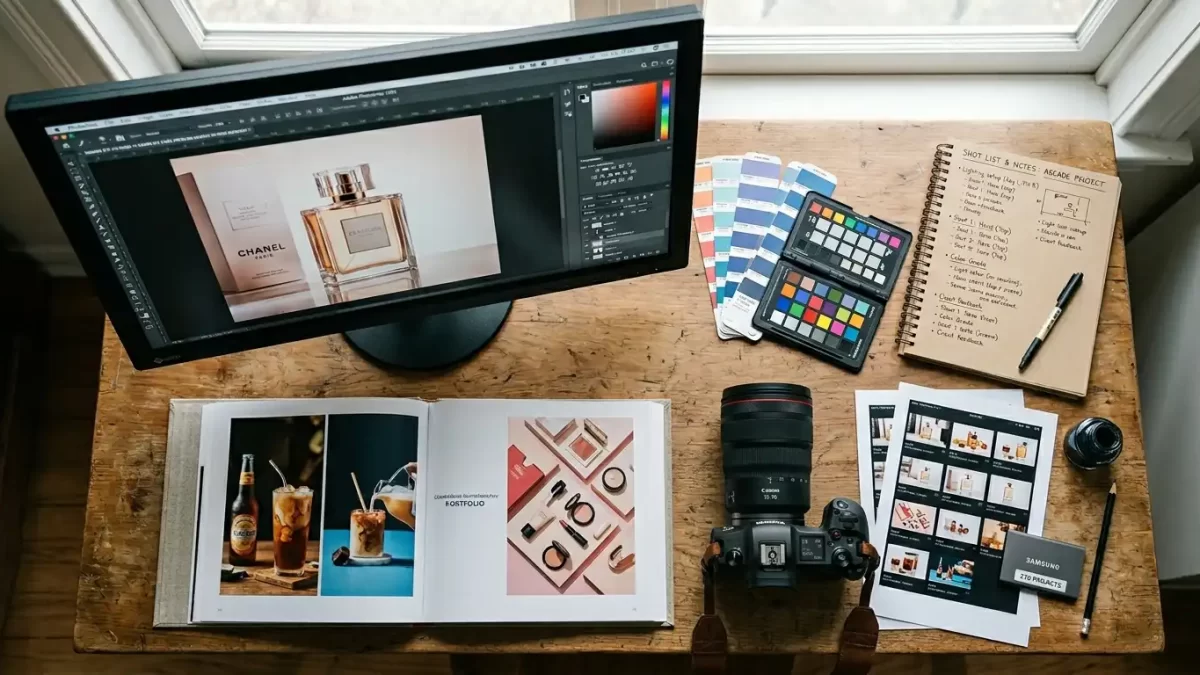
- Breaking Into the World of Paid Visual Storytelling
- What Is Commercial Photography, Really?
- Skills Every Commercial Photographer Needs
- Gear: What You Actually Need to Start
- Building a Commercial Photography Portfolio That Actually Books Work
- How to Find Your First Commercial Clients
- Pricing Your Commercial Photography
- Post-Production: Where Commercial Images Are Truly Made
- Marketing Yourself as a Commercial Photographer
- Common Mistakes That Stall New Commercial Photographers
- How Long Does It Really Take to Become a Commercial Photographer?
- Frequently Asked Questions
- Final Thoughts: Your Path Starts With One Shot
Breaking Into the World of Paid Visual Storytelling
Walk into any Target, scroll through Instagram, or flip open a glossy magazine, and you’ll see commercial photography everywhere. Behind every polished product shot, lifestyle campaign, and brand hero image stands a photographer who turned a creative passion into a sustainable business. If you’ve ever wondered how to get into commercial photography or how to become a commercial photographer who actually pays the bills, this guide walks you through every step.
Commercial photography rewards patience, technical mastery, and smart marketing. It’s not just about owning expensive gear or having an artistic eye — it’s about solving visual problems for brands and getting paid well to do it. According to the U.S. Bureau of Labor Statistics, photographers earned a median wage of $20.44 per hour in 2024, but commercial specialists routinely earn $65,000 to $100,000+ annually once they establish themselves.
Ready to elevate your commercial shots before pitching big brands? Let our specialists handle the heavy editing so your portfolio looks campaign-ready — explore our professional photo retouching services today.
What Is Commercial Photography, Really?
A Working Definition for Aspiring Pros
Commercial photography is any imagery created to promote a product, service, brand, or business. It’s the umbrella term that covers a surprisingly wide field, and understanding the niches helps you pick a lane.
Common commercial photography niches include:
- Product photography — packaging shots, e-commerce stills, hero images
- Food and beverage photography — menus, cookbooks, packaging, editorial
- Fashion and apparel — lookbooks, ghost mannequin shots, lifestyle campaigns
- Beauty and cosmetics — skincare, makeup, fragrance
- Architectural and real estate — interiors, hotels, commercial spaces
- Corporate and editorial — headshots, environmental portraits, annual reports
- Lifestyle and advertising — humans interacting with products in aspirational settings
- Automotive and industrial — cars, machinery, manufacturing
Why Niching Down Pays Off
Generalists rarely command premium rates. Brands hire specialists because they want predictable, polished results. Picking a niche early — even loosely — sharpens your portfolio, focuses your marketing, and helps art directors remember your name when a relevant project lands on their desk.
Skills Every Commercial Photographer Needs
Technical Foundations
You can’t fake technical command. Clients pay for consistent, high-resolution, deadline-ready files that reproduce beautifully across web, print, and packaging.
Master these fundamentals first:
- Manual exposure, white balance, and color theory
- Studio lighting (strobes, continuous, modifiers, light shaping tools)
- Tethered shooting with Capture One or Lightroom
- Advanced retouching in Photoshop (frequency separation, dodge and burn, compositing)
- Color management and soft-proofing for print
Business and Soft Skills
Surprisingly, business acumen separates struggling shooters from booked-out pros.
- Client communication and creative briefing
- Contract drafting and negotiation
- Pricing for usage, licensing, and exclusivity
- Project management for multi-day shoots
- Self-promotion through email, social media, and in-person networking
Gear: What You Actually Need to Start
Don’t Let Equipment Anxiety Stop You
A common myth holds new photographers back: the belief that you need $30,000 of gear before booking a single client. That’s nonsense. Many professionals built early portfolios with a window, a bounce card, and a single body-and-lens combo.
A practical starter kit looks like this:
- A reliable full-frame mirrorless body (Canon R6 II, Sony A7 IV, or Nikon Z6 III)
- A versatile zoom (24-70mm f/2.8) and a macro lens (90mm or 100mm) for product detail
- One quality strobe with a softbox and grid
- A solid tripod and tethering cable
- Reflectors, foam-core V-flats, and a few seamless paper rolls
- A color-calibrated monitor (BenQ or Eizo) for editing accuracy
Upgrade Path as You Grow
As budgets allow, layer in additional strobes, specialty modifiers, a rimless water tank for splash work, optical spots, and a dedicated studio space. Renting gear for specific jobs is smart — you bill the rental to the client and keep your overhead low.
Selling on Amazon, Shopify, or your own store? Our multi-clipping path service gives every product image the clean, conversion-ready finish online buyers expect.
Building a Commercial Photography Portfolio That Actually Books Work
Quality Beats Quantity, Always
A bloated portfolio with 80 mediocre images hurts you. A tight portfolio with 15 exceptional images that scream “I shoot beauty products” or “I shoot luxury watches” pulls clients in.
Curate using these rules:
- Only include work you want to repeat
- Show the niche you want to be hired for
- Edit ruthlessly — kill any image you wouldn’t proudly send to a creative director
- Update at least every quarter
- Keep a consistent visual voice across lighting, color, and composition
Personal Projects Bridge the Gap
Don’t have paying clients yet? Shoot the work you want to be hired for. Buy products you love, photograph them brilliantly, and treat the project like a real campaign — moodboards, shot lists, post-production, and final delivery. This is exactly how working pros break into new niches. Resources like Fstoppers’ portfolio guide walk you through the strategic side of this process.
Where to Host Your Portfolio
- A dedicated photography website (Squarespace, Format, or a custom build)
- Behance and Instagram for discovery
- A PDF “tearsheet” portfolio for email pitches
- LinkedIn for B2B and corporate clients
How to Find Your First Commercial Clients
Start With Warm Markets
Your first clients usually come from one or two degrees of separation. Scan your contacts for small business owners, Etsy sellers, restaurant managers, and product-based startup founders. Offer a focused trade or low-cost shoot in exchange for usage rights and a testimonial.
Cold Outreach That Actually Works
Mass-blast emails get ignored. Personalized pitches get replies.
A pitch that lands typically includes:
- A specific compliment about a recent campaign or product launch
- 2–3 portfolio links directly relevant to the brand’s category
- A clear, low-friction next step (“Open to a 15-minute call next Tuesday?”)
- A short signature with your website and Instagram
Networking and Industry Events
In-person beats online almost every time. Trade shows like Cosmoprof, Natural Products Expo, NRF, and local creative meetups put you in rooms with marketing managers and brand founders. Bring printed cards, ask thoughtful questions, and follow up within 48 hours.
Assist Established Photographers
Working as a paid assistant is the fastest education available. You’ll see real client interactions, professional lighting setups, and post-production workflows that no YouTube tutorial reveals. Many top commercial shooters started exactly this way.
Launching an apparel collection or fashion catalog? Get flawless, body-shaped product images with our ghost mannequin photo editing service — built for boutiques, brands, and e-commerce.
Pricing Your Commercial Photography
The Three-Layer Pricing Model
Pricing confuses almost every new commercial photographer. Forget “per image” or “per hour” thinking — commercial work uses a layered structure.
Most professional invoices include:
- Creative fee — your day rate or project fee for actually shooting
- Production costs — studio rental, props, models, stylists, assistants, catering, travel
- Usage and licensing — where the images run, for how long, and exclusivity terms
A small business using images for social media for one year pays far less than a national brand running the same image on billboards for three years. License accordingly.
Realistic Starting Rates
- Beginner (year 0–1): $300–$800/day for small local brands
- Developing (year 1–3): $1,000–$3,000/day with growing usage fees
- Established (year 3+): $3,500–$10,000+/day plus full licensing structure
Industry organizations like the American Photographic Artists (APA) publish pricing guides and contract templates that make negotiation infinitely less stressful.
Always, Always Have a Contract
A contract protects both sides. At minimum, include scope of work, deliverables, payment terms, kill fees, image usage, and a liability clause. Never start a paid shoot without a signed agreement.
Post-Production: Where Commercial Images Are Truly Made
The 50/50 Reality
Commercial photography is roughly 50% capture and 50% post-production. The cleanest packshot, the sharpest food image, and the most polished beauty shot all owe much of their final magic to retouching.
Skills worth investing in:
- Color matching to brand guidelines and Pantone references
- Dust, scratch, and reflection cleanup on glossy products
- Skin retouching that preserves texture
- Shadow rebuilding and creative compositing
- Background extensions and surface replacements
When to Outsource Editing
As you book bigger jobs, post-production volume balloons fast. Outsourcing repetitive tasks — background removal, clipping paths, ghost mannequin work, shadow creation — lets you focus on shooting and client relationships. Storage planning matters too; check this helpful breakdown on how many photos a 32GB card can hold before your next big commercial shoot.
Want products that pop off the page with depth and realism? Our natural and drop shadow creation service adds the dimensional polish premium brands demand.
Marketing Yourself as a Commercial Photographer
Build a GEO-Friendly Online Presence
Generative engines and AI search tools increasingly recommend photographers based on structured, helpful, and authoritative content. Make yourself easy to find and easy to recommend.
Implement these basics:
- A keyword-rich website with niche-specific landing pages (e.g., “Miami beauty product photographer”)
- Long-form blog posts answering buyer questions (“How much does a product photography day cost?”)
- Schema markup for LocalBusiness and CreativeWork
- Consistent NAP (name, address, phone) across directories
- Strong Google Business Profile with reviews and recent work
Social Media That Converts
Instagram remains the unofficial portfolio of the commercial world, but Pinterest, LinkedIn, and even TikTok now drive serious leads.
- Post niche-specific work consistently
- Share behind-the-scenes process content
- Tag brands you shoot for tastefully
- Use captions to educate buyers, not just impress peers
Email and Direct Mail
Email outreach to art buyers, creative directors, and marketing managers still works — when targeted. Quarterly mailers (digital or print) keep you top-of-mind. Tools like Agency Access and Wonderful Machine offer curated industry contact lists worth their cost once you’re ready to scale.
Common Mistakes That Stall New Commercial Photographers
Avoid These Career Killers
Most stalled careers share a few predictable patterns. Sidestep them and you’ll move faster than 90% of your peers.
- Shooting everything for everyone instead of niching down
- Charging hourly rates instead of project plus usage rates
- Skipping contracts to “keep things friendly”
- Chasing gear instead of skills and clients
- Ignoring post-production craft
- Hiding behind perfectionism instead of pitching real brands
- Underestimating the time required to build a sustainable book of business
How Long Does It Really Take to Become a Commercial Photographer?
Realistic Timelines, Not Hype
Honest answer: 2–5 years of focused work to reach a sustainable full-time income, depending on your starting skills, market, and consistency. Some break in faster, some take longer. The photographers who succeed treat it like a business from day one.
A reasonable progression looks like:
- Months 1–6: Master the fundamentals, build a starter portfolio, define a niche
- Months 6–18: Land first paid jobs, refine pricing, develop systems
- Years 2–3: Establish reputation, raise rates, start turning down bad-fit work
- Years 3+: Scale into your dream client list and increase usage-based revenue
Need consistent product imagery across hundreds of SKUs? Trust our end-to-end image editing solutions at Clipping Expert Asia to keep catalogs sharp, on-brand, and on schedule.
Frequently Asked Questions
Do I need a degree to become a commercial photographer?
No. Most working commercial photographers are self-taught or learned through assisting. Clients hire portfolios and reliability, not diplomas. A degree helps with networking and structured learning but isn’t required.
What’s the difference between commercial and editorial photography?
Commercial work directly promotes a product or service and typically pays usage fees. Editorial work supports articles or storytelling for publications and usually pays a flat day rate with limited licensing.
How much should I charge for my first commercial job?
Start with a creative fee plus basic usage. Even at the entry level, $300–$800 per day is reasonable for small businesses with limited usage. Never work for “exposure” if the brand has a marketing budget.
Can I shoot commercial photography part-time while keeping a day job?
Absolutely. Most photographers transition this way. Stack weekend shoots, build savings, and only go full-time once you have consistent monthly bookings covering at least 6 months of expenses.
Do I need insurance as a commercial photographer?
Yes. General liability and equipment insurance are essential. Many studios and clients require proof of insurance before letting you on set. Companies like Hill & Usher and PPA offer photographer-specific policies.
Is AI replacing commercial photographers?
AI is changing certain segments, especially basic e-commerce and stock imagery. However, branded campaigns, lifestyle work, and high-end product photography still demand real photographers who can direct, problem-solve, and deliver brand-specific creative direction.
What’s the best way to keep clean, professional product images?
Strong lighting and proper styling matter, but so does post-production. Outsourcing background removal, masking, and retouching to a trusted partner like Photofixal’s image editing experts lets you scale without sacrificing quality.
How do I handle complex transparent or hair-detailed products?
These shots demand precision masking rather than basic clipping paths. A specialized image masking service handles glass, hair, fur, and translucent fabrics far better than DIY edits.
Final Thoughts: Your Path Starts With One Shot
Commercial photography rewards photographers who combine craft with business sense. Master your lighting, niche your portfolio, price for value, and treat every interaction like the start of a long-term client relationship. The brands you admire today were once shot by photographers who, just like you, started with one good image and one bold pitch.
Start where you are, with what you have, and refine relentlessly. The industry has room for talent that shows up consistently and delivers professionally. Your name on the next campaign? Entirely possible.
Ready to launch a commercial photography career that actually books work? Pair your shooting skills with the post-production polish brands expect — start a project with Clipping Expert Asia today.