

Resize Images Without Quality Loss ?
October 20, 2025
Portrait Photography Tips for Stunning Images
October 20, 2025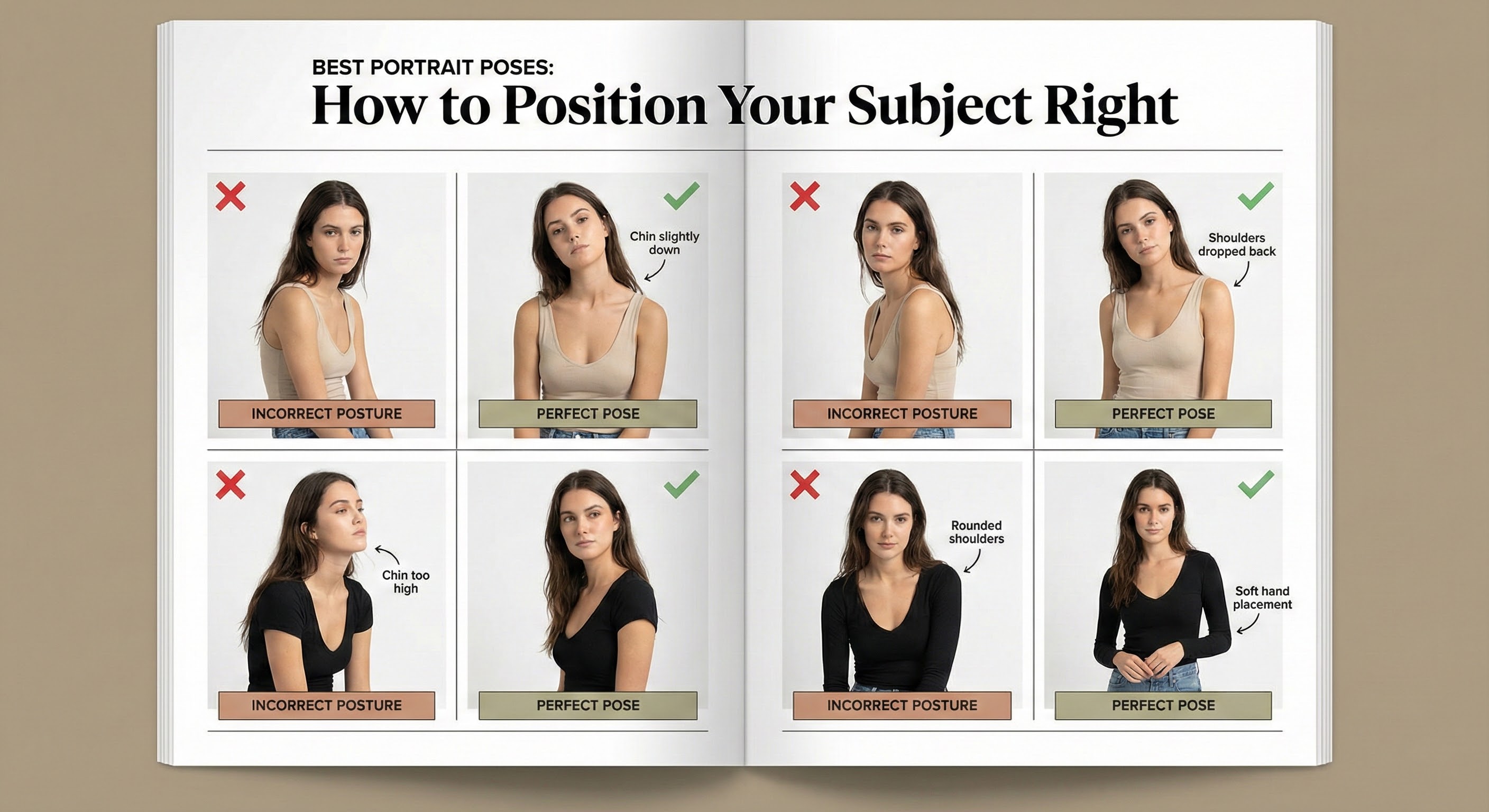
Portrait Poses That Create Confidence and Connection
Learn the best portrait poses and how to position your subject for stunning professional photos. Discover proven posing techniques that create natural expressions, confident body language, and visually engaging portraits.
Prepare for a Successful Portrait Shoot
Before you worry about hand angles or head tilts, take a step back. The real magic begins before the camera is even turned on.
A successful portrait shoot starts with trust. If your subject feels awkward, unsure, or overly self-conscious, no pose will save the shot. That’s why your first job is to create a comfortable, collaborative atmosphere.
Here’s how to get there:
- Please have a quick pre-shoot chat: Learn their comfort level with the camera. Ask about the purpose of the portraits. Keep it light, friendly, and open.
- Pick a setting with intention: Choose a location that suits the subject’s personality and the vibe you’re aiming for.
- Keep it collaborative: Show them sample poses or mood boards. Let them give input. It helps them feel involved, not just like they’re being captured.
- Choose outfits that flatter: Suggest solid colors, textures, or layers that work well on camera. Avoid loud patterns unless it’s part of the subject’s style.
People aren’t mannequins, and the best photos reflect who they are, not just how they look.
Main Posing Frameworks for Any Portrait Shoot
Posing isn’t about memorizing a hundred poses. It’s about knowing a few solid foundations and then tweaking them to match each subject’s mood, vibe, and body language.
Here are the core frameworks every portrait photographer should have in their back pocket:
The S-Curve
A natural, flowing body line is especially flattering for feminine portraits. Think gentle weight shift, curved spine, and relaxed hands. The result? Effortless grace.
The Triangle
One of the oldest tricks in portraiture. Using arms, legs, or even the tilt of the head to form subtle triangles adds structure and visual interest without feeling forced.
The Lean
Walls, railings, furniture, they’re not just background. Get your subject to lean subtly, and suddenly their whole body softens. It’s relaxed, real, and often more confident.
Negative Space
Instead of crowding every limb into the frame, create space between arms and the torso, between the jaw and neck. It adds elegance and separation that makes your subject stand out.
Soft Hands, Strong Eyes
The hands should be gentle, never claw-like. Meanwhile, the eyes are everything: direct eye contact with purpose, or looking away with intent. Expression carries the story.
Pro tip: Don’t just say pose like this. Demonstrate it. People understand a lot faster when they see the pose in action.
Common Posing Challenges and How to Solve Them
Every photographer knows the moment: your subject freezes, their smile is glued on, and they ask, What do I do with my hands?
Here’s how to handle the most common posing hiccups with ease:
The Challenge Your Move
The subject looks stiff. Get them moving. Ask them to walk, fix their collar, laugh, shift weight. Movement loosens tension.
Hands are awkward. Please give them a task: adjust jewelry, run fingers through hair, lightly touch their chin, or rest their hands in pockets.
Poses feel fake or too posed. Ditch the pose list. Use prompts instead: “Pretend you’re waiting for someone you’re excited to see.”
Posture is slouched. Gently guide: “Lift from the crown of your head.” Avoid saying “stand straight”; it usually leads to overcompensation.
Expressions feel forced. Talk. Joke. Ask questions. A real reaction, even a mid-laugh, always beats a fake smile.
Remember, you’re not just directing limbs, you’re guiding confidence.
Are You Ready to Direct Your Next Portrait Shoot?
Directing a portrait shoot isn’t about barking commands; it’s about connection. It’s about reading your subject, listening between the lines, and knowing when to push and when to pull back.
Here’s the real secret: Most people don’t need a perfect pose. They need permission to be themselves.
And your job? To make them feel seen.
So before you click the shutter, ask yourself: “Am I capturing a person, or just a picture?”
That answer will shape every frame you take.
Portrait Poses FAQs
Q: How do I pose someone who is uncomfortable in front of the camera?
A: Don’t throw them into a complicated pose. Start with action-based prompts: “Stroll toward me,” “Look at the light over there,” “Lean on that wall.” Ease them in. The goal is to make the camera disappear.
Q: What’s better, candid or posed portraits?
A: The best portraits are both. Posed doesn’t have to mean stiff. And candid doesn’t mean unintentional. Direct in a way that leads to natural reactions.
Q: Should I pose men and women differently?
A: Think in terms of energy and mood, not gender. Masculine energy may lean toward strong lines and confident posture; feminine energy might favor curves and softness. But it’s all a flexible pose for the person, not the stereotype.
Q: How can I find someone’s best angle?
A: Move around them as you shoot. Watch how the light hits their face, how they carry their jawline, how their eyes connect. Everyone has angles that sing; you need to look for them.