

32GB Memory Card Photo Capacity (JPEG vs RAW Explained)
February 28, 2026
What Is 4K Resolution? Complete Guide to Pixels, Screen Size & Meaning
March 2, 2026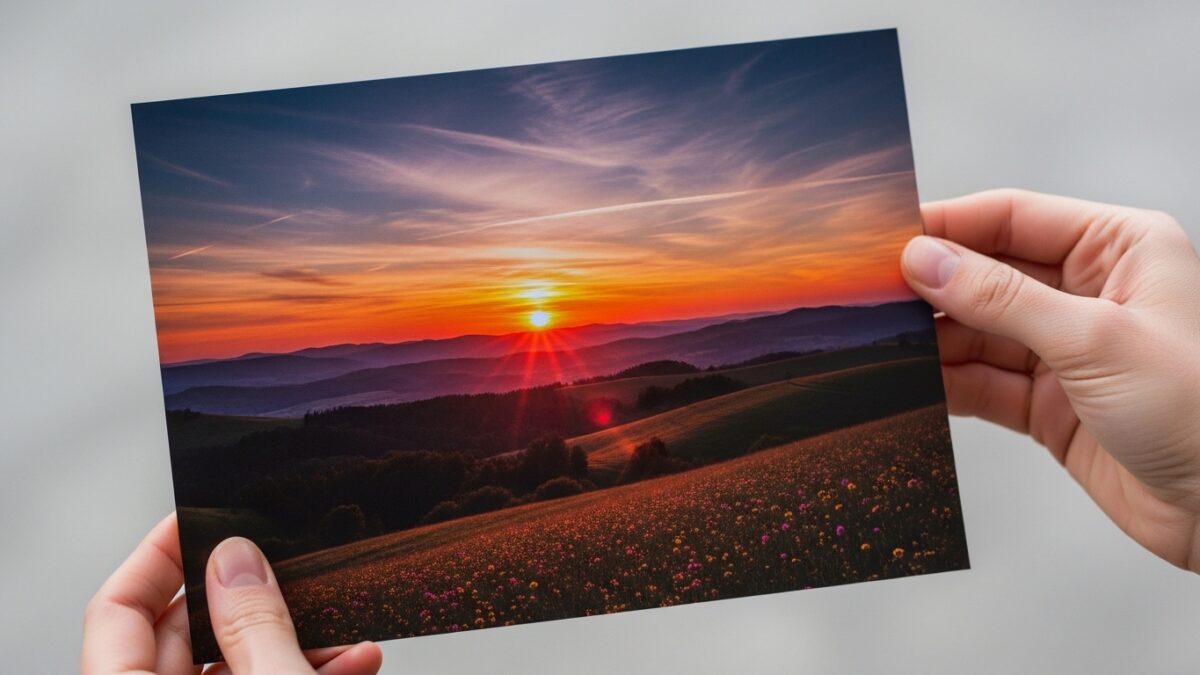
Photographers and everyday enthusiasts often face a simple yet crucial decision when printing their favorite shots: should they go with the compact 4×6 size or the slightly larger 5×7 option? This choice impacts everything from how you display memories in albums to the way professional images pop on walls or in portfolios. You weigh factors like cost, space, and image quality to make the right pick. In this comprehensive guide, we dive deep into the 4×6 photo size versus the 5×7 photo size, exploring their dimensions, uses, and advantages to help you decide confidently. Whether you print family snapshots or prepare product images for e-commerce, understanding these popular photo print sizes ensures your visuals shine.
Experts in the field emphasize that selecting the appropriate photo size enhances the overall viewing experience. You consider the aspect ratio, which dictates how well your original image fits without cropping. For instance, most smartphone cameras capture in a 4:3 ratio that aligns better with certain prints. We break down these elements step by step, drawing from practical scenarios and tips to optimize your printing process. By the end, you gain clear insights into when the 4×6 photo print size outperforms the 5×7, and vice versa, all while incorporating best practices for high-quality results.
Not sure which size to print? We optimise for both. Get print-ready photos with our expert retouching service
- Understanding Standard Photo Print Sizes
- Dimensions and Aspect Ratios Compared
- Common Uses for 4x6 Photo Prints
- Common Uses for 5x7 Photo Prints
- Cost Comparison: 4x6 vs 5x7 Prints
- Image Quality and Resolution Requirements
- Printing at Home vs Professional Services
- Editing Photos for Optimal Printing Results
- Special Considerations for Product Photography
- When to Choose 4x6 Photo Size
- When to Choose 5x7 Photo Size
- Tips for Choosing the Right Photo Size
- Conclusion
- Frequently Asked Questions
Understanding Standard Photo Print Sizes
You encounter various photo print sizes in stores and online services, but 4×6 and 5×7 stand out as staples for good reason. These dimensions trace back to traditional film photography, where 35mm rolls produced negatives that printers enlarged to these formats. Today, digital cameras and phones make it easier to adapt images to these sizes, yet many people overlook the nuances that affect the final output.
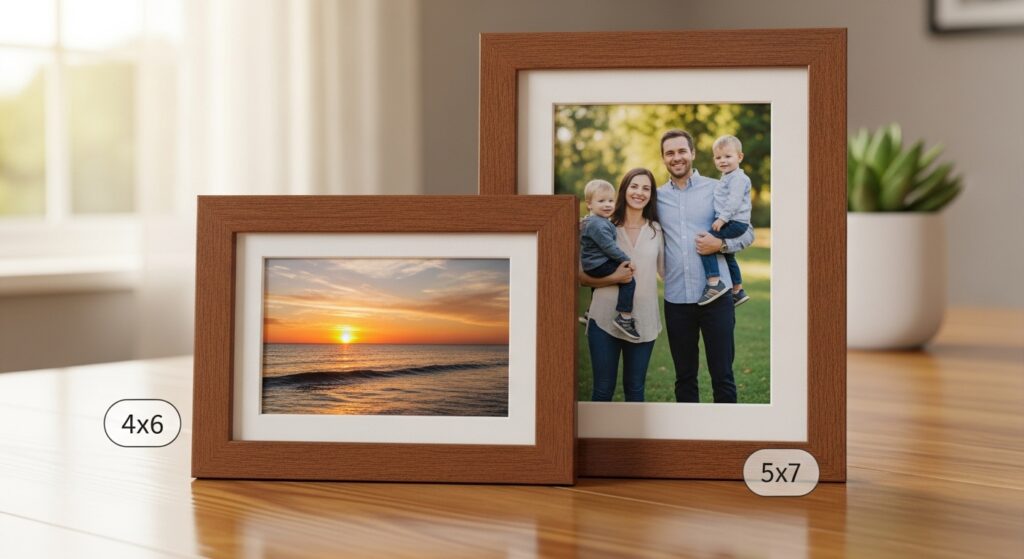
The 4×6 photo size measures exactly 4 inches by 6 inches, offering a rectangular shape that’s portable and versatile. Printers produce millions of these annually because they fit standard wallets, frames, and albums without hassle. On the other hand, the 5×7 photo size spans 5 inches by 7 inches, providing more surface area for details to emerge. You notice this difference immediately when holding both side by side the larger one draws the eye with its expansive feel.
People choose these sizes based on their project’s needs. Hobbyists grab 4×6 prints for quick sharing at events, while professionals opt for 5×7 to showcase portraits or landscapes with greater impact. Both sizes support high-resolution printing, but you adjust your camera settings or editing software accordingly to avoid pixelation. We explore these technical aspects further, ensuring you grasp how to prepare files for flawless results.
Dimensions and Aspect Ratios Compared
You start by examining the physical dimensions to see why they matter in photo printing. The 4×6 photo size boasts a width of 4 inches and a height of 6 inches, resulting in an aspect ratio of 2:3. This ratio mirrors many DSLR cameras, meaning your images often fit perfectly without losing edges.
In contrast, the 5×7 photo size features a 5-inch width and 7-inch height, yielding a slightly different aspect ratio of approximately 5:7. This setup accommodates compositions that benefit from extra vertical or horizontal space, like group shots or scenic views. You calculate the area difference: a 4×6 covers 24 square inches, while a 5×7 spans 35 square inches that’s about 46% more room for your photo to breathe.
Aspect ratios play a pivotal role when you crop images. If your original shot uses a 4:3 ratio common in point-and-shoot cameras, printing to 4×6 might require minor adjustments, whereas 5×7 could demand more cropping. You prevent distortion by using tools that maintain proportions, ensuring the subject remains centered and balanced. Professionals recommend checking resolution early; for sharp prints, aim for at least 300 DPI, which translates to 1200×1800 pixels for 4×6 and 1500×2100 for 5×7.
These measurements influence framing choices too. Standard frames for 4×6 photos abound in stores, keeping costs low, while 5×7 options offer elegance for mantel displays. You factor in mat borders if you want a polished look, as larger sizes allow for wider mats without overwhelming the image.
Common Uses for 4×6 Photo Prints
You turn to 4×6 photo prints for everyday convenience and affordability. Families print vacation snapshots in this size to fill photo albums or slip into wallets, capturing moments like birthdays or holidays with ease. The compact nature makes them ideal for mailing to relatives, fitting neatly into envelopes without extra postage.
In professional settings, event photographers hand out 4×6 prints on-site, allowing guests to take home memories instantly. Marketers use this size for promotional postcards, where space constraints demand concise visuals that still pack a punch. You appreciate how 4×6 accommodates quick prints from kiosks at drugstores, perfect for last-minute gifts.
Creative individuals craft custom greeting cards with 4×6 photos, adding personal touches for occasions like weddings or anniversaries. Teachers incorporate them into classroom projects, helping students visualize history or science concepts through tangible images. The versatility extends to scrapbooking, where the size integrates seamlessly with stickers and embellishments.
Business owners leverage 4×6 for product catalogs, showcasing items like jewelry or accessories without overwhelming the page. You ensure high-quality output by selecting glossy paper, which enhances colors and sharpness for these applications.
Common Uses for 5×7 Photo Prints
You select 5×7 photo prints when you seek a step up in presentation and detail. Portrait photographers favor this size for headshots or family poses, as the extra space highlights facial expressions and backgrounds more vividly. Galleries display artwork reproductions in 5×7 to give viewers a substantial yet manageable piece.
Home decorators frame 5×7 prints for walls or desks, creating focal points in living rooms or offices. The size suits thank-you cards or invitations, offering room for text alongside the image without crowding. You find it popular for senior portraits or graduation announcements, where the format conveys importance.
In e-commerce, sellers use 5×7 for detailed product shots, especially apparel or home goods that benefit from larger visuals. Event planners include them in goodie bags, providing attendees with premium takeaways. Artists print limited editions in this size, balancing exclusivity with accessibility.
You enhance these prints with matte finishes for a sophisticated touch, reducing glare in well-lit spaces. The format’s popularity stems from its ability to bridge casual and formal uses effectively.
Cost Comparison: 4×6 vs 5×7 Prints
You compare costs to budget wisely for your printing needs. Basic 4×6 photo prints often start at around $0.15 each from online services or retail labs, making bulk orders economical for large quantities. Professional labs charge slightly more, up to $0.50, for premium paper and finishes.
The 5×7 photo size typically costs $0.30 to $1.00 per print, reflecting the increased material use. You save by ordering in packs; for example, 100 4×6 prints might total $15, while the same number of 5×7 could reach $30. Shipping adds another layer smaller sizes ship cheaper due to weight.
Home printing alters the equation. Inkjet cartridges and photo paper for 4×6 run lower per unit, especially if you buy generic supplies. You factor in electricity and time, though, as larger 5×7 prints consume more resources. Discounts from apps or membership programs further tip the scales toward affordability for frequent printers.
Ultimately, you assess value beyond price: 5×7 offers more impact for special occasions, justifying the extra expense, while 4×6 suits routine needs without breaking the bank.
Image Quality and Resolution Requirements
You prioritize resolution to achieve crisp, vibrant prints in either size. For 4×6 photo prints, experts suggest a minimum of 1200×1800 pixels at 300 DPI, ensuring details like textures and colors render sharply. Lower resolutions lead to blurry edges, especially noticeable in close-ups.
The 5×7 photo size demands higher specs at least 1500×2100 pixels to fill the larger area without stretching. You check your camera’s output; most modern devices exceed these thresholds, but older phones might require upscaling. Software tools help boost resolution intelligently, preserving quality.
Paper type influences perceived sharpness. Glossy surfaces amplify vibrancy in both sizes, while matte options soften highlights for artistic effects. You test prints on sample sheets to match your vision, adjusting contrast and saturation accordingly.
Professional printers calibrate equipment for optimal results, handling color profiles that home setups often miss. You upload files in sRGB format to avoid shifts, guaranteeing consistency across devices.
Printing at Home vs Professional Services
You decide between home printing and professional services based on volume and quality expectations. Home setups with inkjet printers deliver quick 4×6 photo prints, using affordable paper packs from office stores. You control the process, tweaking settings for custom finishes like borders or effects.
However, professionals excel in consistency for 5×7 photo prints, employing lab-grade machines that produce deeper blacks and truer colors. Services like those from big chains or online platforms handle large orders efficiently, often with same-day pickup. You benefit from their expertise in calibration, reducing waste from trial runs.
Cost-wise, home printing shines for small batches, but ink costs accumulate over time. Professionals offer bulk discounts and guarantees, replacing faulty prints at no charge. You consider environmental impact too labs recycle materials better than individual households.
For specialized needs, like archival-quality prints, experts use acid-free papers that last decades. You weigh convenience against precision to choose the best route.
Editing Photos for Optimal Printing Results
You edit images meticulously to ensure they translate well to print in 4×6 or 5×7 sizes. Start by cropping to the desired aspect ratio, using software that previews the final output. Adjust exposure and white balance to compensate for paper’s light absorption, brightening shadows slightly for vivid results.
Color correction proves essential; monitors often display hues differently than prints. You apply profiles specific to your printer or lab, testing small proofs. Sharpening tools enhance edges without overdoing it, preventing halos in detailed areas.
For advanced tweaks, professionals rely on Adobe Photoshop, which offers precise control over layers and masks for resizing without quality loss. You resize images to exact pixel dimensions, maintaining 300 DPI for professional-grade outputs.
Incorporate retouching to remove blemishes or distractions, ensuring the focus remains on key elements. Expert photo retouching services elevate this process, providing polished files ready for any size.
Special Considerations for Product Photography
You approach product photography with an eye on how print sizes affect sales materials. For e-commerce, 4×6 photo prints work well for inserts or tags, showcasing items compactly. Larger 5×7 sizes suit catalogs, allowing buyers to appreciate textures and details up close.
Lighting and composition matter greatly; even shadows can alter perceptions in prints. You use softboxes to minimize glare, capturing true colors that hold up in both formats.
We edit batches of mixed sizes every day. See our bulk image editing pricing
When to Choose 4×6 Photo Size
You pick 4×6 when portability and economy top your list. Travelers print snapshots in this size for journals or sharing on the go, fitting easily into bags. Budget-conscious families order dozens of holiday cards, keeping expenses minimal.
Casual photographers use 4×6 for testing compositions before committing to larger formats. The size suits quick collages or mood boards, where multiple images combine without overwhelming space.
In business, real estate agents include 4×6 prints in property packets, highlighting features succinctly. You value its universality; most frames and albums accommodate it effortlessly.
When to Choose 5×7 Photo Size
You opt for 5×7 when impact and detail drive your choice. Artists reproduce works in this format for portfolios, allowing critiques to focus on nuances. Event hosts provide 5×7 prints as favors, elevating the gesture.
Home enthusiasts frame 5×7 for gallery walls, creating cohesive displays. The size balances visibility with subtlety, perfect for desks or nightstands.
Professionals in marketing select 5×7 for press kits, where larger visuals convey professionalism. You appreciate how it accommodates intricate designs without cropping vital elements.
Tips for Choosing the Right Photo Size
You evaluate your purpose first, casual sharing favors 4×6, while displays lean toward 5×7. Measure available space; walls handle larger prints better than shelves.
Consider the image’s composition; landscapes suit wider ratios in 4×6, portraits thrive in 5×7’s height. Budget for quantity; smaller sizes cost less in bulk.
Test digital previews to spot issues early. Seek feedback from others on size preferences for gifts.
Upgrade paper quality for longevity, especially in humid environments. Store prints flat to prevent curling.
Conclusion
You now possess the knowledge to confidently choose between 4×6 and 5×7 photo sizes for your next project. Each offers unique strengths, from the compact efficiency of 4×6 to the detailed presence of 5×7. Factor in uses, costs, and editing to maximize results. Experiment with both to discover what suits your style best, and enjoy the satisfaction of perfectly printed memories.
Frequently Asked Questions
- What is the main difference between 4×6 and 5×7 photo sizes?
The primary distinction lies in dimensions and area: 4×6 measures 4 by 6 inches with a 2:3 aspect ratio, while 5×7 spans 5 by 7 inches, offering more space for details. - Which photo size is cheaper to print?
4×6 photo prints generally cost less, starting at $0.15 each, compared to 5×7, which ranges from $0.30 upward, due to smaller material use. - Do I need to crop my images differently for 4×6 vs 5×7?
Yes, you adjust cropping based on aspect ratios; 4×6 fits many camera defaults closely, but 5×7 may require trimming edges for optimal fit. - What resolution works best for 5×7 photo prints?
Aim for at least 1500×2100 pixels at 300 DPI to ensure sharp, high-quality 5×7 prints without pixelation. - Can I print 4×6 photos at home easily?
Absolutely, home inkjet printers handle 4×6 sizes well with standard paper, making it convenient for small batches. - When should I use glossy paper for these photo sizes?
Choose glossy for vibrant colors in both 4×6 and 5×7, especially landscapes or portraits, where shine enhances the visual appeal. - How do photo sizes affect framing options?
4×6 fits abundant, affordable frames, while 5×7 offers elegant choices for displays, often with mat options for added sophistication.