


Human Eye Resolution Explained: Megapixels, FPS & Vision
June 6, 2026
Top Compact Cameras with a Viewfinder: 2026 Expert Picks
June 8, 2026
- How Nikon’s Mature Z-Mount Ecosystem Empowers Visual Creators Across Every Skill Level
- The Deciding Metrics: What Makes a Great Photography Camera in 2026?
- 1. Nikon Z8: The Absolute King of Pure Photography
- 2. Nikon Z6 III: The Supreme Hybrid Value Choice
- 3. Nikon Zf: Retro Aesthetic Infused with Cutting-Edge Firepower
- 4. Nikon Z9: The Unstoppable Professional Heavyweight
- 5. Nikon Z5 II: The Ultimate Entry-Point to Full-Frame Artistry
- 6. Nikon APS-C Options: Compact Companions for Nimble Shooters
- Matching Nikon Z Cameras to Specific Photography Niches
- The Ultimate Nikon Z Photography Comparison Matrix
- Advanced Field Strategies: Maximizing Your Nikon Z Camera Settings
- Frequently Asked Questions
- The Path Forward: Investing in Your Ultimate Photographic Tool
How Nikon’s Mature Z-Mount Ecosystem Empowers Visual Creators Across Every Skill Level
The mirrorless landscape underwent a massive transformation over the last few years, and Nikon stands at the absolute pinnacle of this evolution in 2026. The company did not merely adapt to the mirrorless shift; they redefined it by engineering a lens mount that opens new frontiers for optical performance. Photographers who once clung tenaciously to their trusty DSLRs have now crossed the bridge to the Z mount, drawn by unparalleled edge-to-edge sharpness, lightning-fast subject tracking, and incredible low-light capabilities.
Choosing the right camera body requires a clear understanding of your specific creative goals, shooting environments, and budget constraints. Nikon’s 2026 lineup offers tailored solutions for every type of visual artist, from full-time commercial professionals to weekend enthusiasts. This comprehensive guide breaks down the absolute best Nikon Z cameras available today, ensuring you invest in a tool that elevates your photographic journey.
Still weighing your mirrorless options? Explore our comprehensive guide to the best Nikon DSLR cameras in 2026 to find your perfect traditional body.
The Deciding Metrics: What Makes a Great Photography Camera in 2026?
Understanding Sensor Architectures, Autofocus Logic, and Mechanical Ergonomics
Modern photography demands more than simple high pixel counts. In 2026, the interaction between the sensor architecture and the processing engine determines how well a camera captures a fleeting moment. Stacked and partially stacked sensors have replaced traditional sensors in high-end bodies, virtually eliminating rolling shutter distortion and enabling blazingly fast readout speeds. This means you can shoot completely silently with an electronic shutter without worrying about straight lines bending when panning across a scene.
Autofocus technology has also evolved from simple point-selection systems to sophisticated AI-driven subject recognition networks. Nikon’s modern Expeed 7 processing engine continuously calculates focus tracking variables, instantly identifying human eyes, animals, vehicles, and aircraft. Furthermore, physical ergonomics still play an essential role; a camera must balance beautifully in your hands, offer intuitive button layouts, and survive harsh weather elements during outdoor assignments.
1. Nikon Z8: The Absolute King of Pure Photography
Why This High-Resolution Powerhouse Wins the Crown for Serious Creators
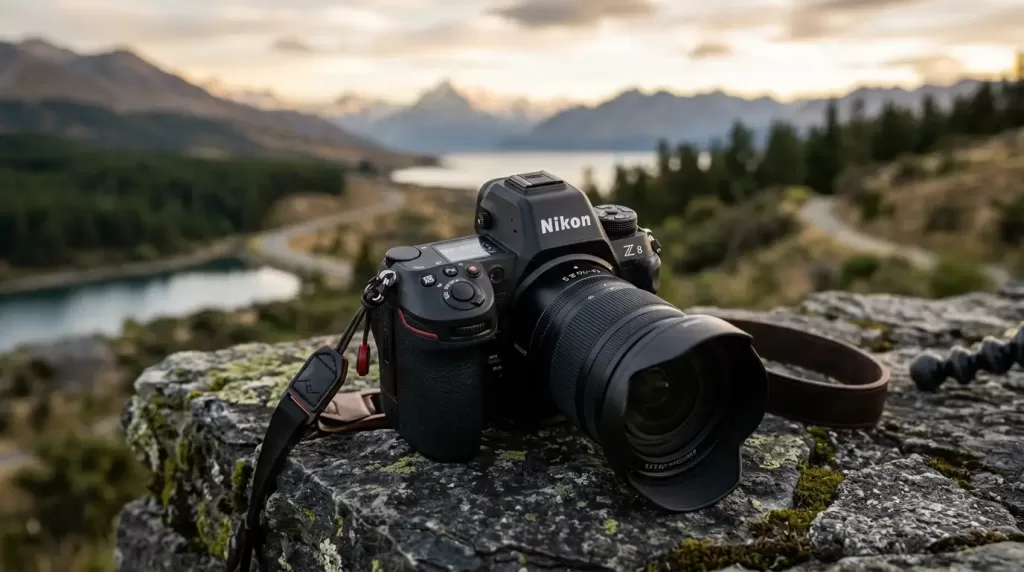
+---------------------------------------------------------------------------------+
|                                 NIKON Z8 AT A GLANCE                            |
|                                                                                 |
| * Sensor: 45.7MP Full-Frame Stacked CMOS                                        |
| * Processor: EXPEED 7                                                           |
| * Continuous Shooting: 20fps RAW / 120fps JPEG                                  |
| * Autofocus: 493-Point Phase-Detection with AI Subject Tracking                 |
| * Rear Screen: 3.2-inch 3-Way Tilting LCD Screen                                |
| * Best For: Landscapes, Portraits, Wildlife, Commercial, and Weddings           |
+---------------------------------------------------------------------------------+
Nikon created a masterpiece when they engineered the Nikon Z8. It inherits almost all the revolutionary power of the massive flagship Nikon Z9 but packages it into a standard-sized, ruggedly built body that feels familiar to old DSLR users. For pure photographers, the Nikon Z8 represents the ultimate sweet spot, delivering extreme resolution alongside rapid-fire performance.
The heart of the Z8 is its magnificent 45.7-megapixel stacked CMOS sensor. This sensor design reads out data so rapidly that Nikon completely omitted a mechanical shutter. When you click the shutter button, the camera records the image entirely electronically, eliminating mechanical wear and tear forever. The incredible resolution gives landscape and studio photographers immense freedom to crop deep into their frames without sacrificing fine details or print quality.
                    Nikon Z8 Structural Advantages

       +-------------------------------------------------------+
       |   45.7MP Stacked Sensor (Zero Rolling Shutter)        |
       +----------------------------+--------------------------+
                                    |
            +-----------------------+-----------------------+
            |                                               |
+-----------v------------+                      +-----------v------------+
| 3-Way Tilting Screen   |                      | Dual Card Slots        |
| (Maintains Optical Axis|                      | (CFexpress Type B &    |
| for Low-Angle Stills)  |                      | Standard SD UHS-II)    |
+------------------------+                      +------------------------+
Photographers heavily praise the Z8’s rear screen mechanism. Unlike fully articulating screens that flip out to the side—which many stills shooters find distracting—the Z8 utilizes a robust three-way tilting layout. This configuration keeps the LCD screen perfectly aligned with the lens axis whether you shoot horizontally or vertically. It allows for quick, discreet low-angle composition without forcing you to look away from your subject’s line of sight.
Real-World Performance Metrics and Ergonomic Comfort
When you take the Z8 into the field, its deeply recessed grip provides exceptional comfort during long shooting sessions, even when you mount heavy telephoto lenses. The intelligent autofocus system locks onto subjects with astonishing confidence, tracking small birds through dense branches or keeping a bride’s eye sharply focused as she moves through changing light conditions. The camera also supports 14-bit RAW shooting at up to 20 frames per second, ensuring you capture the precise apex of any action sequence.
- Pros:
- Massive 45.7MP resolution allows for aggressive cropping options.
- The stacked sensor completely eliminates rolling shutter distortions.
- Real-view electronic viewfinder offers a continuous, zero-blackout display.
- The photographer-focused 3-way tilting screen speeds up low-angle work.
- Weather sealing matches the legendary toughness of the classic D850 DSLR.
- Cons:
- Battery life requires carrying a couple of spares for all-day events.
- The body is noticeably larger and heavier than entry-level Z models.
2. Nikon Z6 III: The Supreme Hybrid Value Choice
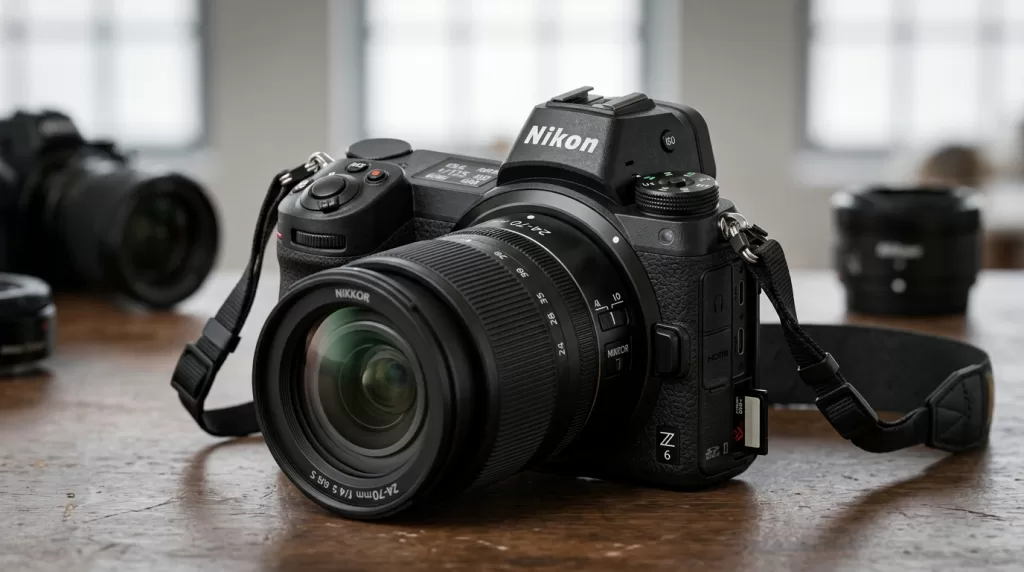
Blending High-Speed Readouts with Uncompromised Low-Light Mastery
+---------------------------------------------------------------------------------+
|                                NIKON Z6 III AT A GLANCE                         |
|                                                                                 |
| * Sensor: 24.5MP Full-Frame Partially Stacked CMOS                              |
| * Processor: EXPEED 7                                                           |
| * Continuous Shooting: 20fps Electronic / 14fps Mechanical                      |
| * Autofocus: Advanced Subject Recognition with 273 AF Points                     |
| * Rear Screen: 3.2-inch Fully Articulating Touchscreen                          |
| * Best For: Event Photography, Travel, Low-Light Stills, and Creative Videos    |
+---------------------------------------------------------------------------------+
If you do not require the massive file sizes of a 45-megapixel sensor, the Nikon Z6 III stands out as an incredibly smart, agile choice. Nikon equipped this body with a groundbreaking 24.5-megapixel partially stacked CMOS sensor. This innovative engineering feat delivers significantly faster data readouts than traditional back-illuminated sensors, giving enthusiasts access to professional-tier performance at a much more attainable price point.
The 24.5-megapixel resolution serves as a perfect sweet spot for event, editorial, and documentary photographers. The files stay beautifully compact, saving valuable hard drive space and accelerating post-processing workflows. Despite the smaller file sizes, the dynamic range remains truly spectacular, preserving rich tonal gradations in both deep shadows and brilliant highlights.
Elevate your raw portraits into gallery-ready masterpieces today with our professional, high-end photo retouching services for demanding photographers.
Low-Light Dominance and Viewfinder Innovation
The Nikon Z6 III shines exceptionally bright when the sun goes down or when you enter dimly lit interior spaces. Its sensor pixels capture ambient light efficiently, producing incredibly clean images at elevated ISO settings like 6400 or 12800. Additionally, the camera features an exceptionally bright, 5.76-million-dot electronic viewfinder with an expansive color gamut. This gorgeous viewfinder makes composing shots in harsh, direct midday sunlight or dark reception halls an absolute joy.
- Pros:
- Partially stacked sensor technology ensures swift autofocus calculations.
- Outstanding high-ISO noise control yields pristine low-light files.
- The ultra-bright electronic viewfinder reduces eye strain significantly.
- It features 8 stops of in-body image stabilization for steady handheld shooting.
- Cons:
- Fully articulating screen design can slow down pure landscape setups.
- 24.5 megapixels limits your ability to crop deeply after shooting.
3. Nikon Zf: Retro Aesthetic Infused with Cutting-Edge Firepower
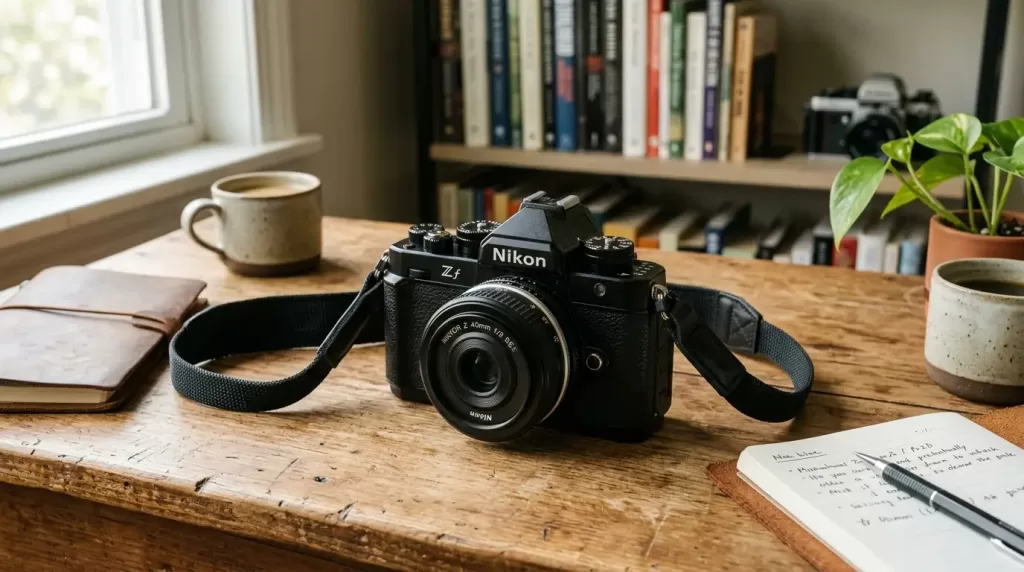
A Beautiful Tribute to Film Heritage That Rejects Performance Compromise
+---------------------------------------------------------------------------------+
|                                 NIKON ZF AT A GLANCE                            |
|                                                                                 |
| * Sensor: 24.5MP Full-Frame BSI CMOS                                            |
| * Processor: EXPEED 7                                                           |
| * Continuous Shooting: 14fps Mechanical / 30fps High-Speed JPEG                 |
| * Autofocus: 273-Point System with Dedicated Monochrome Tracking Mode          |
| * Rear Screen: Fully Articulating Vari-Angle Touchscreen                        |
| * Best For: Street Photography, Casual Portraits, Travel, and Everyday Stills   |
+---------------------------------------------------------------------------------+
Nikon understands that the emotional connection to a camera often inspires great art. The Nikon Zf appeals directly to that passion by reviving the iconic, tactile design of the historic Nikon FM2 film camera. However, do not let its gorgeous vintage exterior fool you; underneath the precision-milled brass top dials sits a modern performance monster that shares its processing brain with the flagship Z9.
The external physical controls change the way you approach the craft of image-making. Turning dedicated physical dials to adjust your shutter speed, ISO, and exposure compensation encourages a more deliberate, thoughtful workflow. The satisfying mechanical click of each dial grounds you in the moment, making casual street photography or intimate portrait sessions feel incredibly rewarding.
                     Nikon Zf Creative Focus Control

     +--------------------------------------------------------+
     |   Tactile Brass Dials (Manual ISO, Shutter, Exposure)  |
     +---------------------------+----------------------------+
                                 |
           +---------------------+---------------------+
           |                                           |
+----------v-----------+                    +----------v-----------+
| Dedicated B&W Lever  |                    | Focus-Point VR       |
| (Instant Switch to   |                    | (Tethers Stability   |
| Rich Monochromatic)  |                    | Directly to AF Point)|
+----------------------+                    +----------------------+
Nikon also included a dedicated physical lever on the top plate that instantly switches the camera into monochrome mode. This lets you see the world immediately in rich high-contrast black and white through the viewfinder, helping you analyze forms, shadow shapes, and lighting structures perfectly before pressing the shutter.
Pixel-Shift Technology and Innovative Stabilization
The Zf introduces a brilliant Pixel-Shift feature to the Nikon Z ecosystem. By mounting the camera to a sturdy tripod, the sensor shifts precisely by fractions of a pixel between consecutive frames, combining multiple shots into a single, ultra-detailed image. This allows you to generate massive, high-resolution landscapes or fine-art reproductions without carrying a heavier camera body. Furthermore, the Zf incorporates an innovative Focus-Point VR system, which links the internal image stabilization directly to your active autofocus point rather than just the center of the sensor.
- Pros:
- Exquisite, premium build quality featuring durable brass dials.
- Dedicated black-and-white mode switch inspires immediate creative styling.
- Focus-Point VR maximizes sharpness at your precise point of interest.
- Highly attractive aesthetic makes it an ideal, non-threatening street camera.
- Cons:
- The minimalist flat front grip can feel fatiguing with long telephoto lenses.
- MicroSD card slot used for the secondary card slot is tricky to handle.
4. Nikon Z9: The Unstoppable Professional Heavyweight
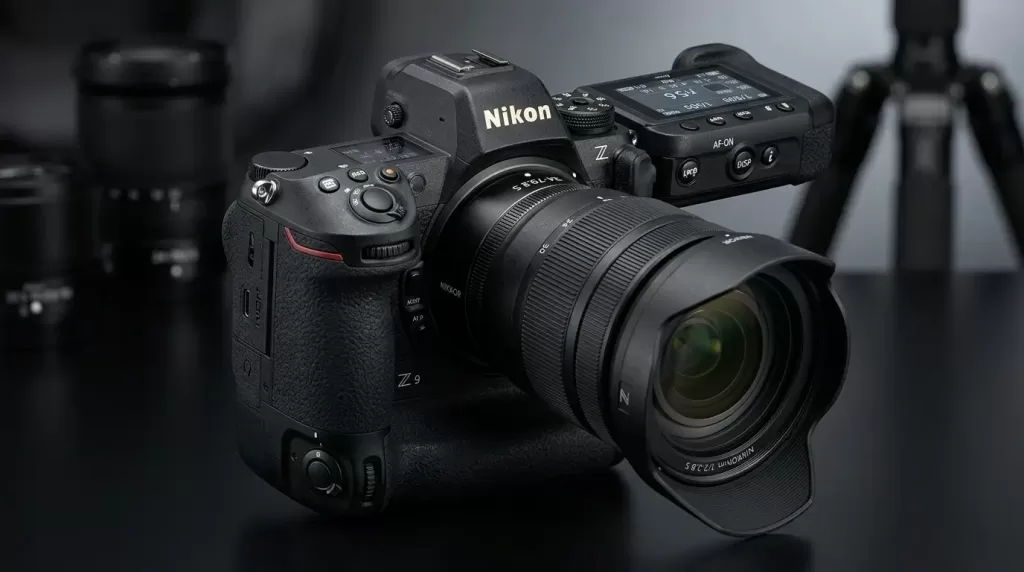
The Ultimate Built-In Grip Flagship Designed for Extreme Durability
+---------------------------------------------------------------------------------+
|                                 NIKON Z9 AT A GLANCE                            |
|                                                                                 |
| * Sensor: 45.7MP Full-Frame Stacked CMOS                                        |
| * Processor: EXPEED 7                                                           |
| * Continuous Shooting: 20fps RAW / 120fps Low-Res JPEG                          |
| * Autofocus: Ultimate Flagship Subject Tracking with 493 AF Points              |
| * Rear Screen: Dual-Axis Tilting Touchscreen LCD                                |
| * Best For: Elite Sports, Wildlife, Harsh Photojournalism, and Studio Work       |
+---------------------------------------------------------------------------------+
When an assignment takes you into extreme weather conditions or requires absolute reliability over days of continuous operation, the Nikon Z9 represents the gold standard. This camera serves as the rugged foundation for elite sports photojournalists, boundary-pushing wildlife photographers, and demanding high-end studio professionals worldwide. Featuring a fully integrated vertical battery grip, the Z9 provides incredible power longevity and effortless handling when switching orientations.
The Z9 shares the same brilliant 45.7-megapixel stacked sensor layout as the Z8, but wraps it inside a massive, indestructible magnesium alloy chassis. The larger internal surface area dissipates heat with incredible efficiency, allowing the camera to operate flawlessly without ever encountering thermal limitations. The integrated vertical grip provides secondary shutter and dial controls, which naturally balances large, exotic prime lenses during fast-moving athletic events.
Streamline your e-commerce workflow and isolate complex color areas perfectly with our expert multi clipping path service designed for online sellers.
Unmatched Power Delivery and Zero-Blackout Monitoring
The dual-battery capacity inside the large grip ensures you can shoot thousands of high-resolution images on a single charge. Like the Z8, the Z9 features a dual-stream viewfinder display powered by the EXPEED 7 engine. This system sends data to the EVF completely independently from the image-recording stream, meaning you never experience a single microsecond of blackout or stuttering while tracking a fast-moving athlete or a bird in flight.
- Pros:
- Indestructible build quality provides total confidence in extreme climates.
- Incredible battery life easily outlasts long, grueling days of production.
- Dual CFexpress card slots ensure lightning-fast buffer clearing speeds.
- Integrated vertical grip balances massive professional telephoto lenses perfectly.
- Cons:
- The large form factor is bulky and heavy for casual travel or street use.
- The premium pricing represents a major investment for non-professionals.
5. Nikon Z5 II: The Ultimate Entry-Point to Full-Frame Artistry
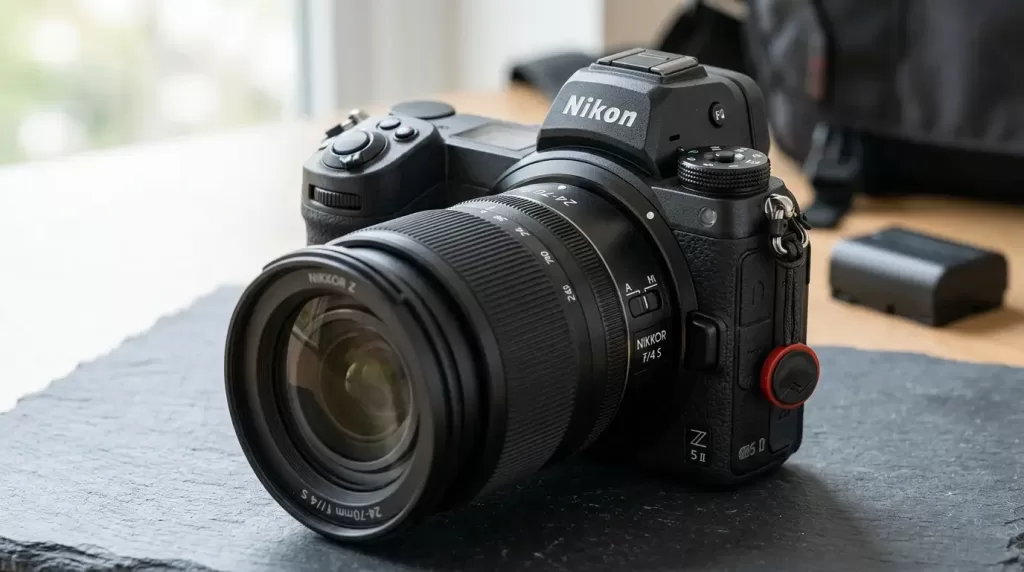
Democratizing Professional Image Quality Without Demolishing Your Budget
+---------------------------------------------------------------------------------+
|                                NIKON Z5 II AT A GLANCE                          |
|                                                                                 |
| * Sensor: 24.5MP Full-Frame BSI CMOS                                            |
| * Processor: EXPEED 7 (Upgraded for 2026)                                       |
| * Continuous Shooting: 15fps Electronic RAW / JPEG                              |
| * Autofocus: Upgraded Subject Tracking with Deep Learning                       |
| * Rear Screen: Standard Tilting Touchscreen LCD                                 |
| * Best For: Budget Full-Frame Upgrades, Portraits, Landscapes, and Travel        |
+---------------------------------------------------------------------------------+
Nikon created an exceptional gateway for enthusiasts looking to step up to full-frame photography with the introduction of the Nikon Z5 II. This camera updates the highly successful original Z5 formula by inserting the incredibly fast EXPEED 7 processor into its internal architecture. This simple upgrade completely transforms the camera, providing entry-level users with the exact same intelligent subject recognition capabilities found on bodies that cost three times as much.
The 24.5-megapixel sensor handles high contrast brilliantly, capturing gorgeous skin tones and delicate landscape textures with ease. Because it uses an upgraded processing engine, the Z5 II clears its internal buffer rapidly and wakes up instantly when you flick the power switch, ensuring you never miss a sudden, spontaneous moment.
Isolate complex details like hair or fur flawlessly by outsourcing your post-processing to our seamless, high-quality image masking specialists.
Uncompromised Ergonomics and Accessible Pro Layouts
Unlike many budget-oriented models from competing brands, Nikon did not remove essential physical features from the Z5 II. You still get dual card slots for instant real-time data backup, robust weather-resistant construction, and a clear, highly detailed electronic viewfinder. The camera body remains highly compact and lightweight, making it an excellent companion for long weekend hikes or extensive international travel.
- Pros:
- Incredible financial value for entry into the full-frame mirrorless world.
- Upgraded EXPEED 7 processor brings flagship subject tracking to a budget body.
- Dual card slots protect your irreplaceable memories from unexpected card errors.
- Lightweight, compact design reduces physical strain during extended travel.
- Cons:
- Maximum burst rate is slightly slower than high-end action bodies.
- Low-light performance at extreme ISO ranges falls slightly behind the Z6 III.
6. Nikon APS-C Options: Compact Companions for Nimble Shooters
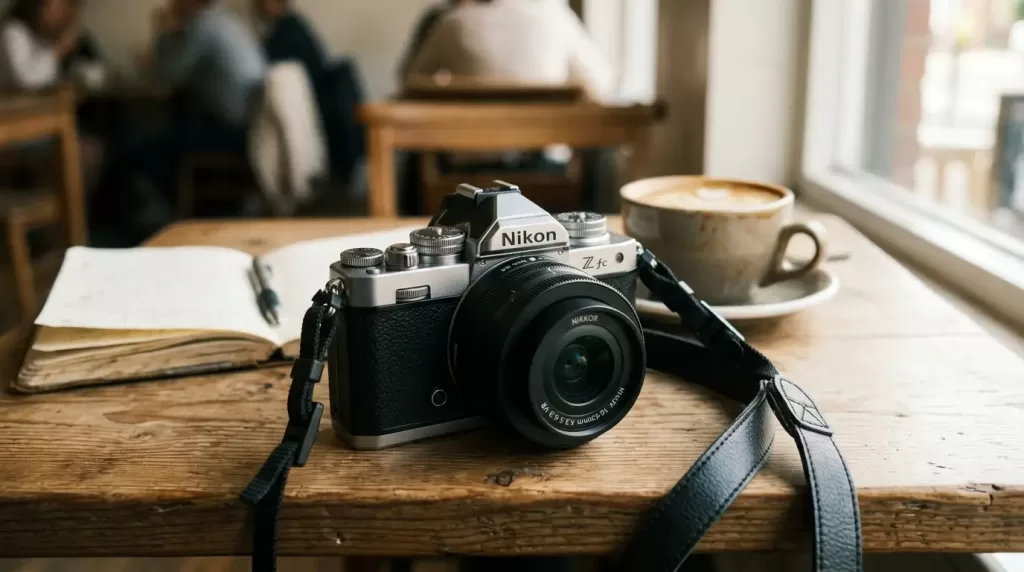
Analyzing the Lightweight Efficiency of the Nikon Z50 II and Nikon Zfc
+---------------------------------------------------------------------------------+
|                               NIKON DX BODIES AT A GLANCE                       |
|                                                                                 |
| * Sensor: 20.9MP APS-C (DX-Format) CMOS                                         |
| * Form Factor: Ultra-Compact and Lightweight                                    |
| * Lens Compatibility: Accepts All Z-Mount Lenses (Applies 1.5x Crop Factor)      |
| * Best For: Beginner Photographers, Content Creators, Vlogging, and Ultra-Light |
+---------------------------------------------------------------------------------+
While full-frame cameras naturally dominate professional discussions, Nikon’s APS-C (DX-format) camera bodies offer immense value for creators who prioritize ultra-lightweight portability and streamlined setups. The Nikon Z50 II and the beautifully styled Nikon Zfc both utilize a highly capable 20.9-megapixel crop sensor that produces incredibly vibrant, razor-sharp images while keeping your overall camera bag remarkably light.
The 1.5x crop factor inherent to these sensors acts as a natural extender for telephoto photography. If you mount a full-frame lens to a DX body, it narrows your field of view, effectively bringing distant wildlife or field sports significantly closer to your lens. The compact nature of these bodies makes them ideal choices for everyday family documentation, street exploration, and lightweight travel vlogging.
Streamlined Controls and Agile Everyday Handling
The Z50 II offers a modern, deeply contoured grip that handles exceptionally well for its tiny size, while the Zfc mirrors the vintage dial layout of the full-frame Zf on a smaller, highly customizable scale. Both cameras feature intuitive touchscreens and seamless wireless connectivity, allowing you to transfer high-quality images to your smartphone for instant online sharing within seconds of capture.
- Pros:
- Extremely small and lightweight form factors fit easily into small bags.
- Highly affordable entry prices leave plenty of room for creative lens purchases.
- 1.5x crop factor provides free extra reach for budget wildlife shooters.
- Highly accessible menus help beginners learn the foundations of exposure quickly.
- Cons:
- Lack of built-in image stabilization (IBIS) requires relying on VR lenses.
- The dedicated native DX-format prime lens lineup remains somewhat limited.
Matching Nikon Z Cameras to Specific Photography Niches
Selecting the Perfect Tool Based on Your Primary Subject Matter
+---------------------------------------------------------------------------------------+
|                              RECOMMENDED CAMERAS BY GENRE                             |
|                                                                                       |
| * Landscape Photography:  Nikon Z8 or Nikon Z9 (High resolution, deep dynamic range)  |
| * Wildlife & Sports:     Nikon Z9 or Nikon Z8 (Blazing speed, sticky tracking)       |
| * Portrait & Wedding:    Nikon Z8 or Nikon Z6 III (Beautiful skin tones, dual slots)  |
| * Street & Travel:       Nikon Zf or Nikon Z5 II (Compact sizes, discrete profiles)   |
+---------------------------------------------------------------------------------------+
Every photographic genre presents unique technical challenges that require specific camera features. Landscape photographers prioritize resolution and dynamic range above all else, as they need to capture tiny details in distant mountain ridges and handle high-contrast sunrises. For these artists, the 45.7-megapixel sensors in the Nikon Z8 and Z9 are unmatched. These sensors allow you to extract incredible details from deep shadows, providing immense creative control during post-processing.
Wildlife and action shooters, on the other hand, require exceptional speed, massive internal buffers, and intelligent autofocus tracking that refuses to lose focus on a target. The extreme readout speed of the stacked sensor inside the Z9 and Z8 ensures you capture the exact wing position of a hummingbird or the intense expression of a sprinting athlete.
                      Nikon Z System Selection Guide

           Are you earning a full-time income from photography?
                               |
                +--------------+--------------+
                |                             |
             Yes (Pro)                     No (Enthusiast)
                |                             |
    Do you need a vertical grip?       What is your budget limit?
                |                             |
        +-------+-------+             +-------+-------+
        |               |             |               |
     Yes (Z9)        No (Z8)      Under $1500     Over $1500
                                      |               |
                                   (Z5 II)    Do you like retro dials?
                                                      |
                                              +-------+-------+
                                              |               |
                                           Yes (Zf)      No (Z6 III)
For wedding, portrait, and commercial product photographers, capturing accurate skin tones and fine fabric textures is vital. The Nikon Z8 and Nikon Z6 III provide exceptional color science that reduces your editing time significantly. If your work focuses on high-end commercial products, you must pair your chosen camera body with the best Nikon lens for product photography to capture crisp details.
The Ultimate Nikon Z Photography Comparison Matrix
A Side-by-Side Architectural Assessment of Performance and Physical Attributes
To help you visualize exactly how these stellar camera bodies compare across critical technical lines, we compiled a detailed breakdown of their key specifications. This matrix clarifies the specific hardware advantages of each model within the current mirrorless framework.
| Camera Model | Sensor Resolution | Sensor Type | Processing Engine | Maximum Frame Rate | Screen Articulation | Primary Card Target |
| Nikon Z8 | 45.7 Megapixels | Fully Stacked CMOS | EXPEED 7 | 20 fps RAW | 3-Way Tilting | CFexpress Type B + SD |
| Nikon Z6 III | 24.5 Megapixels | Partially Stacked | EXPEED 7 | 20 fps Electronic | Fully Articulating | CFexpress Type B + SD |
| Nikon Zf | 24.5 Megapixels | Standard BSI CMOS | EXPEED 7 | 14 fps Mechanical | Fully Articulating | Standard SD + MicroSD |
| Nikon Z9 | 45.7 Megapixels | Fully Stacked CMOS | EXPEED 7 | 20 fps RAW | Dual-Axis Tilting | Dual CFexpress Type B |
| Nikon Z5 II | 24.5 Megapixels | Standard BSI CMOS | EXPEED 7 | 15 fps Electronic | Standard Tilting | Dual Standard SD Cards |
| Nikon Z50 II | 20.9 Megapixels | APS-C (DX) CMOS | EXPEED 7 | 11 fps Mechanical | Flip-Under Screen | Single Standard SD Card |
This clear structural overview illustrates how Nikon has methodically distributed its processing power across various price tiers. By utilizing this data, you can quickly identify which body provides the exact mix of speed, storage reliability, and resolving power your creative workflow requires.
Advanced Field Strategies: Maximizing Your Nikon Z Camera Settings
Custom Configuration Secrets for Perfect Focus Consistency and Exposure Accuracy
Purchasing a top-tier mirrorless camera body is only the first step; configuring the internal software options properly unlocks its true potential. Nikon’s deep, highly customizable menu system allows you to tailor the camera’s behavior to match your personal shooting rhythm. One of the most effective modifications you can make is separating your autofocus activation from the shutter release button, a technique widely known as back-button focusing.
By assigning the autofocus activation exclusively to the rear AF-ON button, you gain instant control over when the camera recalculates focus. This allows you to lock focus on a subject once, recompose your frame freely, and press the shutter button repeatedly without causing the camera to accidentally re-focus on an distracting element in the background.
- Optimize Subject Tracking Sensitivity: Navigate directly into the Custom Settings Menu to adjust your AF Subject Detection variables. Lowering the tracking responsiveness setting tells the camera to hold focus on your original subject longer if an obstacle temporarily blocks your view.
- Configure Custom Recall Profiles: Assign frequently used shooting parameters—such as a fast shutter speed and wide-area tracking pattern—to a specific custom button. This lets you instantly switch from shooting a static portrait to capturing a sudden action sequence with a single button press.
- Utilize Pre-Release Capture: Enable the Pre-Release Capture feature within the continuous shooting settings when photographing unpredictable wildlife. This mode records images to the buffer while you hold the shutter button halfway down, saving those frames to your memory card when you press the button fully.
Frequently Asked Questions
Can I use my old F-mount DSLR lenses on a new Nikon Z camera body safely?
Yes, you can adapt your older F-mount lenses perfectly by utilizing the official Nikon FTZ II lens adapter. The adapter maintains complete electronic communication between the camera and lens, ensuring that autofocus, automatic exposure, and image stabilization systems function flawlessly with zero loss in image quality.
Why does the Nikon Z8 omit a mechanical shutter completely?
Nikon omitted the mechanical shutter from the Z8 because its stacked CMOS sensor features exceptionally rapid data readout speeds. This advanced engineering design eliminates rolling shutter distortion entirely, allowing the electronic shutter to handle fast action without moving physical parts that can wear out over time.
Is a three-way tilting screen better than a fully articulating screen for stills photography?
Most pure stills photographers prefer a three-way tilting screen because it keeps the LCD monitor perfectly centered along the optical axis of the lens when shooting at low angles. Fully articulating screens flip out to the side, which forces you to look away from the physical line of your lens, slowing down quick adjustments.
Do I need to buy expensive CFexpress cards, or can I stick with standard SD cards?
Your choice depends entirely on your chosen camera body and shooting style. High-resolution, high-speed cameras like the Z8 and Z9 require fast CFexpress Type B cards to clear their massive data buffers quickly during rapid bursts. However, cameras like the Z6 III and Zf offer secondary SD card slots that handle standard workflows beautifully.
How does the body image stabilization (IBIS) perform when shooting handheld landscapes?
Nikon’s modern in-body image stabilization system is exceptionally powerful, delivering up to 8 stops of stabilization on advanced bodies like the Z6 III and Zf. This allows you to shoot sharp, handheld images at slow shutter speeds like half a second, eliminating the need to carry a heavy tripod on casual outings.
Does the crop factor of an APS-C lens reduce the light gathering performance on a full-frame body?
No, mounting a crop-sensor lens does not change the physical light-gathering ability of the lens’s aperture. However, the camera body will automatically switch into DX crop mode, reducing your overall resolution because it utilizes a smaller physical area of the full-frame sensor to record the frame.
The Path Forward: Investing in Your Ultimate Photographic Tool
Final Thoughts on Building a Future-Proof Mirrorless System That Grows with You
The Nikon Z-mount ecosystem has fully matured into an incredibly powerful, cohesive system that provides photographers with unparalleled creative freedom. Whether you choose the absolute high-resolution power of the Nikon Z8, the incredible low-light versatility of the Z6 III, or the gorgeous tactile feel of the retro Zf, you are investing in a future-proof camera platform. Each body delivers exceptional color reproduction, dependable weather resistance, and intelligent autofocus capabilities that make the process of creating beautiful images an absolute pleasure.
Take your time to analyze your primary subject matter, consider your long-term creative ambitions, and select the specific body that feels most natural in your hands. The right camera acts as a seamless extension of your creative vision, fading into the background and allowing you to focus entirely on capturing beautiful light, compelling stories, and unforgettable visual moments.
Transform your spectacular raw images into polished professional works of art with our reliable, expert photo editing solutions today.