


Depth of Field Explained: Tips Every Photographer Needs
June 6, 2026
Best Nikon Z Camera for Photography in 2026
June 8, 2026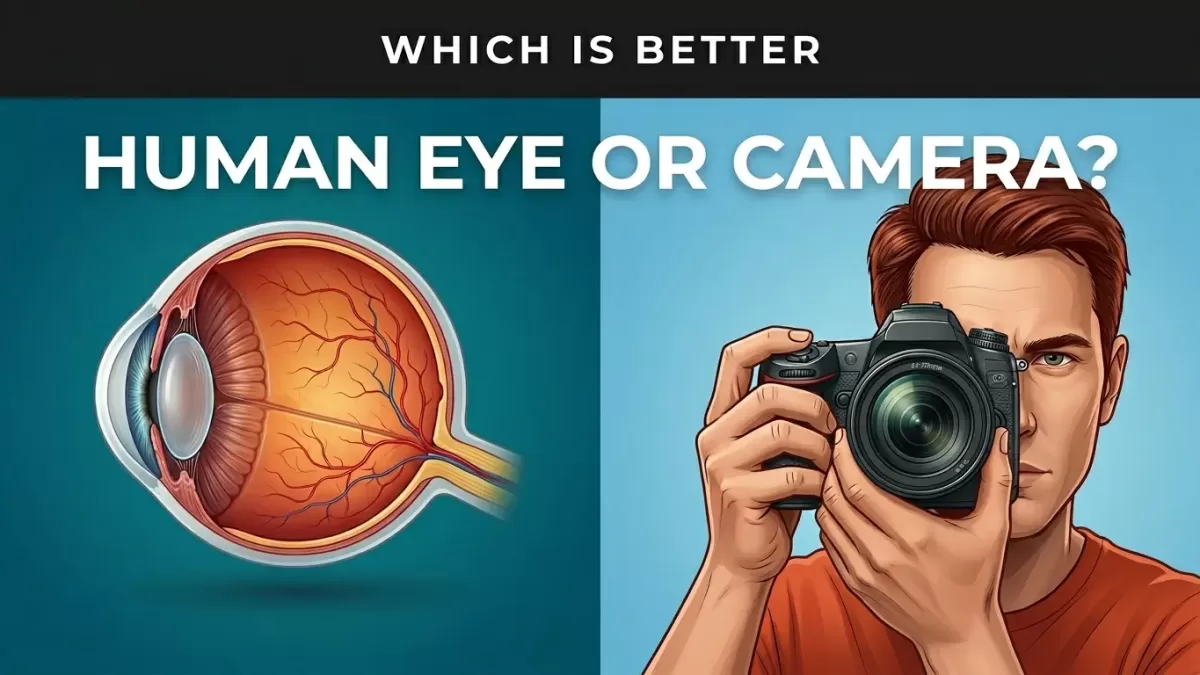
Every time you blink, your eyes deliver a stream of stunning detail that the most advanced cameras still struggle to match. People often wonder how a soft, jelly-like organ can outperform precision-engineered sensors that cost thousands of dollars. The answer hides inside the retina — a paper-thin layer of light-sensitive cells that processes the world in real time.
Photographers, vision scientists, and curious readers keep asking one big question: What is the resolution of the human eye in megapixels? Most experts point to a famous calculation by astrophotographer Dr. Roger N. Clark, who pegged the figure at roughly 576 megapixels across the full field of view. That number, however, only tells part of the story. Your eye does not snap one static frame the way a DSLR does — it scans, refocuses, and stitches together a continuous mental image.
In this guide, we break down the science clearly, compare your eyes to modern cameras, and explain what these numbers mean for product photography, ecommerce visuals, and everyday viewing.
Need crisp, eye-pleasing product photos that match the detail your viewers can actually see? Explore our professional clipping path service and let your visuals shine.
- How Does the Human Eye Actually “See”?
- What Is the Resolution of the Human Eye in Megapixels?
- The Fovea: Where Your Sharpest Vision Lives
- Field of View: How Wide Is Human Vision?
- Dynamic Range: The Eye’s Hidden Superpower
- How Many Colors Can the Human Eye See?
- Frame Rate: How Many “FPS” Can Your Eye Process?
- Human Eye vs Modern Cameras: A Realistic Comparison
- Can the Human Eye See 4K, 8K, or Beyond?
- How Eye Resolution Knowledge Helps Photographers and Ecommerce Brands
- The Limits of Human Vision
- How Aging Affects Eye Resolution
- Why the 576 Megapixel Number Sometimes Misleads
- Practical Takeaways for Photographers and Ecommerce Sellers
- Frequently Asked Questions (FAQ)
- Final Thoughts: Your Eyes Are Still the Best Camera Ever Built
How Does the Human Eye Actually “See”?
Your eyes work like biological cameras, but they handle information very differently than a sensor and lens combo. Light first enters through the cornea, passes through the pupil, and gets focused by the lens onto the retina at the back of the eyeball.
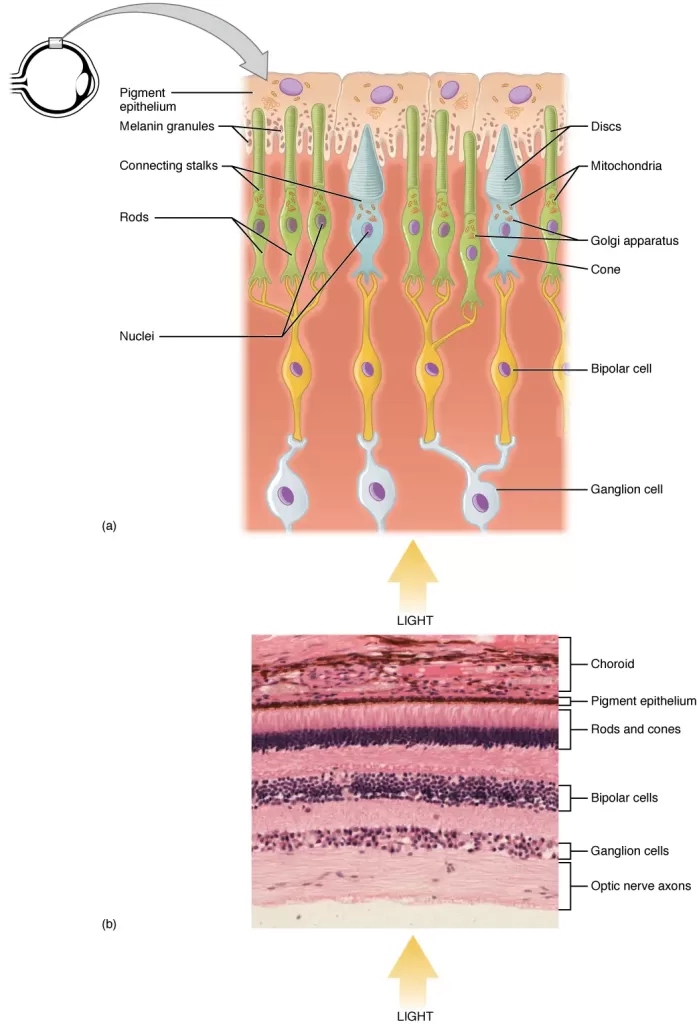
The retina then converts light into electrical signals using two types of photoreceptors:
- Rods — about 120 million per eye, responsible for low-light and peripheral vision
- Cones — roughly 6 to 7 million per eye, responsible for color and sharp central detail
These signals travel through the optic nerve to the brain’s visual cortex, where they get assembled into the rich, three-dimensional image you actually experience. The American Academy of Ophthalmology explains that this entire process happens in milliseconds, faster than any computer rendering pipeline.
Why Your Brain Matters as Much as Your Eyes
Vision is not purely optical. The brain fills in gaps, removes motion blur, and constantly adjusts color balance. This neural processing is the reason a small, organic organ can outperform sensors with billions of pixels of computing power behind them.
What Is the Resolution of the Human Eye in Megapixels?
The most cited figure — 576 megapixels — comes from Dr. Roger N. Clark, a planetary scientist and respected nature photographer. His Clarkvision calculation assumes a 120-degree field of view and an angular resolution of 0.3 arc-minutes per pixel.
Here is the actual math he used:
- 120° × 120° × 60 × 60 ÷ (0.3 × 0.3) = 576,000,000 pixels
In simpler terms:
- ✓ One eye scanning a wide scene = ~576 megapixels of perceivable detail
- ✓ A single fixed glance = closer to 5–15 megapixels (because only the fovea sees sharply)
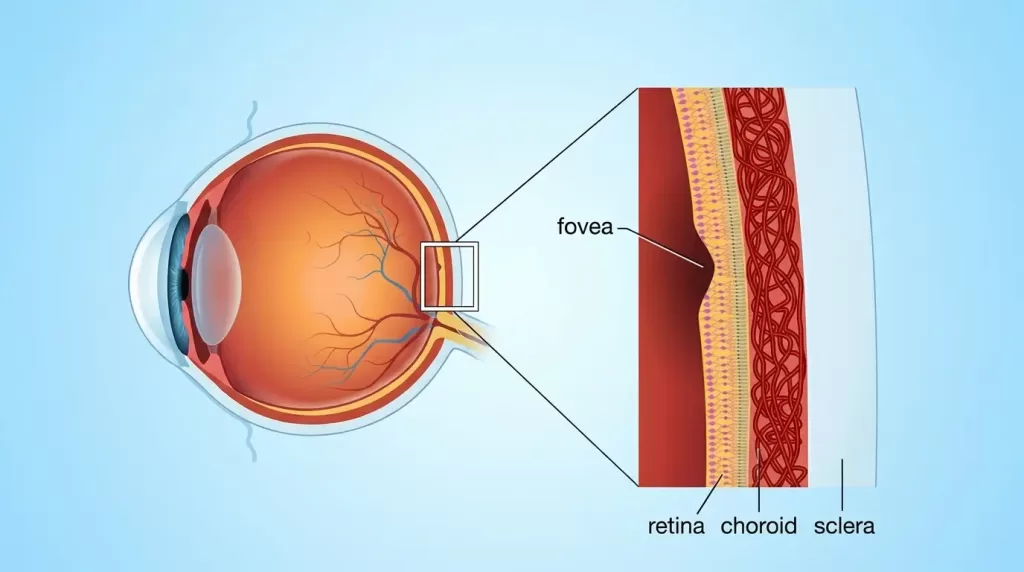
- ✓ The fovea — a tiny pit just 1.5 mm wide — handles your sharpest central vision
- ✓ Peripheral vision is far lower resolution but excels at motion detection
So, when you read “the human eye has 576 megapixels,” remember that the figure represents accumulated detail across many eye movements, not a single snapshot.
A More Conservative Estimate
Other sources, like Cambridge in Colour, suggest the eye resolves roughly 52 megapixels at 20/20 vision over a 60° field of view. Both numbers are valid — they simply measure different things.
The Fovea: Where Your Sharpest Vision Lives
The fovea centralis is a microscopic depression in the center of your retina. Even though it covers less than 1% of your visual field, it packs about 158,000 cones per square millimeter. This dense cone population gives you the ability to read fine print, recognize faces, and appreciate intricate artwork.
Key facts about the fovea:
- Size: Approximately 1.5 mm in diameter
- Cone density: Highest concentration in the entire body
- Rods: Almost zero — color detail dominates here
- Field coverage: Only about 2 degrees of visual angle
Outside this tiny zone, your vision quality drops sharply. This is why your eyes constantly dart around (saccades) — your brain stitches multiple high-detail “snapshots” into one continuous, sharp scene.
Field of View: How Wide Is Human Vision?
A single human eye covers roughly 150° to 160° horizontally. When you combine both eyes, the total field of view jumps to about 200° to 220° horizontally and 130° to 135° vertically.
This panoramic coverage breaks down into several functional zones:
- Central vision (fovea): Ultra-sharp, color-rich, ~2° wide
- Near peripheral: Moderate detail, ~30° wide
- Mid peripheral: Lower detail, motion-aware, ~60° wide
- Far peripheral: Mostly motion and contrast detection, beyond 60°
Compare that to a 50mm camera lens, which captures only about 46° diagonally. Your eyes win on coverage, but cameras win on uniform sharpness across the frame.
Have product photos that look uneven or distracting around the edges? Our expert image masking service refines complex details so every viewer sees a clean, professional result.
Dynamic Range: The Eye’s Hidden Superpower
Dynamic range describes how much detail you can perceive between the brightest highlights and darkest shadows in a single scene. This is one area where the human eye absolutely crushes most cameras.
| Feature | Human Eye | Typical DSLR/Mirrorless |
|---|---|---|
| Dynamic range (instantaneous) | ~10–14 stops | 12–15 stops |
| Dynamic range (with adaptation) | ~20–24 stops | Same as instantaneous |
| Low-light sensitivity | Very high | Moderate to high |
| Adaptation time (dark) | 20–30 minutes | Instant ISO change |
When you walk from a sunlit street into a dim café, your pupils widen and rod cells slowly take over. After about 30 minutes of full dark adaptation, your eyes can detect a single candle flame from over 1.5 miles away on a clear night. The Barraquer Ophthalmology Center confirms that no current sensor matches this kind of biological flexibility.

How Many Colors Can the Human Eye See?
Most healthy adults can distinguish approximately 10 million distinct colors, according to the American Academy of Ophthalmology. This wide color palette comes from three types of cone cells, each tuned to a different wavelength:
- S-cones — sensitive to short wavelengths (blue)
- M-cones — sensitive to medium wavelengths (green)
- L-cones — sensitive to long wavelengths (red)
A few rare individuals — called tetrachromats — carry a fourth functional cone type and may perceive up to 100 million colors. Most tetrachromats are women, because the gene controlling cone variation sits on the X chromosome.
Why Color Matters for Photography
When ecommerce shoppers compare two product images, even a 2–3% color shift can affect their purchase decision. Calibrated monitors, color-managed workflows, and skilled retouchers help bridge the gap between what your eye sees in real life and what a screen displays.

Want product shots that reflect every realistic shade your customers see? Our professional photo retouching service restores natural color, tone, and texture without losing authenticity.
Frame Rate: How Many “FPS” Can Your Eye Process?
Many people repeat the myth that the human eye sees in “30 FPS.” Reality is far more interesting. Your eye does not work in discrete frames at all — it processes light continuously. However, scientists measure perception limits using the flicker fusion threshold, which is the rate at which flashing light starts looking continuous.
According to a 2014 study in Scientific Reports (Nature), people can actually perceive flicker artifacts at rates over 500 Hz under specific conditions. More typically:
- Steady flicker fusion: 60–90 Hz for most adults
- Fast-action perception: Up to 150 Hz when motion and edges are involved
- Extreme conditions: Some pilots and trained observers detect flashes up to 500 Hz
This is why gaming monitors at 144 Hz or 240 Hz still feel noticeably smoother than 60 Hz screens — your eyes really can tell the difference.
Human Eye vs Modern Cameras: A Realistic Comparison
Let’s put everything side by side. Here’s how the eye stacks up against a high-end mirrorless camera in 2026:
| Specification | Human Eye | Sony A1 II / Canon R5 II |
|---|---|---|
| Effective resolution | ~576 MP (full scan) | 45–50 MP |
| Field of view (one eye) | ~150° horizontal | ~46° (50mm lens) |
| Color sensitivity | ~10 million colors | ~16.7 million (24-bit) on sensor |
| Dynamic range | 20+ stops (adapted) | 14–15 stops |
| Low-light ISO equivalent | ~ISO 800 effective | ISO 100–102,400 |
| Refresh rate | Continuous + ~60–90 Hz fusion | 30–120 FPS video |
| Autofocus speed | Instant (neural) | ~0.02 seconds |
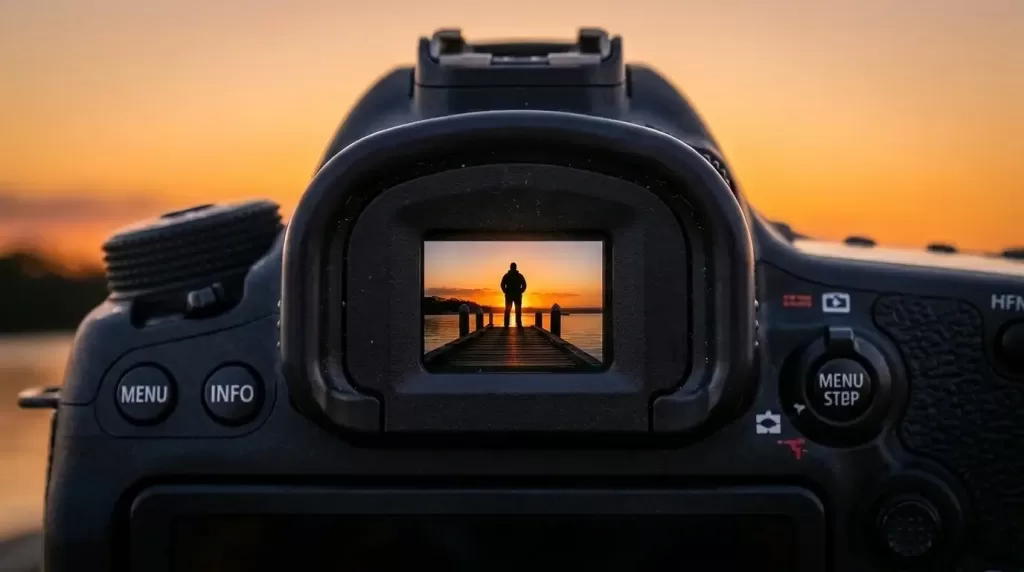
Cameras now beat human eyes in raw ISO sensitivity, telephoto reach, and exposure consistency. The eye, meanwhile, still dominates in field coverage, dynamic range, and color adaptation.
Can the Human Eye See 4K, 8K, or Beyond?
Display manufacturers love to debate this. A 2022 study from the University of Cambridge measured how many pixels per degree (PPD) the eye can resolve. The findings:
- Maximum 94 PPD for grayscale detail
- About 89 PPD for red-green color contrast
- Around 53 PPD for yellow-violet contrast
In practical viewing distances, this means:
- ✓ A 27-inch 4K monitor viewed at 24 inches — sharpness is fully resolved
- ✓ A 65-inch 8K TV viewed from 10 feet — most of the extra detail is invisible
- ✓ A virtual reality headset right against your eyes — 8K is the bare minimum
So 8K matters for VR, IMAX cinema, and giant signage. For everyday TVs, 4K is the practical ceiling for most viewers.
How Eye Resolution Knowledge Helps Photographers and Ecommerce Brands
Understanding human eye resolution directly influences how product images should be prepared. If shoppers can detect ~10 million colors, 0.3 arc-minute detail, and subtle dynamic-range cues, your visuals need to honor that level of perception.
Smart practices include:
- Capturing in RAW for the widest dynamic range
- Editing on calibrated monitors covering at least 95% sRGB
- Using clean clipping paths so edges look natural at any zoom level
- Adding realistic shadows to preserve depth cues
- Applying ghost mannequin techniques for apparel products
- Color-correcting to match real-world tones
A great resource on photo preservation and recovery is PhotoFixal’s guide to recently deleted photos, which helps when you accidentally lose those carefully edited shots.

Apparel photography needs natural depth and realistic dimension. Try our ghost mannequin service for clothing visuals that match how shoppers actually perceive garments.
The Limits of Human Vision
No biological system is perfect. The human eye has known limitations:
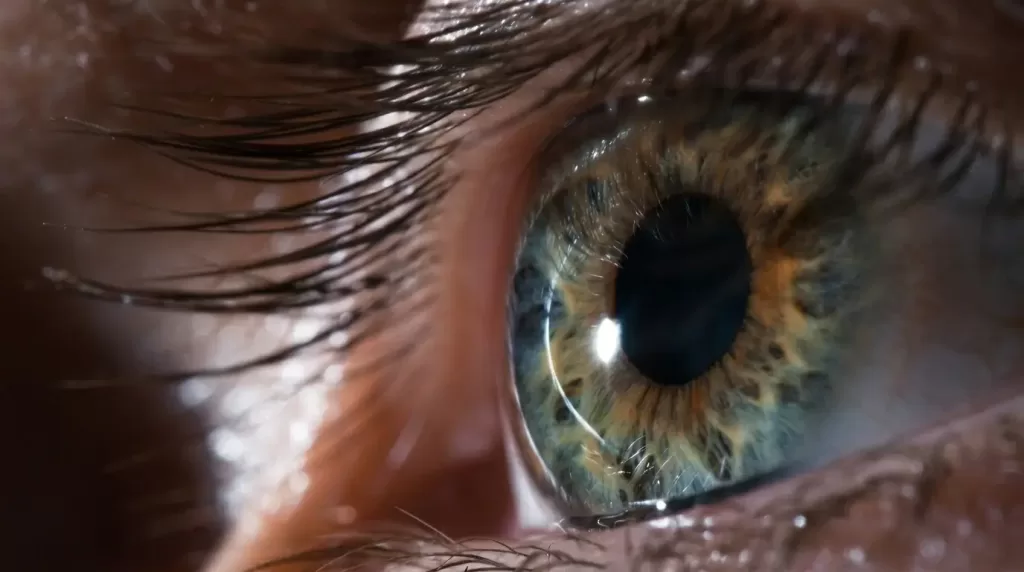
- Blind spot: Each eye has a ~5° area with no photoreceptors where the optic nerve exits
- Chromatic aberration: The lens splits colors slightly, just like a camera lens
- Accommodation loss: Focusing ability decreases with age (presbyopia after 40)
- Resolution drop in peripheral vision: Up to 100× worse than foveal vision
- Color blindness: Affects about 8% of men and 0.5% of women globally
Despite these flaws, the brain compensates so well that most people never notice their own blind spots without specific tests.
How Aging Affects Eye Resolution
Your vision quality changes throughout life. The National Eye Institute tracks the most common age-related changes:
- Age 20–30: Peak resolving power and color sensitivity
- Age 40–50: Lens stiffens, near vision blurs (presbyopia)
- Age 50–60: Pupil shrinks, reducing low-light performance
- Age 60+: Risk of cataracts, macular degeneration, glaucoma
Regular eye exams help preserve sharpness. Photographers especially benefit from yearly checks because their work depends on accurate color and detail perception.
Why the 576 Megapixel Number Sometimes Misleads
The 576 MP figure gets thrown around online without context. Several caveats matter:
- ✕ It is not a single-snapshot value
- ✕ It assumes ideal lighting and a fully scanning gaze
- ✕ Most detail concentrates in a tiny central area
- ✕ The brain throws away most of the data within milliseconds
- ✓ It is still useful for comparing perceived detail across scenes
Treat 576 MP as a ceiling, not an everyday measurement. In any one glance, the brain typically processes 5–15 MP of meaningful data — already more than a smartphone camera but far less than the famous headline number.
Need detailed cutouts of products with multiple parts or colors? Use our multi-clipping path service to isolate every element with precision.
Practical Takeaways for Photographers and Ecommerce Sellers
You do not need a 576-megapixel camera to satisfy human vision. Instead, focus on:
- Sharpness in the area where viewers naturally look first
- Accurate, calibrated color reproduction
- Healthy dynamic range with shadow and highlight detail
- Clean, distraction-free edges and backgrounds
- Consistency across your product catalog
Modern editing workflows can produce images that look “more real than real” to the average viewer — the secret lies in respecting how the eye perceives, not in maximizing raw pixel count.
Frequently Asked Questions (FAQ)
1. What is the resolution of the human eye in megapixels?
According to Dr. Roger Clark’s well-known calculation, the human eye perceives roughly 576 megapixels of detail across its full field of view. A single fixed glance, however, captures only about 5–15 megapixels of sharp detail.
2. Can the human eye see in 4K or 8K?
Yes, the human eye comfortably resolves 4K detail at typical viewing distances. 8K only becomes noticeable on extremely large displays viewed up close or in VR headsets, where pixel density really matters.
3. How many colors can the human eye distinguish?
Most healthy adults can detect about 10 million distinct colors. Rare tetrachromats with four cone types may perceive up to 100 million colors — a fascinating genetic gift mostly found in women.
4. How many FPS does the human eye see?
The eye does not see in fixed frames. The flicker fusion threshold sits around 60–90 Hz for steady light, though under specific conditions people can perceive visual artifacts up to 500 Hz.
5. Is the human eye better than a camera?
Yes and no. The eye wins in dynamic range, field of view, and color adaptation. Cameras win in low-light ISO, telephoto reach, and consistent sharpness across the entire frame.
6. Why is foveal vision so important?
The fovea contains the densest concentration of cone photoreceptors in your retina. It delivers your sharpest, most color-rich detail, even though it covers only 1–2 degrees of your total visual field.
7. Does eye resolution decrease with age?
Yes. Lens flexibility, pupil size, and photoreceptor health all decline gradually after age 40. Annual eye exams help track changes early and preserve quality vision longer.
8. How can photographers use this knowledge?
Photographers should focus on sharpness where viewers look first, calibrate monitors for accurate color, and use editing techniques that mirror how the eye actually perceives light, color, and depth.
Final Thoughts: Your Eyes Are Still the Best Camera Ever Built
Even after decades of sensor innovation, the human eye remains a marvel of biological engineering. With around 576 megapixels of perceivable detail, ~10 million distinguishable colors, and 20+ stops of dynamic range, your eyes outperform almost every device in their natural environment.
For photographers and ecommerce sellers, the lesson is clear — you don’t need to chase impossible camera specs. You simply need to respect how human vision works and prepare your images with that science in mind. Clean cutouts, realistic shadows, faithful colors, and well-balanced exposures will always feel more “real” to viewers than raw megapixel counts.
Ready to deliver visuals that match the impressive detail your customers’ eyes can perceive? Get a clean, professional finish with our background removal service — fast, accurate, and built for ecommerce success.