

Nikon Zf Review: A Retro Soul Meets Modern Power in Full-Frame Mirrorless
May 18, 2026
DJI Osmo Pocket 4 Review 2026: Specs, Features & Verdict
May 21, 2026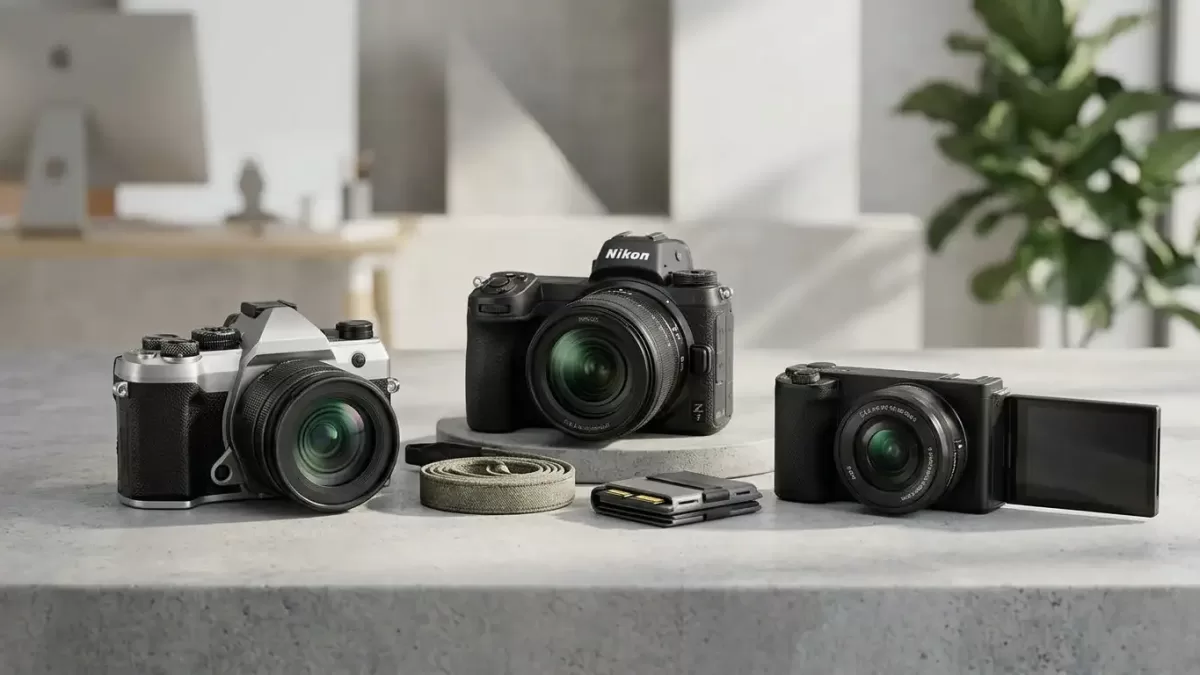
- Why Most Beginner Camera Guides Get It Wrong
- What “Beginner Camera” Actually Means in 2026
- How We Chose These Cameras (Our Testing Framework)
- The 7 Best Cameras for Beginners in 2026
- Quick Comparison Table
- The Advice Most Guides Skip
- Mirrorless vs DSLR in 2026: Is the DSLR Dead?
- Lenses Every Beginner Should Eventually Own
- Editing Your Photos: The Step Most Beginners Skip
- Common Mistakes New Photographers Make
- How Long Should Your First Camera Last?
- Where to Buy (And Where Not To)
- Frequently Asked Questions
- Final Thoughts: The Right Camera Is the One You’ll Actually Use
Why Most Beginner Camera Guides Get It Wrong
If you’ve spent the last hour scrolling through “best beginner camera” lists, you’ve probably noticed something strange. Every guide pushes you toward pricier, flashier bodies — yet none of them honestly explain what a first camera actually needs to do.
Here’s the truth: your first camera should help you learn photography, not impress strangers on Instagram. The right beginner camera in 2026 sits somewhere between $500 and $1,000, fits comfortably in your hand, and grows with you for at least three to five years. Anything more expensive usually slows your learning curve because you spend more time fiddling with menus than actually shooting.
This guide skips the marketing fluff. Instead, you’ll get tested picks, honest trade-offs, and the small details (memory cards, lens choices, editing workflow) that decide whether you keep shooting six months from now — or whether your camera collects dust on a shelf.
Already shooting and need clean, professional-looking product or portrait images? Our team at Clipping Expert Asia handles skin, color, and detail polish so your photos look their best online.
What “Beginner Camera” Actually Means in 2026
The phrase gets tossed around carelessly. A beginner camera in 2026 should hit five clear marks:
- Easy controls — physical dials and a friendly auto mode you can grow out of
- APS-C or Micro Four Thirds sensor — large enough to crush smartphone quality
- Reliable autofocus with face and eye detection — modern subject tracking is non-negotiable
- A growing lens ecosystem — so you don’t outgrow the system in a year
- Sub-$1,000 entry price — body-only or with a kit lens
Full-frame cameras look tempting on YouTube, but they cost roughly twice as much per lens and rarely produce visibly better images for everyday shooting. According to DPReview’s ongoing testing, APS-C sensors now deliver image quality that was flagship-grade just five years ago.
The Hidden Question: What Type of Beginner Are You?
Not all beginners share the same goal. Roughly speaking, you fall into one of two camps:
- The Memory Keeper — You want sharper family photos, holiday shots, and pet pictures than your phone can manage. You don’t plan to edit.
- The Hobbyist — You felt a spark. You want to learn light, composition, and maybe even sell prints someday.
Memory Keepers thrive with simple cameras and a single kit zoom. Hobbyists benefit from cameras with manual dials and a healthy lens roadmap. Identifying your camp before buying saves hundreds of dollars and weeks of buyer’s remorse.
How We Chose These Cameras (Our Testing Framework)
We didn’t rank these cameras based on spec sheets alone. Each one was evaluated on:
- Real-world ergonomics — does it feel good in average-sized hands?
- Menu friendliness — can a first-time user find ISO in under 10 seconds?
- Autofocus reliability in mixed lighting and on moving subjects
- JPEG and video quality straight out of camera
- Long-term value — lens availability, firmware support, resale price
- Community and learning resources — tutorials, YouTube coverage, forums
Every camera below has been tested by professional reviewers across Amateur Photographer, DPReview, and hands-on field reports. We cross-referenced findings rather than relying on a single source.
The 7 Best Cameras for Beginners in 2026
1. Canon EOS R50 — Best Overall Beginner Mirrorless

The Canon EOS R50 continues to dominate beginner recommendations in 2026, and for good reason. It pairs Canon’s class-leading Dual Pixel autofocus with a 24.2MP APS-C sensor in a body that weighs just 375g.
Key specs:
- 24.2MP APS-C CMOS sensor
- Dual Pixel CMOS AF II with subject detection (people, animals, vehicles)
- 4K 30p uncropped video, Full HD 120p slow motion
- Vari-angle touchscreen — perfect for selfies and low-angle shots
- Around $680 with kit lens
Why beginners love it: The Creative Assist mode walks you through aperture and shutter changes using plain English instead of jargon. The grip feels secure, and the menus follow Canon’s logical tab system that most YouTube tutorials reference.
The downside: Canon’s RF-S lens lineup remains thin. You’ll eventually need adapted EF lenses or third-party options like Sigma’s recent RF-mount releases.
2. Nikon Z50 II — Best Hybrid Performer

Nikon shocked the industry when it stuffed flagship-level autofocus from the pro-grade Z9 into a beginner body. The Nikon Z50 II is genuinely the most “professional-feeling” entry camera under $1,000.
Key specs:
- 20.9MP APS-C sensor with EXPEED 7 processor
- 9 subject-detection modes (people, dogs, cats, birds, cars, planes, etc.)
- 4K 60p video, 10-bit N-Log internal recording
- Dedicated Picture Control button for instant film-style looks
- Around $909 body only / $1,049 with kit lens
Why it wins: Nikon’s color science feels neutral and editable, and the Z50 II shoots up to 30 fps in burst mode — overkill for beginners, but it means you’ll never outgrow the autofocus.
Heads-up: The lens lineup for APS-C Nikon Z cameras still trails Sony and Fujifilm. Plan to use the FTZ adapter or full-frame Z lenses long-term.
Selling on Etsy, Shopify, or Amazon? Our pixel-perfect clipping path service makes your product photos pop on white backgrounds — fast turnaround, agency-grade quality.
3. Fujifilm X-T30 III — Best Film-Look Camera for People Who Hate Editing

If you’d rather shoot than sit in front of Lightroom, the Fujifilm X-T30 III is your camera. Its 20 built-in Film Simulations (Classic Chrome, Velvia, Acros, Reala Ace) produce gorgeous JPEGs you can post immediately.
Key specs:
- 26MP X-Trans APS-C BSI CMOS sensor
- 20 Film Simulation modes with a dedicated dial
- 6.2K open-gate video / 4K 60p with crop
- Compact retro body — 378g
- Around $999 with kit lens
Why beginners love it: The retro dials physically show your shutter speed and exposure compensation. You learn exposure by feel, not by digging through menus.
The trade-off: Autofocus, while solid, lags slightly behind Sony and Nikon when tracking fast-moving kids or pets. Battery life sits around 315 shots per charge.
4. Sony ZV-E10 II — Best for Vloggers and Content Creators

The Sony ZV-E10 II rebuilt the original ZV-E10 from the ground up — a larger battery, the 26MP sensor from the FX30 cinema camera, and 4K 60p without a crop. If you plan to film YouTube videos, TikToks, or vlogs, this is the obvious pick.
Key specs:
- 26MP APS-C Exmor R sensor
- 4K 60p 10-bit 4:2:2 internal recording
- Product Showcase and Background Defocus buttons
- Directional 3-capsule microphone with deadcat included
- Around $999 with 16-50mm kit zoom
Why creators love it: Sony’s real-time tracking autofocus locks onto faces and stays there, even when you walk around. The fully articulating screen flips forward for self-recording.
Not for everyone: There’s no electronic viewfinder, which makes shooting stills in bright sunlight harder.
5. Canon EOS R100 — Best Budget Pick Under $500

For pure affordability, nothing beats the Canon EOS R100. It’s the cheapest current-generation mirrorless camera from any major brand, often selling for $479 with a kit lens.
Key specs:
- 24.1MP APS-C CMOS sensor
- Dual Pixel CMOS AF with face/eye detect
- 4K 24p (cropped) and Full HD 60p video
- Compact, lightweight (356g)
- Around $479 with 18-45mm kit lens
Honest take: The fixed rear screen and lack of subject-tracking AI keep the price low. But the image quality jump over a smartphone is enormous, and Canon’s RF mount means you can upgrade lenses later without changing systems.
Need flawless cut-outs on tricky images with hair, fur, or transparent edges? Try our professional image masking service — perfect for portraits, e-commerce, and stock photography.
6. OM System OM-5 Mark II — Best for Travel and Outdoor Beginners

The OM System OM-5 Mark II offers something no other beginner camera in this list does: full IP53 weather sealing, in-body 5-axis stabilization rated at 6.5 stops, and computational features like Live ND and high-resolution handheld shooting.
Key specs:
- 20.4MP Micro Four Thirds sensor
- In-body image stabilization (IBIS) — 6.5 stops
- IP53-rated weatherproofing (rain, dust, light freezing temps)
- Live ND, Live Composite, and 50MP handheld high-res mode
- Around $1,199 body only
Why travelers love it: The MFT system has the smallest, lightest premium lenses of any system. A weather-sealed body with a 12-100mm lens fits in a small sling bag.
Consider this: The smaller sensor handles low light worse than APS-C. If you mostly shoot indoors or at night, look elsewhere.
7. Nikon Z fc — Most Stylish (and Surprisingly Capable)

The Nikon Z fc wraps modern Z-mount internals inside a retro film-camera body. It’s gorgeous, but more importantly, the dedicated ISO and shutter speed dials make exposure concepts click faster for beginners.
Key specs:
- 20.9MP APS-C CMOS sensor
- 209-point hybrid AF with eye detection
- Fully articulating 3-inch touchscreen
- Up to 11 fps continuous shooting
- Around $959 body only / $1,099 with 16-50mm kit
Bonus: Because it shares the Z-mount with Nikon’s full-frame cameras, every Z lens you buy will work if you ever upgrade.
Quick Comparison Table
| Camera | Best For | Sensor | Approx. Price | Video |
|---|---|---|---|---|
| Canon EOS R50 | Overall beginners | 24MP APS-C | $680 kit | 4K 30p |
| Nikon Z50 II | Hybrid shooters | 20.9MP APS-C | $909 body | 4K 60p |
| Fujifilm X-T30 III | JPEG lovers | 26MP APS-C | $999 kit | 6.2K |
| Sony ZV-E10 II | Vloggers | 26MP APS-C | $999 kit | 4K 60p |
| Canon EOS R100 | Tight budgets | 24MP APS-C | $479 kit | 4K 24p |
| OM-5 Mark II | Travel/outdoor | 20MP MFT | $1,199 body | 4K 30p |
| Nikon Z fc | Retro lovers | 20.9MP APS-C | $959 body | 4K 30p |
The Advice Most Guides Skip
This is where this article diverges from every other “top 10” list online. The camera body is honestly the easy decision. Here’s what actually determines whether you’ll stick with photography long-term.
Spend Less on the Camera, More on the Lens
A $1,500 camera with a kit lens produces softer photos than an $800 camera paired with a fast 35mm f/1.8 prime. Lenses outlast bodies by a decade or more. Every brand offers a “nifty fifty” equivalent — usually around $200-$250 — that delivers professional-looking background blur and sharpness.
Buy the Right SD Card (Don’t Skimp Here)
A slow memory card bottlenecks even the best camera. For 2026 beginner cameras, get a V30 UHS-I SD card minimum, ideally V60 if you plan to shoot 4K video. Trusted brands include SanDisk Extreme Pro, Lexar Professional, and ProGrade Digital.
Curious how much you can actually store? Check this practical guide on how many photos a 32GB card holds — it breaks down RAW vs JPEG capacity in plain language.
Don’t Buy More Lenses Right Away
New shooters often grab three lenses in the first month and use only one. Shoot for at least three months with your kit lens before buying anything else. You’ll discover what focal length you naturally gravitate toward, and that knowledge is worth more than any gear.
Invest in Learning, Not Gear
Books, YouTube channels, and online courses move your photography forward faster than upgrading bodies. Classic recommendations:
- Understanding Exposure by Bryan Peterson
- The Photographer’s Eye by Michael Freeman
- Read This If You Want to Take Great Photographs by Henry Carroll
Free YouTube channels like Sean Tucker, Mango Street, and James Popsys offer years of practical lessons at zero cost.
Posting on Amazon or your own store? Get clean white backgrounds in minutes with our background removal service — bulk pricing available for catalogs.
Mirrorless vs DSLR in 2026: Is the DSLR Dead?
DSLRs aren’t dead, but new ones essentially are. Both Canon and Nikon have stopped developing new DSLR bodies, and lens production has slowed. That said, used DSLRs offer phenomenal value:
- A used Nikon D5600 or Canon Rebel T8i can be had for $300-$400 in good condition
- Optical viewfinders show the actual scene with zero lag
- Battery life often hits 1,000+ shots per charge
The verdict: Buy mirrorless if you want the latest autofocus and video features. Buy a used DSLR if budget is tight and you mainly shoot stills.
Lenses Every Beginner Should Eventually Own
After three to six months with your kit lens, consider adding:
- A 50mm f/1.8 prime (or 35mm f/1.8 for APS-C) — sharper, faster, dreamy background blur
- A telephoto zoom (55-200mm or 70-300mm) — for wildlife, sports, and candid portraits
- A wide-angle zoom (10-18mm or similar) — for landscapes and architecture
Most beginners discover they really only need two lenses for years.
Editing Your Photos: The Step Most Beginners Skip
Even the best JPEG benefits from a small amount of post-processing. Free tools to start with:
- Darktable or RawTherapee — free, open-source RAW editors
- Snapseed (mobile) — surprisingly powerful for quick edits
- Lightroom Mobile — free basic version with cloud sync
If you sell products, take portraits commercially, or run an e-commerce shop, professional editing saves you hours. According to Adobe’s photography blog, even small color and exposure tweaks lift conversion rates on product images by double digits.
Selling apparel online? Bring your clothing photos to life with our ghost mannequin service — invisible mannequin effect with crisp inner labels and natural shape.
Common Mistakes New Photographers Make
Watch out for these traps:
- Buying full-frame too early — heavy, expensive, and overkill for learning
- Switching brands repeatedly — every system has good cameras; pick one and learn it
- Shooting only in auto mode — you’ll never grow until you experiment with manual
- Ignoring composition — gear matters less than knowing where to stand
- Forgetting to back up photos — use a cloud service or external drive from day one
- Comparing yourself to pros on Instagram — they shot for years before going public
How Long Should Your First Camera Last?
A well-chosen beginner camera in 2026 should serve you comfortably for 3 to 5 years. By then, you’ll know whether photography is a lifelong passion or a passing curiosity. If it’s the former, you’ll have outgrown the body and be ready for a deliberate upgrade. If not, your camera still holds resale value because mirrorless bodies depreciate slowly.
Running multiple product categories that need different background or layer edits? Our multi-clipping path service lets you color-correct individual elements without redoing the whole image.
Where to Buy (And Where Not To)
Stick with reputable retailers to avoid grey-market warranty headaches:
- B&H Photo and Adorama (US) — fast shipping, honest pricing
- Amazon — only buy “Ships from and sold by Amazon” or directly from manufacturer storefronts
- WEX Photo Video and MPB (UK and EU) — MPB is excellent for used gear with warranties
- KEH Camera (US) — trusted used dealer since 1979
Avoid eBay listings without return policies, unfamiliar third-party Amazon sellers, and “too good to be true” pricing on Facebook Marketplace.
Frequently Asked Questions
1. What is the single best beginner camera in 2026?
The Canon EOS R50 edges out the competition for most beginners due to its forgiving autofocus, friendly menus, vari-angle screen, and reasonable price. The Nikon Z50 II is a close second if you want flagship-style autofocus.
2. Should beginners buy a DSLR or mirrorless camera?
In 2026, mirrorless is the clear default. Manufacturers have shifted development entirely to mirrorless mounts. DSLRs still work beautifully, but you’ll find fewer new lenses, fewer firmware updates, and weaker autofocus for video.
3. Do I need a full-frame camera to take professional photos?
No. Modern APS-C and Micro Four Thirds cameras produce images indistinguishable from full-frame in most situations — especially when viewed online or printed up to A3 size. Full-frame matters most for low-light pros, wedding shooters, and large-print landscape photographers.
4. How much should I spend on my first camera?
Budget between $500 and $1,000 for the body plus kit lens. Spending more rarely improves your photos as a beginner. Save the extra cash for a prime lens, a tripod, or a photography course.
5. Is it better to buy a used camera or a new one?
Both are valid. New cameras come with full warranties (typically 1–2 years) and the latest firmware. Used cameras from trusted dealers like MPB or KEH save 30–50% with limited warranties. If you’re tech-cautious, buy new. If you’re budget-conscious, buy used from a reputable seller.
6. What memory card should I buy with my first camera?
A 64GB or 128GB V30 UHS-I SD card from SanDisk, Lexar, or ProGrade Digital is the sweet spot. Avoid no-name brands — failure rates are higher. For 4K video shooters, step up to V60 or V90.
7. Can I shoot professional product photos with a beginner camera?
Absolutely. Most product photography requires good lighting, a tripod, and clean editing — not an expensive camera. Pair any APS-C body with a 50mm or 100mm macro lens, add softbox lighting, and you’re set. Outsourcing post-production to a shadow creations service gives your photos the realistic depth that boosts e-commerce conversions.
8. How long before I should upgrade?
Don’t think about upgrading until you can clearly explain what your current camera is preventing you from doing. If “better photos” is your only reason, the upgrade won’t help — practice will.
Final Thoughts: The Right Camera Is the One You’ll Actually Use
The truth most camera reviews dance around: the best camera for a beginner is the one you bring everywhere. A perfect $3,000 setup that lives in a closet is worthless. A modest $700 mirrorless that rides in your daypack every weekend is priceless.
Pick a camera from this list based on your real life — not the photographer you imagine becoming. Learn light, composition, and timing. Edit your photos thoughtfully. Buy lenses slowly. And most importantly: shoot every week, even when you don’t feel inspired.
In two years, you’ll look back at your first photos and laugh. That’s the goal.
Ready to give your photos the professional finish they deserve? Visit PhotoFixal for fast, affordable photo editing services trusted by photographers, agencies, and e-commerce brands worldwide.