

The 9 Best Vlogging Cameras of 2026 — Compact, Mirrorless & 360°
May 16, 2026
Best Cameras for Beginners 2026: What to Buy (and Skip)
May 19, 2026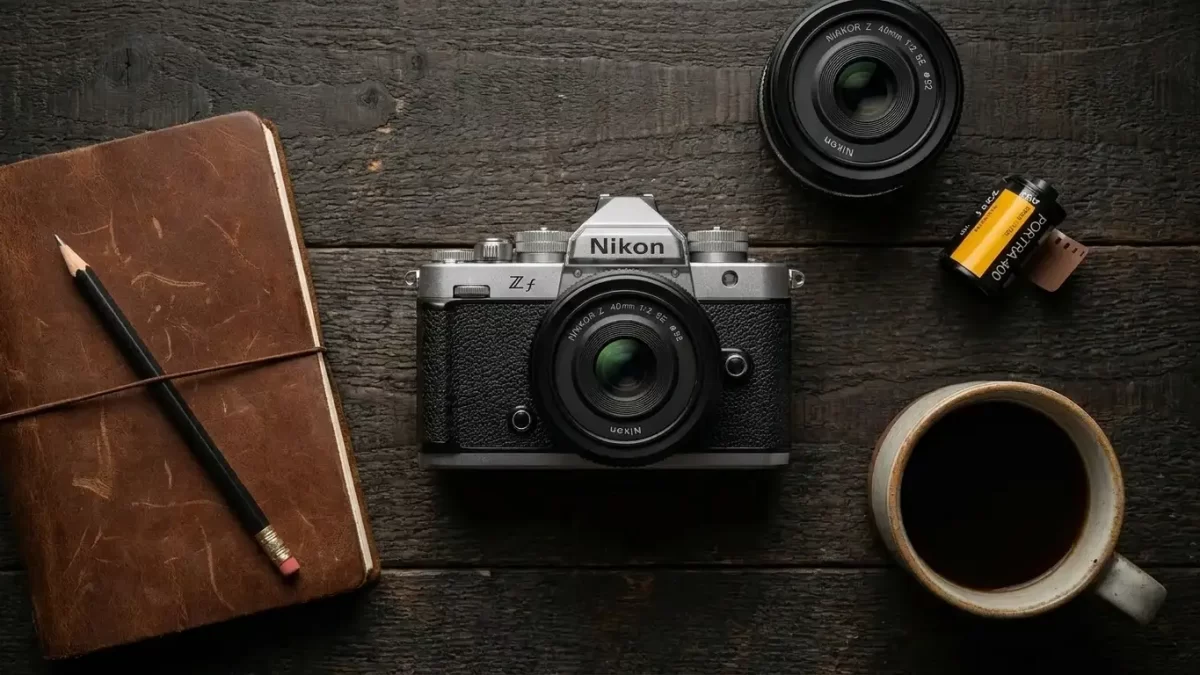
- A Hands-On Look at Nikon’s Most Charming Camera Yet
- First Impressions: Why the Nikon Zf Turns Heads
- Sensor and Image Quality: The Heart of the Zf
- Autofocus Performance: EXPEED 7 Changes Everything
- In-Body Image Stabilization: An Industry First
- Video Capabilities: More Than a Stills Camera
- Build Quality, Ergonomics, and the Grip Question
- Real-World Use Cases: Where the Nikon Zf Truly Shines
- Nikon Zf Pros and Cons at a Glance
- Nikon Zf vs Z6 III vs Z6 II: Which One Wins?
- Best Lenses to Pair With the Nikon Zf
- Who Should Buy the Nikon Zf in 2026?
- Frequently Asked Questions About the Nikon Zf
- Final Verdict: The Nikon Zf Is a Camera With Soul
A Hands-On Look at Nikon’s Most Charming Camera Yet
The Nikon Zf sits in a strange but beautiful place in the camera world. It looks like something your grandfather pulled out of a leather case in 1982, yet it shoots like a camera engineered for 2026. Nikon designed the Zf to channel the spirit of the classic FM2 SLR while packing in the same EXPEED 7 processor that powers the flagship Z8 and Z9. The result? A full-frame mirrorless body that pulls heartstrings and delivers serious technical performance.
I’ve spent considerable time researching how working photographers actually use this camera in the wild, and the verdict is fascinating. Some call it the “almost perfect camera.” Others see it as a flawed but lovable companion. In this in-depth Nikon Zf review, I’ll walk you through every meaningful detail — the design, the sensor, the autofocus, the quirks, the real-world performance, and whether this camera deserves a spot in your kit bag.
Whether you shoot weddings, street scenes, portraits, landscapes, or you simply want a camera that makes you fall in love with photography again, this guide will help you decide.
Sharpen every shot from your Nikon Zf with expert color, skin, and detail work — explore our professional photo retouching service and let your images shine the way you imagined them.
First Impressions: Why the Nikon Zf Turns Heads
Pull the Zf out of its box and you immediately understand the point. The brass-look dials, the leatherette wrap, the engraved “Nikon” script on the pentaprism hump — they all whisper “classic camera.” The body weighs about 630 grams (22.3 oz) and measures roughly 144 × 103 × 49 mm, which gives it a reassuring heft without feeling oversized Nikon USA.
What makes the Zf stand apart from every other full-frame mirrorless on the market:
- Three dedicated top dials for ISO, shutter speed, and exposure compensation
- A small front dial for switching between stills, video, and B&W modes (a wonderful touch)
- Magnesium alloy construction with weather-sealing rated for dust and drip resistance
- A 3.2-inch fully articulating touchscreen — bigger than most competitors offer
- A 3.69M-dot OLED viewfinder with 0.8x magnification
The retro design is not just nostalgia. The physical controls force you to slow down. You think about ISO before you shoot. You feel the click of the shutter dial under your thumb. For many photographers raised on digital menu diving, this feels like coming home.
Sensor and Image Quality: The Heart of the Zf
At the core of the Nikon Zf sits a 24.5MP back-side illuminated full-frame CMOS sensor, paired with the EXPEED 7 processor. This is essentially the sensor from the Z6 II, but the new processor unlocks performance the older camera never had.
What the Sensor Delivers
- Stunning dynamic range of roughly 14.5 stops at base ISO
- Native ISO range of 100–64,000 (expandable to ISO 50–204,800)
- Excellent color science that produces pleasing skin tones straight out of camera
- Pixel Shift mode for stitching together a 96MP image when shooting from a tripod
The 24MP resolution is the sweet spot for most working photographers. Files stay manageable in size, low-light performance shines, and you still get enough detail to crop or print large. As DPReview noted in their assessment, the Zf’s image quality matches or exceeds anything at this price point.
For high-ISO work, the Zf genuinely impresses. Clean files come out of the camera up to ISO 12,800, and many users report keeping ISO 25,600 for noise-tolerant scenes like concerts or wedding receptions. Nikon’s deep-learning noise reduction also helps when you need an extra stop or two.
Autofocus Performance: EXPEED 7 Changes Everything
This is where the Nikon Zf separates itself from older Z-series bodies. The EXPEED 7 processor brings the same subject-detection autofocus that wowed Z8 and Z9 owners. The Zf automatically recognizes nine subject types:
- People (eyes, faces, heads, and full bodies)
- Dogs and cats
- Birds
- Cars, motorcycles, bicycles
- Trains
- Airplanes
In real-world shooting, the eye-detection is remarkable. Move your subject’s head to the edge of the frame, and the focus point sticks. Photograph a child running through a garden, and the camera tracks them through clutter that would confuse older systems.
3D-tracking returns from Nikon’s DSLR days, and it works beautifully. You lock onto your subject by pressing the AF-ON button, then the camera follows them wherever they move. This single feature converts the Zf into a genuinely useful action camera, although the 14fps mechanical and 30fps electronic burst speeds (in DX crop with JPEG) are surprisingly fast for a “retro” body.
Low-Light Autofocus
The Zf focuses down to -10 EV with the right lens. To put that in perspective, that’s roughly the brightness of a moonlit night. Street photographers shooting after sunset will love how the camera locks onto faces even when the EVF looks nearly black.
Selling products photographed with your Zf? Get pixel-perfect cutouts that make every item pop with our precision background removal service — built for e-commerce sellers and creative teams who need clean, conversion-ready images.
In-Body Image Stabilization: An Industry First
Nikon claims 8 stops of 5-axis vibration reduction on the Zf, which currently leads the industry. More impressive than the number is the technology behind it: the Zf is the world’s first camera with focus-point VR, meaning stabilization applies to the area around your active focus point rather than just the center of the frame.
This matters because:
- Off-center compositions stay sharp at slow shutter speeds
- You can shoot at 1/4 second handheld with practice
- Macro and tabletop work becomes far more forgiving
- Video footage looks noticeably steadier than older Z bodies
For wedding photographers shooting dim church interiors, this is a game-changer. For street photographers who hate flash, this is freedom.
Video Capabilities: More Than a Stills Camera
The Zf may dress like a film SLR, but its video chops are entirely modern.
Key video specs include:
- 4K UHD up to 60p (with a slight 1.5x crop at 60p)
- 4K up to 30p oversampled from 6K for maximum detail
- Full HD up to 120p for slow motion
- 10-bit N-Log and HDR (HLG) internal recording
- Waveform monitor, zebras, and magnified focus assist
- A front-facing vari-angle screen ideal for content creators and vloggers
The vari-angle screen flips out to face forward, which makes the Zf surprisingly capable for solo vloggers, YouTubers, or anyone shooting talking-head content. Combined with the IBIS and the eye-detect AF for people, the camera holds its own against video-focused rivals.
One limitation: there is no full-size HDMI port, only a micro-HDMI. Serious video shooters will want to baby the cable connection or use a cage with an HDMI clamp.
Build Quality, Ergonomics, and the Grip Question
The Zf feels gorgeous in hand. The dials click with mechanical precision. The leatherette grip feels genuine. But here is the honest truth most reviews dance around: without the SmallRig L-grip or a similar accessory, the Zf is tiring to hold for long sessions — especially with larger zoom lenses.
The body has no proper hand grip on the front. Nikon designed it this way for aesthetic purity, mirroring the look of the original FM2. With small prime lenses like the Z 40mm f/2 or Z 28mm f/2.8, the camera balances beautifully. Strap on a 70-200mm f/2.8, and your wrist will complain within an hour.
Common solutions Zf owners use:
- The SmallRig L-bracket grip (about $60–80)
- The JJC Metal Grip for a more period-appropriate look
- A solid neck or hand strap to take weight off your fingers
- Sticking primarily with compact prime lenses
Another quirk: the dual card slot uses one full-size SD (UHS-II) and one microSD. The microSD slot has been criticized widely — and rightly so. For a $2,000 camera, two full-size SD slots would have made more sense, especially for wedding shooters who rely on real-time backup. The good news is the SD slot supports the fast V90 cards needed for 4K 60p video.
Have a shoot full of complex outlines like hair, fur, or jewelry? Save hours of editing time with our image masking service — designed for tricky edges that simple cutouts can’t handle.
Real-World Use Cases: Where the Nikon Zf Truly Shines
Street Photography
The Zf almost begs to be carried on a quiet walk through the city. The manual dials let you set exposure without ever looking at a screen. The silent electronic shutter helps you stay invisible. The B&W mode on the front dial — which uses dedicated monochrome picture profiles — gives you a Leica-like experience at a fraction of the price.
Pair it with the Z 40mm f/2 SE (the silver edition that matches the body) and you have one of the most charming street setups of the decade.
Portrait Photography
The combination of full-frame depth, deep-learning eye AF, and tactile dials makes the Zf a portrait photographer’s dream. The 24MP files retouch beautifully with plenty of resolution for high-end print work. Many portrait shooters even prefer 24MP over 45MP because the files don’t reveal every pore and require less retouching work.
For studio portrait shooters and headshot artists, post-production becomes the next consideration. If you want each subject to look polished and professional, professional photo retouching handles skin smoothing, color grading, and detail work at scale.
Wedding Photography
Wedding photographers using the Zf as a primary or secondary body report excellent results, particularly in low light. The combination of 8 stops of IBIS, ISO 12,800 with clean files, and reliable eye-AF makes dim ceremony venues manageable. The retro look also charms clients — many couples comment on the camera during the day, which can ease tension and break the ice.
The microSD slot is the biggest concern here. Most wedding shooters serious about backup keep the Zf as a second body and run primary capture on a Z8 or Z6 III.
Landscape and Travel
The Zf’s dynamic range and Pixel Shift mode make it a strong landscape tool. Its weather-sealing (rated for dust and drip resistance) handles light rain and dusty trails. Combined with compact Nikon Z primes, it makes an excellent travel kit. For more options on travel-friendly mirrorless bodies, this guide to the best mirrorless cameras is a useful comparison resource.
Video and Content Creation
Vloggers, YouTubers, and indie filmmakers will appreciate the 4K 60p capability, 10-bit N-Log, and the front-facing screen. The Zf works well as a B-camera on professional shoots and a primary tool for solo creators who want cinematic quality without buying a dedicated cinema camera.
Nikon Zf Pros and Cons at a Glance
What I Love About the Nikon Zf
- Outstanding 24.5MP full-frame image quality with excellent color science
- EXPEED 7 autofocus with class-leading subject detection
- Industry-first 8 stops of focus-point IBIS
- Beautiful retro design with premium materials and tactile dials
- Excellent low-light performance down to -10 EV autofocus
- Pixel Shift high-res mode for 96MP composites
- Sharp 4K 60p video with N-Log and HLG
- Encourages slower, more intentional shooting
What Could Be Better
- Ergonomics suffer without an aftermarket grip — especially with zooms
- The microSD secondary slot feels out of place at this price
- No full-size HDMI port limits serious video workflows
- Menu logic for stills/video switching takes time to learn
- Limited buffer depth when shooting RAW at high frame rates
- Battery life of around 380 shots per charge (CIPA) is average
For a thorough side-by-side technical breakdown of how the Zf compares against its older sibling, Photography Life’s Zf vs Z6 II comparison is worth a read.
Nikon Zf vs Z6 III vs Z6 II: Which One Wins?
Many buyers cross-shop the Zf against the Z6 II and the newer Z6 III. Here’s how they really stack up:
- Nikon Z6 II — Older sensor, older processor, fewer autofocus tricks, but cheaper and ergonomically friendlier. Best for budget-conscious buyers who want a workhorse.
- Nikon Z6 III — A partially-stacked sensor, faster burst, better video, and a deeper grip. Best for hybrid shooters who prioritize performance over aesthetics.
- Nikon Zf — Same EXPEED 7 brain as the Z6 III, similar image quality, but with the retro charm and dial-driven controls. Best for photographers who want character and tactile shooting.
If you primarily shoot weddings, sports, or fast action as a working pro, the Z6 III is the smarter buy. If you want a camera that makes every shoot feel like an event, the Zf is unmatched.
Running a fashion or apparel store? Our ghost mannequin service turns Zf product shots into clean, professional invisible-mannequin images that boost trust and sales.
Best Lenses to Pair With the Nikon Zf
The Zf shines brightest with compact, characterful primes. My top recommendations:
- Nikon Z 40mm f/2 (SE) — The classic “first lens” for the Zf. Light, sharp, and visually matched.
- Nikon Z 28mm f/2.8 (SE) — Wide enough for street, intimate enough for environmental portraits.
- Nikon Z 50mm f/1.8 S — The sharpest standard prime at a reasonable price.
- Nikon Z 85mm f/1.8 S — Magic for portraits with full-frame compression.
- Nikon Z 24-70mm f/4 S — A balanced zoom if you need versatility.
Avoid heavy zooms like the 70-200mm f/2.8 unless you mount an L-grip. The body simply isn’t designed for that weight distribution.
Who Should Buy the Nikon Zf in 2026?
The Nikon Zf is the right camera for you if:
- You love physical dials and want a tactile, deliberate shooting experience
- You shoot mostly prime lenses in the 28mm to 85mm range
- You already own a Z6 III, Z8, or Z9 and want a charming second body
- You’re switching from Fujifilm but want full-frame quality
- You shoot weddings, portraits, street, or travel and value low-light performance
- You appreciate beautiful objects that perform as well as they look
The Nikon Zf may not be ideal if:
- You shoot fast sports or wildlife professionally (consider the Z8 or Z9)
- You need two full-size card slots for redundant backup
- You primarily shoot with large zoom lenses
- You prefer a deep, ergonomic grip
Frequently Asked Questions About the Nikon Zf
1. Is the Nikon Zf a full-frame camera?
Yes. The Zf uses a 24.5MP back-side illuminated full-frame CMOS sensor measuring 35.9 × 23.9 mm — the same sensor found in the Z6 II, paired with the newer EXPEED 7 processor.
2. Is the Nikon Zf good for beginners?
The Zf is approachable but not beginner-first. The manual dials reward photographers who already understand exposure. New shooters can absolutely learn on it, but a Z5 II or Z50 II offers easier ergonomics and lower cost.
3. How does the Nikon Zf perform in low light?
The Zf performs excellently in low light. Files stay clean to ISO 12,800, autofocus works down to -10 EV, and 8 stops of IBIS allow handheld shooting at very slow shutter speeds. It’s one of the best low-light mirrorless options at its price point.
4. Can the Nikon Zf shoot 4K video?
Yes. The Zf records 4K UHD up to 60p (with a slight crop) and 4K 30p oversampled from 6K for maximum detail. It also supports 10-bit N-Log and HLG internally.
5. Does the Nikon Zf have weather sealing?
Yes, the Zf is rated for dust and drip resistance. It’s not fully waterproof, but it handles light rain and dusty environments well. Treat it like a professional camera, not a GoPro.
6. Does the Nikon Zf work with older Nikon F-mount lenses?
Yes, with the optional FTZ II adapter. The Zf adapts to most modern F-mount Nikon lenses and even communicates focus and aperture data for older AI-S manual lenses, which is a wonderful feature for vintage glass collectors.
7. What memory cards should I use with the Nikon Zf?
Use a UHS-II V60 or V90 SD card in the main slot for 4K video and burst shooting. The microSD secondary slot is best used for JPEG backup or as overflow storage rather than primary capture.
8. Is the Nikon Zf worth the money in 2026?
Yes, for the right photographer. At around $2,000 body-only, the Zf offers Z8-level autofocus, industry-leading IBIS, and beautiful design. If you value the tactile experience and character, it’s exceptional value. If you only care about pure specs per dollar, the Z6 III may serve you better.
Final Verdict: The Nikon Zf Is a Camera With Soul
The Nikon Zf is not the most “sensible” camera in Nikon’s lineup — it is the most distinctive. It refuses to disappear into the background. It demands you handle it, set its dials, and engage with it. And in return, it delivers files that genuinely sing, autofocus that rivals flagship bodies, and an experience that reminds you why you fell in love with photography in the first place.
It is not perfect. The grip issue is real. The microSD slot is a misstep. But the camera makes up for these quirks with character, image quality, and a shooting experience that simply feels more rewarding than most cameras at this price.
If you want a camera that performs like a 2026 flagship and feels like a 1982 classic, the Nikon Zf belongs on your shortlist.
Ready to give your Zf photos the polish they deserve? Outsource the heavy lifting with our precision clipping path service and spend more time behind the camera, less in front of the screen.