


How Many Photos Can 32/64/128/256GB Memory Cards Hold? (2026)
March 24, 2026
Multiple Clipping Path Services: When They Deliver Real Value
April 1, 2026
You stand in front of a gallery wall or flip through a photo album, holding a memory in your hands, but the frame feels slightly off. The print looks cropped in a way you didn’t anticipate, or perhaps it gets lost in the vastness of the wall space. Choosing the right photo size isn’t just about fitting a frame; it dictates how viewers interact with your work, how much detail they see, and the overall impact of the image. Whether you are a professional photographer preparing client deliverables, a small business owner creating marketing materials, or a home decorator preserving family milestones, understanding the nuances of 4×6, 5×7, 8×10, 11×14, and 16×20 prints will save you time, money, and creative frustration.
These standard sizes dominate the printing industry for a reason. They represent a balance between cost, availability of frames, and viewing pleasure. However, each size interacts differently with the digital files coming out of your camera. You must consider aspect ratios, resolution requirements, and the physical space where the photo will live. This guide breaks down the technical specifications and practical applications of each size, helping you make an informed decision that aligns perfectly with your creative vision.
- The Core Differences: Size, Ratio, and Real Estate
- 4×6 Photo Size: The Everyday Standard
- 5×7 Photo Size: The Sweet Spot for Detail
- 8×10 Photo Size: The Professional Standard
- 11×14 Photo Size: The Dominant Wall Presence
- 16×20 Photo Size: The Statement Maker
- The Technical Deep Dive: Cropping and Composition
- Cost Efficiency and Budget Planning
- Presentation and Display Strategies
- Decision Matrix: Which One Should You Choose?
- Professional Presentation and Client Work
- Memory Preservation and Longevity
- Conclusion: Aligning Size with Vision
- Frequently Asked Questions (FAQs)
The Core Differences: Size, Ratio, and Real Estate
Before diving into specific use cases, it is essential to understand the fundamental math behind each print. The difference between these sizes goes beyond simple inches; it involves aspect ratio, the proportional relationship between width and height. This ratio determines how much of your original photo fits onto the paper without cropping.
Here is a quick comparison of the technical specs you need to know:
| Feature | 4×6 Photo | 5×7 Photo | 8×10 Photo | 11×14 Photo | 16×20 Photo |
|---|---|---|---|---|---|
| Dimensions | 4″ x 6″ | 5″ x 7″ | 8″ x 10″ | 11″ x 14″ | 16″ x 20″ |
| Aspect Ratio | 3:2 | 7:5 (1.4:1) | 5:4 (1.25:1) | 7:5 (1.4:1) | 5:4 (1.25:1) |
| Square Inches | 24 sq in | 35 sq in | 80 sq in | 154 sq in | 320 sq in |
| Best Viewing Distance | Arm’s length (7–11″) | Tabletop (12–14″) | Wall display (15–18″) | Across the room (2–3 ft) | Statement piece (3–5 ft) |
| Common Use | Albums, proofs, souvenirs | Gifts, tabletop frames | Wall art, portfolios, headshots | Large wall art, family portraits | Centerpiece art, exhibition prints |
| Resolution @ 300 DPI | 1200×1800 px | 1500×2100 px | 2400×3000 px | 3300×4200 px | 4800×6000 px |
| Typical Frame Availability | Excellent | Good | Excellent | Moderate | Moderate (often custom) |
When you take a photo with a standard DSLR or mirrorless camera, the native aspect ratio is typically 3:2. This means a 4×6 print matches your camera perfectly. However, if you try to print that same image as an 8×10 or 16×20 (both 5:4 ratio), you will lose a significant portion of the image—roughly 20%—because the aspect ratios do not align. Understanding this cropping dynamic is the first step to protecting your composition. For more guidance on mastering these ratios, check out our detailed article on aspect ratio in photography.
4×6 Photo Size: The Everyday Standard
What Defines a 4×6 Print?
A 4×6 photo measures exactly 4 inches by 6 inches. Because it mirrors the 3:2 aspect ratio found in most modern digital cameras and 35mm film, this size remains the most popular choice for casual printing. You do not need to crop your images or worry about cutting off important details. What you see in your viewfinder is precisely what arrives on the paper.
Why Photographers Love the 4×6
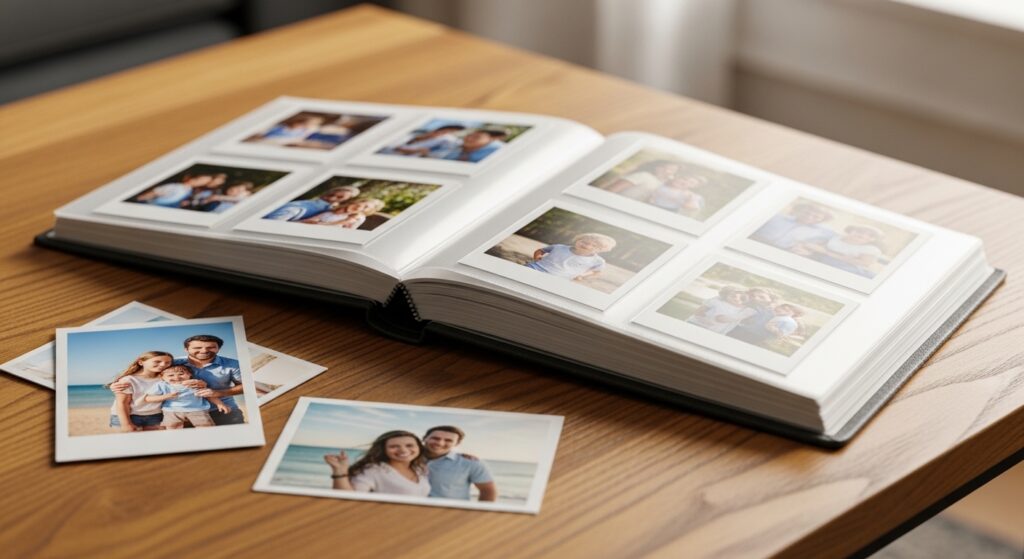
For photographers handling large volumes, such as event photographers or those offering proofing services, the 4×6 is a workhorse. It offers the lowest cost per print, making it ideal for sharing contact sheets or delivering sneak peeks to clients. You can easily fit dozens of these prints into a standard photo album without the bulkiness of larger sizes.
Best uses for 4×6:
- Photo Albums: They slide into sleeve protectors effortlessly.
- Casual Gifting: Slip them into a thank-you card or a wallet.
- Travel Photography: They are lightweight and easy to pack.
- Bulk Printing: When you need 100+ prints, this size keeps your budget intact.
Resolution Requirements
Because the print is smaller, you have more flexibility with resolution. A high-quality print requires 1200 x 1800 pixels (at 300 DPI). Even older smartphone images or low-megapixel camera files often look sharp at this size. You don’t need to stress about pixelation here, as the viewing distance is usually close range.
5×7 Photo Size: The Sweet Spot for Detail
What Defines a 5×7 Print?
Measuring 5 inches by 7 inches, this size introduces a 7:5 aspect ratio. It sits perfectly in the middle ground. It is substantially larger than a 4×6, offering nearly 46% more surface area, yet it remains small enough to be held comfortably in your hand or displayed on a desk.
The “Gift Size”
In the industry, professionals often refer to the 5×7 as the “gift size.” It carries a sense of importance that a 4×6 lacks. When you hand someone a 5×7 print in a simple matte frame, it feels like a deliberate piece of art rather than a casual snapshot. This size works exceptionally well for portraits where you want to capture facial expressions without requiring a massive wall space.
Best uses for 5×7:
- Portrait Gifts: Ideal for senior portraits, baby announcements, or family gifts.
- Greeting Cards: Many card templates are pre-sized for 5×7 folds.
- Tabletop Frames: It fits perfectly on nightstands, office desks, or mantels.
- Small Business Branding: Use them for promotional material or product inserts.
Cropping Considerations
Unlike the 4×6, the 5×7 requires cropping if your camera shoots in 3:2. You will lose a small portion of the image along the long edges. This is usually manageable for portraits because you can tighten the composition around the subject. However, for landscape shots with critical elements at the far edges, you might prefer to stick with the 4×6.
8×10 Photo Size: The Professional Standard
What Defines an 8×10 Print?
The 8×10 is a classic. Measuring 8 inches by 10 inches, it offers a 5:4 aspect ratio. This is the go-to size for professional headshots, fine art prints, and gallery displays. It commands attention. You do not hold an 8×10 in your hand to pass around; you place it in a frame on a wall for everyone to see.
The Impact of Wall Art
When you move into the realm of wall art, the 8×10 becomes a powerful tool. It provides enough real estate to showcase intricate details, textures, and lighting nuances that smaller prints simply cannot convey. For photographers building a portfolio, 8×10 prints demonstrate technical proficiency. They allow clients to see the sharpness of the eyes and the smoothness of the skin tones.
Best uses for 8×10:
- Professional Headshots: The industry standard for actors, real estate agents, and corporate profiles.
- Framed Wall Art: Creates a focal point in living rooms or office lobbies.
- Wedding & Event Packages: High-end clients expect larger prints for their most cherished moments.
- Gallery Exhibitions: Provides a professional scale for viewing from a distance.
The Resolution Demand
With great size comes great responsibility regarding resolution. For an 8×10, you need a source file of at least 2400 x 3000 pixels to maintain sharpness. If you attempt to blow up a low-resolution file to this size, the pixelation will be obvious, especially when viewed from the recommended distance of 15–18 inches. Always check your file size before committing to this large format.
11×14 Photo Size: The Dominant Wall Presence
What Defines an 11×14 Print?
An 11×14 photo measures 11 inches by 14 inches, offering a 7:5 aspect ratio, the same as a 5×7, but scaled up. This size bridges the gap between medium wall art (8×10) and truly large statement pieces (16×20 and beyond). It demands a prominent spot on a wall and is often the first size that feels like “real art” to homeowners and collectors.
Why Choose 11×14?
The 11×14 print provides nearly double the area of an 8×10 (154 square inches vs. 80). This extra space allows group portraits, wide landscapes, and detailed architectural shots to breathe. Because the aspect ratio matches the 5×7, you can use the same cropping guidelines, just with much more impact.
Best uses for 11×14:
- Family Portraits: Large enough to display several people without feeling cramped.
- Fine Art Prints: A standard size for art fairs and limited editions.
- Office Décor: Adds sophistication to reception areas or conference rooms.
- Gallery Walls: Often serves as the centerpiece in a mixed-size arrangement.
Resolution and Cropping
To produce a sharp 11×14 at 300 DPI, you need 3300 x 4200 pixels, roughly 14 megapixels. Most modern cameras handle this easily. If your original is 3:2, expect to crop away about 20% of the image to fit the 7:5 ratio. As with all sizes, manually cropping in software before printing gives you full creative control.
A staged living room with an 11×14 framed print hanging above a sofa. The photo is a wide landscape that fills the frame beautifully. Alt Text: “An 11×14 landscape photo framed and hung as a centerpiece above a sofa, showing the size’s impact in a living room.”
16×20 Photo Size: The Statement Maker
What Defines a 16×20 Print?
At 16 inches by 20 inches, this size leaves no room for subtlety. It uses a 5:4 aspect ratio, the same as an 8×10, so it doubles the dimensions in both directions, quadrupling the area (320 square inches). A 16×20 print is a declaration: this image matters.
When to Go 16×20
You choose 16×20 when the photograph needs to anchor a large wall, serve as the hero piece in a collection, or make a lasting impression in a gallery. It is the go-to size for luxury family portraits, wedding enlargements, and exhibition prints where viewers stand several feet back to take in the full composition.
Best uses for 16×20:
- Luxury Portraits: Ideal for clients who want a legacy piece.
- Exhibition Prints: Galleries often request this size for solo shows.
- Corporate Lobbies: Projects professionalism and scale.
- Matted Displays: Fits perfectly in a 20×24 frame with a wide mat for a museum look.
Resolution Demands and Up-Rezzing
A 16×20 print at 300 DPI requires 4800 x 6000 pixels, a 28.8-megapixel image. While many professional cameras meet or exceed this, older files or smartphone images may not. In such cases, you can use high-quality upscaling software (like Super Resolution) to add pixels without losing sharpness. Alternatively, view the print from a slightly greater distance (3–5 feet), which allows lower resolutions (240 DPI) to still appear crisp.
The Technical Deep Dive: Cropping and Composition
One of the most frustrating experiences for any photographer is receiving prints back from the lab only to realize that someone’s head got cropped off. This usually happens because the print size chosen does not match the capture ratio.
The 3:2 vs. 5:4 vs. 7:5 Conflict
Most digital cameras (Canon, Nikon, Sony, Fujifilm) natively shoot in a 3:2 ratio. That aligns perfectly with 4×6. However, if you order an 8×10 or 16×20 (both 5:4), the lab must crop the image to fit. You lose approximately 20% of the image. For 5×7 and 11×14 (both 7:5), the cropping is less severe but still present.
Active strategy for cropping:
When preparing an image for any size that doesn’t match your camera’s native ratio, do not leave it to the lab’s auto-crop feature. Instead, manually crop the image in your editing software before sending it to print. This ensures you control the composition. If the subject’s feet or a crucial background element sits at the edge of the 3:2 frame, you will lose it in the conversion.
How to Avoid Cropping Disasters
- For 4×6: Print straight from the camera. No cropping required.
- For 5×7 or 11×14: Expect a slight trim on the long sides. Compose with some “breathing room” on the edges.
- For 8×10 or 16×20: Compose intentionally. Either shoot with the 5:4 ratio in mind (some cameras offer this as a guide) or accept that you will lose roughly 20% of the horizontal width if shooting in landscape orientation.
For a step-by-step guide on preserving image quality during resizing, read our tutorial on how to resize images without losing quality.
Cost Efficiency and Budget Planning
Your budget plays a significant role in determining which size works for your project. The price per print scales exponentially, not just linearly, because larger paper costs more and requires more sophisticated handling.
When ordering prints, consider the cumulative cost. If you are a photographer offering a wedding photography package, your pricing should reflect these material costs. Many professionals offer a mix: small 4×6 prints for parents and thank-you cards, 5×7 prints for tabletop displays, 8×10 or 11×14 prints for the couple’s master album, and a single 16×20 canvas as the “hero” piece.
Bulk ordering tip:
If you plan to order over 100 prints, the cost per unit drops significantly across all sizes. However, the difference between a 4×6 and a 16×20 is usually 10 to 15 times more expensive. Use the 4×6 for proofs and high-volume sharing. Reserve 11×14 and 16×20 for final, paid deliverables where the profit margin justifies the material cost.
Presentation and Display Strategies
How you plan to display the photo often dictates the size you should choose. You must consider the viewing distance. A 4×6 print is intimate; viewers pick it up and hold it close. An 8×10 or 11×14 print is architectural; it defines a space. A 16×20 commands the room.
Creating Gallery Walls
If you are building a gallery wall, mixing sizes creates visual interest. Avoid using the same size for every frame. Instead, use a 5×7 or 8×10 as accent pieces next to a dominant 11×14 or 16×20. The largest piece becomes the anchor, drawing the eye, while the smaller sizes add depth to the arrangement. For even more variety, include a 4×6 cluster as part of the collage.
Frames and Mats
Availability of frames matters for long-term preservation. 4×6, 8×10, and 11×14 frames are widely available at most retailers. 16×20 frames are also common but may offer fewer style choices; custom framing is an option for a truly unique look. If you plan to mat your photos, an 8×10 print fits beautifully inside an 11×14 frame with a wide mat, and an 11×14 fits perfectly inside a 16×20 frame, giving a museum-quality appearance at a fraction of the cost of custom framing.
A photograph of a well-styled gallery wall. It features a mix of frame sizes: one large 16×20 as the anchor, two 11×14 frames on either side, three 8×10 frames arranged below, and a few 5×7 accents. The frames are a mix of metallic and natural wood. Alt Text: “Stylish gallery wall arrangement mixing 16×20, 11×14, 8×10, and 5×7 photo frames in different finishes.”
Decision Matrix: Which One Should You Choose?
Let’s simplify the decision based on your specific needs.
4×6 If:
- You need to print a high volume of photos (e.g., for an event or vacation album).
- Your images come directly from a standard DSLR or smartphone with a 3:2 ratio.
- You plan to store the photos in a sleeve-based album.
- You are on a tight budget and need to maximize the number of prints.
- You want casual prints to share with friends or family without the formality of framing.
5×7 If:
- You are gifting a photo to someone who will place it on a desk or nightstand.
- You want a physical print for a greeting card or invitation.
- You need a size that feels “special” but does not require a massive wall space.
- You are shooting portraits where you want the subject to dominate the frame.
- You are creating a small, curated collage on a shelf or side table.
8×10 If:
- You intend to hang the photo on a wall as part of your home décor.
- You are delivering professional headshots or portfolio prints to a client.
- Your image contains fine details (textures, patterns, wide landscapes) that deserve to be seen large.
- You are submitting work to a gallery or competition.
- You want the highest perceived value for a single print without going oversize.
11×14 If:
- You want a substantial wall piece that doesn’t overwhelm the room.
- You are displaying a group portrait or detailed landscape.
- You plan to mat the photo inside a 16×20 frame for a gallery look.
- You need a size that commands attention but still fits over a standard sofa or bed.
- Your clients expect a “large” print without the cost of a 16×20.
16×20 If:
- You have a large, empty wall that needs a statement piece.
- You are creating a luxury product for a wedding or family portrait client.
- You are exhibiting in a gallery or art show.
- The image contains intricate details that deserve to be seen from across the room.
- You want the print to be the undisputed focal point of the space.
Professional Presentation and Client Work
For professional photographers, the choice of print size directly reflects your brand’s quality. If you present client images as 4×6 prints in a paper envelope, the perceived value diminishes. Conversely, handing over a box containing a set of 11×14 or 16×20 fine art prints elevates your brand to luxury status.
When working with clients, always discuss aspect ratio during the consultation. Show them physical samples of the sizes you offer, from 4×6 up to 16×20. Explain that cropping will occur if they choose a size that doesn’t match the camera’s native ratio. Most clients appreciate this transparency, as it sets clear expectations and prevents disappointment later.
For businesses needing product photography or real estate photography, consider the end medium. If the images are for a brochure, 4×6 proofs might suffice. However, if the images are for a large-scale lobby display or trade show booth, you must print at 16×20 or larger to maintain visual impact.
To ensure your final prints are flawless, consider professional retouching services. Our team at Clipping Expert Asia specializes in preparing images for large-format output, from color correction to background cleanup.
Memory Preservation and Longevity
When preserving memories, the size you choose determines how often you will view them. Small 4×6 prints often get shuffled into boxes or lost in drawers. Because they are small, they are easy to store but also easy to ignore. 5×7 prints tend to end up in frames on surfaces, meaning you see them daily. 8×10 and 11×14 prints become permanent fixtures in your home, acting as daily reminders of cherished moments. A 16×20 transforms a memory into an heirloom that future generations will pass down.
Think about the legacy of your photos. A 4×6 album might survive for decades, but a 16×20 canvas or framed print becomes a family heirloom. If you are printing images for future generations, consider going larger to ensure the physical piece stands the test of time and remains a focal point in a home.
Conclusion: Aligning Size with Vision
Ultimately, the choice between 4×6, 5×7, 8×10, 11×14, and 16×20 comes down to intention. The 4×6 serves the purpose of documentation and sharing. It is the utilitarian choice that honors the original camera ratio without alteration. The 5×7 acts as the bridge between casual and formal, offering a size that feels personal and intimate but commands slightly more respect than a snapshot. The 8×10 is the statement maker for smaller walls and professional portfolios. The 11×14 steps up to dominate a room while remaining accessible. The 16×20 is the ultimate expression, a piece that declares the image’s importance.
Before you hit “print,” review your workflow. Check your aspect ratios, verify your pixel dimensions, and consider the final home of the photo. By matching your print size to your specific needs, you ensure that your hard work behind the lens translates into a physical product that delights and impresses.
Frequently Asked Questions (FAQs)
1. Does 4×6 or 5×7 print larger?
The 5×7 print is larger. It offers 11 more square inches of surface area than the 4×6, making it a better choice for tabletop display where you want the image to stand out more than a standard snapshot.
2. Will an 8×10 frame fit a 5×7 photo?
No, you cannot fit a 5×7 photo into an 8×10 frame without a mat. However, you can use a mat board with an 8×10 frame to display a 5×7 photo, which adds a professional, gallery-style border around the image.
3. What happens if I print a 3:2 photo as an 8×10 or 16×20?
The printing lab will crop the image to fit the 5:4 aspect ratio. You will lose roughly 20% of the original image from the long edges. To maintain control, manually crop the photo to the desired dimensions in your editing software before submitting the order.
4. Which photo size is best for a portfolio?
Professional photographers typically use 8×10 prints for portfolios. This size allows clients to see fine details like skin texture and sharpness. It also matches the standard size for headshot submissions in the entertainment and corporate industries.
5. How many megapixels do I need for a 16×20 print?
You need a camera with at least 20–24 megapixels to produce a sharp 16×20 print at 300 DPI. Many modern cameras and high-end smartphones can achieve this; if your file is lower, you can use high-quality upscaling software to maintain detail.
6. Are 4×6 photos too small for wall art?
It depends on the wall space. A single 4×6 gets lost on a large wall. However, a cluster or gallery wall featuring multiple 4×6 prints arranged in a grid can create an interesting and dynamic display.
7. Why do 5×7 frames sometimes cost more than 8×10 frames?
Pricing often depends on demand and manufacturing volume. 4×6 and 8×10 are the most mass-produced sizes, leading to lower prices. 5×7 frames, while common, are manufactured in slightly lower volumes, which can occasionally make them more expensive than an 8×10 depending on the style.
8. Can I print a 4×6 photo at 11×14 size?
Technically, you can, but the quality will likely suffer. If you stretch a 4×6 sized digital file (1200×1800 pixels) to 11×14 (3300×4200 pixels), you will lose sharpness and may see pixelation. Always ensure your original file resolution matches the intended print size.
9. What is the best size for a family portrait?
For a family portrait that will hang in a living room or hallway, 11×14 or 16×20 are ideal. The larger size allows every face to be recognizable from across the room. If you plan to mat the print, an 11×14 inside a 16×20 frame offers a classic, elegant look.
10. How do I know if my photo has enough resolution for a large print?
A simple rule: multiply the print dimensions by 300 (for DPI). For an 11×14, you need at least 3300×4200 pixels. For 16×20, aim for 4800×6000 pixels. You can check your file’s pixel dimensions in any photo viewer or editing software.