


How to Use Photoshop: A Comprehensive Guide for Beginners and Pros
February 26, 2026
How To Unify Colors In An Image With Photoshop
February 28, 2026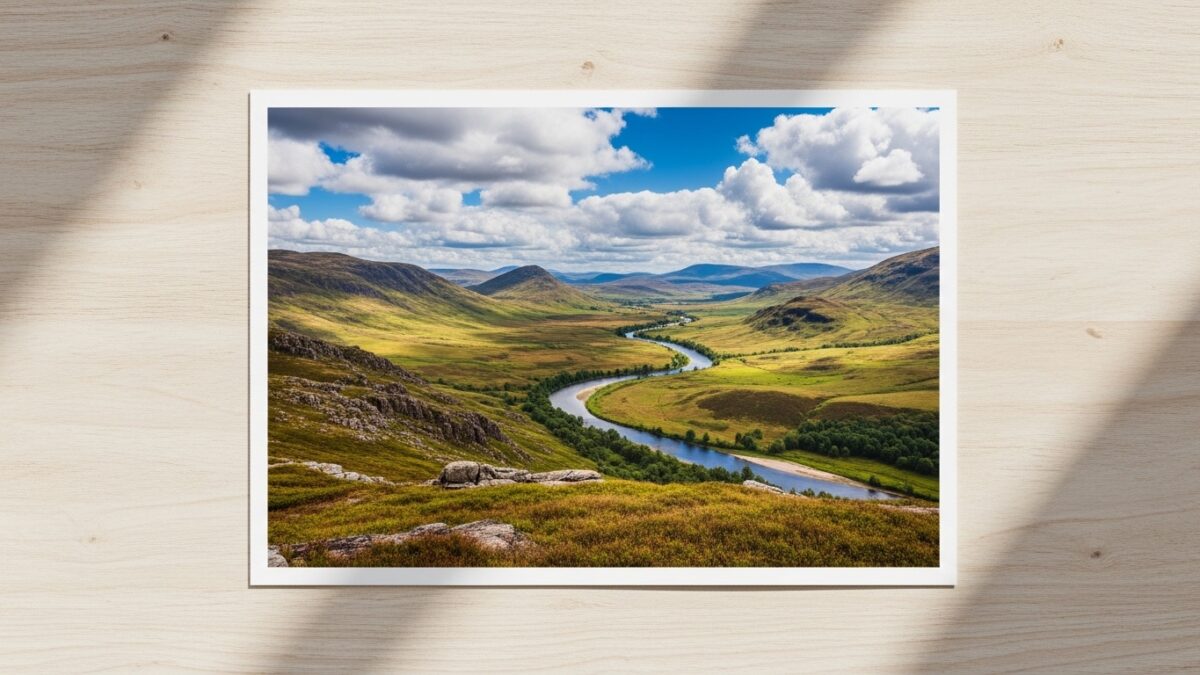
Photographers and everyday enthusiasts often wonder about the exact size of popular print formats. You encounter the 8×10 photo size frequently in portraits, frames, and displays. This standard dimension measures 8 inches in width and 10 inches in height, making it a versatile choice for various applications. Professionals use it for headshots, while families cherish it for wall art. You convert these measurements easily to centimeters for international projects: 20.32 cm wide by 25.4 cm tall. People appreciate this size because it balances detail and portability without overwhelming spaces. You find it in photo labs, online printing services, and even digital editing workflows. Understanding its proportions helps you plan compositions better, especially when cropping images from camera sensors. This guide explores every aspect, from basic measurements to practical tips, ensuring you make informed decisions for your next print.
8×10 prints need crisp edges. Get a free background removal demo for perfect borders
- Understanding the Basic Dimensions of an 8x10 Photo
- Converting 8x10 Photo Size to Metric Units
- Pixel Dimensions for Digital and Print Quality
- Aspect Ratio and Orientation: Portrait vs. Landscape
- Comparing 8x10 to Other Popular Photo Sizes
- Framing Your 8x10 Photo: Tips and Considerations
- Ideal Uses for 8x10 Photos in Home and Professional Settings
- Best Cameras and Lenses for Capturing 8x10-Quality Images
- Printing Tips to Get the Most Out of Your 8x10 Photos
- The History Behind the 8x10 Photo Size
- Enhancing Your 8x10 Photos with Professional Editing
- Conclusion
- Frequently Asked Questions (FAQs)
Understanding the Basic Dimensions of an 8×10 Photo
You start with the fundamentals when determining photo sizes. An 8×10 photo spans 8 inches across and 10 inches up, following the convention where the smaller number comes first for portrait orientation. Printers and framers rely on this standard to produce consistent results. You visualize its scale by comparing it to a sheet of letter paper, which measures 8.5 by 11 inches, slightly larger but similar in feel. This size originated from early photographic practices, where plates and films adopted practical dimensions for handling and display.
Professionals value the 8×10 for its ability to capture intricate details without requiring massive storage space. You hold it comfortably in your hands, yet it displays prominently on desks or shelves. Artists and designers incorporate it into collages or portfolios, appreciating the room it provides for annotations. You ensure accuracy by using rulers or digital calipers when measuring prints at home. This dimension supports high-quality reproduction, allowing sharp edges and vibrant colors. You avoid confusion by noting that “8×10” always refers to inches unless specified otherwise in metric contexts.
Converting 8×10 Photo Size to Metric Units
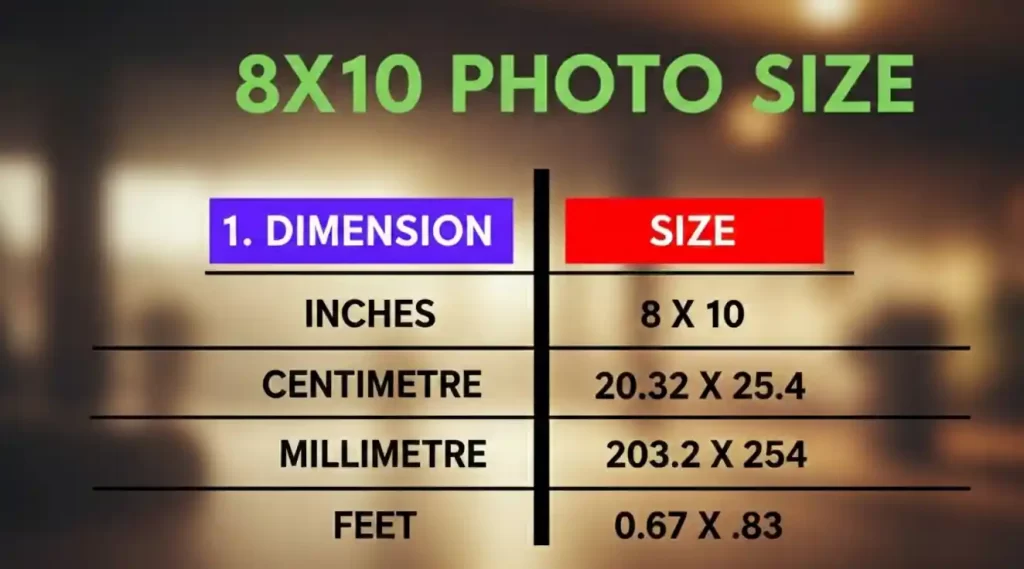
You convert imperial measurements to metric ones seamlessly for global compatibility. Multiply inches by 2.54 to get centimeters: 8 inches becomes 20.32 cm, and 10 inches turns into 25.4 cm. This precision matters when ordering prints from international suppliers or fitting them into European frames. You extend this to millimeters by multiplying centimeters by 10, resulting in 203.2 mm by 254 mm useful for detailed design work.
In feet, you divide inches by 12: 8 inches equals about 0.67 feet, and 10 inches is roughly 0.83 feet. Builders and interior decorators use these figures when planning wall layouts. You apply these conversions in software like Photoshop, where you set canvas sizes accordingly. This ensures your digital files match physical outputs perfectly. Travelers find metric equivalents helpful when printing abroad, avoiding size mismatches. You double-check calculations with online tools for accuracy, but mastering the basics empowers independent work.
Sizing is easy – editing hundreds of 8×10s is not. See our multi‑clipping path pricing
Pixel Dimensions for Digital and Print Quality
You calculate pixel requirements based on resolution for optimal results. At 300 dots per inch (DPI), standard for professional prints, an 8×10 photo needs 2400 pixels wide by 3000 pixels tall. This density delivers crisp details, ideal for close viewing. Photographers shoot in high resolution to meet these specs, preventing pixelation during enlargement.
For web use, you drop to 72 DPI, resulting in 576 by 720 pixels. Websites load these faster, maintaining quality on screens. You adjust DPI in editing software to suit your purpose, balancing file size and sharpness. Graphic designers factor in PPI (pixels per inch) when preparing files for print shops. You test prints on sample paper to verify resolution holds up. This approach saves time and resources, ensuring your images shine in both digital and physical formats.
Higher resolutions like 600 DPI suit fine art, doubling pixels to 4800 by 6000. You reserve this for gallery pieces where viewers inspect closely. Beginners start with 300 DPI to build confidence before experimenting.
Aspect Ratio and Orientation: Portrait vs. Landscape
You grasp aspect ratio as the relationship between width and height. For 8×10, it simplifies to 4:5 by dividing both numbers by 2. This ratio guides composition, ensuring elements fit without distortion. Cameras often use 3:2, so you crop accordingly to match 4:5, preserving key subjects.
In portrait mode, you orient the photo vertically: 8 inches wide by 10 inches tall, perfect for headshots or full-body poses. Landscape flips it to 10×8, suiting wide scenes like horizons. You choose based on content portraits favor vertical for emphasis on height.
Framers stock both orientations, but you specify to avoid mismatches. Digital frames auto-rotate, adding flexibility. You experiment with ratios in post-processing to see how they alter impact. This knowledge enhances your creative control.
Comparing 8×10 to Other Popular Photo Sizes
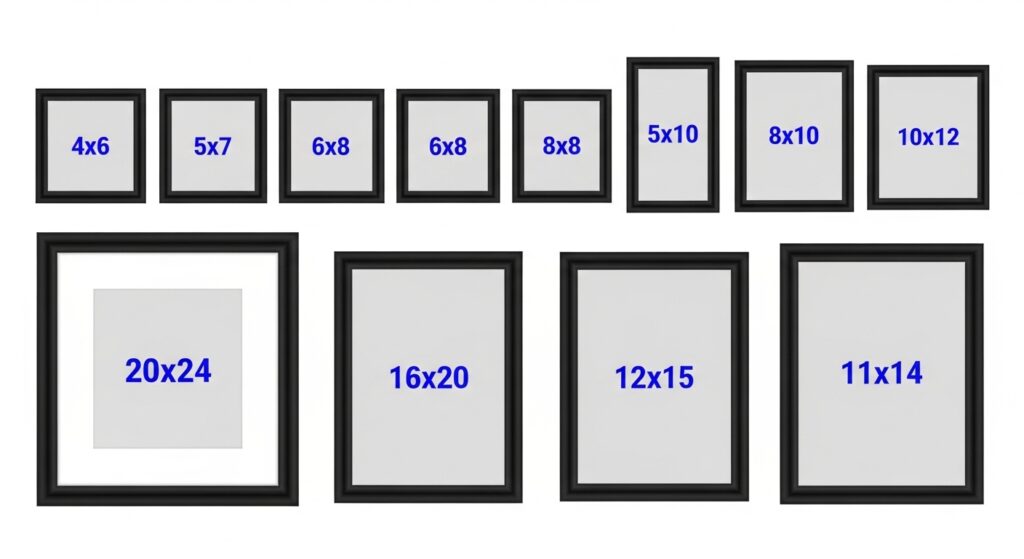
You position 8×10 as a mid-range option among standards. It dwarfs 4×6 snapshots, offering more detail for family keepsakes. Compared to 5×7, it provides extra space for intricate elements without dominating shelves.
Larger formats like 11×14 overwhelm small rooms, while 8×10 fits snugly. You use it over 16×20 for affordability in bulk printing. Wallet sizes at 2×3 serve quick shares, but 8×10 elevates displays.
- 4×6: Ideal for albums, compact and economical.
- 5×7: Great for desks, balances size and portability.
- 11×14: Suits walls, captures broader scenes.
- 16×20: For statements, demands ample space.
You select based on viewing distance 8×10 shines at arm’s length. Interior designers mix sizes for dynamic galleries.
Framing Your 8×10 Photo: Tips and Considerations
You select frames that match the exact dimensions for a snug fit. Standard 8×10 frames measure internally to accommodate the print, with outer edges adding 1-2 inches for borders. You add mats to enhance presentation, reducing visible area to 7.5×9.5 inches for focus.
Wooden frames offer warmth for home decor, while metal suits modern spaces. You hang them at eye level, around 57-60 inches from the floor. DIY enthusiasts build custom frames using molding and glass.
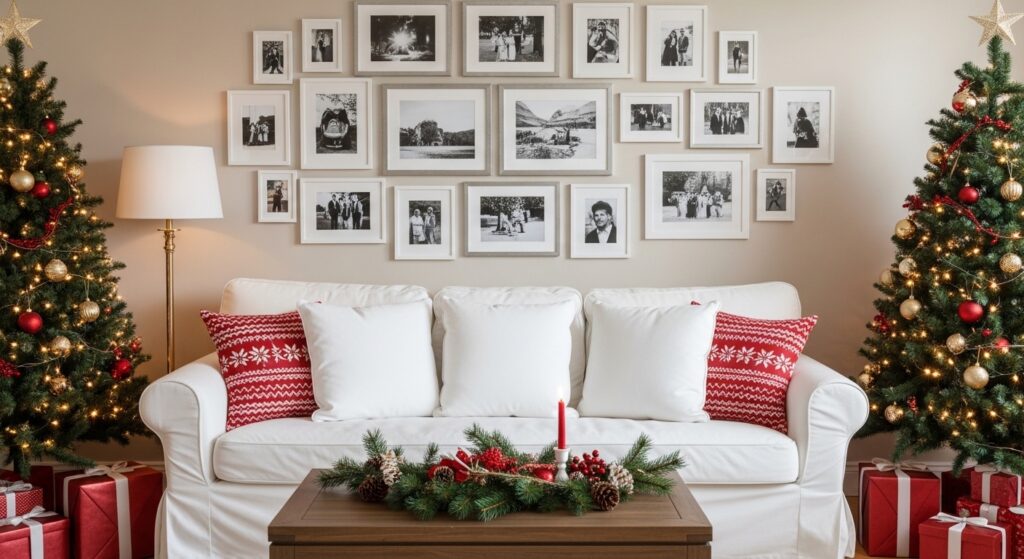
Consider UV-protective glass to prevent fading. You clean frames gently with microfiber cloths. Group multiple 8x10s for gallery walls, spacing them evenly. This elevates simple prints into art.
For more on enhancing photos before framing, explore our photo editing services.
Ideal Uses for 8×10 Photos in Home and Professional Settings
You display 8×10 photos on mantels for personal touches. Families frame vacation memories, creating conversation starters. In offices, professionals use them for certificates or team portraits, boosting morale.
Event planners incorporate 8x10s into table centerpieces. Schools print student awards in this size for affordability. You gift them during holidays, personalizing with custom messages.
In e-commerce, sellers showcase products via 8×10 prints for catalogs. Real estate agents use them for property highlights. This versatility makes 8×10 a go-to for diverse needs.
Artists sell limited editions, numbering each print. You store them in acid-free sleeves for longevity. This size bridges casual and formal applications effectively.
Best Cameras and Lenses for Capturing 8×10-Quality Images
You choose DSLRs or mirrorless cameras with full-frame sensors for superior detail. Models like Canon EOS R5 or Sony A7R IV deliver high megapixels, exceeding 2400×3000 requirements. Crop-sensor options like Nikon D7500 suffice for beginners.
Prime lenses at 50mm or 85mm excel for portraits, minimizing distortion. You set apertures to f/8 for sharpness across the frame. Tripods stabilize shots, reducing blur.
Smartphone cameras with pro modes approximate quality, but dedicated gear outperforms. You edit raw files to fine-tune exposure. This setup ensures prints pop with clarity.
Printing Tips to Get the Most Out of Your 8×10 Photos
You select premium paper like glossy or matte based on desired finish. Glossy enhances colors for vibrant scenes, while matte reduces glare for portraits. Calibrate your monitor to match print outputs accurately.
Use ICC profiles for color consistency across devices. You proof prints at smaller sizes first to catch issues. Home printers handle 8x10s well with quality ink.
Online services offer bulk discounts, ensuring professional results. You avoid low-resolution files to prevent fuzzy edges. Store prints flat in cool, dry places.
Experiment with borders for added flair. This refines your workflow over time.
Ready for gallery‑ready prints? Contact us for a free quote on photo editing
The History Behind the 8×10 Photo Size
You trace 8×10 roots to 19th-century large-format photography. Pioneers like Mathew Brady used glass plates in this dimension for Civil War portraits. Studios adopted it for its balance of portability and detail.
Film evolution standardized sizes, with 8×10 sheets becoming common in darkrooms. Ansel Adams favored it for landscapes, capturing nuances in black and white. Digital era preserved the format through software presets.
You see its influence in modern printing standards. Museums display vintage 8x10s, highlighting enduring appeal. This history informs current practices, blending tradition with technology.
Collectors seek antique cameras compatible with 8×10 films. You appreciate how it shaped visual storytelling.
Enhancing Your 8×10 Photos with Professional Editing
You elevate prints through skilled retouching. Remove blemishes, adjust lighting, and enhance colors to make images pop. Clipping paths isolate subjects for clean compositions.
Professionals handle complex edits like background replacements. You upload files to services for quick turnarounds. This ensures 8x10s reflect your vision perfectly.
Batch processing saves time for multiple prints. You learn basic techniques in free software, but experts deliver polished results. Integrate editing into your routine for consistent quality.
Discover more at our services page.
Conclusion
You now understand the full scope of an 8×10 photo’s size and applications. From dimensions in inches, centimeters, and pixels to framing and printing tips, this guide equips you for success. Embrace its versatility in personal and professional projects. Experiment with orientations and comparisons to find what suits your needs. Remember, quality editing transforms good photos into great ones. Start printing today and enjoy the timeless appeal of this classic size.
Frequently Asked Questions (FAQs)
- What are the exact dimensions of an 8×10 photo in inches?
An 8×10 photo measures 8 inches wide by 10 inches tall in portrait orientation. - How do I convert 8×10 inches to centimeters?
Multiply each dimension by 2.54: 8 inches equals 20.32 cm, and 10 inches equals 25.4 cm. - What pixel resolution do I need for a high-quality 8×10 print?
Aim for 2400×3000 pixels at 300 DPI to ensure sharp, detailed prints. - Is 8×10 the same as 10×8?
No, 8×10 refers to portrait (vertical), while 10×8 is landscape (horizontal), but both share the 4:5 aspect ratio. - How does 8×10 compare to A4 paper size?
An 8×10 photo is slightly smaller than A4 (21×29.7 cm), making it more compact for framing. - What cameras work best for 8×10 prints?
Full-frame DSLRs or mirrorless cameras with at least 24 megapixels capture the necessary detail. - Can I print 8×10 photos at home?
Yes, with a quality inkjet printer and photo paper, but professional labs offer better color accuracy. - Why choose 8×10 over larger sizes?
It balances detail and affordability, fitting well in standard frames without overwhelming spaces.