

The Complete Guide to Color Grading in Photography
January 28, 2026
How to Take a Screenshot on Windows 11 and Windows 10: Shortcuts and Tools
January 30, 2026
In the fast-paced world of real estate, captivating visuals drive buyer interest and close deals quicker. Agents and photographers constantly seek ways to enhance property images, making listings stand out on platforms like Zillow or MLS. As technology advances, a key debate emerges: should you rely on artificial intelligence for photo enhancements, or stick with skilled human editors? This question grows more relevant in 2026, where market demands push for efficiency without sacrificing quality. Professionals in the industry weigh costs, speed, and results to decide what fits their business model best.
- The Evolution of Real Estate Photo Editing
- Understanding AI-Powered Real Estate Photo Editing
- The Strengths of Professional Real Estate Photo Editing Services
- Pros and Cons of AI in Real Estate Photography Editing
- Advantages and Drawbacks of Professional Editing
- Case Studies: Real-World Applications in Real Estate
- 2026 Trends Shaping Real Estate Photo Editing
- Choosing the Right Approach for Your Business
- Conclusion
- Frequently Asked Questions
The Evolution of Real Estate Photo Editing
Real estate professionals understand that high-quality images influence buyer decisions profoundly. Listings with polished photos attract more views and generate higher offers. In recent years, editing techniques have transformed from basic adjustments to sophisticated enhancements that highlight a property’s best features. Editors now correct lighting, remove distractions, and even add virtual elements to empty spaces.
Technology plays a pivotal role in this shift. Innovations allow for quicker processing times, enabling agents to list properties faster in competitive markets. However, the choice between automated systems and human expertise affects not just the final image but also the overall marketing strategy. Businesses must evaluate how these options align with their goals, whether prioritizing volume or premium appeal.
Statistics reveal the impact: homes featuring professional photography sell 32% faster on average. This underscores why investing in editing matters. As the market evolves, understanding both AI and professional approaches helps you make informed choices.
Understanding AI-Powered Real Estate Photo Editing
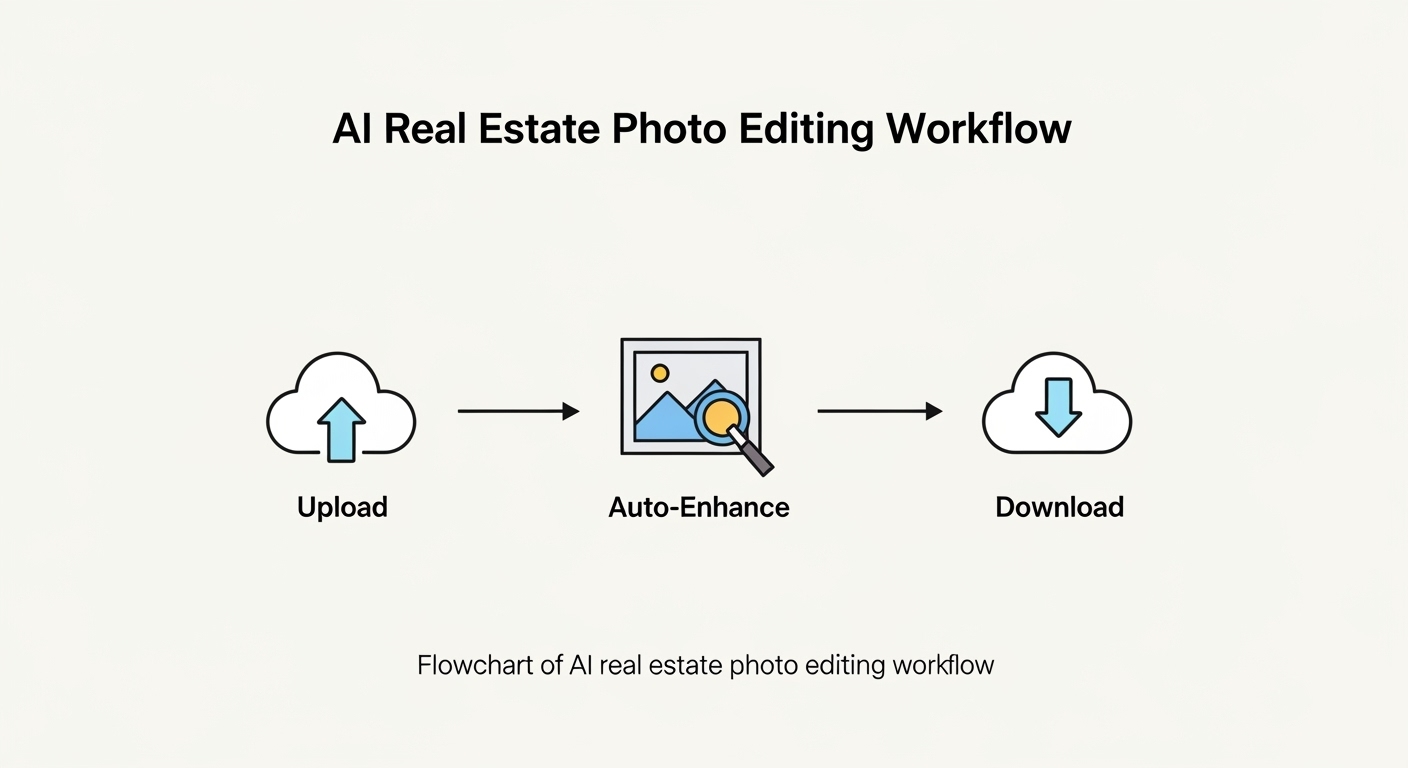
AI tools revolutionize how agents and photographers handle image enhancements. These programs use machine learning to analyze photos and apply corrections automatically. Popular options include software that adjusts brightness, straightens lines, and replaces skies with a few clicks.
In 2026, AI excels in speed and accessibility. For instance, tools process batches of images in minutes, freeing up time for other tasks. They detect common issues like overexposure or color imbalances and fix them consistently. This appeals to busy professionals who manage multiple listings daily.
However, AI shines in specific areas. Virtual staging, where software adds furniture to vacant rooms, becomes more realistic with advanced algorithms. Sky replacement turns cloudy days into sunny ones, enhancing exterior shots. These features make AI a go-to for quick turnarounds.
Explore more on top AI tools shaping the industry at Imagen AI’s guide to real estate photo editing tools, which highlights options like Luminar Neo for creative adjustments.
Despite advantages, AI lacks the nuanced touch humans provide. It sometimes overcorrects, leading to unnatural results. For complex scenes, such as irregularly shaped rooms, AI struggles to maintain realism.
The Strengths of Professional Real Estate Photo Editing Services
Skilled editors bring years of experience to property images. They assess each photo individually, applying custom adjustments that align with the property’s unique style. Professionals handle tasks like HDR blending, where they merge multiple exposures to create balanced interiors.
Outsourcing to experts ensures consistency across listings. Editors remove unwanted items, such as electrical cords or trash, while enhancing lawns or adding fire to fireplaces for warmth. This level of detail elevates photos, making properties more appealing to potential buyers.
In 2026, professional services offer reliability for high-stakes listings. They provide revisions based on feedback, ensuring satisfaction. Costs vary, but the return on investment shows through faster sales and higher prices. Listings with expert edits see up to 118% more online views.
Human editors adapt to trends, incorporating elements like day-to-dusk conversions that AI might not execute perfectly. They understand ethical boundaries, avoiding misleading alterations that could harm your reputation.
For insights into outsourcing benefits, check PhotoUp’s trends in real estate photo editing, emphasizing hybrid approaches for optimal results.
Professionals also scale with your business. Whether you need edits for one property or dozens, they deliver on time without compromising quality.
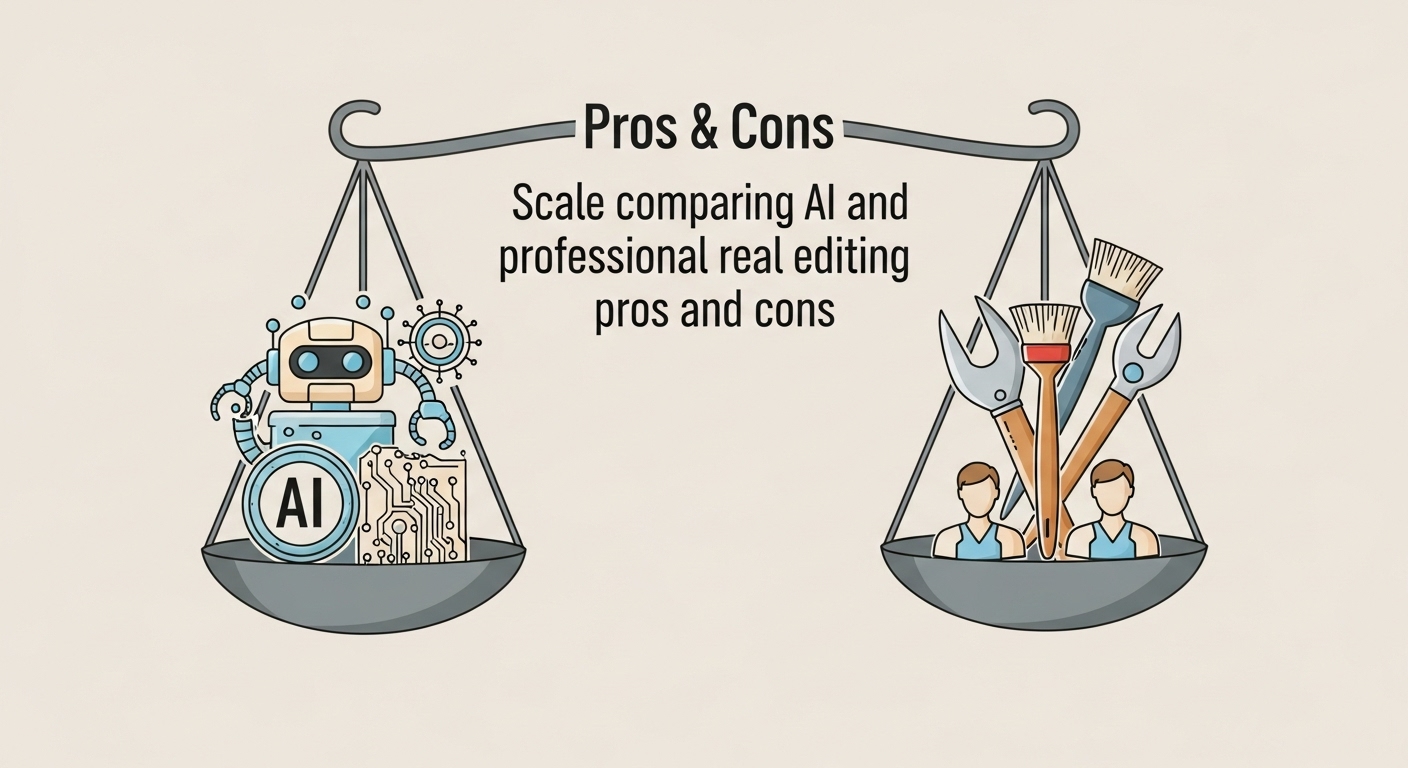
Pros and Cons of AI in Real Estate Photography Editing
AI brings several benefits to the table. It reduces costs significantly, often charging per image or through subscriptions. This makes it ideal for small-scale operations or testing new markets.
Speed ranks as a top advantage. AI tools deliver edited photos in under an hour, compared to days for some manual services. This quick turnaround helps agents list properties swiftly, capitalizing on hot markets.
Accessibility stands out too. Anyone with basic tech skills can use AI platforms, democratizing high-quality edits.
On the downside, AI sometimes produces inconsistent results. It may misinterpret lighting, creating shadows that don’t match reality. Ethical concerns arise when edits mislead buyers, potentially leading to legal issues.
Limited customization hinders AI. While it handles standard tasks well, unique requests require human intervention. In 2026, regulations around AI-generated images tighten, demanding transparency.
- Pros:
- Cost-effective for high-volume editing
- Rapid processing times
- User-friendly interfaces for beginners
- Cons:
- Potential for unnatural or inaccurate edits
- Lacks creative intuition
- Risks of over-reliance leading to generic outputs
Advantages and Drawbacks of Professional Editing
Human editors provide precision that AI can’t replicate. They tailor edits to specific client needs, ensuring photos reflect the property’s true potential.
Quality remains unmatched. Professionals use advanced software combined with artistic judgment to create compelling images. This leads to higher engagement, with edited listings selling at premiums.
Collaboration enhances the process. Editors communicate directly, incorporating feedback for perfect results.
Drawbacks include higher costs. Professional services charge more per photo, impacting budgets for large portfolios.
Turnaround times vary. While some offer 24-hour delivery, complex edits take longer.
Scalability poses challenges for solo agents, but partnerships with reliable providers mitigate this.
- Advantages:
- Customized, high-quality enhancements
- Ethical and realistic adjustments
- Expert handling of complex scenarios
- Drawbacks:
- Higher expenses compared to AI
- Potentially slower delivery
- Dependence on editor availability
For a deeper look at professional editing’s ROI, visit Lighthouse Visuals’ statistical analysis.
Case Studies: Real-World Applications in Real Estate
One agency switched to AI for basic edits and saw turnaround times drop by 50%. They handled more listings, but noticed buyer feedback on unrealistic colors in interiors. Switching back to professionals for premium properties improved satisfaction rates.
A photography firm integrated hybrid editing, using AI for initial processing and humans for refinements. This approach cut costs by 30% while maintaining quality, leading to a 20% increase in client retention.
In another example, a developer used professional services for virtual staging. The edited photos attracted 40% more inquiries, resulting in faster sales. AI attempts earlier yielded mismatched furniture scales, deterring potential buyers.
These stories highlight how context matters. Small businesses benefit from AI’s efficiency, while luxury markets demand professional finesse.
Learn from similar successes at Backoffice Pro’s real estate image editing case study, detailing capacity increases through expert outsourcing.
2026 Trends Shaping Real Estate Photo Editing
The year 2026 sees AI integration deepen, with tools offering better realism through advanced learning. Hybrid models gain popularity, blending automation with human oversight for balanced results.
Drone imagery and 360-degree tours require sophisticated editing, where professionals excel in seamless integrations.
Sustainability influences edits, with enhancements highlighting eco-friendly features like solar panels.
Regulations emphasize transparency, mandating disclosures for AI alterations to build trust.
Vertical videos for social media demand quick edits, favoring AI’s speed.
Stay updated on these shifts via CubiCasa’s real estate photography trends.
Businesses adapt by training teams on both methods, ensuring versatility.
Choosing the Right Approach for Your Business
Assess your needs first. High-volume agents lean toward AI for efficiency, while those focusing on luxury opt for professionals.
Budget plays a key role. Calculate ROI by considering sales speed and view increases.
Test both options. Start with AI for routine tasks and escalate to experts for challenging projects.
Consider scalability. Growing businesses benefit from hybrid services that evolve with demand.
Ultimately, the best choice enhances your listings and supports long-term success.
For national trends, refer to the National Association of Realtors’ insights.
Conclusion
Navigating AI and professional real estate photo editing in 2026 requires balancing innovation with proven expertise. Both offer value, but your business goals dictate the fit. Embrace tools that boost efficiency and quality, ensuring your listings captivate buyers. As the market evolves, staying informed positions you for success.
Frequently Asked Questions
- What makes AI suitable for real estate photo editing?
AI handles quick, automated adjustments like color correction and sky replacement, ideal for fast-paced listings. - How do professional editors differ from AI in results?
Professionals provide customized, realistic edits that AI might overlook, especially in complex scenes. - Can I use both AI and professional editing together?
Yes, hybrid approaches use AI for basics and humans for refinements, optimizing cost and quality. - What are the costs involved in professional real estate photo editing?
Prices range from $1-5 per photo for basic edits to $20+ for advanced services like virtual staging. - Are there legal risks with AI photo editing?
Undisclosed AI alterations can mislead buyers, so always disclose changes to avoid issues. - How does photo editing impact property sales?
Enhanced images lead to more views and faster sales, with stats showing 32% quicker closings. - What trends should I watch for in 2026?
Look for AI advancements in virtual staging and increased use of hybrid editing models. - Is outsourcing photo editing worth it for small businesses?
Outsourcing saves time and ensures professional results, often proving cost-effective long-term.