

Best Nikon Z Camera for Photography in 2026
June 8, 2026
Top 10 Budget Action Cameras for 2026 — 4K, Vlogging & Underwater
June 9, 2026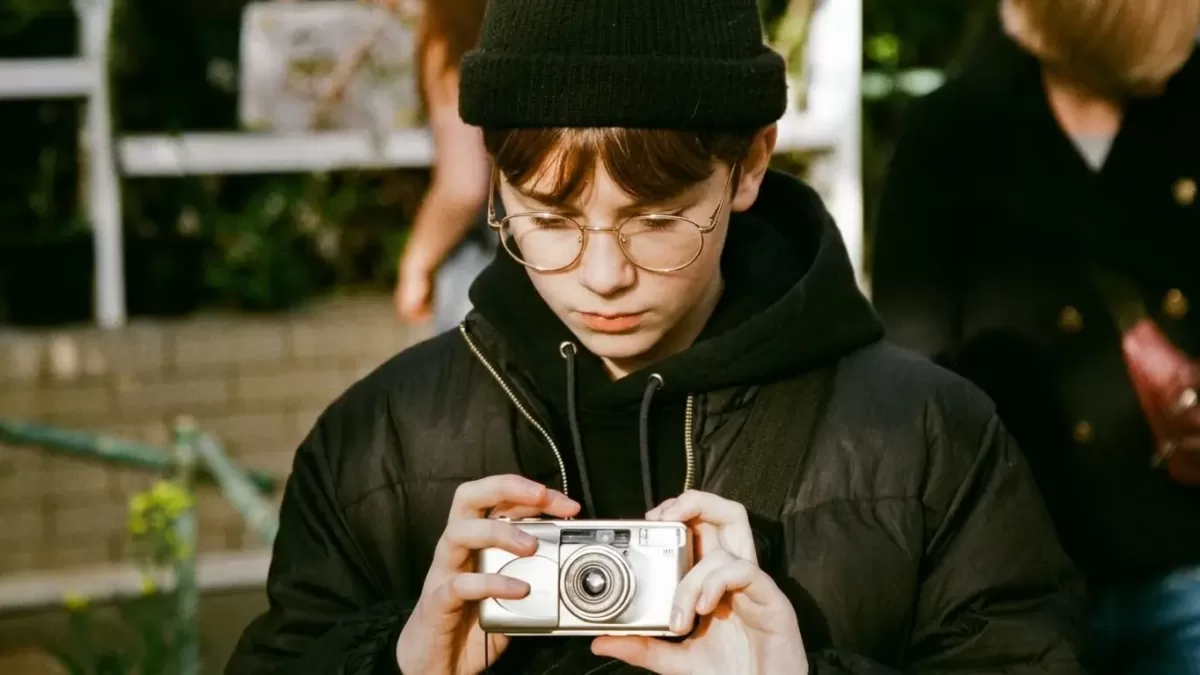
Smartphones now shoot remarkable photos, yet a growing community of photographers keeps returning to dedicated cameras. The reason is simple: a real viewfinder changes how you see. When you press a camera to your eye, the outside world dims, distractions disappear and the frame becomes everything. According to Digital Camera World’s 2026 round-up, compact cameras are enjoying a genuine renaissance, with models like the Fujifilm X100VI selling out for months at a time. (Digital Camera World)
In this guide, I rank the best compact cameras with a viewfinder you can buy in 2026, from premium full-frame icons to affordable enthusiast models. I cover sensor size, viewfinder type, image quality, autofocus and real-world usability. Every camera here has either an optical viewfinder (OVF), an electronic viewfinder (EVF) or — in two special cases — a hybrid that does both.
Ready to elevate your brand’s visual presence?
Partner with Clipping Expert Asia for fast, secure, and premium image editing starting at just 25¢. Explore all our services
- What Makes a Compact Camera “Best” When It Has a Viewfinder?
- Quick Comparison: Best Compact Cameras with a Viewfinder (2026)
- 1. Fujifilm X100VI — The Best All-Round Compact Camera with a Viewfinder
- 2. Sony RX100 VII — The Best Truly Pocketable Camera with a Pop-Up EVF
- 3. Leica Q3 & Leica Q3 43 — The Premium Compact Camera with a Viewfinder
- 4. Fujifilm X-Pro3 — The Best Interchangeable-Lens Compact with a Hybrid Viewfinder
- 5. Sony a7C II — The Best Full-Frame Compact Camera with a Viewfinder
- 6. Panasonic LUMIX LX100 II — The Best Enthusiast Value Compact with an EVF
- 7. Canon PowerShot G5 X Mark II — The Travel Zoom with an EVF
- 8. Ricoh GR IIIx + Optional Optical Viewfinder — For Pocket Purists
- OVF vs EVF vs Hybrid: Which Viewfinder Type Should You Choose?
- Who Should Buy a Compact Camera with a Viewfinder?
- How to Choose: A Practical Buying Checklist
- Caring for Your Compact Camera (and Your Photos)
- Common Mistakes Buyers Make (and How to Avoid Them)
- At-a-Glance Quick Picks
- FAQs: Best Compact Cameras with a Viewfinder
- Final Verdict: Which Compact Camera with a Viewfinder Should You Buy?
What Makes a Compact Camera “Best” When It Has a Viewfinder?
Before the rankings, here is the criteria I used. Every model in this guide must meet most of these benchmarks:
- A genuinely portable body — small enough for a jacket pocket or a small sling bag
- A built-in or pop-up viewfinder (OVF, EVF or hybrid), not a clip-on accessory
- A sensor at least 1-inch in size for noticeably better image quality than a phone
- Fast, reliable autofocus with face or eye detection
- Manual controls (aperture, shutter, ISO) accessible without diving into menus
- Solid build quality, ideally with some weather resistance
- Strong value, judged against the camera’s price tier
I also weighed how the camera feels in daily use, because a camera you actually carry beats one that sits at home.
Quick Comparison: Best Compact Cameras with a Viewfinder (2026)
| Camera | Sensor | Viewfinder | Lens | Best For |
|---|---|---|---|---|
| Fujifilm X100VI | 40MP APS-C | Hybrid OVF/EVF | 23mm f/2 fixed | All-round flagship |
| Sony RX100 VII | 20MP 1-inch | Pop-up EVF | 24–200mm zoom | Pocket versatility |
| Leica Q3 / Q3 43 | 60MP full-frame | 5.76M-dot EVF | 28mm or 43mm fixed | Premium image quality |
| Fujifilm X-Pro3 | 26MP APS-C | Hybrid OVF/EVF | Interchangeable | Rangefinder lovers |
| Sony a7C II | 33MP full-frame | EVF | Interchangeable | Compact full-frame |
| Panasonic LUMIX LX100 II | 17MP Four Thirds | EVF | 24–75mm zoom | Enthusiast value |
| Canon PowerShot G5 X Mark II | 20MP 1-inch | Pop-up EVF | 24–120mm zoom | Travel zoom |
| Ricoh GR IIIx (with optional OVF) | 24MP APS-C | Optional optical | 40mm fixed | Pocket purists |
1. Fujifilm X100VI — The Best All-Round Compact Camera with a Viewfinder
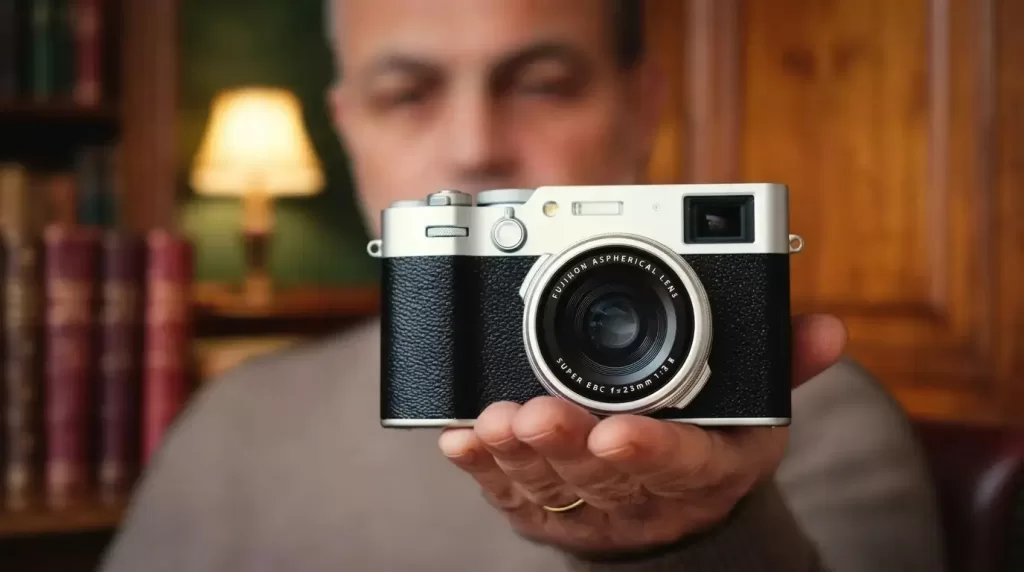
The cult favourite that lives up to the hype
The Fujifilm X100VI sits at the top of almost every “best compact camera” list in 2026, and it earns the position. Behind its retro silver-and-black body lives a 40MP APS-C X-Trans CMOS 5 HR sensor, in-body image stabilisation rated up to six stops and a fixed 23mm f/2 lens (35mm full-frame equivalent)
What makes it sing for this guide is the hybrid viewfinder. Flip a small lever on the front and you switch between a bright optical viewfinder (with overlaid digital information) and a 3.69M-dot electronic viewfinder. According to DPReview, the camera is rated for 450 shots per charge with the OVF or 310 with the EVF (DPReview)
Why it wins
- Hybrid OVF/EVF — see the world directly or see the image as the sensor sees it
- 20 film simulations, including the new REALA ACE mode, pulling from Fujifilm’s 90-year color science archive
- 6.2K video capture and 10-bit recording
- Weather-resistant when paired with the adapter ring and filter
- Tactile aperture ring, shutter dial and exposure compensation dial
Where it falls short
- Fixed 23mm lens limits framing flexibility
- Stock shortages remain a real issue
- Smaller hands may find the rear thumb rest tight
Bottom line: If you want one camera that handles street, travel, portraits and family snaps with style, the X100VI is the easy choice.
Want to see how easily we can transform your product’s color?
Get a free, no-obligation sample of our Photo Color Correction Services
2. Sony RX100 VII — The Best Truly Pocketable Camera with a Pop-Up EVF
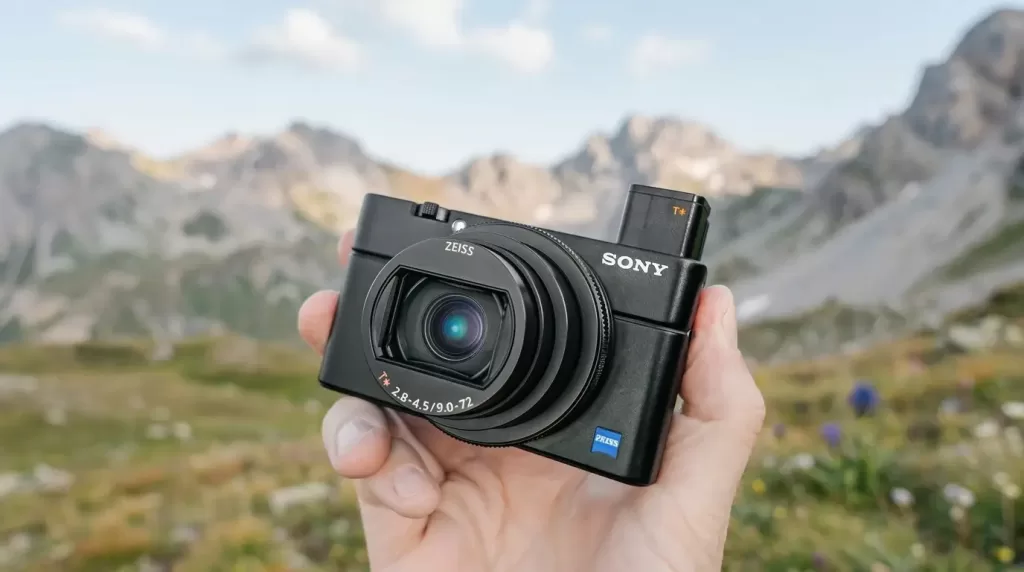
A pop-up viewfinder packed into a true pocket camera
The Sony RX100 VII remains the king of true pocket cameras with viewfinders. It hides a 0.39-inch, 2.36M-dot OLED EVF that pops up from the top plate — clever engineering that keeps the body genuinely shirt-pocket small. Inside sits a 20.1MP 1-inch stacked Exmor RS CMOS sensor and a versatile 24–200mm equivalent Zeiss Vario-Sonnar T* zoom lens. (Sony)
According to DPReview’s hands-on testing, the RX100 VII tracks subjects at 20 fps with no EVF blackout, which is astonishing in a body this size.
Strengths
- Genuinely pocketable (302 g with battery)
- Real-time Eye AF for humans and animals
- 24–200mm zoom range covers wide landscapes to tight portraits
- 4K HDR video with microphone input — a rarity in this size class
- Pop-up EVF plus tilting touchscreen
Trade-offs
- One-inch sensor cannot match APS-C low-light performance
- The pop-up EVF feels small after using bigger finders
- No built-in ND filter (a pain in bright sun at f/2.8)
- Pricey for a 1-inch compact
3. Leica Q3 & Leica Q3 43 — The Premium Compact Camera with a Viewfinder
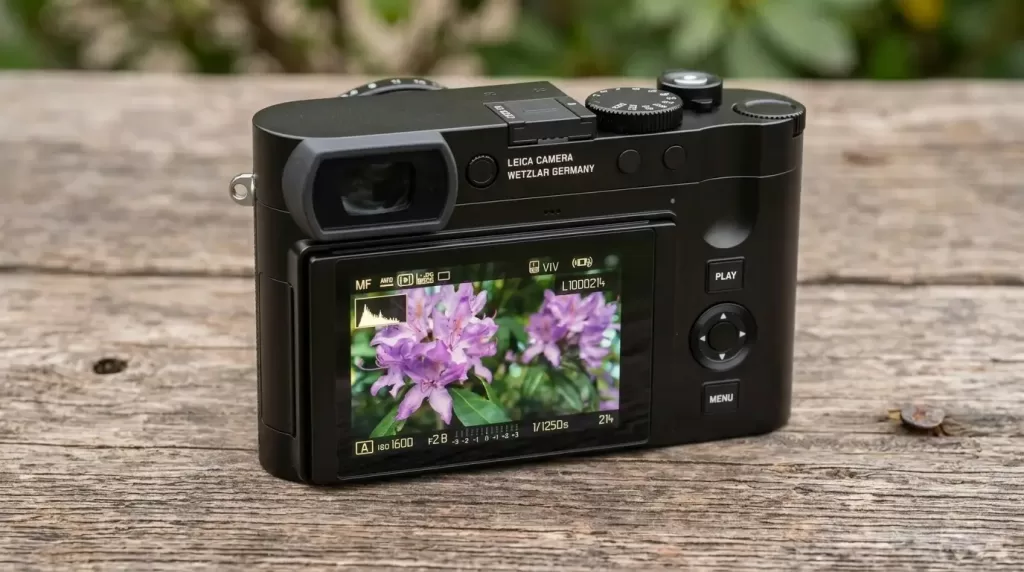
Full-frame, fixed-lens luxury — now with two focal lengths
The Leica Q3 and its 43mm sibling, the Leica Q3 43, sit at the top of the premium tier. Both share a 60MP full-frame BSI-CMOS sensor with Triple Resolution Technology (60MP / 36MP / 18MP) and a stunning 5.76M-dot OLED viewfinder running at 120 fps. The original Q3 has a 28mm f/1.7 Summilux lens, while the Q3 43 brings a 43mm f/2 APO-Summicron — the focal length closest to natural human vision.
Photography Life’s review notes that the Q3’s lens and viewfinder lean on autofocus rather than a true rangefinder system, giving it a different feel from Leica’s M cameras (Photography Life). Phase-detection AF, 8K video and a tilting LCD round out the spec sheet.
What Leica got right
- 60MP full-frame sensor with class-leading dynamic range
- 5.76M-dot EVF — among the sharpest viewfinders on any camera
- Digital crop frame lines at 35, 50, 75, 90, 120 and 150mm equivalents
- Weather sealed body
- 8K video and wireless charging support
- Two focal-length flavours (28mm or 43mm) so you pick your style
Why it might not be for you
- Starts above $6,000 — a serious investment
- Single focal length per body (no zoom)
- Fstoppers noted the buffer and ergonomics can feel restrictive compared with cheaper rivals (Fstoppers)
4. Fujifilm X-Pro3 — The Best Interchangeable-Lens Compact with a Hybrid Viewfinder
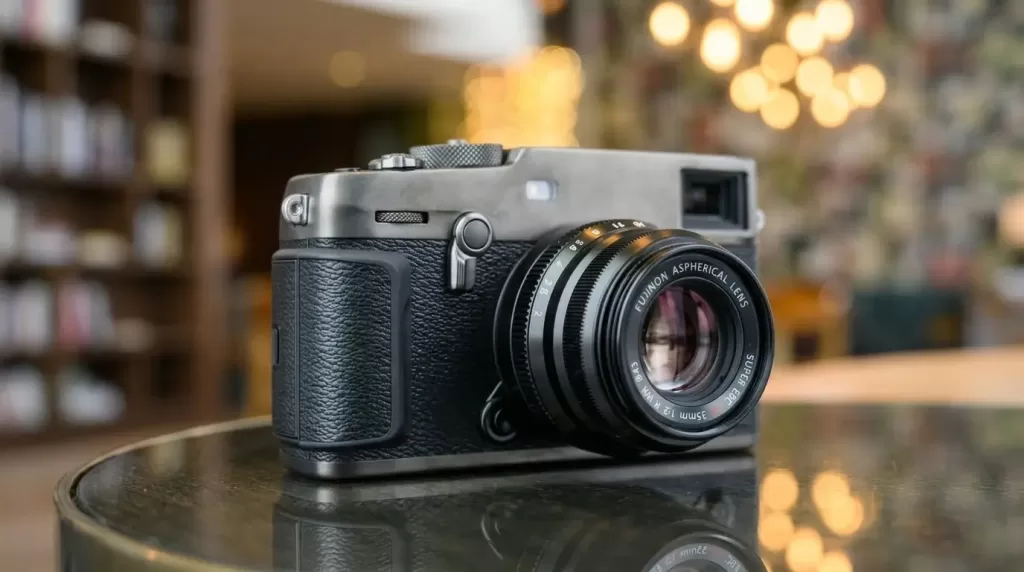
A rangefinder-style camera that loves film shooters
The Fujifilm X-Pro3 is the rebel of this list. Its titanium top and base plate, hidden rear LCD and off-set hybrid viewfinder make it feel closer to a film Leica than to a modern mirrorless camera. The hybrid system uses a 0.5x optical viewfinder with parallax-corrected frame lines, plus a 3.69M-dot OLED EVF that you switch in by lever.
Inside sits a 26.1MP X-Trans CMOS 4 sensor and the X-Processor 4. Imaging Resource calls the design “distinctively rangefinder, with a slim and rectangular shape, minimal grip and off-center hybrid viewfinder” (Imaging Resource)
What you get
- Interchangeable Fujifilm X-mount lenses — pair it with a tiny 27mm f/2.8 pancake for true compactness
- Hidden rear screen that flips down only when you want it (helps you focus on the viewfinder)
- Titanium build with weather resistance
- Film simulations identical to the X-T and X100 series
- Dual SD card slots — rare in a compact
Honest drawbacks
- The hidden screen design splits opinion sharply
- The off-set viewfinder takes time to learn for right-eye shooters
- 4K video is limited compared to the X100VI
5. Sony a7C II — The Best Full-Frame Compact Camera with a Viewfinder
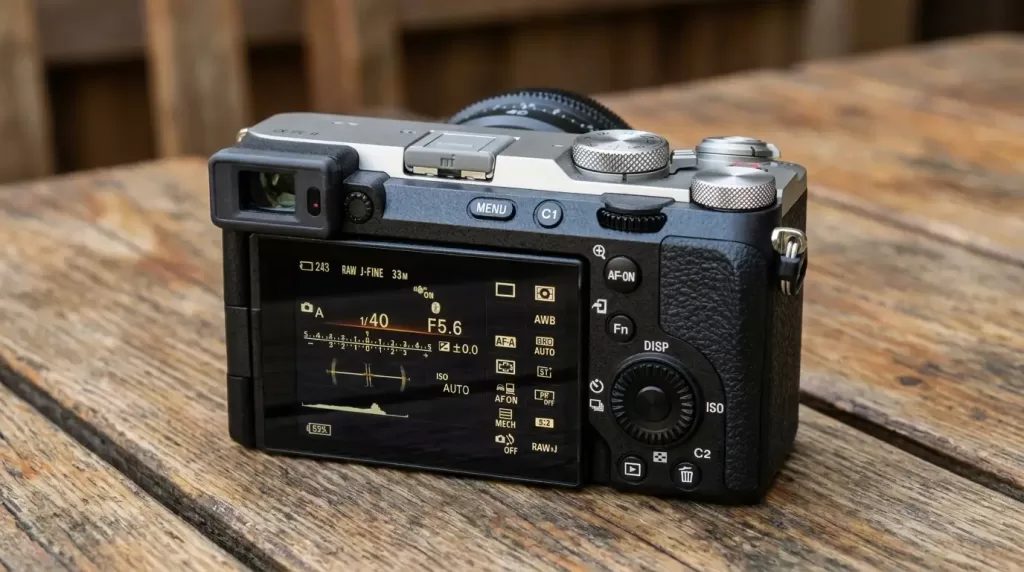
Full-frame quality in a body that almost disappears
If you need full-frame image quality without lugging a big camera, the Sony a7C II delivers. It packs a 33MP back-illuminated sensor, AI-based autofocus, 5-axis in-body stabilisation and 4K 60p video into a rangefinder-style body that weighs just 514 g.
The EVF is small but workable, and the camera mounts the full Sony FE lens lineup. Pair it with a tiny prime like the FE 40mm f/2.5 G and you have a true carry-everywhere full-frame setup.
Strong points
- 33MP full-frame sensor in an APS-C-sized body
- AI processing unit for next-generation subject detection
- In-body stabilisation rated to 7 stops
- 4K 60p 10-bit video with no recording limit
- Works with hundreds of FE-mount lenses
Want to enhance colors and contrast without losing realism?
Trust our experts to perfect your images with our Photo Retouching Service
Watch-outs
- The EVF is noticeably smaller than the one on the bigger Sony a7 IV
- Single SD card slot
- Sony’s menu system, while improved, still demands patience
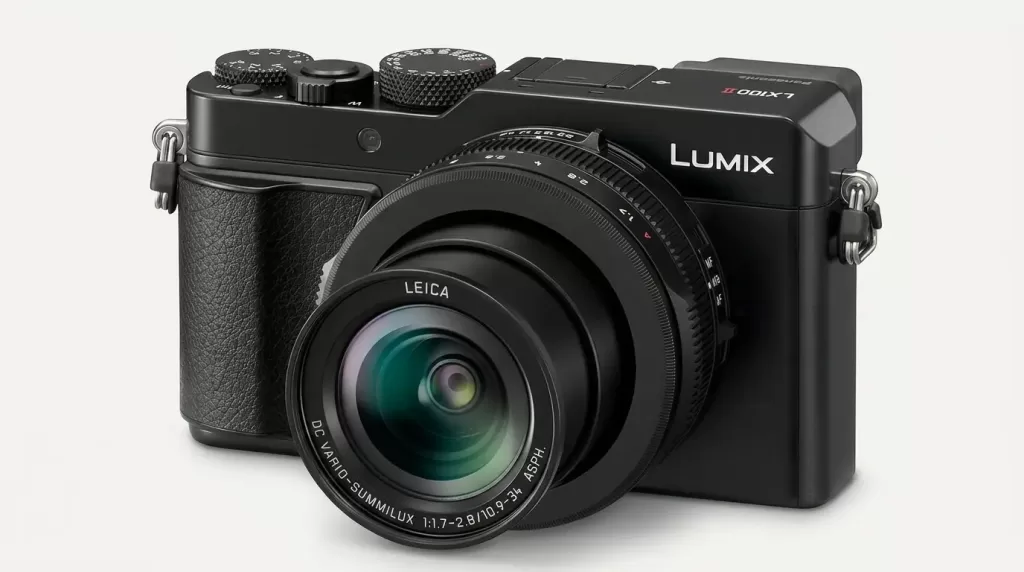
6. Panasonic LUMIX LX100 II — The Best Enthusiast Value Compact with an EVF
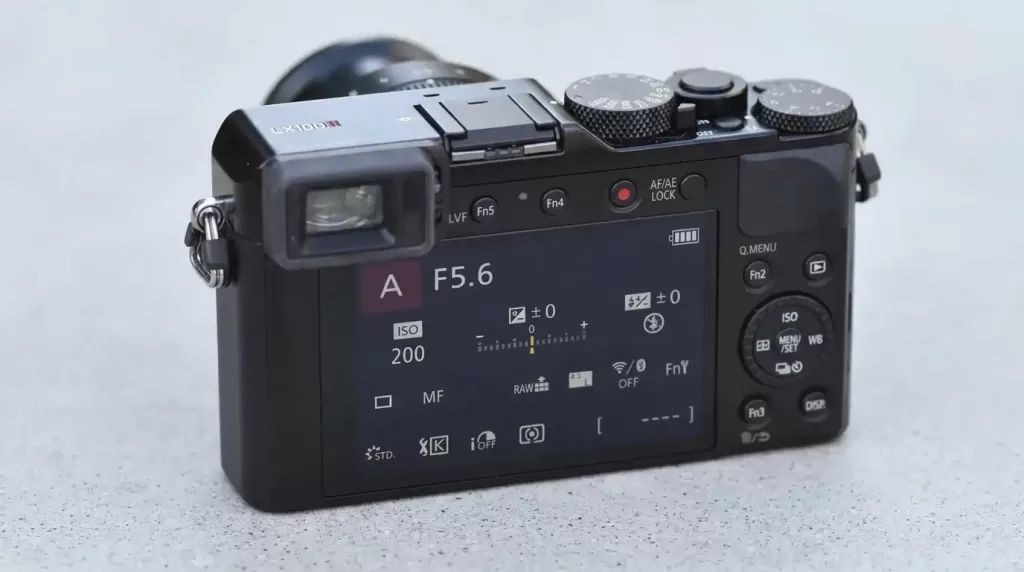
Big sensor, small body, fast Leica zoom
The Panasonic LUMIX LX100 II is the underdog hero of compact cameras. It uses a 17MP multi-aspect Four Thirds sensor — much larger than a 1-inch chip — and a Leica DC Vario-Summilux 24–75mm f/1.7–2.8 zoom. The built-in 2.76M-dot equivalent electronic viewfinder is sharp and usable in bright light, and the touch LCD adds flexibility.
You also get 4K photo modes, post-focus, focus stacking and Bluetooth, all from a camera that has steadily dropped in price over the years.
Why I still love it
- Bright f/1.7–2.8 zoom for low light
- Four Thirds sensor outperforms 1-inch rivals
- Manual dials for aperture, shutter speed and exposure compensation
- 4K video with photo extraction
- One of the best price-to-performance ratios on this list
Limitations
- No weather sealing
- Lens covers a modest 24–75mm range
- Menu navigation can feel dated
- Battery life is average
7. Canon PowerShot G5 X Mark II — The Travel Zoom with an EVF
The Canon PowerShot G5 X Mark II is often overlooked, yet it remains one of the most thoughtful compact zooms ever built. Like the Sony RX100 VII, it hides a pop-up 2.36M-dot OLED viewfinder, but Canon’s body feels marginally more grip-friendly. A 20.1MP 1-inch stacked sensor sits behind a 24–120mm equivalent f/1.8–2.8 zoom — slightly brighter at the wide end than the Sony.
Amateur Photographer’s compact-camera round-up still rates Canon highly for daily versatility, especially with its straightforward Canon colour science.
Highlights:
- Bright 24–120mm f/1.8–2.8 lens
- 30 fps RAW burst shooting
- 4K video (with a slight crop)
- Tilting touchscreen plus pop-up EVF
- Better grip than the Sony RX100 series
Drawbacks:
- Now harder to find new — check trusted refurbished sellers
- Slower autofocus than Sony’s real-time tracking
- No microphone input
8. Ricoh GR IIIx + Optional Optical Viewfinder — For Pocket Purists
The Ricoh GR IIIx does not ship with a built-in viewfinder, yet it earns a spot here because Ricoh sells a dedicated optical viewfinder (the GV-3) that slips into the hot shoe. Pair the two, and you get a truly pocketable APS-C street camera with a 40mm equivalent lens that disappears in a jacket pocket.
According to a Roman Fox real-world comparison, the Ricoh “is substantially smaller and lighter than the Fuji X100VI” and “can easily fit into a trouser pocket”. For documentary photographers who shoot zone-focused on the street, the OVF gives a clean, lag-free frame.
Pros:
- 24MP APS-C sensor in a pocket-sized body
- Sharp 40mm equivalent f/2.8 lens
- Snap focus and instant power-on for street work
- Optional clip-on OVF for clean framing
Cons:
- Viewfinder is an extra purchase and uses the hot shoe
- No tilting screen
- Modest battery life
OVF vs EVF vs Hybrid: Which Viewfinder Type Should You Choose?
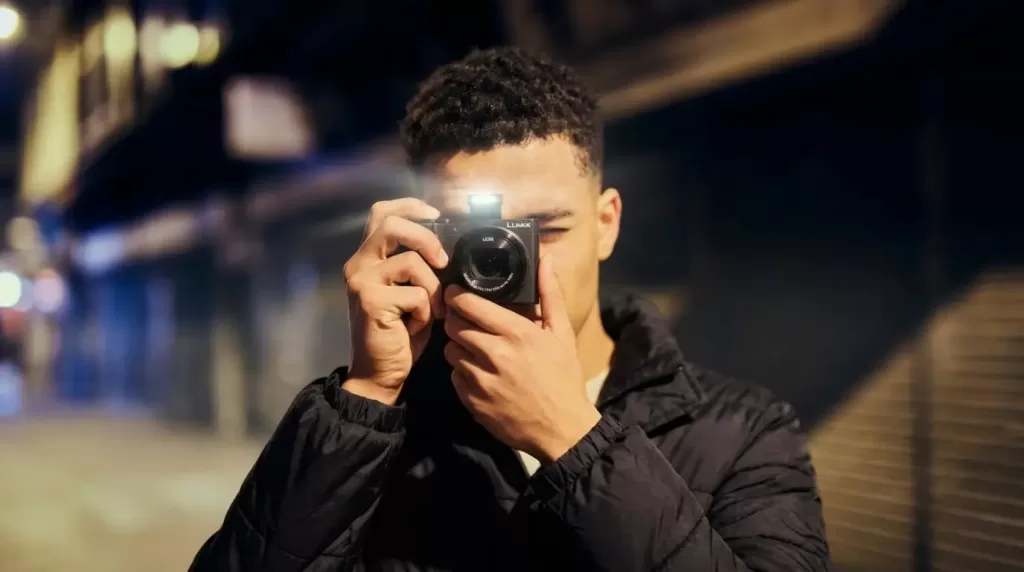
Choosing a compact camera with a viewfinder usually means choosing between three technologies:
Optical Viewfinder (OVF)
An OVF shows the scene directly through the glass. There is no lag, no blackout and no battery drain. The trade-off: it does not show real exposure, depth of field or white balance. Fstoppers notes that OVFs still offer the best “connection with the scene” — you see real light, not a digital interpretation.
Best for: street photographers, sports shooters and traditionalists.
Electronic Viewfinder (EVF)
An EVF is a tiny high-resolution screen that previews exactly what the sensor will capture — exposure, colour and depth of field included. Modern EVFs (like the 5.76M-dot finder in the Leica Q3) feel almost cinematic.
Best for: beginners, video shooters and anyone who likes “what you see is what you get” framing.
Hybrid Viewfinder
Only Fujifilm builds true hybrid viewfinders, found on the X100VI and X-Pro3. You toggle between optical and electronic with a small lever, getting the best of both worlds.
Best for: enthusiasts who want flexibility.
Who Should Buy a Compact Camera with a Viewfinder?
A compact camera with a viewfinder makes sense for several types of buyers:
- Travel photographers who want better image quality than a phone without carrying a DSLR
- Street photographers who value discretion and quick, eye-level framing
- Content creators who shoot photos and short video and need a real microphone input
- Hobbyists rediscovering photography after using only smartphones
- Professionals who want a stealthy second camera for off-duty shooting
If you mainly shoot in bright sunlight, a viewfinder is not a luxury — it is a necessity. LCDs wash out outdoors, while a viewfinder keeps your composition visible no matter the conditions.
How to Choose: A Practical Buying Checklist
Use this short checklist when comparing models in store or online:
- Sensor size — APS-C or full-frame for the best quality, Four Thirds for the best balance, 1-inch for pocket size
- Lens — fixed prime (sharper, brighter) vs. zoom (more versatile)
- Viewfinder magnification and resolution — higher is better
- Stabilisation — in-body IBIS matters for low light and video
- Battery life — aim for at least 300 shots per charge
- Storage — fast SD card support, ideally with dual slots if you shoot professionally
- Connectivity — Wi-Fi and Bluetooth for quick transfer to phone
- Storage workflow — pair your camera with a reliable backup, such as the options compared in this best cloud storage for photos guide
Caring for Your Compact Camera (and Your Photos)
Compact cameras live a hard life. Pockets, beach trips and travel bags all take a toll. A few simple habits stretch your camera’s lifespan:
- Keep a microfibre cloth in your bag and clean the lens after every outing
- Use a small silica gel pack in humid climates to prevent fungus
- Store batteries at about 50% charge if you will not shoot for weeks
- Update firmware through the manufacturer’s app — recent X100VI updates have improved autofocus noticeably
- Back up your RAW files in at least two locations (one local drive plus one cloud service)
Want to test our quality before committing to a large order?
Try our Image Background Removal Services risk-free with a free trial.
The post-processing side matters just as much. Even the sharpest Leica file benefits from clean editing — adjusting skin tones, removing distractions and isolating subjects for use on websites or product listings.
Common Mistakes Buyers Make (and How to Avoid Them)
After helping dozens of photographers shop for cameras, I see the same mistakes repeatedly:
- Chasing megapixels — a 24MP APS-C camera often beats a 40MP smartphone in real conditions
- Ignoring the lens — a brighter, sharper lens matters more than tiny sensor differences
- Forgetting weight — a camera you leave at home takes no photos
- Overlooking firmware history — pick brands that update their cameras for years (Fujifilm, Sony and Leica all do this well)
- Buying for video specs only — if you also shoot stills, prioritise sensor and lens quality
- Skipping the viewfinder test — visit a store and look through several finders before deciding
At-a-Glance Quick Picks
- Best overall — Fujifilm X100VI
- Best pocketable — Sony RX100 VII
- Best premium — Leica Q3 43
- Best for video — Sony a7C II
- Best value — Panasonic LUMIX LX100 II
- Best for rangefinder lovers — Fujifilm X-Pro3
- Best for street purists — Ricoh GR IIIx with optional OVF
- Best travel zoom — Canon PowerShot G5 X Mark II
FAQs: Best Compact Cameras with a Viewfinder
1. What is the best compact camera with a viewfinder in 2026?
The Fujifilm X100VI wins for most photographers, thanks to its hybrid viewfinder, 40MP APS-C sensor, in-body stabilisation and acclaimed film simulations, according to DPReview. If money is no object, the Leica Q3 43 is the premium pick.
2. Is an electronic viewfinder better than an optical one?
Each has strengths. EVFs preview real exposure, depth of field and white balance, while OVFs offer zero lag and a more natural view. Many photographers prefer hybrid systems on cameras like the Fujifilm X100VI and X-Pro3 because they switch on demand.
3. Are pop-up viewfinders reliable?
Yes — Sony’s RX100 series has used a pop-up EVF since 2014, and the design has proven durable. Just avoid forcing the mechanism if it ever sticks.
4. Do I really need a viewfinder if I have a flip screen?
In bright sunlight, screens become almost unusable. A viewfinder also stabilises your camera against your face, giving you sharper handheld shots and a more deliberate shooting style.
5. Are compact cameras still worth buying in 2026?
Absolutely. Sales of premium compacts like the Fujifilm X100VI and Ricoh GR III have hit record highs, with multi-month waiting lists. Smartphones cannot replicate the sensor size, the manual controls or the feel of a real viewfinder.
6. What is the cheapest compact camera with a built-in viewfinder?
On the new market, the Panasonic LUMIX LX100 II offers the best balance of price and capability. On the used market, older Sony RX100 III/IV models still deliver excellent value with their pop-up EVFs.
7. Can I use a compact camera for professional work?
Yes — wedding photographers, photojournalists and travel pros increasingly use cameras like the Leica Q3, X100VI and Sony a7C II as their main or secondary bodies. Image quality is more than sufficient for editorial use, magazine layouts and large prints.
8. How do I edit photos from my compact camera?
Shoot in RAW for the most editing flexibility, then process the files in Lightroom, Capture One or Photoshop. For commercial photos, professional retouching services can save hours of work and deliver consistent, polished results.
Want to see how a simple shadow can transform an image?
Request a free sample of our Shadow Creation Service today.
Final Verdict: Which Compact Camera with a Viewfinder Should You Buy?
If I had to recommend only one, it would be the Fujifilm X100VI — it nails image quality, design and shooting joy. For pocket size, the Sony RX100 VII still has no real rival. For full-frame lovers, the Leica Q3 43 is a once-in-a-lifetime camera, while the Sony a7C II delivers similar quality with interchangeable lenses at half the price.
Whichever camera you pick, a real viewfinder will change how you photograph. It slows you down in the best way, makes you more intentional and reconnects you to the act of looking — something no smartphone screen can match.