

Best Cameras for Beginners 2026: What to Buy (and Skip)
May 19, 2026
Best Cameras for Photography in 2026: The Ultimate Buyer’s Guide
May 23, 2026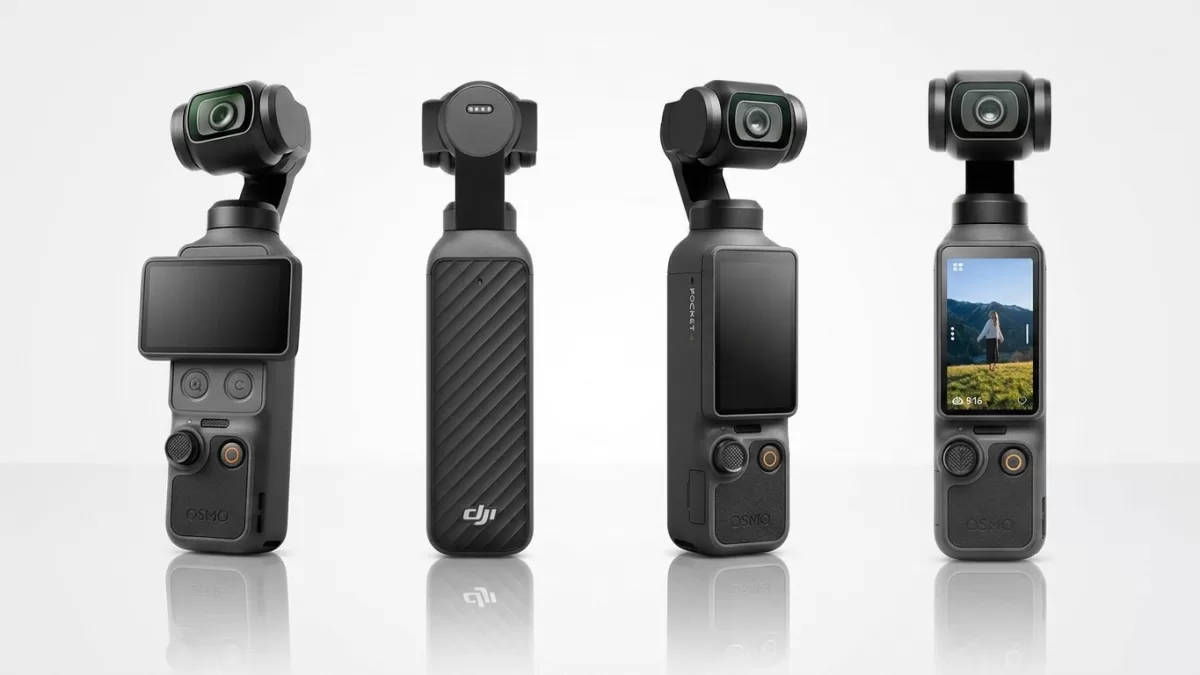
- A Tiny Powerhouse Built for Solo Creators in 2026
- What’s New in the DJI Osmo Pocket 4
- Design and Build Quality
- Image Quality and Sensor Performance
- Video Capabilities and Cinematic Features
- ActiveTrack 7.0 and Smart Tracking
- Audio System and Microphone Options
- Battery Life, Storage, and Real-World Workflow
- Pocket 4 vs Pocket 3: Is the Upgrade Worth It?
- Pricing, Availability, and the U.S. Situation
- Pros and Cons at a Glance
- Real-World Use Cases
- Tips to Get the Most Out of Your Pocket 4
- Final Verdict: Is the DJI Osmo Pocket 4 Worth Buying?
- Frequently Asked Questions (FAQ)
A Tiny Powerhouse Built for Solo Creators in 2026
DJI keeps proving that small sensors and even smaller bodies can deliver outsized results. The DJI Osmo Pocket 4 lands as the company’s most ambitious handheld gimbal camera yet, packing a 1-inch CMOS sensor, 4K/240fps slow motion, ActiveTrack 7.0, and 107GB of built-in storage into a body that still slips into a jacket pocket. After spending real time with it across travel scenes, café interviews, fast-paced street walks, and golden-hour vlogs, I can confidently say the Pocket 4 is not a minor refresh. It is a serious leap forward.
This in-depth DJI Osmo Pocket 4 review covers every angle that matters: sensor quality, gimbal stability, audio capture, ActiveTrack 7.0 behavior, battery endurance, real-world workflow, pricing, and whether current Pocket 3 owners should upgrade. I will also flag the small frustrations DJI quietly hopes you ignore. Let us get into it.
Boost Your Pocket 4 Footage Frames Instantly — Turn your best Pocket 4 stills into magazine-grade visuals with our professional photo retouching service trusted by vloggers and brands worldwide.
What’s New in the DJI Osmo Pocket 4
Headline Upgrades at a Glance
DJI did not simply refine the Pocket 3. The team rebuilt the internals, refreshed the controls, and added cinema-grade features that previously belonged on much larger cameras. The most meaningful changes include:
- New 1-inch CMOS sensor with 14 stops of dynamic range and 10-bit D-Log Pro support
- 4K video at up to 240fps for smooth slow-motion sequences
- 37MP Super Photo mode for richer stills than any previous Pocket model
- 107GB of internal storage plus a microSD slot for overflow
- ActiveTrack 7.0 with Face Lock, Registered Subject Priority, and Dynamic Framing
- 5D analog joystick and two new hidden buttons for zoom and custom presets
- 4-channel audio recording with Spatial Audio and Audio Zoom
- Wi-Fi 6 and USB 3.1 transfers up to 800MB/s
- 1000-nit rotatable OLED touchscreen, brighter than the Pocket 3’s 700-nit panel
- Magnetic pogo-pin accessory port for the new Pocket 4 Fill Light and other add-ons
According to the official DJI Osmo Pocket 4 announcement coverage on CineD, the sensor and processing pipeline were redesigned specifically for low-light fidelity and color science improvements — and you can feel the difference within minutes of shooting.
Design and Build Quality
Familiar Silhouette, Smarter Engineering
At first glance, the Pocket 4 looks almost identical to its predecessor. Pick it up, however, and you notice the differences immediately. The body measures 144.2 × 44.4 × 33.5 mm and weighs 190.5 g, which keeps the camera one-hand friendly while feeling more confident in the palm.
The most welcome physical change is the new gimbal clamp. Previous owners know the pain of pulling a Pocket 3 out of a bag only to find it powered on, drained, or jostled into damage. DJI finally fixed that. The clamp locks the gimbal during transport, protects the motors, and prevents accidental startups.
Controls That Finally Feel Professional
The redesigned control layout deserves real applause:
- A 5D analog joystick replaces the basic four-way switch, giving filmmakers buttery-smooth manual gimbal pans
- Two hidden capacitive buttons under the screen handle zoom and custom functions
- The rotatable 2-inch OLED screen snaps from landscape to portrait with satisfying precision
- A 1000-nit brightness rating keeps the display visible in direct sunlight
These changes turn the Pocket 4 from a quirky vlogging accessory into a tool that feels like a proper compact cinema camera.
Image Quality and Sensor Performance
A 1-Inch Sensor That Punches Above Its Weight
The new 1-inch CMOS sensor is the soul of the Pocket 4. It captures roughly twice the light of the Pocket 3’s 1-inch unit thanks to a redesigned readout architecture and improved noise handling. Skin tones look natural, highlights roll off gracefully, and shadow recovery in D-Log Pro is surprisingly forgiving.
Highlights of the imaging system include:
- 14 stops of dynamic range in both Normal and 10-bit D-Log Pro modes
- f/2.0 aperture for shallow depth-of-field looks straight out of the camera
- 37MP Super Photo mode that uses pixel binning for cleaner, more detailed stills
- A dedicated 4K Low-Light Mode that extends usable ISO without smearing detail
I tested the Pocket 4 in a candle-lit restaurant and the footage came out clean enough to use without grading. That was simply not possible on any previous Pocket model.
Make Every Thumbnail Click-Worthy — Want clean, distraction-free vlog thumbnails? Use our background removal service to isolate your subject in seconds and grow your channel faster.
Video Capabilities and Cinematic Features
Resolution, Frame Rates, and Codecs
The Pocket 4 handles almost every modern filmmaking demand:
- 4K up to 240fps for cinematic slow motion
- 4K/120fps in 10-bit D-Log Pro for color-rich grading
- 1080p/240fps for ultra-smooth highlight reels
- H.264 and H.265 codecs for compatibility and efficiency
- 2× lossless zoom plus up to 4× digital zoom
Built-In Film Tones
DJI added six new color presets baked directly into the camera, so creators who hate color grading can finally skip the timeline gymnastics:
- CC Film – Fuji-inspired tones with cool greens and warm skin
- NC Film – Classic negative film vibe
- Pastel – Soft, dreamy palette for lifestyle content
- Warm Tone – Golden-hour mood without filters
- Movie – Cinematic teal-and-orange contrast
- Retro – Vintage analog feel
If you grade in DaVinci Resolve or Premiere Pro, D-Log Pro gives you the full 14 stops of latitude. If you upload straight to TikTok or Reels, the built-in tones save hours. For more context on how 10-bit D-Log workflows compare across DJI’s lineup, the Engadget Pocket 4 review provides excellent technical breakdowns.
ActiveTrack 7.0 and Smart Tracking
Subject Lock That Actually Holds On
ActiveTrack on the Pocket 3 was reliable but not flawless. ActiveTrack 7.0 fixes nearly every weak spot. The system now uses on-device AI to recognize and prioritize subjects with remarkable accuracy.
Key smart-tracking improvements include:
- Face Lock – Holds onto your face even when you turn away or duck behind objects briefly
- Registered Subject Priority – Teach the camera to recognize you specifically, so it ignores passers-by
- Dynamic Framing – Auto-composes your shot using the rule of thirds or golden spiral
- Gesture Control – Start, stop, or trigger recording with a palm or “V” sign
Solo travel vloggers benefit the most. I walked through a busy night market, and the Pocket 4 kept me locked in the frame while crowds streamed past. The Pocket 3 would have lost me at least three times in that scenario.
Audio System and Microphone Options
Three On-Board Mics Plus Spatial Audio
Audio is often the deciding factor between amateur and professional vlogs, and DJI clearly listened to creator feedback. The Pocket 4 ships with three built-in microphones arranged for directional pickup, 4-channel recording, and brand-new Spatial Audio that recreates a binaural soundstage when played back on headphones.
Standout audio features include:
- Audio Zoom that amplifies sound in sync with the optical zoom
- Directional, omnidirectional, and rear-pickup modes
- Built-In Mic Audio Backup when you pair a DJI Mic transmitter
- Wind reduction algorithms that finally make outdoor handheld vlogs usable
DJI Mic 3 Integration
The Pocket 4 pairs flawlessly with up to two DJI Mic 3 transmitters for dual-subject interviews. The Creator Combo bundles one transmitter, which I consider essential rather than optional for serious vloggers.
Give Your Product Shots a Cinematic Edge — Use our shadow creations service to add lifelike depth and natural shadows to product clips filmed in Pocket 4’s Showcase mode.
Battery Life, Storage, and Real-World Workflow
Endurance That Survives a Full Shoot Day
DJI rates the Pocket 4 at 240 minutes of recording on a single charge thanks to the upgraded 1545mAh battery. In my testing, the real-world figure landed closer to 180–210 minutes when using 4K/60p with ActiveTrack 7.0 active. That is still more than enough for an entire day of B-roll, vlogs, and interviews on one charge.
The optional Battery Handle (950 mAh) adds another 90 minutes or so and doubles as a grip. Fast charging via USB-C tops the camera up to 80% in roughly 16 minutes.
Storage: The 107GB Game-Changer
The leap from “no internal storage” to 107GB built-in quietly changes the entire workflow. You can leave home without a microSD card and still shoot for hours. The Pocket 4 also supports microSDXC cards up to 1TB if you want more headroom for D-Log Pro footage.
For context on how far modern storage stretches, this helpful guide on how many photos a 256GB card can hold breaks down realistic numbers for video shooters too.
Transfer Speeds Worth Celebrating
With USB 3.1 transfers up to 800MB/s and Wi-Fi 6 support, dumping footage onto a laptop takes seconds instead of minutes. A 30-minute 4K clip that used to take 15 minutes on the Pocket 3 now copies in under 3.
Pocket 4 vs Pocket 3: Is the Upgrade Worth It?
Side-by-Side Comparison
| Feature | Osmo Pocket 3 | Osmo Pocket 4 |
|---|---|---|
| Sensor | 1-inch CMOS | New 1-inch CMOS (improved) |
| Dynamic Range | 11 stops | 14 stops |
| Max Frame Rate | 4K/120fps | 4K/240fps |
| Storage | microSD only | 107GB + microSD |
| Display Brightness | 700 nits | 1000 nits |
| Tracking | ActiveTrack 6.0 | ActiveTrack 7.0 |
| Audio Channels | Stereo | 4-channel Spatial Audio |
| Connectivity | USB-C 3.2 Gen 1 | USB 3.1 + Wi-Fi 6 (up to 800MB/s) |
| Battery | 1300 mAh | 1545 mAh |
| Weight | 179 g | 190.5 g |
Who Should Upgrade
Stay with the Pocket 3 if you mainly shoot 1080p for social media, rarely struggle with low light, and already own DJI Mic 2.
Upgrade to the Pocket 4 if:
- You shoot in mixed lighting and need that extra dynamic range
- Slow-motion B-roll is core to your content
- You film alone and rely on tracking
- You want to skip carrying SD cards
- You record interviews and need multi-channel pro audio
Pricing, Availability, and the U.S. Situation
DJI launched the Osmo Pocket 4 globally on April 16, 2026. The standard kit retails around $549 USD equivalent, while the Creator Combo (with DJI Mic 3, wide-angle lens, fill light, and battery handle) sits closer to $799 USD equivalent. Pricing varies by region.
Unfortunately, the Pocket 4 is not officially sold in the United States while DJI awaits FCC and regulatory authorization. As PetaPixel reported, the certification timeline remains unclear, although many U.S. creators import via international retailers and resellers.
Edit Like a Pro Without the Time Sink — Outsource your vlog cleanup, color, and retouching to the editors at PhotoFixal so you can keep filming while we polish every frame.
Pros and Cons at a Glance
What I Loved
- Massive jump in dynamic range and low-light performance
- ActiveTrack 7.0 finally feels production-ready
- 107GB internal storage removes a major workflow headache
- 5D joystick and new physical buttons make manual control intuitive
- Spatial Audio and Audio Zoom punch way above the price point
- Six built-in film tones save serious grading time
- Brighter 1000-nit OLED screen is readable in any condition
What Could Be Better
- Still no weather sealing for rain or heavy dust
- No native RAW photo support (DNG would be welcome)
- Wide-angle lens and ND filters cost extra
- U.S. buyers face genuine availability hurdles
- The Creator Combo price climbs quickly for full kits
Real-World Use Cases
Who Is the Pocket 4 Actually For?
The Pocket 4 fits a surprisingly wide range of creators because the combination of gimbal stabilization, internal storage, and AI tracking covers many shooting styles:
- Travel vloggers who want professional output without bulky gear
- Street and documentary filmmakers chasing candid moments quickly
- Real estate agents capturing walk-throughs with smooth motion
- YouTube interviewers using dual DJI Mic 3 transmitters
- Food and lifestyle creators leveraging the macro and product showcase modes
- Solo cinematographers building B-roll libraries on the move
If you need extreme weather durability, look at the DJI Osmo Action series. If you need full manual cinema controls and interchangeable lenses, a mirrorless setup still wins. For everyone in between, the Pocket 4 is arguably the best one-device kit you can buy in 2026.
Tips to Get the Most Out of Your Pocket 4
A few field-tested settings will dramatically improve your output:
- Shoot in 10-bit D-Log Pro at 4K/60fps for the best balance of quality and editability
- Enable Registered Subject Priority before any solo shoot
- Use the Pocket 4 Fill Light for any indoor or low-light interview
- Pair two DJI Mic 3 transmitters for natural-sounding two-person dialogue
- Lock the gimbal clamp before stowing the camera, every single time
- Keep a fresh microSD card formatted in-camera as overflow backup
- Turn on Auto Axis Lock when you need quick handheld B-roll without recalibration
Final Verdict: Is the DJI Osmo Pocket 4 Worth Buying?
The DJI Osmo Pocket 4 is the most refined, capable, and creator-friendly handheld gimbal camera DJI has ever shipped. It does not just iterate on the Pocket 3 — it redefines what a pocketable cinema camera can be. The sensor delivers professional-grade dynamic range, the tracking AI removes the loneliness of solo shooting, the audio rig closes the gap with dedicated kits, and the 107GB of internal storage finally eliminates the SD-card scramble.
It is not perfect. The lack of weather sealing, missing RAW support, and complicated U.S. availability are real drawbacks. Even so, the Pocket 4 stands out as a near-universal recommendation for anyone serious about mobile content creation in 2026. If you film for a living, or you film to live, this camera earns a permanent spot in your bag.
Ready to Make Your Pocket 4 Photos Stand Out Online? — Let our experts handle your image edits with precision through our professional clipping path service and deliver portfolio-grade results fast.
Frequently Asked Questions (FAQ)
1. Is the DJI Osmo Pocket 4 worth upgrading from the Pocket 3?
Yes, especially if you shoot in low light, record slow motion, vlog solo, or need internal storage. The sensor improvements, ActiveTrack 7.0, and 107GB onboard memory alone justify the jump for active creators. Casual users on tight budgets can comfortably stay with the Pocket 3.
2. Can I buy the DJI Osmo Pocket 4 in the United States?
Not officially. DJI is still awaiting U.S. regulatory authorization, so the camera is not sold through DJI’s U.S. store. Many American creators import the Pocket 4 through international retailers, although warranty coverage and customer support may vary.
3. How long does the Pocket 4 battery really last?
DJI rates the camera at 240 minutes, but real-world recording in 4K with ActiveTrack 7.0 lands closer to 180–210 minutes. Adding the optional Battery Handle adds roughly 90 more minutes, which is usually enough for a full day of mixed shooting.
4. Does the DJI Osmo Pocket 4 work with the DJI Mic 3?
Yes. The Pocket 4 supports up to two DJI Mic 3 transmitters simultaneously and offers built-in mic audio backup. The Creator Combo includes one transmitter, which I strongly recommend for serious vloggers and interview-based creators.
5. Is 107GB of internal storage enough for vlogging?
For most short-form creators, yes. 107GB holds roughly 90 minutes of 4K/60p D-Log Pro footage or several hours of 1080p content. For longer trips and full-day shoots, add a high-speed microSDXC card as overflow.
6. Can the Pocket 4 replace a mirrorless camera for vlogging?
For 90 percent of vlogging workflows, yes. The 1-inch sensor, D-Log Pro, and gimbal stabilization rival entry-level mirrorless setups for handheld video. However, if you need interchangeable lenses, deeper manual control, or full-frame depth-of-field, a mirrorless camera still wins.
7. Does the DJI Osmo Pocket 4 shoot RAW photos?
No native RAW (DNG) capture is supported at launch. The 37MP Super Photo mode produces high-resolution JPEG and HEIF stills with excellent detail, but pro photographers who need RAW flexibility should manage expectations accordingly.
8. What accessories should I buy with the Pocket 4?
Prioritize these:
- DJI Mic 3 transmitter (or buy the Creator Combo)
- Pocket 4 Fill Light for interviews and indoor shoots
- Wide-angle lens for vlogging and tight spaces
- Battery Handle for extended shoots
- A 256GB or 512GB high-speed microSD card