


Best Compact Cameras for Travel Photography (2026): The Ultimate Buyer’s Guide
May 14, 2026
Nikon Zf Review: A Retro Soul Meets Modern Power in Full-Frame Mirrorless
May 18, 2026
- Why Your Camera Choice Still Matters in 2026
- What Makes a Camera “Good” for Vlogging in 2026
- The Best Vlogging Cameras of 2026, Ranked by Use Case
- How to Choose: A Quick Decision Framework
- Accessories That Actually Move the Needle
- Vlogging Camera Mistakes to Avoid
- FAQ: Best Vlogging Cameras 2026
- Final Thoughts: Pick the Camera You’ll Actually Use
Why Your Camera Choice Still Matters in 2026
Smartphones keep improving every year, yet a dedicated vlogging camera still gives you something a phone never will — proper depth of field, cleaner audio inputs, reliable autofocus on a moving face, and the kind of color science that makes viewers stop scrolling. If you take content creation even half-seriously, your camera is the single biggest quality lever you can pull.
The market in 2026 looks very different from a few years ago. Sony now dominates the vlogging-first category, Canon finally ships a worthy successor to the V10, DJI’s Pocket 3 has become the unofficial travel-creator standard, and 360° cameras like the Insta360 X5 have crossed the “good enough to be a main camera” threshold. Choosing well comes down to matching the body to how you film, not just what you film.
This guide pulls together the cameras serious creators actually use right now. I’ve cross-referenced hands-on reviews from outlets like DPReview and PCMag, filtered out the hype, and grouped picks by real-world use case — solo travel, indoor talking-head, action, b-roll, and hybrid photo-video work.
Need your YouTube thumbnails and gear shots to look as sharp as your footage? Our team can polish every product still in minutes — explore our professional photo retouching service and give your channel a consistent visual identity.
What Makes a Camera “Good” for Vlogging in 2026
Before naming names, let’s anchor the conversation. A camera earns the “vlogging-friendly” label when it does most of these things well:
- Fully articulating or flip-up screen so you can frame yourself
- Reliable face and eye autofocus that locks on even when you turn your head
- Wide-angle lens (roughly 16–24mm equivalent) for arm’s-length shots
- In-body or electronic stabilization for walking footage
- Good built-in mics plus a 3.5mm input (or digital hotshoe) for an external mic
- No overheating or short clip limits during long takes
- Compact, light body you’ll actually carry every day
Sensor size matters too, but not as much as creators assume. A 1-inch sensor with great autofocus often beats a full-frame body with sluggish AF — because viewers forgive softness, but they don’t forgive out-of-focus faces. Wirecutter’s video team makes the same point in their long-term testing notes.
The Best Vlogging Cameras of 2026, Ranked by Use Case
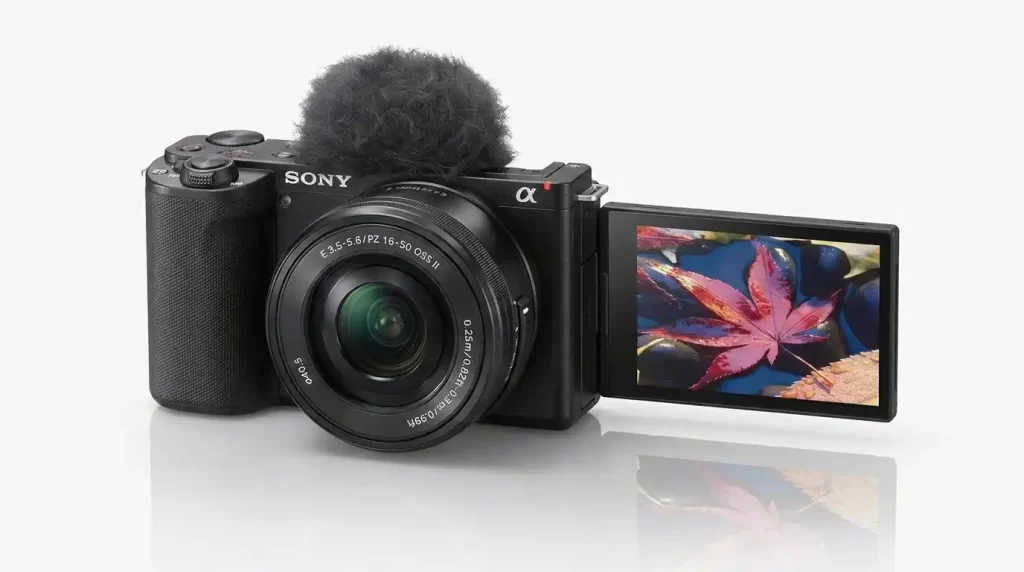
1. Sony ZV-E10 II — Best Overall for Most YouTube Creators
A True Step-Up From the Original
The Sony ZV-E10 II is the camera I recommend more than any other in 2026. It pairs a new 26MP APS-C sensor with Sony’s latest BIONZ XR processor, gives you 4K/60p with no recording limit, and keeps the vlogger-friendly touches that made the original a hit — Product Showcase mode, Background Defocus button, and a fully articulating screen.
Why creators love it:
- Excellent real-time eye autofocus, even with the cheaper kit lens
- USB-C streaming straight to a computer (no capture card needed)
- Larger NP-FZ100 battery — finally good for a full day’s shoot
- 3.5mm mic input plus digital hotshoe for Sony’s directional mics
- Interchangeable E-mount lenses unlock real creative range
Watch out for: rolling shutter is still noticeable on quick pans, and there’s no in-body stabilization — you rely on the electronic “Active” mode, which crops in slightly.
If you’re a solo creator who films a mix of indoor talking-head and outdoor walking content, this body remains the sweet spot in 2026.
Building a clean product-review channel? Make your gear cutouts look studio-grade with our precision clipping path service — fast turnaround, pixel-perfect edges, and ready-to-use PNGs.
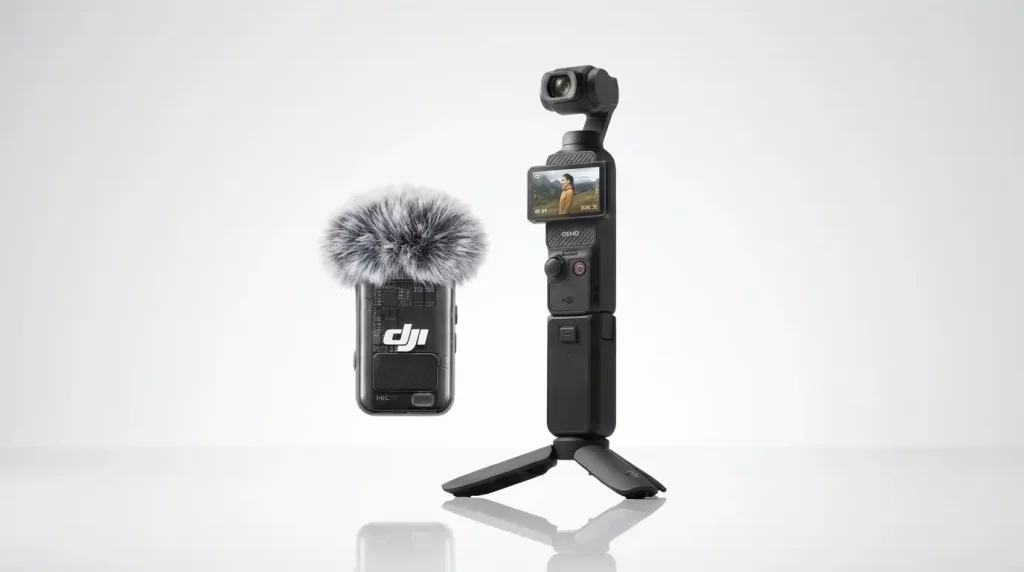
2. DJI Osmo Pocket 3 — Best Pocket-Sized Vlogging Camera
Gimbal-Stabilized Magic in Your Palm
The DJI Osmo Pocket 3 is genuinely one of the most influential cameras of the last few years. It packs a 1-inch sensor, a three-axis mechanical gimbal, and a rotating 2-inch screen into something smaller than a TV remote. Walking footage looks like you’re floating on a dolly — no warpy electronic stabilization, no cropping, no post-production work.
Standout features:
- 4K/120fps in a body that weighs just 179 grams
- The screen rotates between portrait and landscape — perfect for TikTok and Reels
- Face tracking that physically follows you with the gimbal
- D-Log M color profile for grading flexibility
- Wireless connection to the DJI Mic Mini for broadcast-quality audio
I use the Pocket 3 daily for travel B-roll and quick to-camera pieces. The only real downsides are a fixed lens (no zoom worth using) and a battery that struggles past 90 minutes without the extended grip.
For solo travel vloggers, family creators, and anyone who hates carrying a backpack of gear, this is the 2026 pick. DIYPhotography’s deep-dive review reaches the same conclusion.
3. Canon PowerShot V1 — Best Premium Compact Vlogging Camera
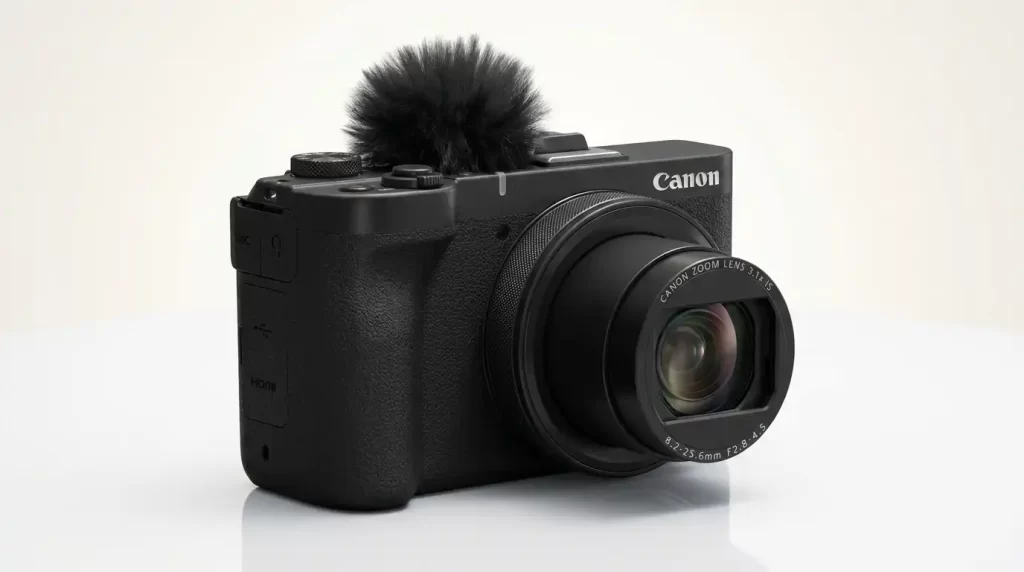
Canon Finally Gets Serious About Vloggers
The Canon PowerShot V1 (released in 2025) is what the V10 should have been. Canon dropped in a brand-new 1.4-inch sensor — physically larger than Micro Four Thirds — paired with a fast 16-50mm equivalent f/2.8-4.5 zoom. It shoots oversampled 4K/30p, 4K/60p with a small crop, and uses Canon’s class-leading Dual Pixel autofocus.
Why it stands out:
- Built-in ND filter — a rare and genuinely useful touch
- Cooling fan for unlimited 4K recording
- Real zoom range, not just a fixed wide
- Beautiful Canon color science straight out of camera
- Compact enough to carry one-handed all day
Reviewers at MPB and Fstoppers both call it the most polished compact vlogger on the market. Expect to pay around $899, which positions it directly against the Sony ZV-1 II — and in most lighting, the V1 wins.
Selling on Amazon or running an e-commerce channel? Our ghost mannequin editing service turns flat product shots into clean, professional hero images your audience will trust.
4. Sony ZV-1 II — Best Compact Camera for Beginners
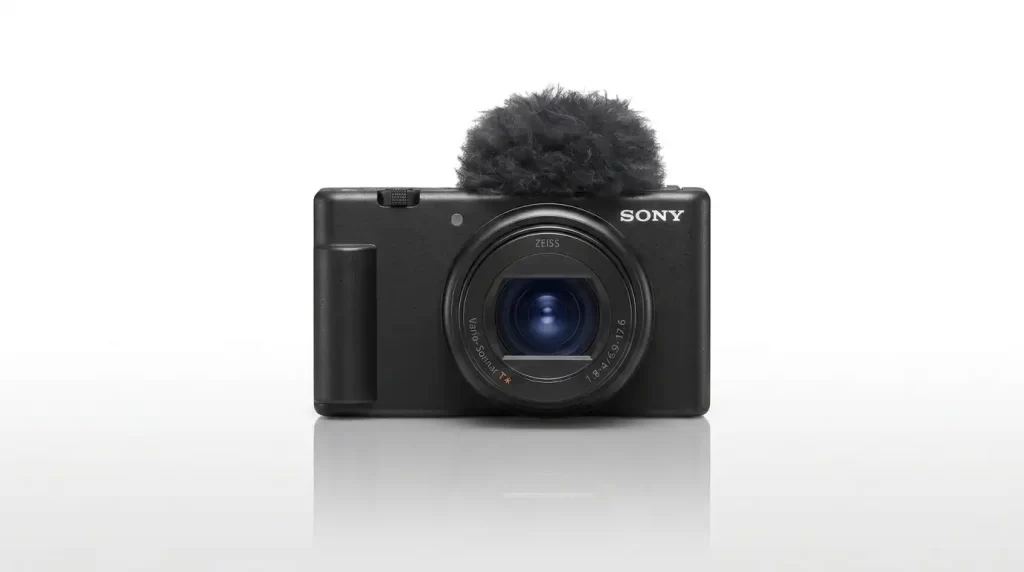
The Easiest “Real Camera” to Hand Someone
If your friend asks “what should I buy to start vlogging?” — answer Sony ZV-1 II. It costs around $899, feels like a point-and-shoot, but delivers footage that looks unmistakably professional. The wider 18-50mm equivalent zoom (versus the original’s 24-70mm) fixes the biggest complaint about the first model: not enough room to fit your face and the scene behind you.
Beginner-friendly wins:
- One-button Bokeh Switch for instant background blur
- Touch-to-track autofocus that just works
- Built-in three-capsule directional microphone
- Live-streams to your phone over Wi-Fi
- No interchangeable lens overwhelm
The 1-inch sensor isn’t going to win low-light shootouts against the Sony ZV-E10 II, but for daylight, indoor lighting, and YouTube delivery, you genuinely won’t tell the difference.
5. Fujifilm X-M5 — Best for Aesthetic-Driven Creators
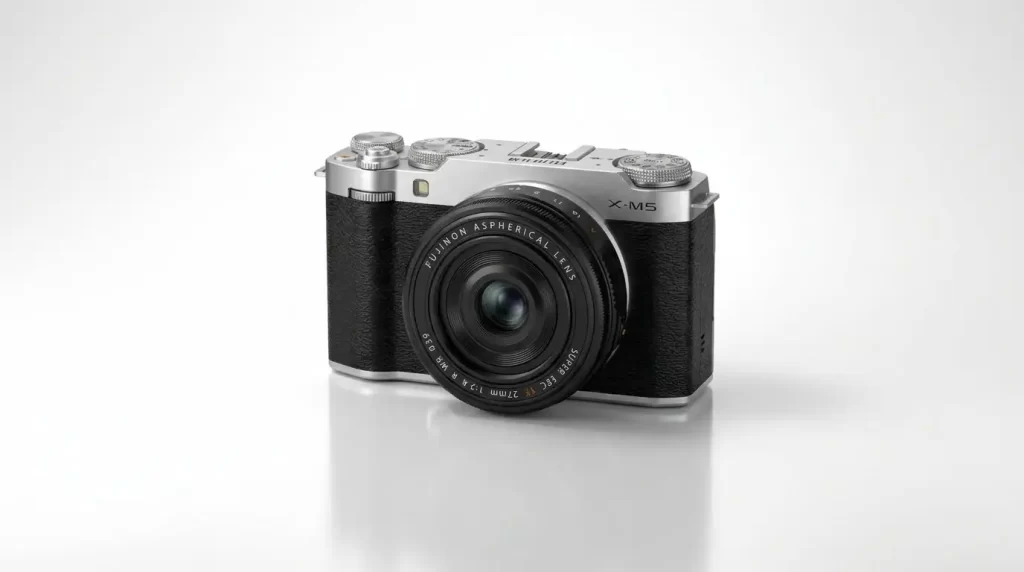
Film Simulations Are a Creative Cheat Code
The Fujifilm X-M5 is a tiny APS-C mirrorless body priced around $799 body-only. It targets creators who want a distinct visual identity baked in rather than added in post. Fuji’s film simulations — Classic Negative, Reala Ace, Eterna — give your videos a finished look the moment you stop recording.
Standout strengths:
- 6.2K/30p and 4K/60p with 10-bit internal recording
- Dedicated Vlog mode and Product Priority mode
- 20 film simulations including the new Reala Ace
- Lightweight (just 355g) with a flip-out screen
- Excellent stills camera, doubling as a hybrid tool
Watch out for the lack of in-body stabilization and the missing viewfinder. The X-M5 doesn’t try to be everything; it tries to be a beautiful, fun, content-focused camera — and at that, it succeeds.
6. GoPro HERO13 Black — Best for Action and Adventure Vloggers
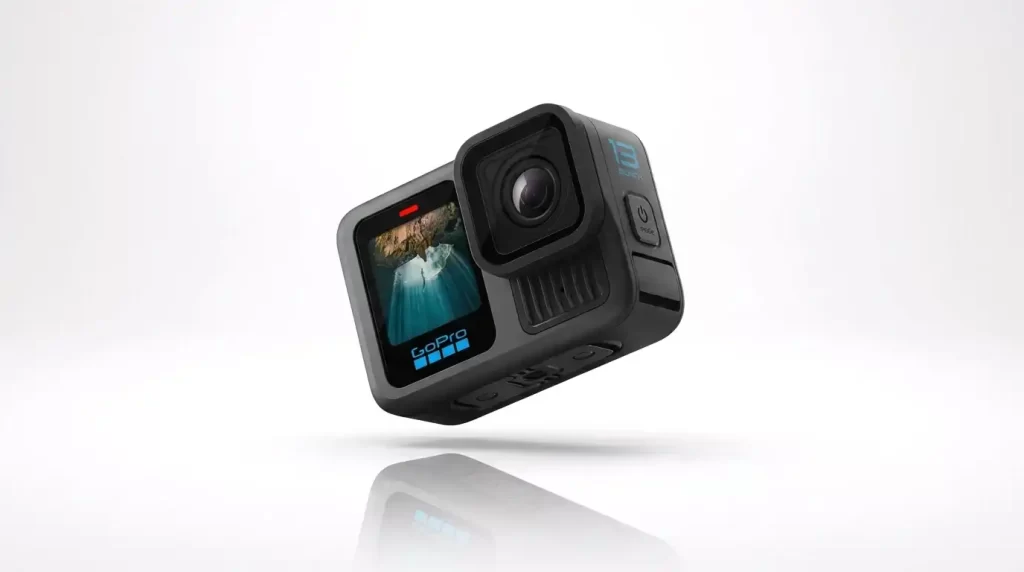
Tougher, Wider, Smarter
For surfing, skiing, motorbike riding, or anything where a mirrorless camera would die a quick death, the GoPro HERO13 Black still leads. The new HB-Series interchangeable lens mod system lets you swap on Ultra Wide, Macro, or Anamorphic lenses — a feature no other action camera matches.
Why it earns the spot:
- 5.3K/60p and 4K/120p slow motion
- Waterproof to 33 feet without a housing
- HyperSmooth 6.0 stabilization rivals a gimbal
- New Enduro battery delivers 1.5+ hours of 4K recording
- Magnetic Easy Latch Mount system for fast rig changes
Pair it with the Creator Edition bundle (Volta grip + Media Mod + Light Mod) and you have a complete vlogging rig under a kilogram.
Editing thousands of adventure or travel photos? Save hours of work with our bulk background removal service — handled by humans, not just AI, for clean and natural results.
7. Insta360 X5 — Best 360° Vlogging Camera
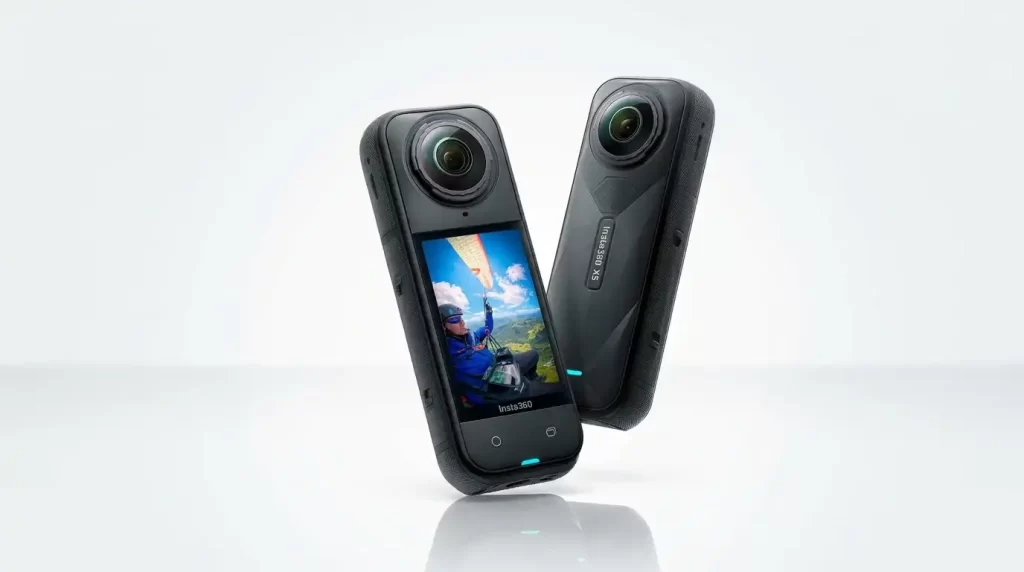
Frame Your Shot After You’ve Filmed It
The Insta360 X5 is genuinely a different category of tool. You don’t aim it — you mount it, press record, and reframe in the app afterwards. The dual 1/1.28-inch sensors capture true 8K 360° footage, and the new PureVideo low-light mode finally makes night vlogs usable.
Where it shines:
- “Invisible selfie stick” effect that looks like drone footage
- 8K30 / 5.7K60 360° capture
- Replaceable lens covers (a long-standing pain point — now solved)
- Built-in AI editing for clip generation
- Waterproof to 49 feet
The trade-off is workflow. Editing 360° content takes longer, and exported 4K reframes won’t match a native 4K camera. But for adventure, motovlogging, or anyone who wants visually surprising footage, nothing else competes.
8. Sony ZV-E1 — Best Full-Frame Vlogging Camera
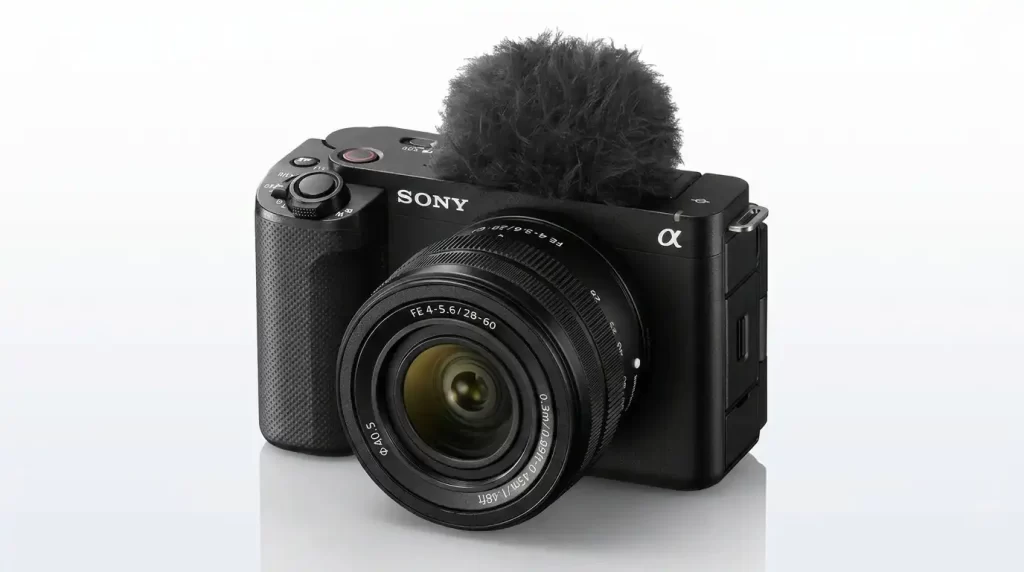
Cinema-Grade Footage in a Vlogger’s Body
The Sony ZV-E1 takes the sensor from the legendary FX3 cinema camera and crams it into a 483g vlogging body. The result is full-frame 4K/120p, dynamic range that handles harsh sunlight gracefully, and AI-driven autofocus that may be the best in the industry.
Best-in-class features:
- 12.1MP full-frame sensor optimized for low light
- AI subject recognition (human, animal, vehicle)
- Cinematic Vlog Setting with auto-LUT application
- Dynamic Active stabilization for handheld walking
- 5-axis in-body image stabilization
At roughly $2,200 body-only, this is a serious investment. Reserve it for full-time creators or filmmakers who want one body for everything.
9. Panasonic Lumix GH7 — Best for Hybrid Photo-Video Pros
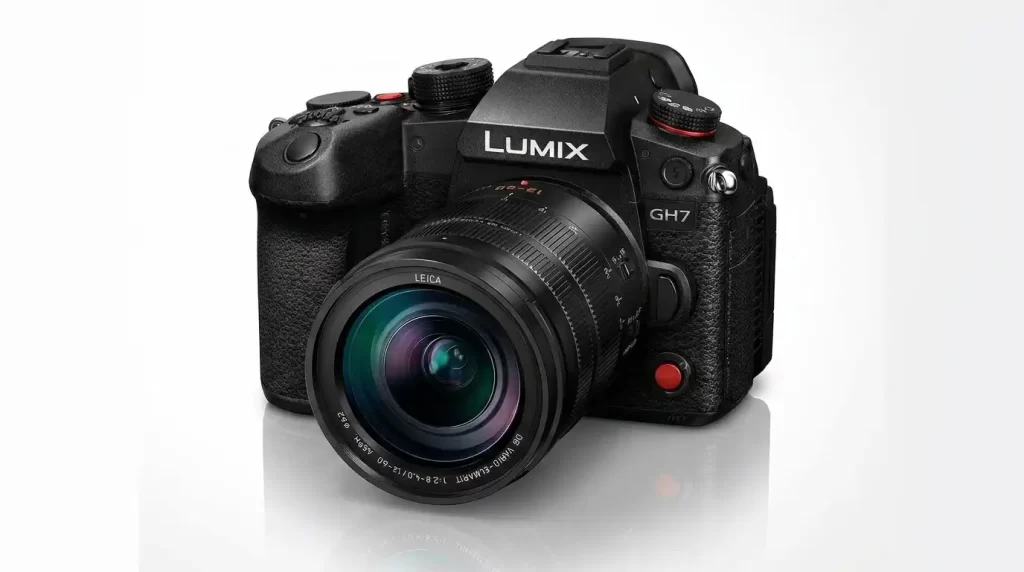
The “Cinema Camera in Disguise”
The Panasonic Lumix GH7 isn’t a beginner pick, but for anyone graduating from creator to filmmaker, it’s untouchable. Internal ProRes RAW, 32-bit float audio with the optional XLR adapter, and Phase Detection AF (a first for the GH line) make it more capable than cameras twice its price.
Why pros pick it:
- Unlimited recording with active cooling
- 5.7K open-gate video for vertical reframing
- Industry-leading codec support
- Robust weather-sealed body
- Compatible with affordable Micro Four Thirds glass
Read DPReview’s full GH7 evaluation if you want to dig into the technical depth.
How to Choose: A Quick Decision Framework
Choosing among nine excellent options is paralysis-inducing. Run yourself through this short filter:
- Mostly travel and walk-and-talk? → DJI Osmo Pocket 3
- Sit-down YouTube and product reviews? → Sony ZV-E10 II
- Just starting out, want simple? → Sony ZV-1 II
- Strong visual style matters most? → Fujifilm X-M5
- Action, surf, ski, motorbike? → GoPro HERO13 Black
- Creative angles and 360° freedom? → Insta360 X5
- Going pro, full-time creator? → Sony ZV-E1 or Lumix GH7
- Premium compact with real zoom? → Canon PowerShot V1
If you tend to favor versatile compact cameras with optical zoom — for both vlogs and family travel — also check the companion guide on the best compact zoom cameras, which covers a few hybrid options not listed here.
Accessories That Actually Move the Needle
A great camera with bad sound or shaky framing still produces unwatchable content. Spend a little extra on the right accessories and you double the perceived quality of your vlogs.
- External microphone: the DJI Mic Mini or Rode Wireless Micro are both excellent and affordable
- Lightweight tripod or grip: a Manfrotto PIXI or DJI Osmo grip transforms handheld shots
- Variable ND filter: controls light in bright outdoor scenes, especially for cameras without a built-in ND
- Extra batteries: plan for at least three; nothing kills a shoot faster than dead cells
- Fast SD cards: V60 or V90 rating for any 4K/60p or 10-bit recording
B&H Photo’s vlogging accessories hub is a reliable place to compare current pricing on these add-ons.
Launching a product line on your channel? Our multi-clipping path service isolates colors, materials, and parts individually — perfect for creating swappable color variants.
Vlogging Camera Mistakes to Avoid
A few patterns trip up almost every new creator. Sidestep these and you’ll save yourself months of frustration.
- Buying based on megapixels alone — video looks identical at 12MP and 50MP
- Forgetting about audio — viewers will tolerate bad video, never bad sound
- Ignoring weight — the camera you leave at home shoots zero footage
- Skipping the test return window — try the camera for a week before committing
- Buying lenses before mastering the kit lens — most “lens upgrades” don’t move the needle for vlogs
FAQ: Best Vlogging Cameras 2026
What’s the single best vlogging camera in 2026?
For most creators, the Sony ZV-E10 II offers the best balance of price, image quality, autofocus, and ecosystem support. If portability tops your list, the DJI Osmo Pocket 3 wins.
Do I really need 4K to start vlogging?
No, but every camera worth buying in 2026 shoots 4K anyway. The bigger benefit is the cropping flexibility — you can deliver in 1080p and still reframe shots cleanly in post.
Is a phone enough, or should I buy a camera?
A modern flagship phone shoots impressively, but it struggles with autofocus tracking, external mics, and depth of field. The moment you want a professional look, a dedicated camera pulls ahead instantly.
How much should a beginner spend?
You can start strong around $700–$900. The Sony ZV-1 II, Canon PowerShot V10, and DJI Osmo Pocket 3 all sit in this bracket and deliver genuinely professional output.
Are mirrorless cameras better than compact vlogging cameras?
They offer more creative range — interchangeable lenses, better low light, and stronger autofocus. However, they’re heavier and more complex. Match the form factor to your shooting style, not the spec sheet.
Which vlogging camera has the best autofocus?
Sony currently leads. The ZV-E1 and ZV-E10 II both use AI subject recognition that locks onto eyes with near-perfect reliability. Canon’s Dual Pixel AF on the PowerShot V1 is a close second.
Can I use a vlogging camera for live streaming?
Yes. Most modern vlogging cameras (Sony ZV series, Canon V1, Lumix GH7) support UVC/UAC streaming over USB-C, meaning no capture card required.
What’s the best vlogging camera under $500 in 2026?
The DJI Osmo Action 5 Pro and the older Sony ZV-1 (used market) both deliver excellent results at this price point. Avoid generic “4K vlogging cameras” from unknown brands — autofocus quality is consistently poor.
Final Thoughts: Pick the Camera You’ll Actually Use
The “best vlogging camera” isn’t the one with the biggest sensor or the most impressive spec sheet — it’s the one you’ll grab when you’re rushing out the door, the one whose menus you’ve memorized, and the one that doesn’t make you dread the editing process.
For most creators in 2026, that means a Sony ZV-E10 II for primary content or a DJI Osmo Pocket 3 for travel-first shooting. Pair either with a decent wireless mic, a lightweight tripod, and clean editing — and you’re operating at a level that would have required a $5,000 rig five years ago.
The gear has finally caught up to the creativity. Now it’s your turn to use it.
Ready to turn your vlogging stills and thumbnails into scroll-stopping visuals? Partner with the editing specialists at PhotoFixal and let your channel’s visual quality finally match your storytelling.